
Understanding moon phases Worksheets for Ages 7-9
4 filtered results
Difficulty Level
Grade
Age
-
From - To
Subject
Activity
Standards
Discover our "Understanding Moon Phases" worksheets for ages 7-9 to make learning fun and engaging. Designed to align with educational standards, these worksheets help young learners grasp the lunar cycle's complexity through colorful visuals, interactive activities, and easy-to-follow instructions. Your child will learn about the different moon phases, their names, and how they occur in a systematic sequence. With engaging illustrations and practice exercises, kids will build a strong foundation in astronomy while enhancing critical thinking and observational skills. Perfect for classroom use or homeschooling, foster a love of science and exploration today!
Favorites
With answer key
Interactive
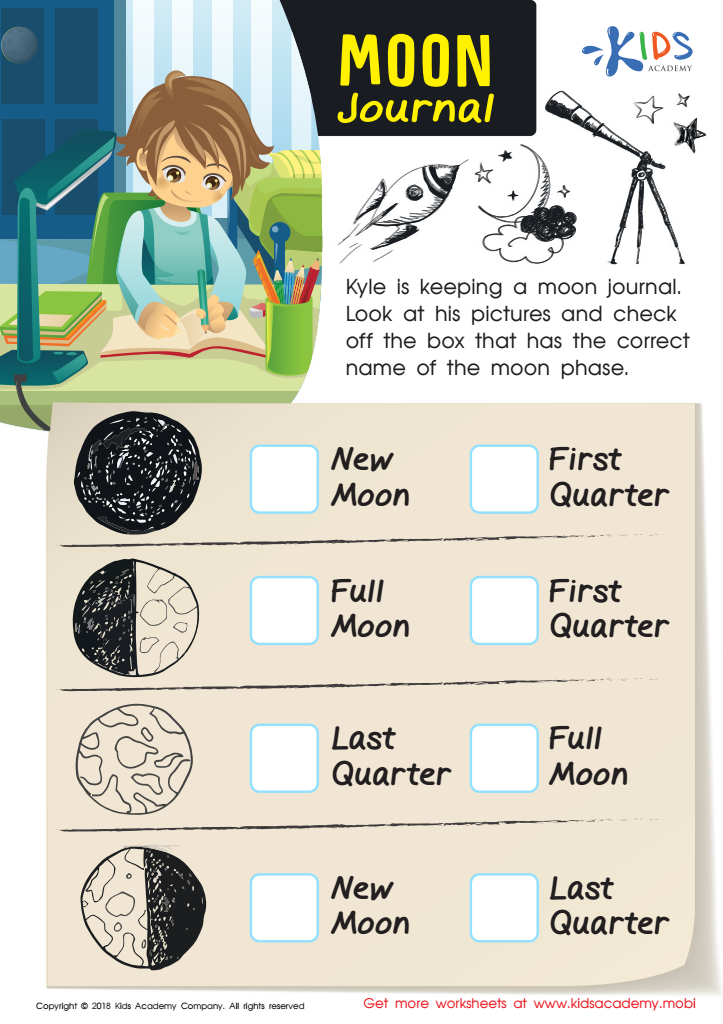
Moon Journal Worksheet
Observe the moon and its 8 phases with your child by downloading this free PDF worksheet from Kids Academy! Review the moon phases with them then help them label Kyle's moon journal. Select the right moon phase for each picture to complete the page!
 Assign to My Students
Moon Journal Worksheet
Worksheet
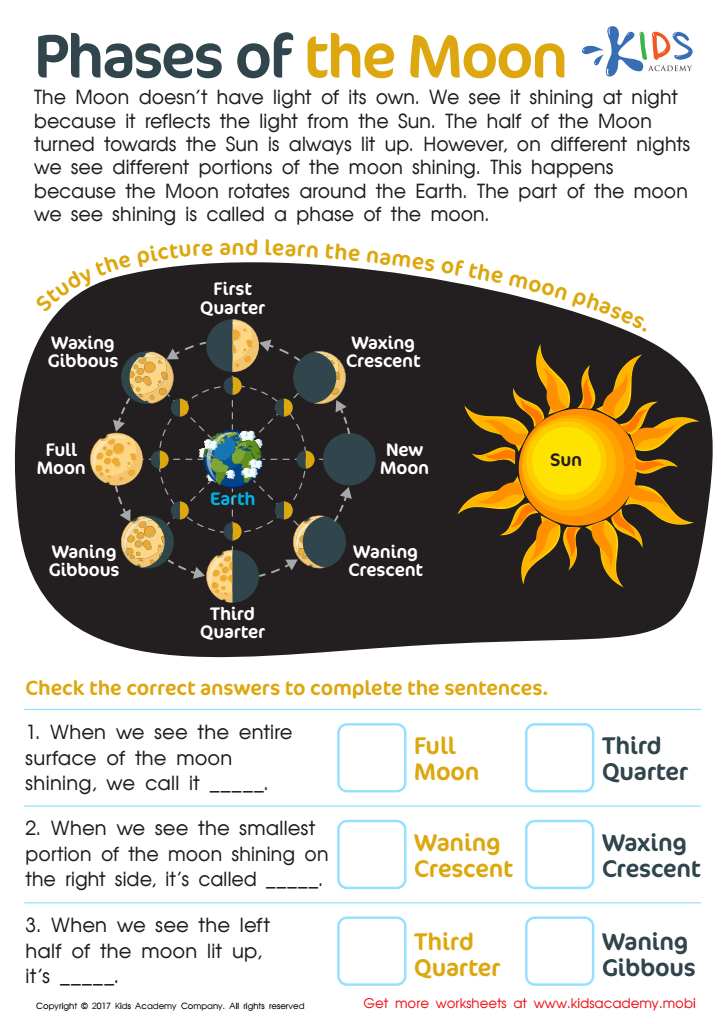
Phases of The Moon Worksheet
It'll show kids the fascinating phases and journey the moon takes around Earth. They'll be amazed to learn it's not always shining!
Phases of The Moon Worksheet
Worksheet
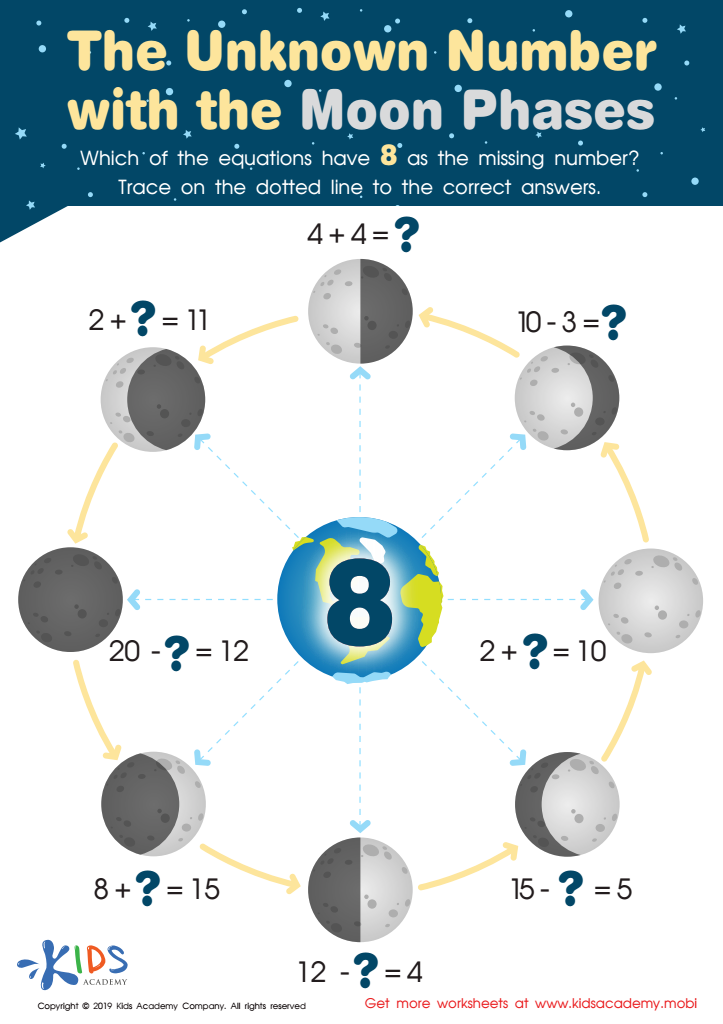
The Unknown Number with the Moon Phases Worksheet
Show your kids the moon one night! Explain why its shape changes during the month with a worksheet. Then, help them to solve math equations and trace the answer, where the missing number is '8'.
The Unknown Number with the Moon Phases Worksheet
Worksheet
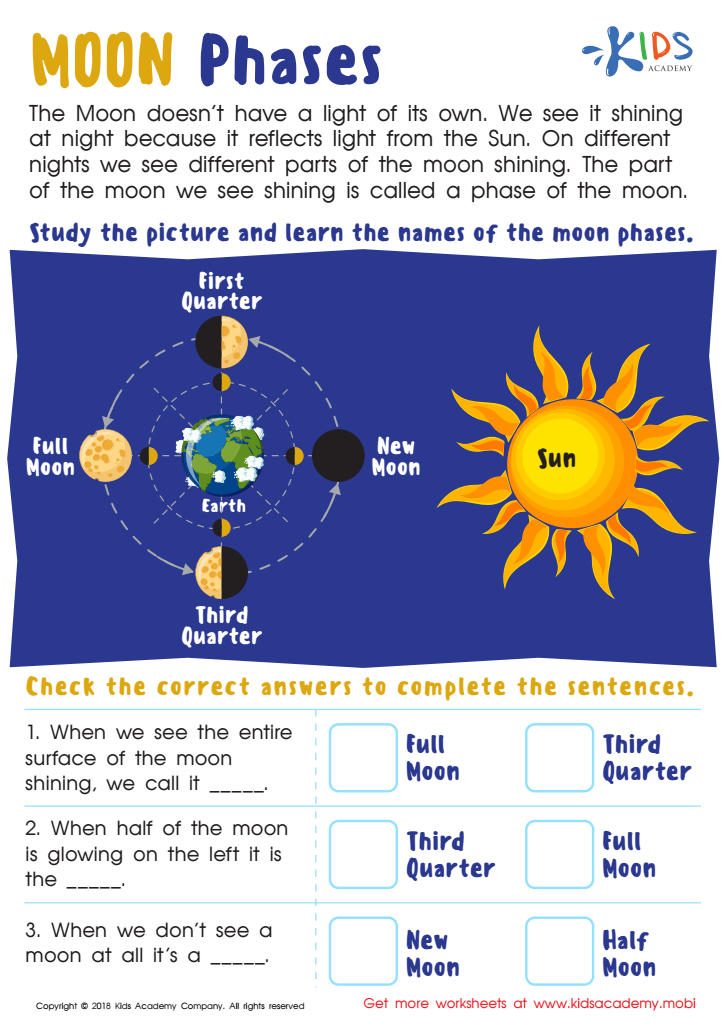
Moon Phases Worksheet
Gaze up at the night sky and the moon's appearance may change from night to night. Encourage your child to learn more about the sun, the moon, and space with this science worksheet. Have them read the text then study the picture. Finally, read the sentences and check the answers to identify the moon's phases.
Moon Phases Worksheet
Worksheet
Join Kids Academy for Free
Who is primarily going to use this learning content?


.jpg)



Understanding moon phases can be a delightful and educational experience for children aged 7-9, making it vital for parents and teachers to foster this interest. At this age, kids are naturally curious and eager to explore the world around them, and the moon is a visible, ever-changing object that captures their imagination.
Learning about moon phases supports the development of key scientific concepts such as observation, patterns, and cycles. These concepts are foundational for later learning in various STEM (science, technology, engineering, and math) fields. Children observe the moon in different shapes—crescent, half, and full—and notice the regular pattern of these changes, helping them grasp ideas like time, sequence, and nature’s regularity.
Additionally, understanding moon phases can enhance literacy and storytelling skills. Folktales, myths, and literature often feature the moon, allowing children to appreciate the moon's cultural significance and its influence on human life.
Moreover, discussing moon phases supports emotional and cognitive development. It encourages kids to ask questions, think critically, and foster a sense of wonder about the natural world. This curiosity can inspire a lifelong love of learning and discovery.
Ultimately, engaging with the topic of moon phases is a fun, interactive way to support educational growth, cultivate imagination, and connect to something larger than themselves, boosting both scientific thinking and educational excitement.








