
Understanding patterns Worksheets for Ages 7-9
52 filtered results
Difficulty Level
Grade
Age
-
From - To
Subject
Activity
Standards
Dive into the world of patterns with our "Understanding Patterns Worksheets" designed specifically for ages 7 to 9! These engaging worksheets will help young learners recognize, create, and extend various patterns through fun activities. Each worksheet is crafted to enhance critical thinking and promote problem-solving skills, making learning both enjoyable and effective. Covering a range of patterns including shapes, colors, and numbers, students will develop foundational skills necessary for future math concepts. Perfect for teachers and parents alike, our worksheets offer a dynamic approach to pattern recognition and creativity, ensuring children grasp essential skills while having fun! Get started today!
Favorites
With answer key
Interactive
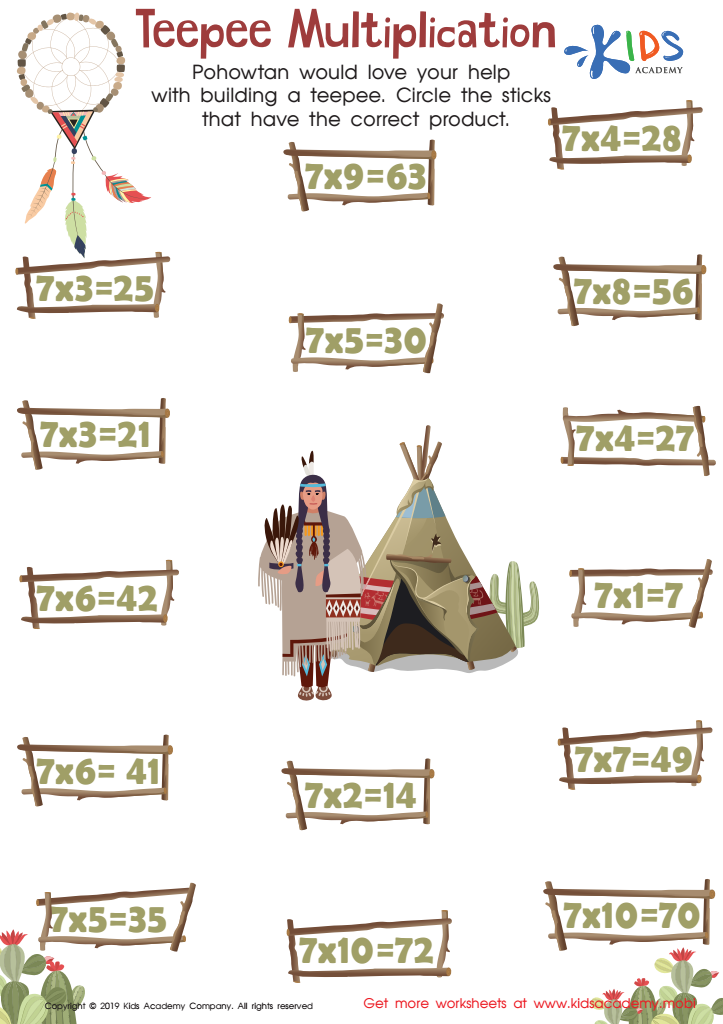
Teepee Multiplication Worksheet
Help the Native American man build his teepee by checking multiplication facts! Learners are given purpose and excitement with this fun math worksheet. Check each set of sticks, find, and circle the ones with the correct product to complete.
 Assign to My Students
Teepee Multiplication Worksheet
Worksheet
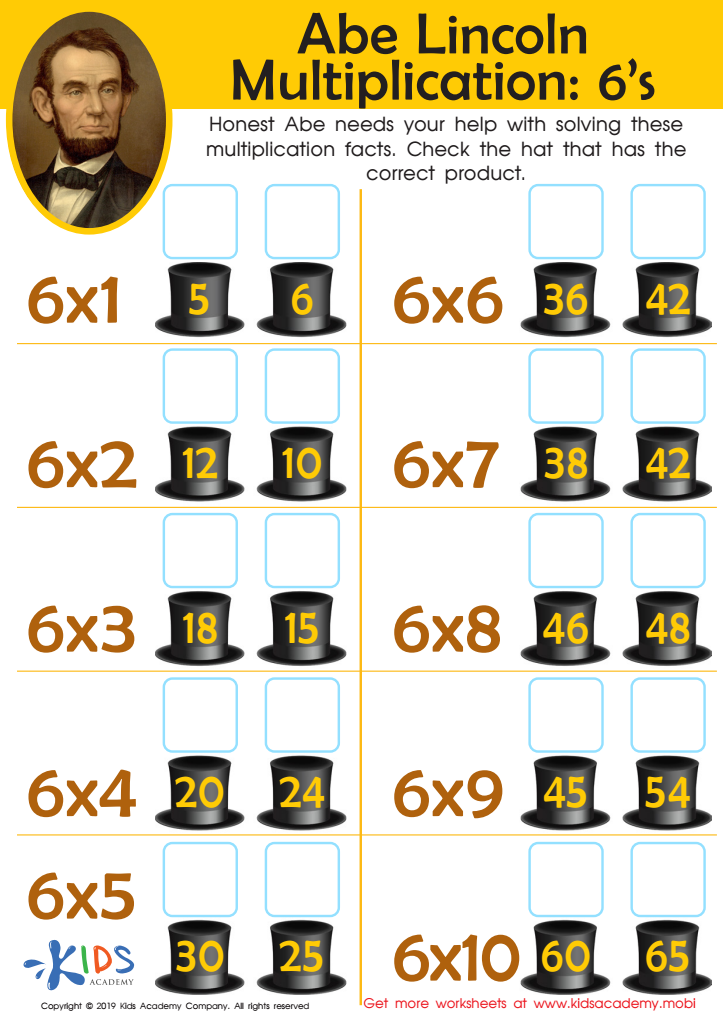
Abe Lincoln Multiplication: 6’s Worksheet
Abraham Lincoln is a key figure in US history. Remind your kids of his contributions and challenge them with this multiplication worksheet! Ask them to solve the facts in the picture and check the hat with the correct product.
Abe Lincoln Multiplication: 6’s Worksheet
Worksheet
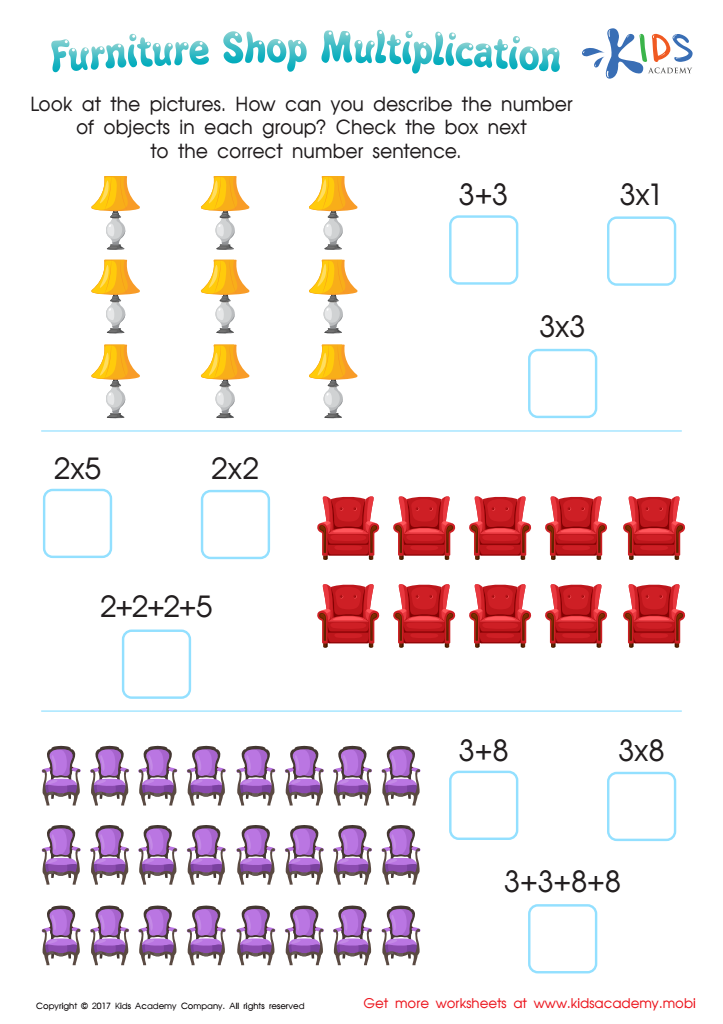
Furniture Shop Worksheet
Our multiplication PDF worksheets for 3rd grade use a visual strategy to help kids understand multiplication. Fun and colorful furniture engages kids as they use number sentences to describe each picture, aiding in memorizing multiplication tables.
Furniture Shop Worksheet
Worksheet
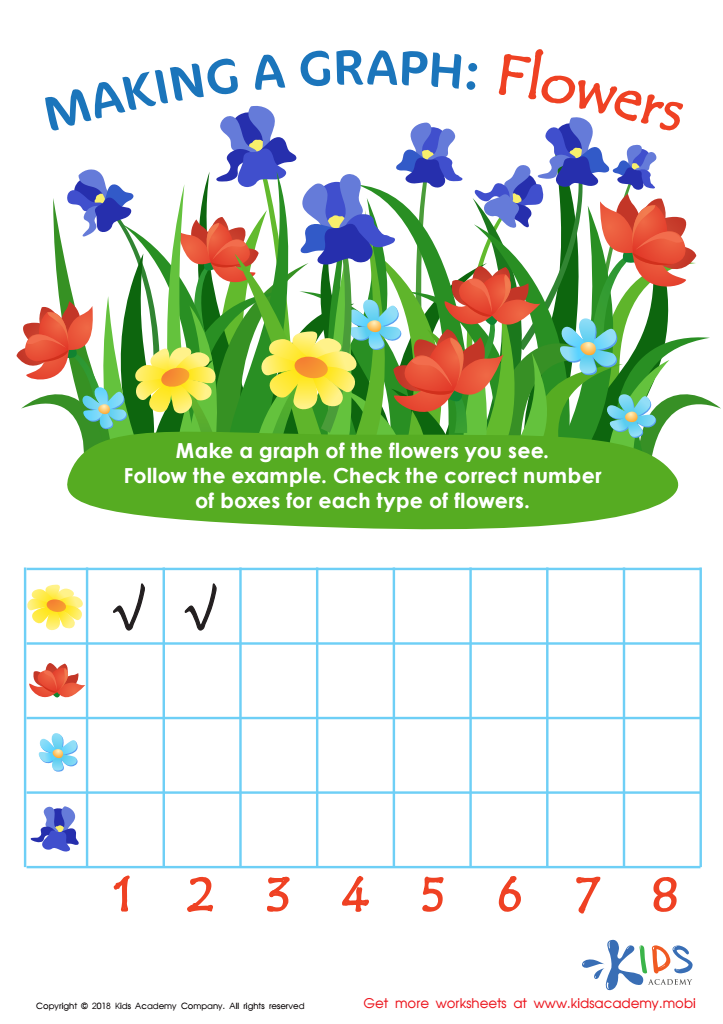
Making a Graph: Flowers Worksheet
Kids will love this engaging PDF graph. They'll count flowers and use checkmarks to represent the number on the graph, tangibly seeing the differences in an organized way they contributed to. All while developing their number representation and concrete number sense skills without even realizing it!
Making a Graph: Flowers Worksheet
Worksheet
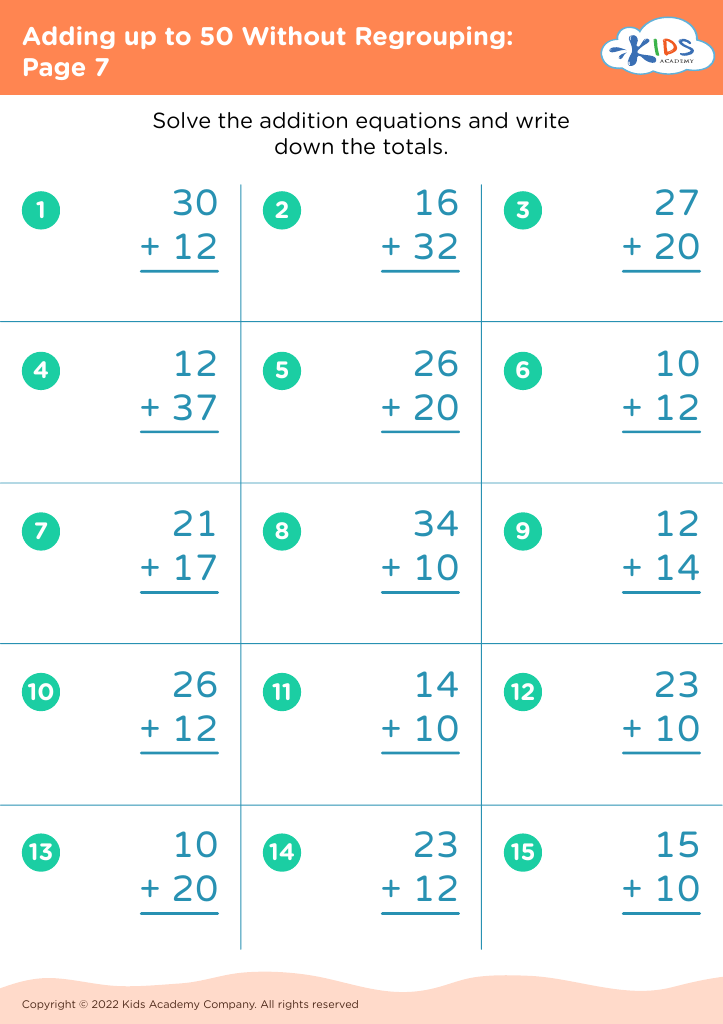
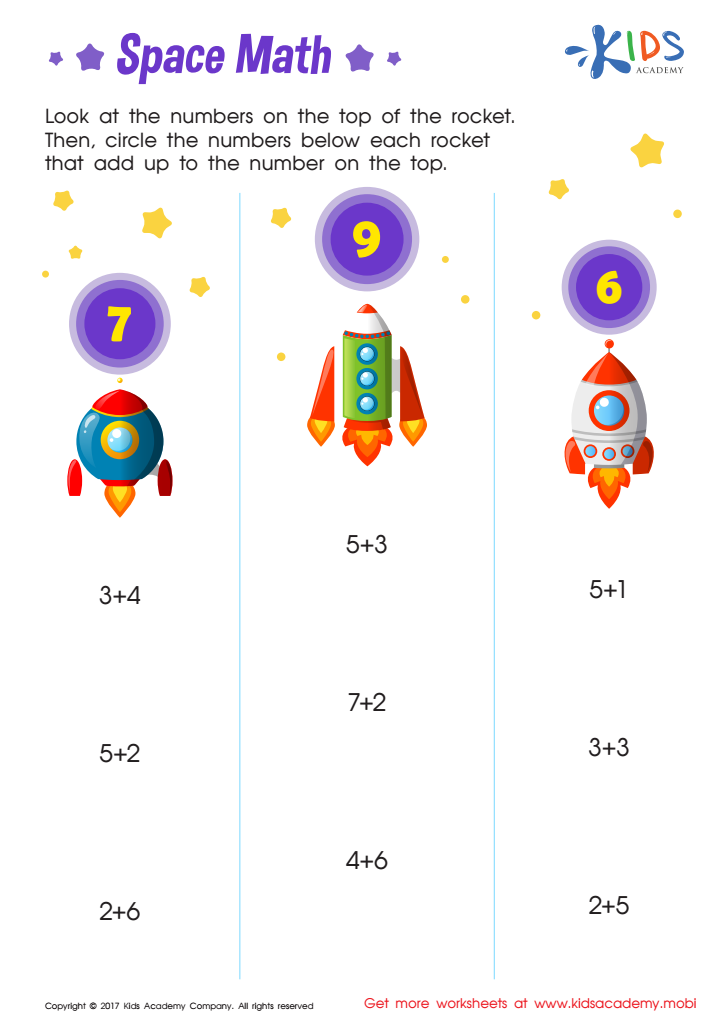
Addition: Space Math Worksheet
Fun and engaging space-themed practice with vivid pictures and matching numbers will make learning more meaningful. Take their math skills out of this galaxy today with Kids Academy!
Addition: Space Math Worksheet
Worksheet
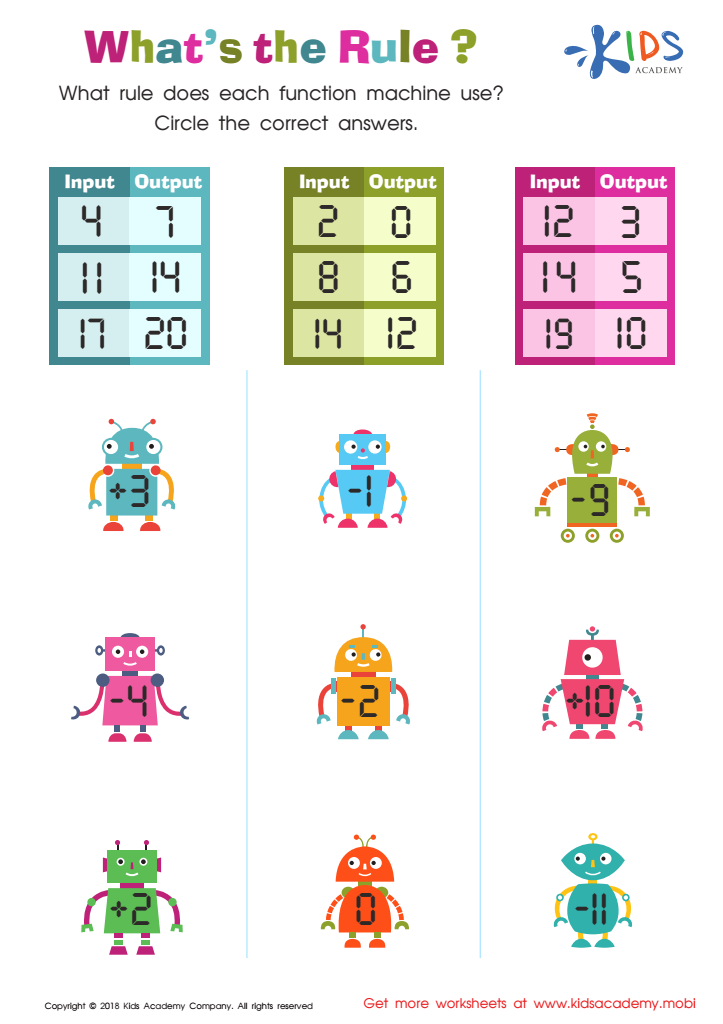
What's the Rule Worksheet
Robots are here to help your child find the relationship between each set of numbers! Adorably illustrated worksheets use vivid pictures that each contain a rule. Look at each function machine and find the pattern or relationship between the input and output. Then, complete the sheet by circling the correct answer!
What's the Rule Worksheet
Worksheet
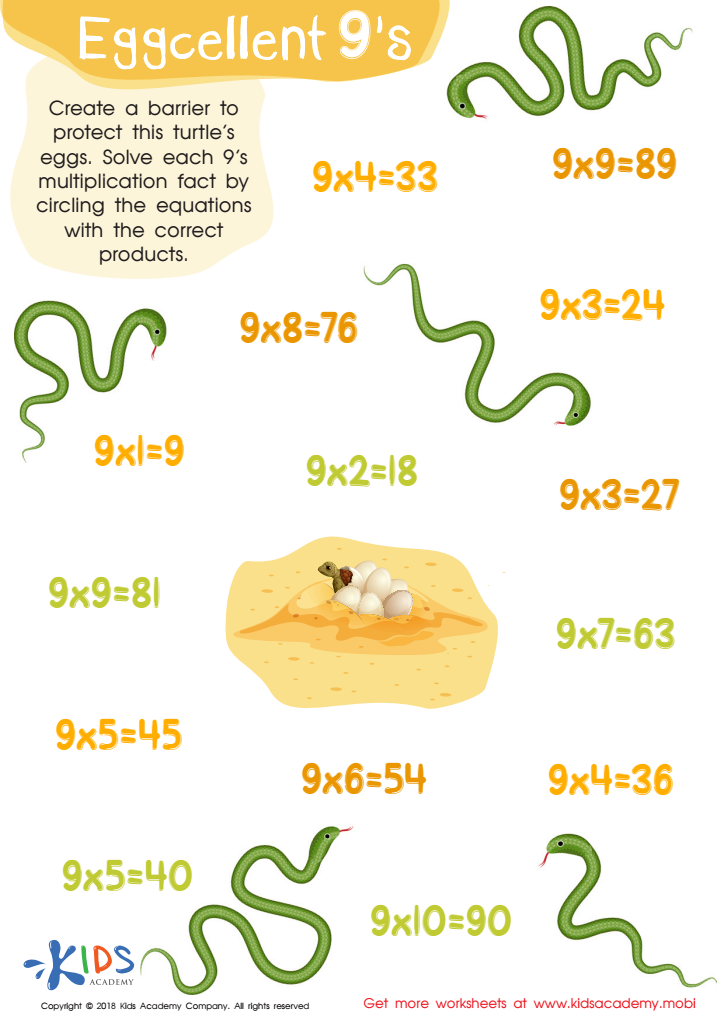
Eggcellent 9’s Worksheet
Help your kids save turtle eggs in this worksheet! Have them create a barrier by solving 9's multiplication facts, then circling the equations with the correct product. Finish up this exercise and show them how they can help protect turtle eggs from predators.
Eggcellent 9’s Worksheet
Worksheet
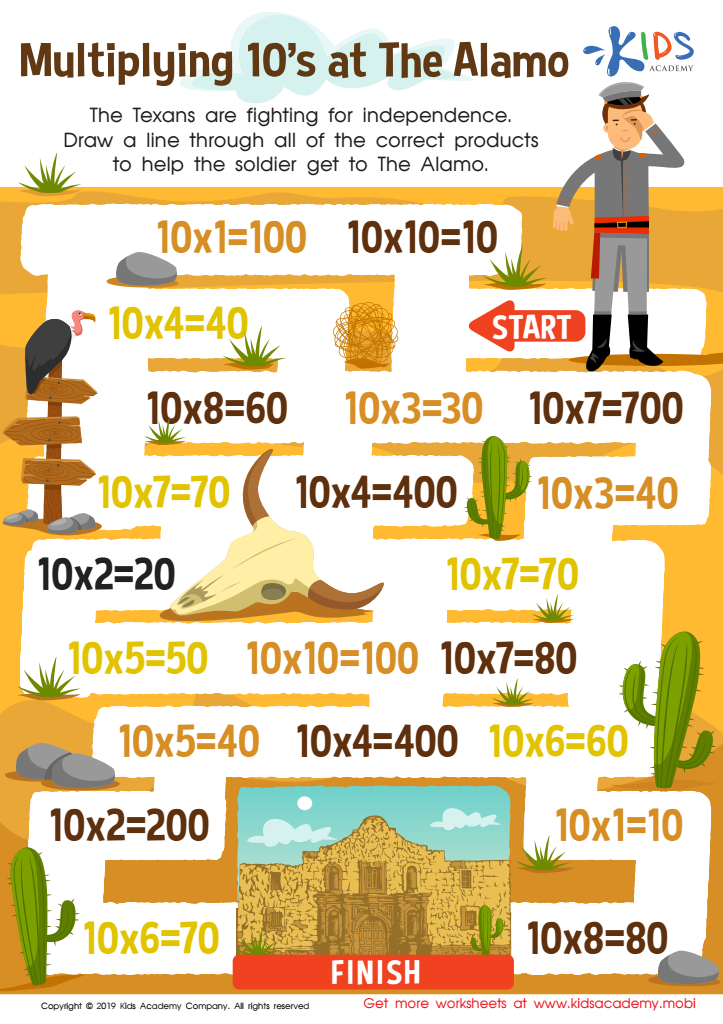
Multiplying 10’s at The Alamo Worksheet
Teach your kids easy tricks to simplify any multiplication problem. For example, when multiplying any number by 10, the result will always end in a zero. To help the Texans in this worksheet, draw a line through all of the correct products to get them to The Alamo.
Multiplying 10’s at The Alamo Worksheet
Worksheet
Join Kids Academy for Free
Who is primarily going to use this learning content?



%20(1).jpg)



Understanding patterns is essential for children aged 7-9, as it underpins many foundational concepts in mathematics and other disciplines. At this age, children are developing critical thinking skills and recognizing patterns helps them make connections between different ideas. For instance, mastering patterns enhances their ability to grasp more complex mathematical concepts such as addition, subtraction, multiplication, and division, and will eventually support their understanding of algebraic thinking.
In addition to mathematics, pattern recognition plays a critical role in subjects like science, where students observe trends in data and develop hypotheses. Encouraging children to identify and explore patterns in their surroundings nurtures their observational skills, creativity, and problem-solving abilities. This understanding fosters a growth mindset, as children learn persistence through trial and error while working with patterns.
Moreover, recognizing patterns in daily life—such as routines—can improve a child's organizational skills and time management. For teachers and parents, introducing engaging and interactive activities focused on patterns will stimulate children's enthusiasm for learning. Ultimately, fostering this understanding aids in developing confident learners who are equipped to tackle more complex challenges as they progress in their education.








