Verb identification Worksheets for Ages 7-9
6 filtered results
-
From - To
Enhance your child's language skills with our Verb Identification Worksheets, specially designed for kids aged 7-9! These engaging and interactive worksheets help young learners recognize and understand verbs in various contexts. Packed with fun exercises, children will practice identifying action words, boosting their writing and reading comprehension. Our user-friendly resources cater to different learning styles, ensuring every child can grasp this fundamental grammar concept with ease. Ideal for classroom use or at-home learning, these worksheets support educational development in a lively and effective way. Explore our collection today to empower your child’s journey to confident communication!
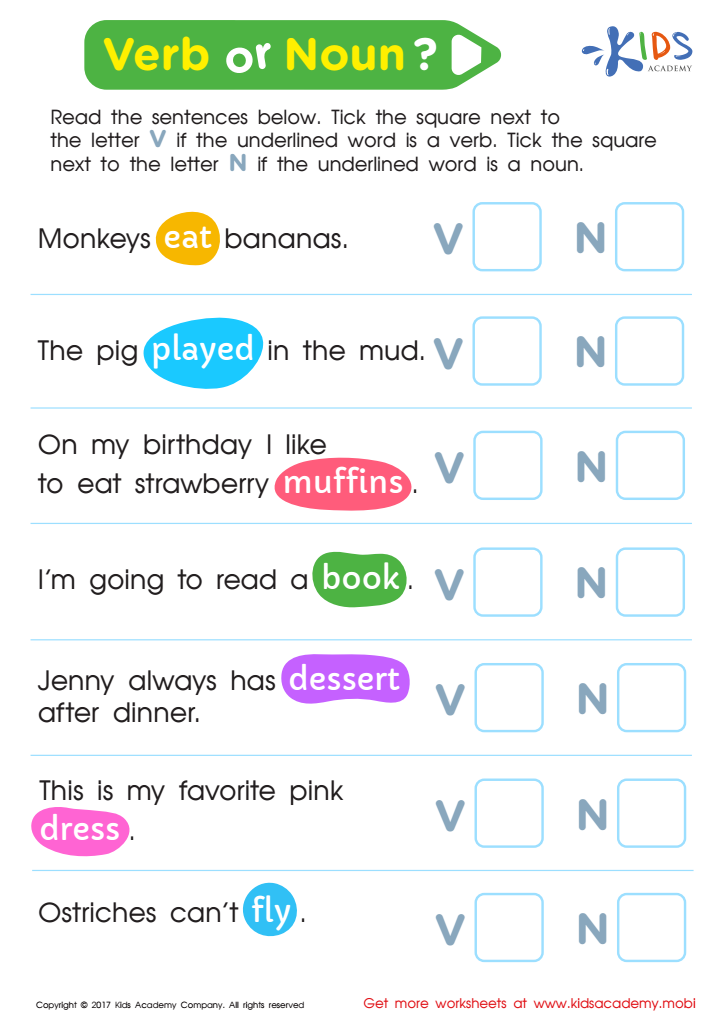
Verb or Noun Worksheet
 Assign to My Students
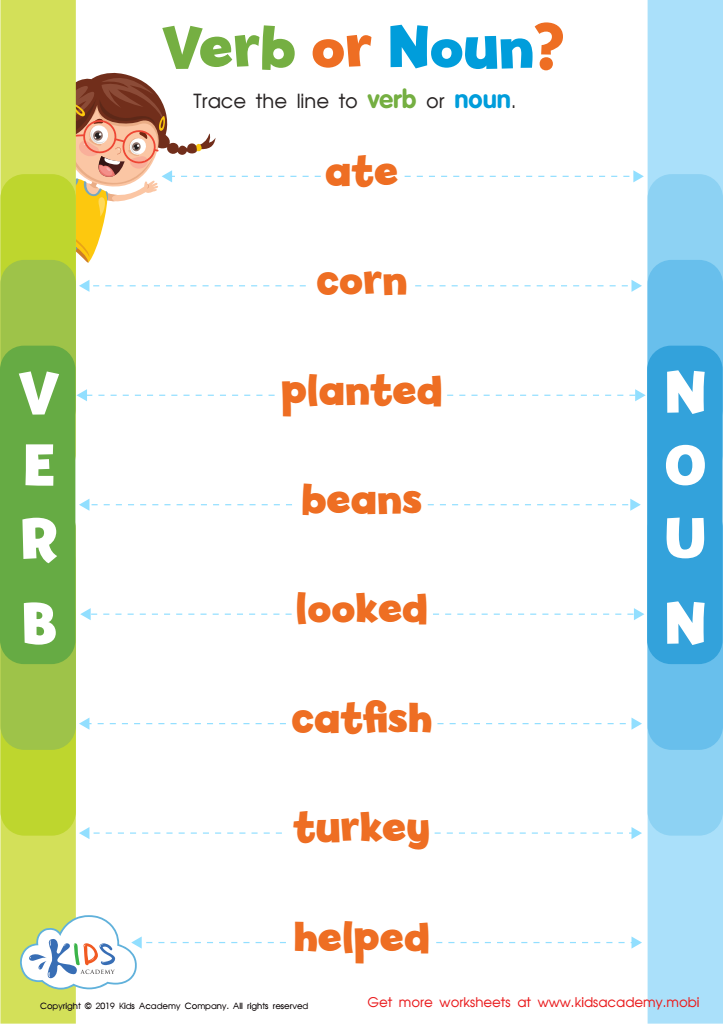
Verb or Noun Worksheet
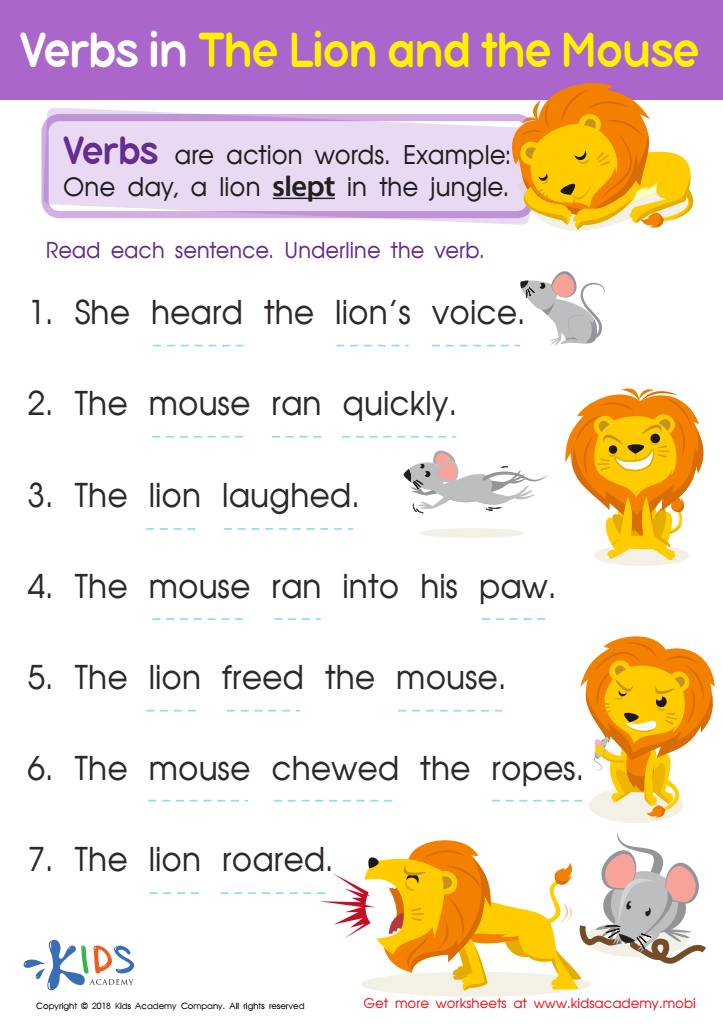
Verbs in The Lion and the Mouse Worksheet
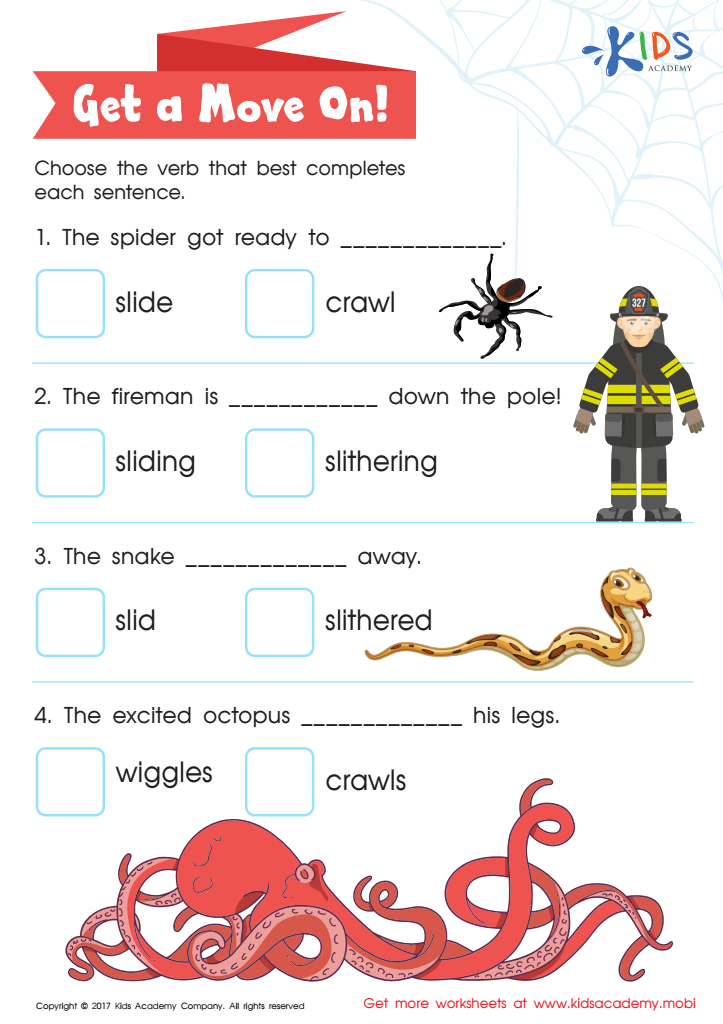
Verb Worksheet
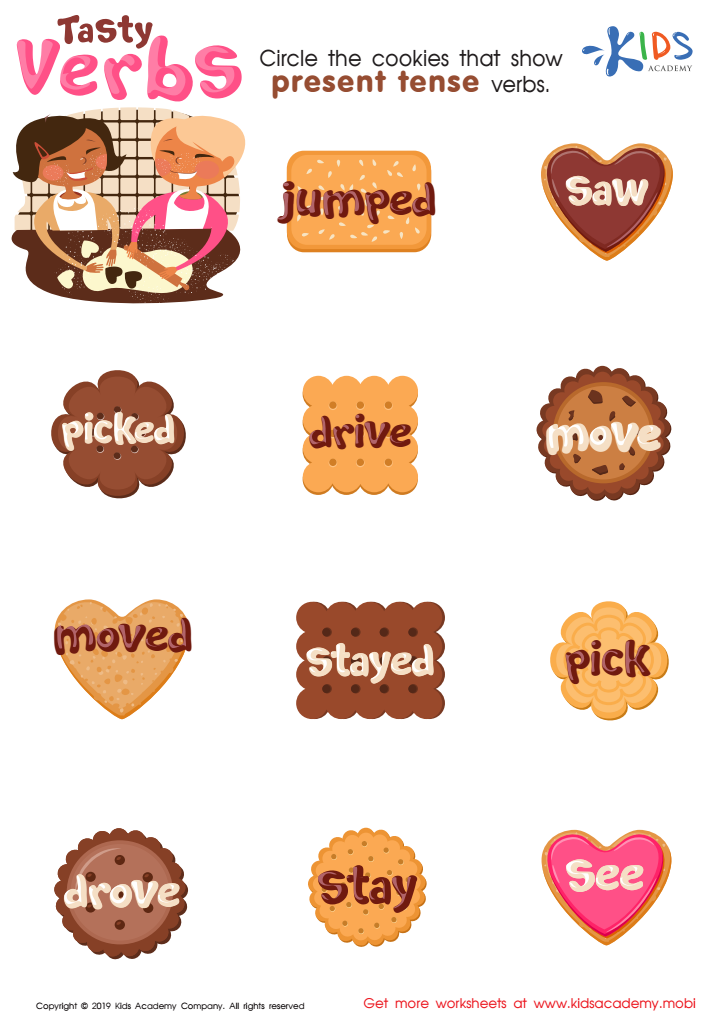
Tasty Verbs Worksheet
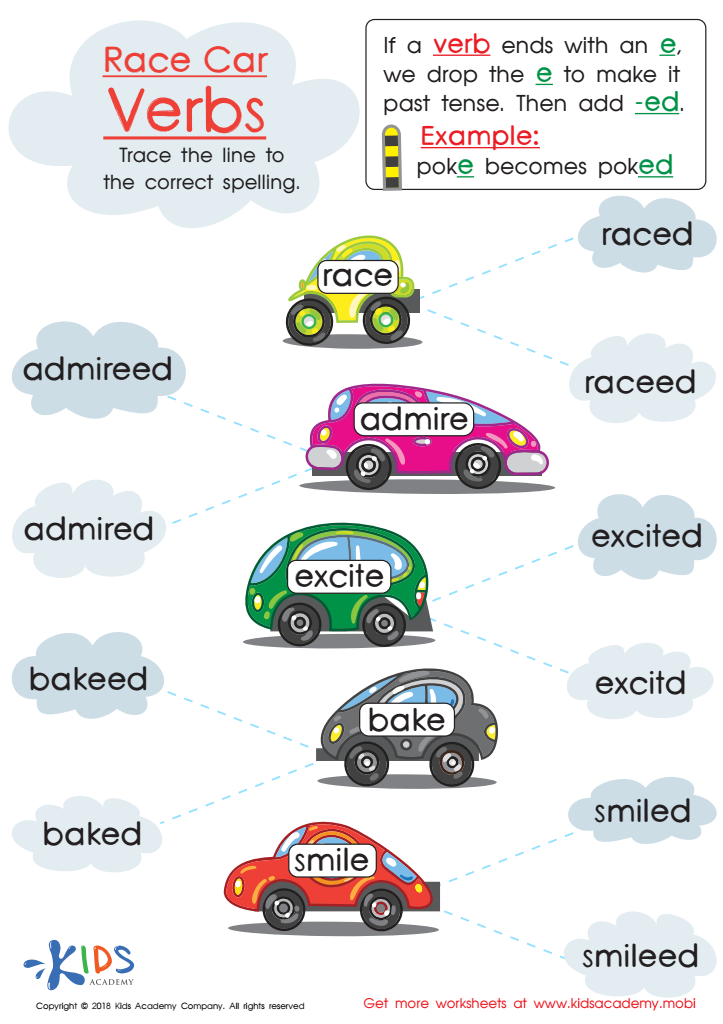
Race Car Verbs Worksheet








Verb identification is crucial for children aged 7-9 as it lays the foundation for their linguistic and cognitive development. Understanding verbs enhances language skills, enabling students to express actions, events, and states of being with clarity. At this age, children are refining their grammar knowledge, and recognizing verbs is essential for effective communication and writing.
Mastering verbs also improves reading comprehension. When children can identify verbs in texts, they gain a better understanding of narrative flow and character actions, which promotes engagement and retention of information. Furthermore, verb identification fosters critical thinking, as students learn to analyze sentences and discern meaning based on verb usage.
For teachers and parents, focusing on verb identification during these formative years creates a pathway for academic success. It can scaffold their learning in more complex language concepts, such as tenses and subject-verb agreement, leading to stronger speaking and writing abilities.
Encouraging children to identify and use verbs appropriately develops their confidence in language arts and supports broader educational goals, including improved literacy and a lifelong love for learning. Ultimately, active involvement in children’s language development assists them in becoming proficient, expressive communicators in both academic and real-world contexts.








