Word Recognition Worksheets for Ages 7-9 - Page 3
52 filtered results
-
From - To
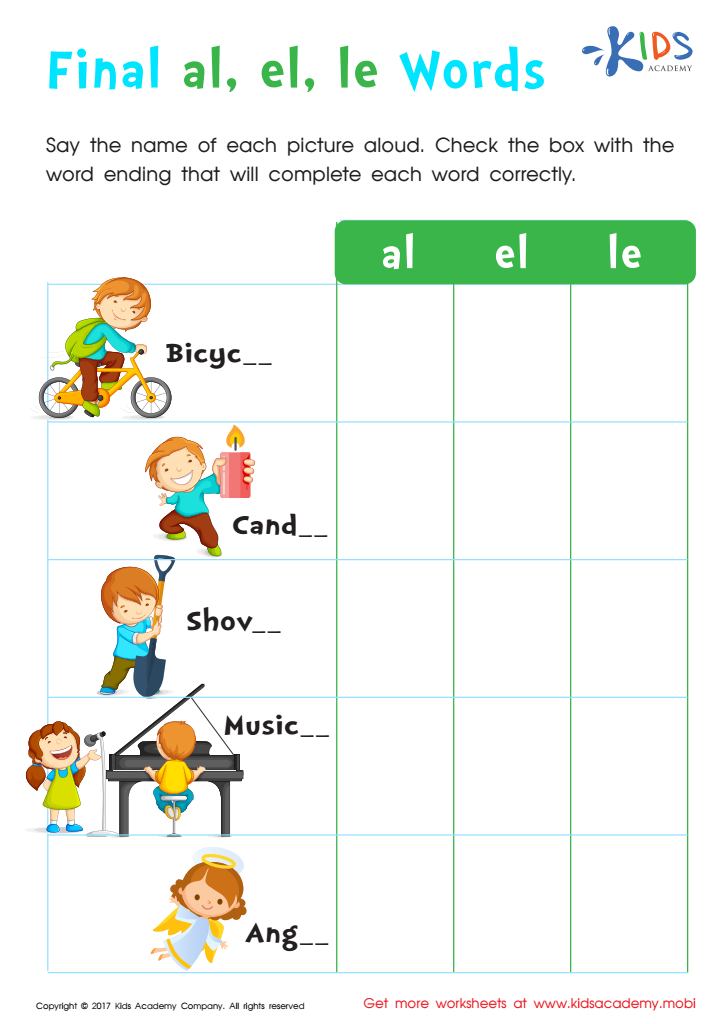
Spelling Words Ending with –le, –el and –al Worksheet
 Assign to My Students
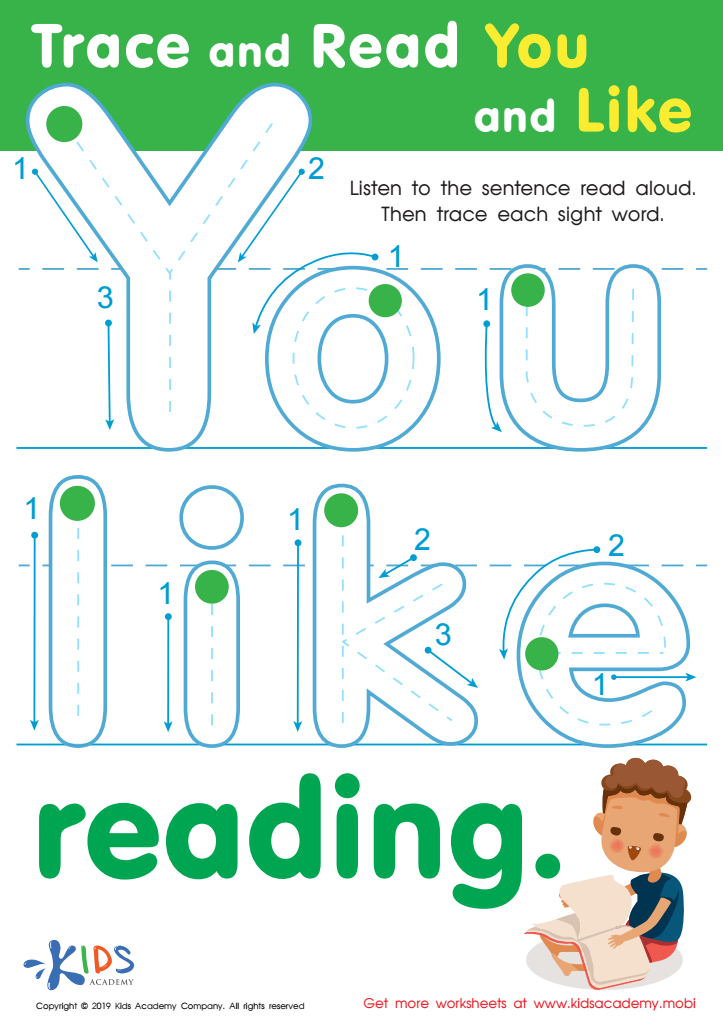
Trace Read You Like Worksheet
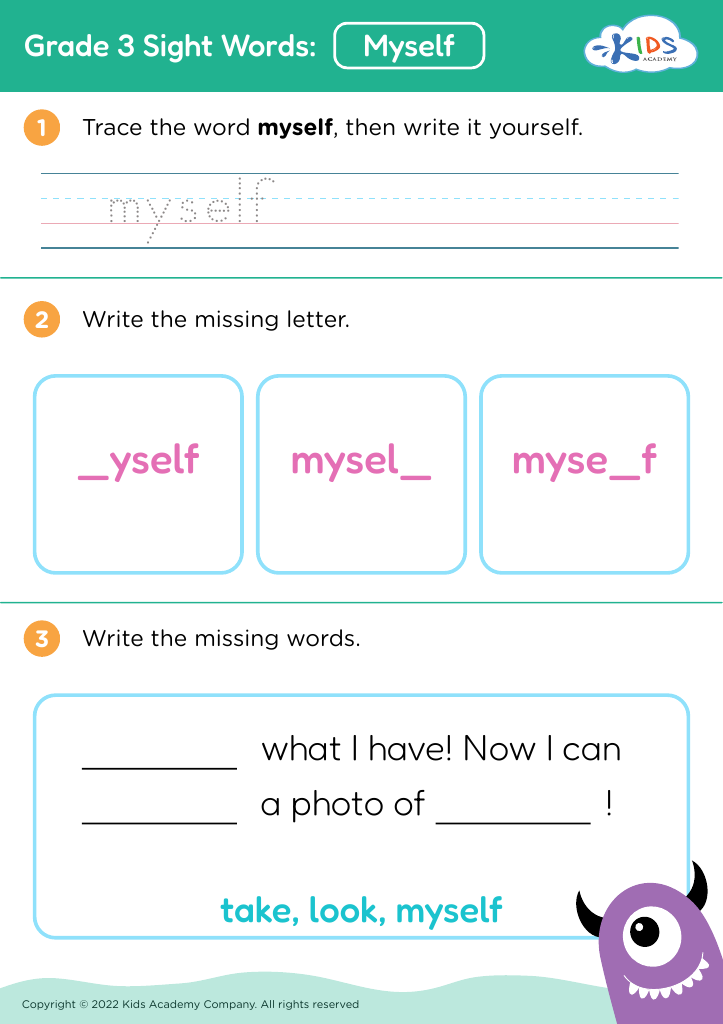
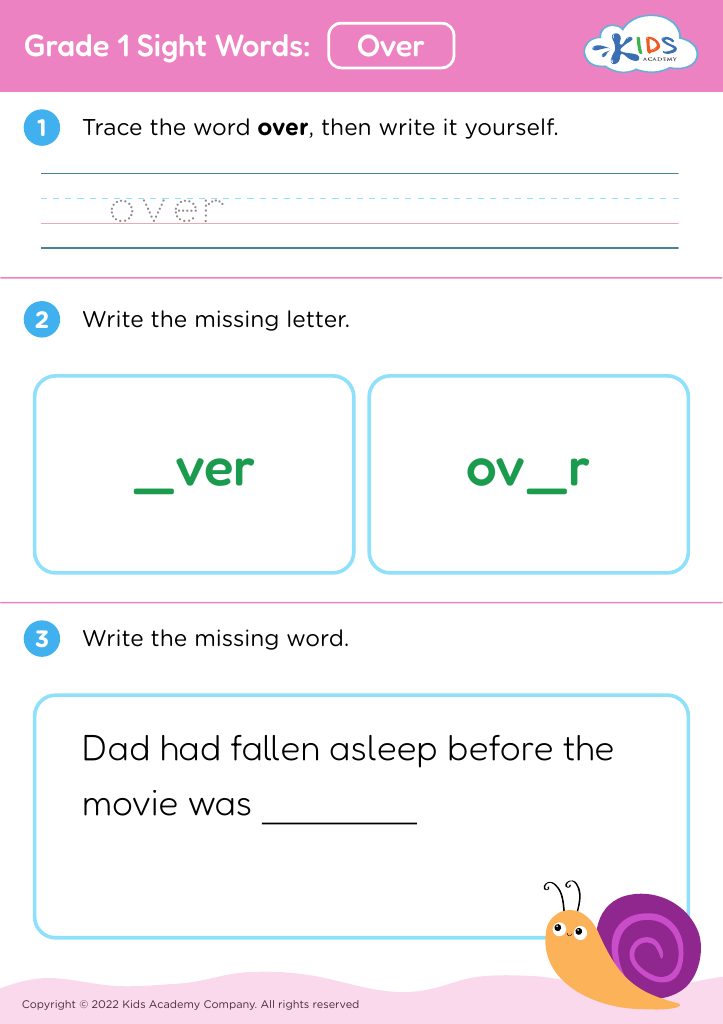








Word recognition is a crucial skill for children aged 7 to 9, as it lays the foundation for fluent reading and comprehension. At this age, children transition from learning to read to reading to learn. Mastery of word recognition enables them to decode words quickly and accurately, which is essential for understanding texts across subjects. When students readily recognize words, they can focus on meaning rather than struggling with pronunciation, leading to a more engaging reading experience.
Parents and teachers should care about word recognition because it directly impacts a child’s academic success and self-esteem. Struggles with this skill can lead to frustration and a negative attitude toward reading, which can affect overall literacy development. Moreover, frequent practice and recognition of sight words support vocabulary expansion, enhancing communication skills.
Additionally, this age group often encounters more complex texts that require efficient word recognition to navigate. Thus, fostering this ability ensures that children not only become competent readers but also develop a love for reading, which further fuels their learning journey. Encouraging activities that improve word recognition, such as games and reading together, can significantly benefit children's confidence and academic performance, making them prepared for future educational challenges.








