Comparing shapes 2D Shapes Worksheets for Ages 7-9
3 filtered results
-
From - To
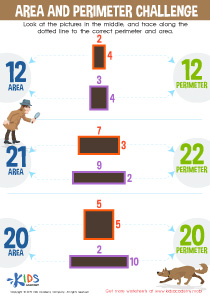
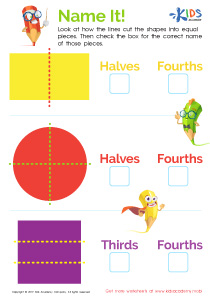
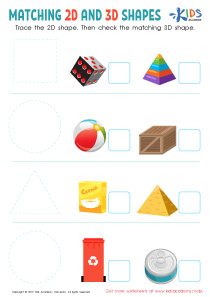
Empower your child's learning with our "Comparing Shapes 2D Shapes Worksheets" tailored for ages 7-9. These engaging and interactive worksheets introduce young learners to the fascinating world of two-dimensional shapes. Through fun activities, children will develop essential comparison skills, identifying similarities and differences between a variety of shapes. Our resources foster critical thinking and enhance visual awareness, making shape recognition a joyful process. Ideal for classroom settings or home practice, the worksheets cater to different learning styles, ensuring a holistic understanding of geometry concepts. Spark your child’s curiosity about shapes today and watch their confidence soar in math!
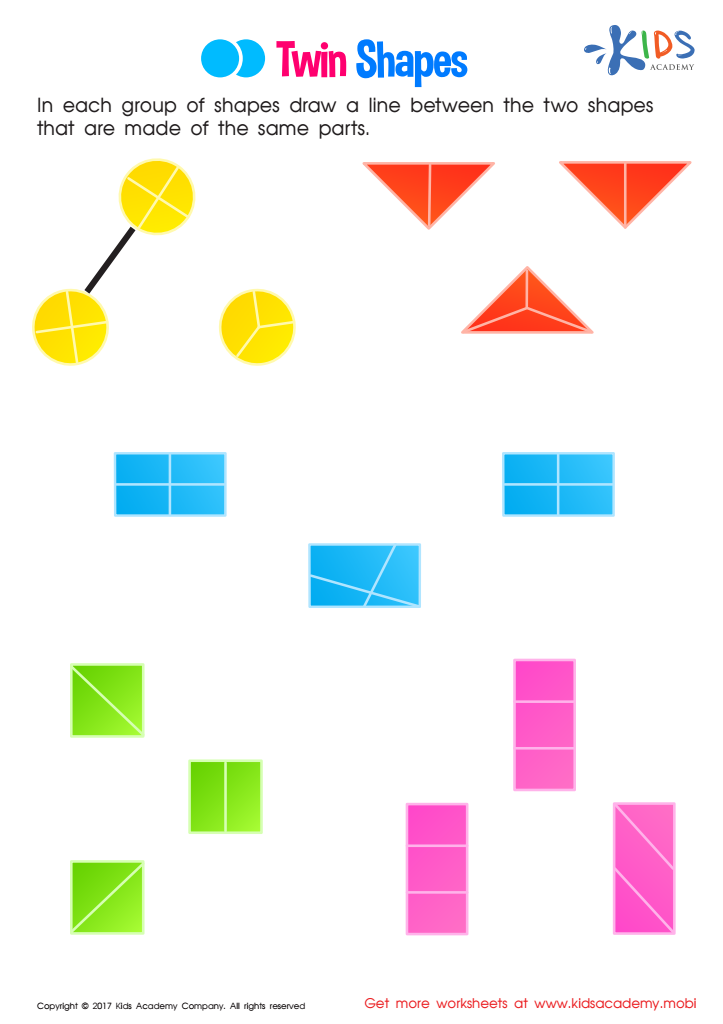
Twin Shapes Worksheet
 Assign to My Students


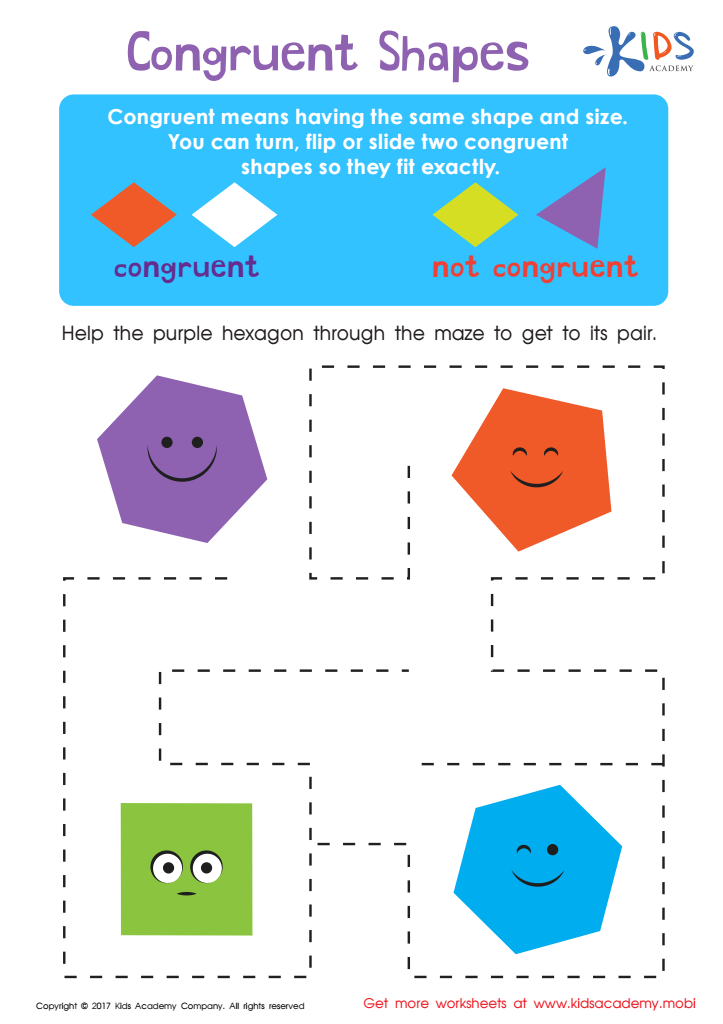
Congruent Shapes Worksheet
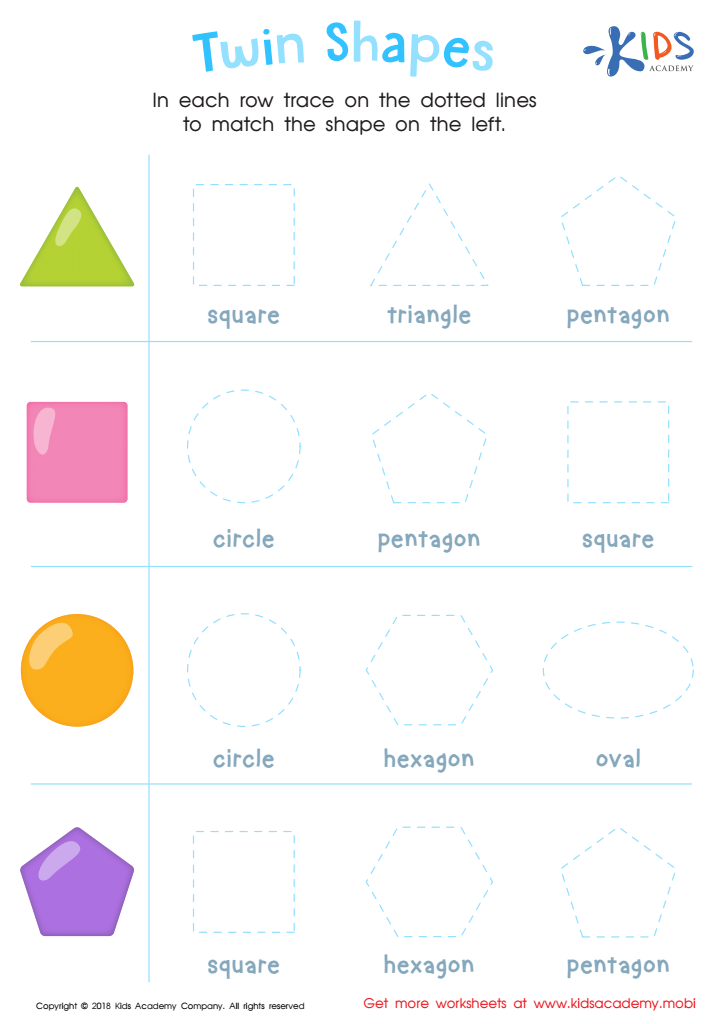
Twin Shapes Dot-to-Dot Worksheet








Comparing 2D shapes is a vital skill for children aged 7-9, as it lays the foundation for mathematical reasoning and spatial awareness. At this age, children are developing their understanding of geometric concepts, and learning to compare shapes helps them identify and understand attributes such as size, angles, and symmetry. This comparison enables them to categorize shapes, which enhances organizational skills and logical thinking.
For parents and teachers, fostering this skill in children promotes critical thinking. Engaging in activities that involve comparing shapes can lead to meaningful discussions about patterns and relationships, bolstering communication skills. It also lays groundwork for more advanced topics in geometry as children progress in their education.
Moreover, understanding shapes significantly impacts children’s problem-solving skills. Whether it’s in math, science, or art, the ability to analyze and differentiate shapes can aid in developing innovative solutions and creative expression. Lastly, hands-on activities related to comparing 2D shapes can also promote collaborative learning, connecting students and enriching their classroom experience. Therefore, investing time into shape comparison is not just about recognizing geometric figures; it’s about enriching children’s cognitive skills and preparing them for future learning challenges.