Spatial awareness 2D Shapes Worksheets for Ages 7-9
3 filtered results
-
From - To
Enhance your child’s spatial awareness with our engaging 2D shapes worksheets designed specifically for ages 7-9. These carefully crafted activities promote critical thinking and problem-solving skills through fun exercises focused on identifying, comparing, and manipulating shapes. Children will explore various 2D forms while developing their cognitive abilities and understanding of geometric concepts. Our worksheets encourage hands-on learning and creativity, making mastering spatial awareness enjoyable and effective. Whether at home or in the classroom, these resources will foster a strong foundation in geometry and prepare young learners for future mathematical challenges. Discover the joy of learning shapes today!
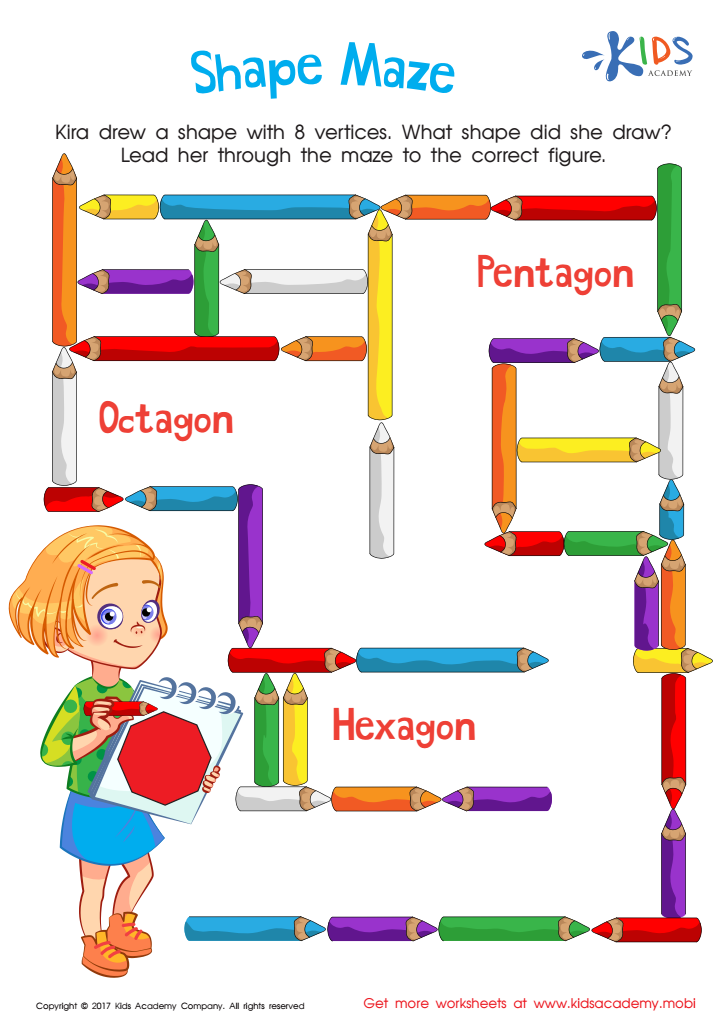
Shape Maze Worksheet
 Assign to My Students











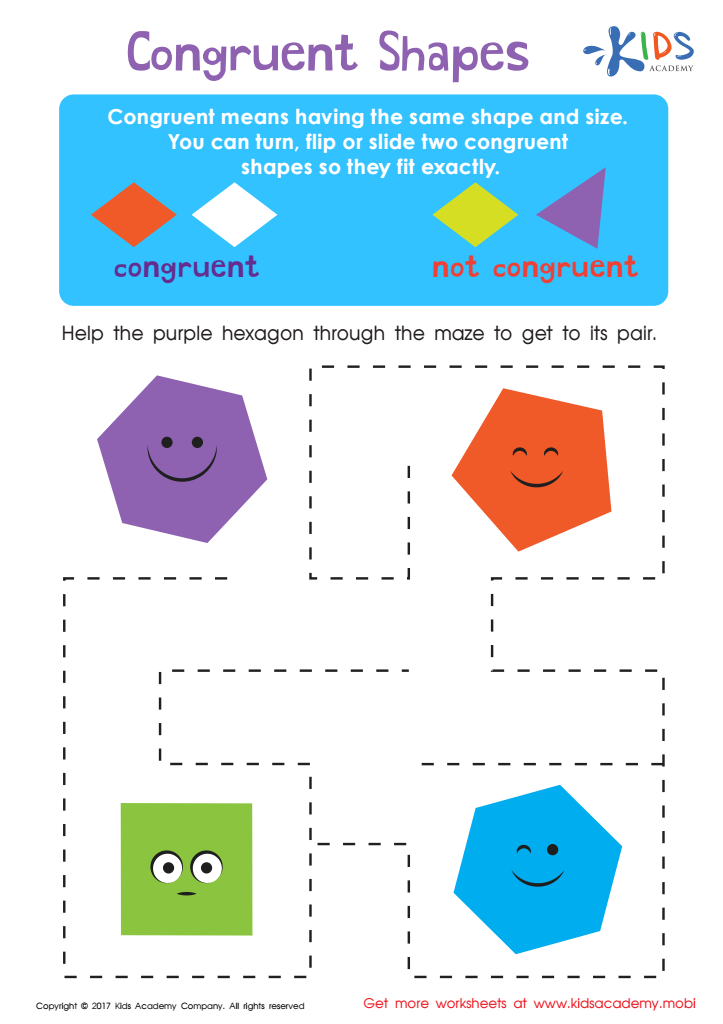
Congruent Shapes Worksheet
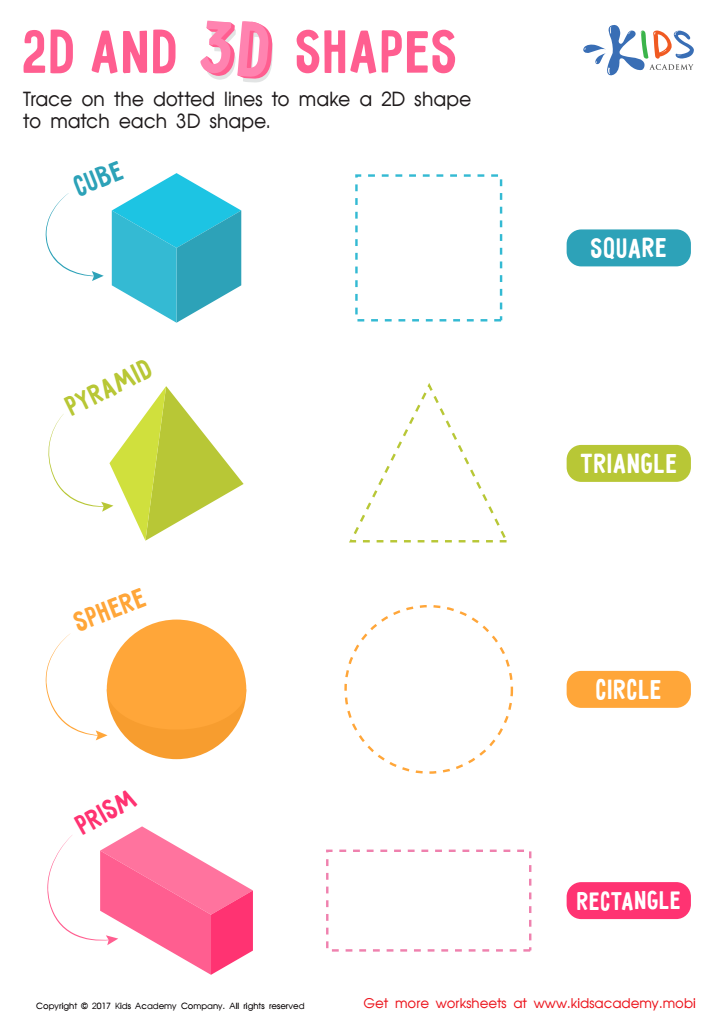
2D and 3D Shapes Worksheet








Spatial awareness and understanding of 2D shapes are crucial skills for children aged 7-9, as they lay the foundation for critical problem-solving and reasoning abilities. Developing spatial awareness allows children to recognize, understand, and manipulate shapes and spaces effectively, enhancing their comprehension of their environment. This skill set is key in various subjects, including math, science, and art.
For parents and teachers, fostering these skills can significantly boost a child's confidence and academic performance. Proficiency in 2D shapes, such as circles, squares, and triangles, helps children grasp more complex mathematical concepts, including geometry and measurement, as they progress academically. Additionally, spatial awareness aids in everyday activities, like reading maps, visualizing objects in different orientations, and engaging in crafts.
Moreover, spatial skills are linked to later success in STEM fields (science, technology, engineering, and mathematics), which are increasingly vital in today's job market. Engaging children in activities such as puzzles, building blocks, and drawing can be fun and educational, enriching their learning experience. By prioritizing spatial awareness and 2D shape recognition, parents and teachers contribute to their children’s overall cognitive development and future opportunities for success.








