Enhancing problem-solving abilities Adding up to 100 Worksheets for Ages 7-9
3 filtered results
-
From - To
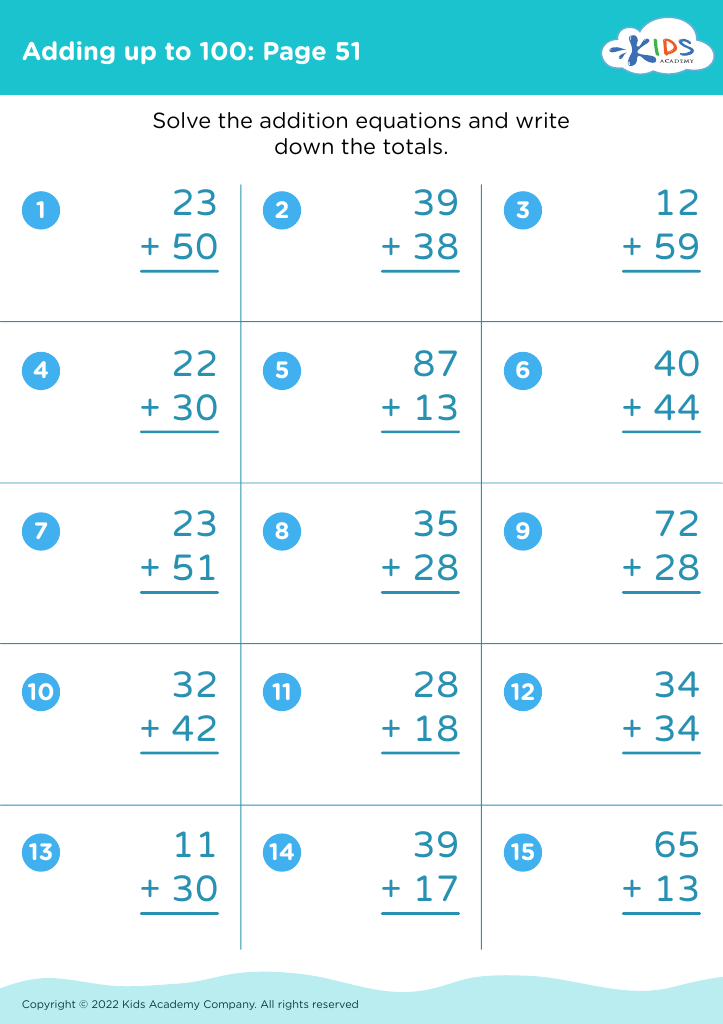
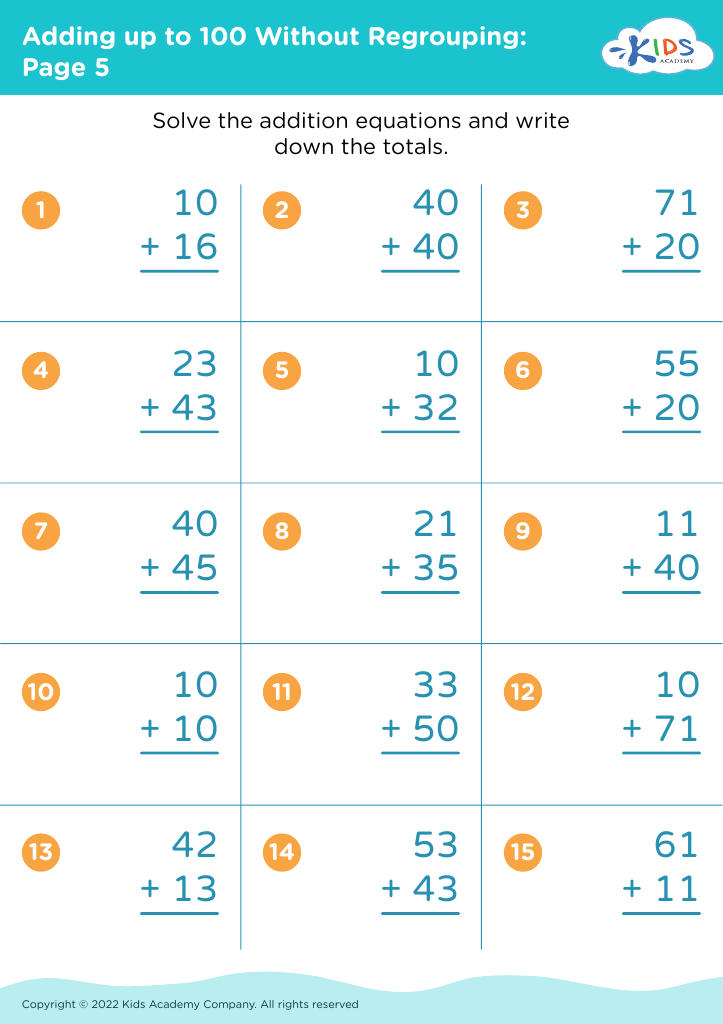
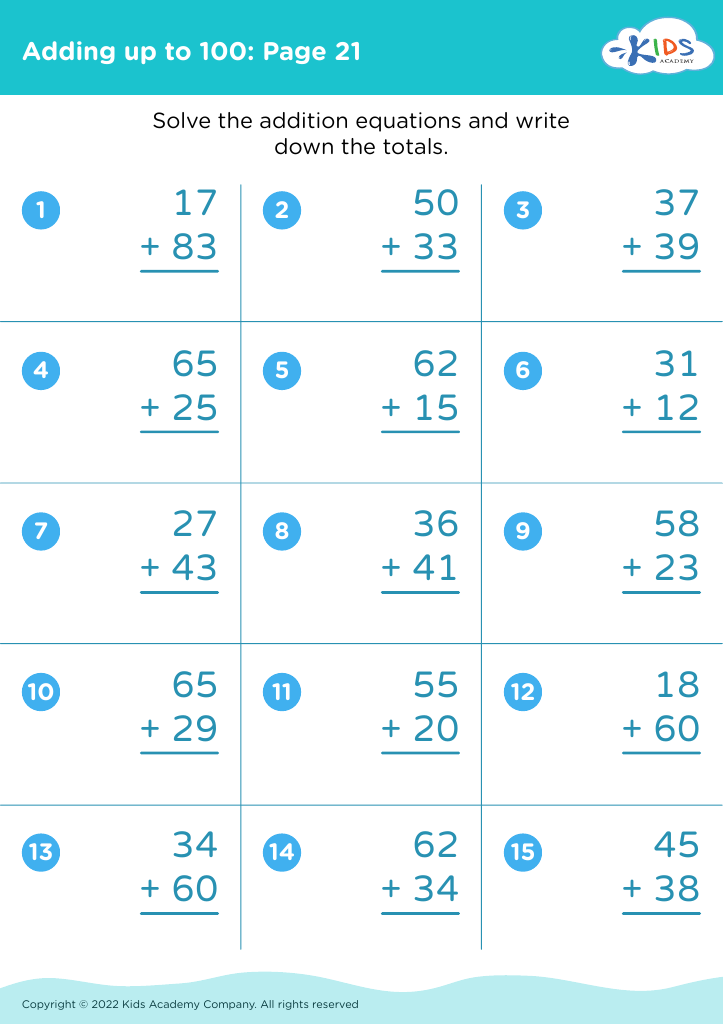
Welcome to our "Enhancing Problem-Solving Abilities: Adding Up to 100 Worksheets for Ages 7-9" page! Here, we provide a diverse collection of engaging and interactive worksheets designed to boost your child's math skills while fostering critical thinking. These worksheets focus on addition concepts, encouraging children to tackle problems involving sums that add up to 100. With a variety of fun, age-appropriate exercises, your child will build confidence in their problem-solving abilities. Perfect for both classroom environments and at-home learning, our resources aim to make math enjoyable and accessible. Explore our worksheets today and watch your child's skills flourish!





%20(1).jpg)

Enhancing problem-solving abilities, specifically in addition for children aged 7-9, is crucial for their cognitive and social development. During this formative stage, children are not only mastering basic mathematical skills but are also learning to think critically and approach challenges with confidence. When children practice adding up to 100, they actively engage in number sense, pattern recognition, and logical reasoning, laying the groundwork for more complex mathematics in the future.
Moreover, strong problem-solving skills improve children’s ability to approach everyday tasks and challenges, from handling school projects to managing relationships with peers. These capabilities foster resilience and perseverance, key attributes in both academic and personal growth.
Parents and teachers play a vital role in nurturing these skills. By incorporating engaging, age-appropriate activities that challenge children to think creatively, they can cultivate a love for learning and an understanding of how math applies in real life. Additionally, by celebrating small achievements, they build confidence, making children more willing to tackle difficult problems during their educational journey. This investment in enhancing problem-solving abilities not only supports mathematical proficiency but equips children with essential life skills they will carry into adulthood.








