Recognize patterns Adding up to 100 Worksheets for Ages 7-9
4 filtered results
-
From - To
Welcome to our Recognize Patterns Adding up to 100 Worksheets, specially designed for ages 7-9! These engaging worksheets help young learners identify and understand patterns in addition, reinforcing their math skills while introducing them to the concept of working up to 100. Children will enjoy solving a variety of problems that challenge their critical thinking and pattern recognition abilities. Our worksheets not only support numerical understanding but also foster confidence in math. Perfect for classroom activities or home practice, these resources are an invaluable tool in promoting lifelong math skills. Start enhancing your child’s learning journey today!
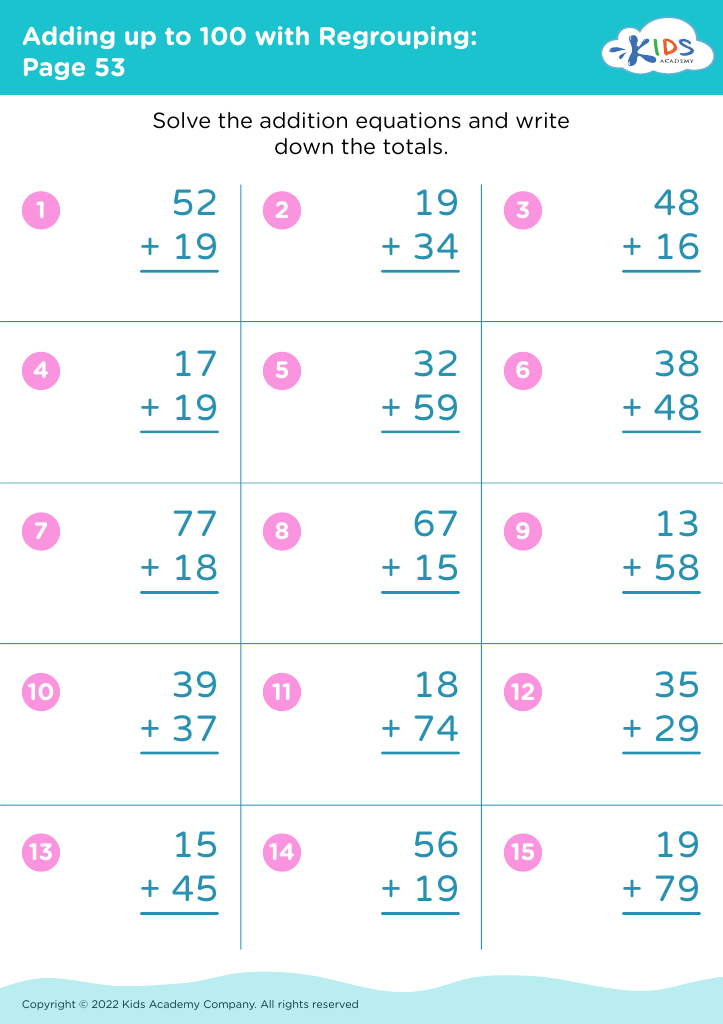
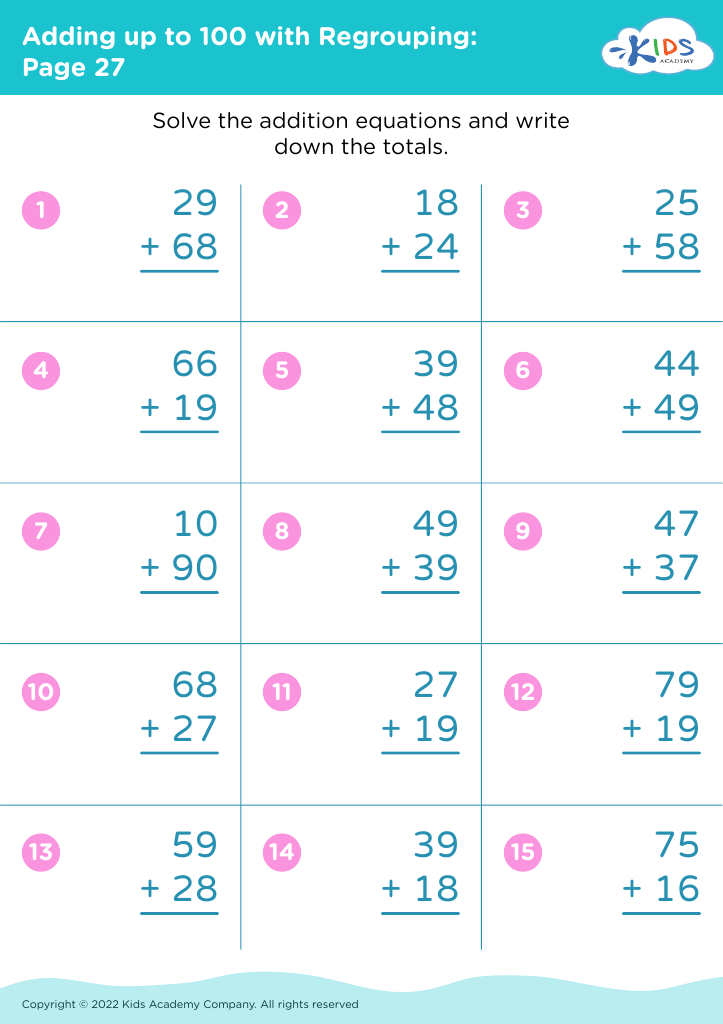
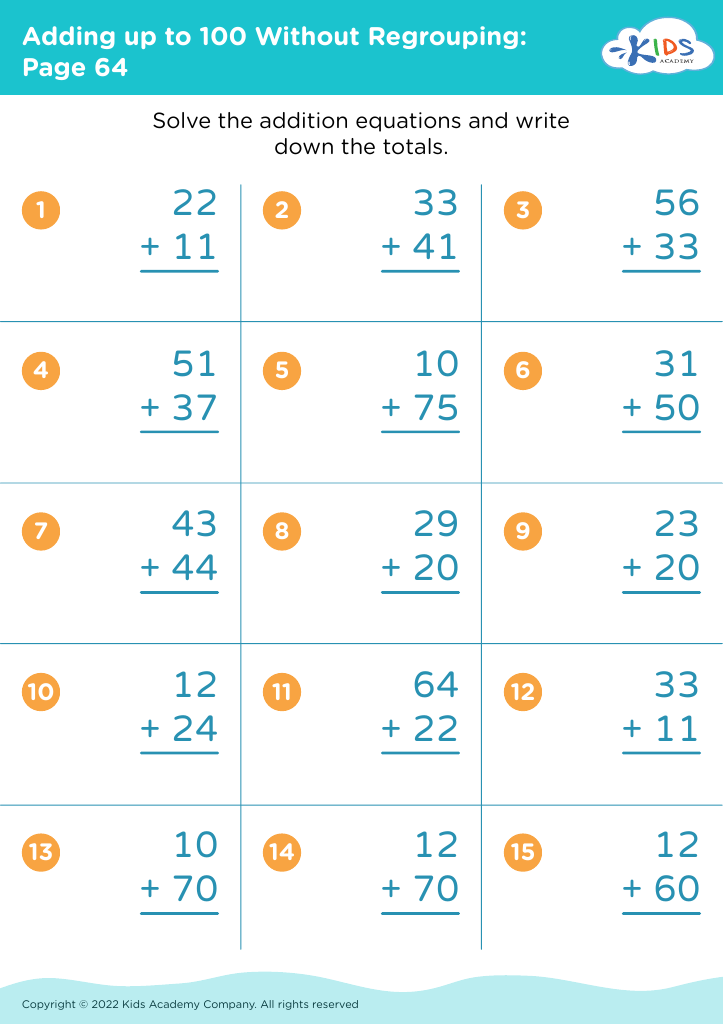
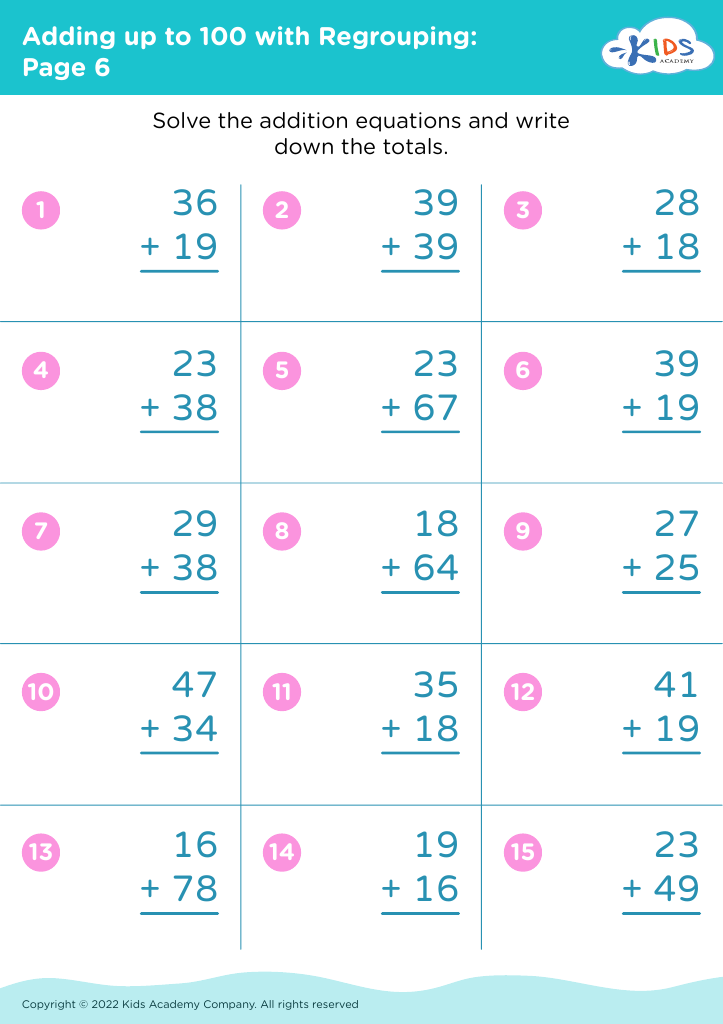



%20(1).jpg)



Recognizing patterns when adding up to 100 is a crucial mathematical skill for children aged 7-9, as it lays the groundwork for more complex problem-solving and analytical thinking. When parents and teachers emphasize this skill, they foster a child’s ability to identify relationships between numbers, enhancing their mathematical intuition. Recognizing patterns helps children learn efficient strategies for addition, which is essential for mental math and everyday calculations.
As children engage with patterns, they develop critical thinking skills that can be applied across subjects, not just mathematics. This skill encourages persistence and resilience, as recognizing and applying patterns often involves trial and error, teaching students the value of perseverance in problem-solving. Furthermore, confidence grows as students become adept at these strategies, promoting a positive attitude towards math.
By focusing on this area, parents and teachers can also instill a sense of wonder about numbers, making mathematics more engaging and relatable. Ultimately, early mastery of recognizing patterns while adding up to 100 not only benefits children academically but also prepares them for future learning in math, enhancing their overall educational experience. Encouraging this understanding now nurtures a lifelong appreciation and proficiency in mathematics.








