Simplifying Fractions Adding up to 100 Worksheets for Ages 7-9
3 filtered results
-
From - To
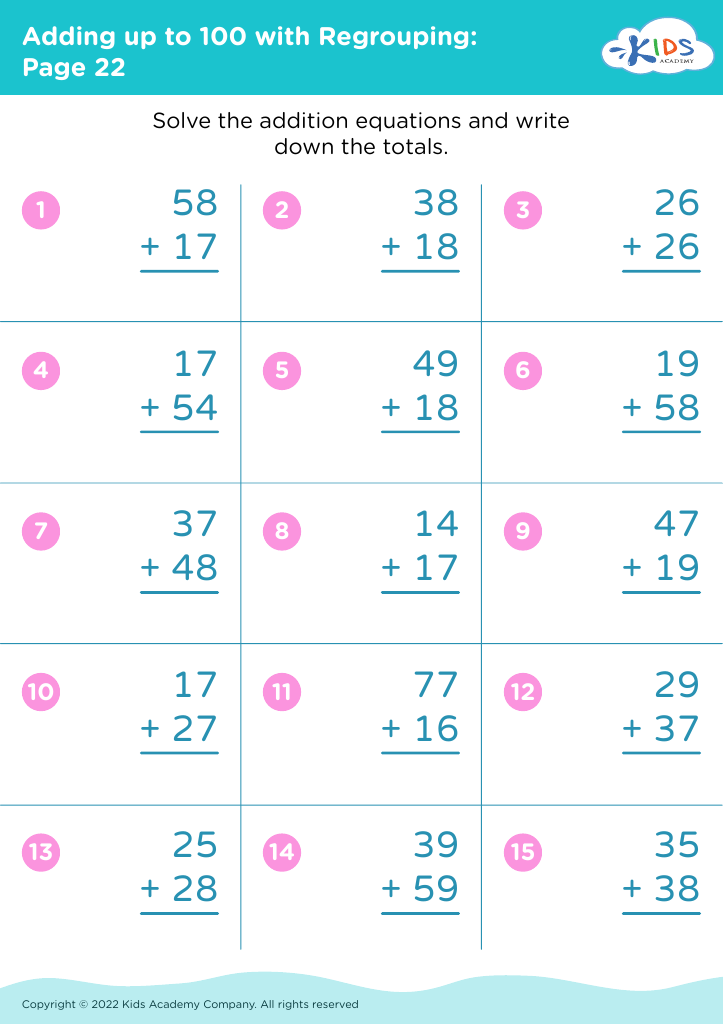
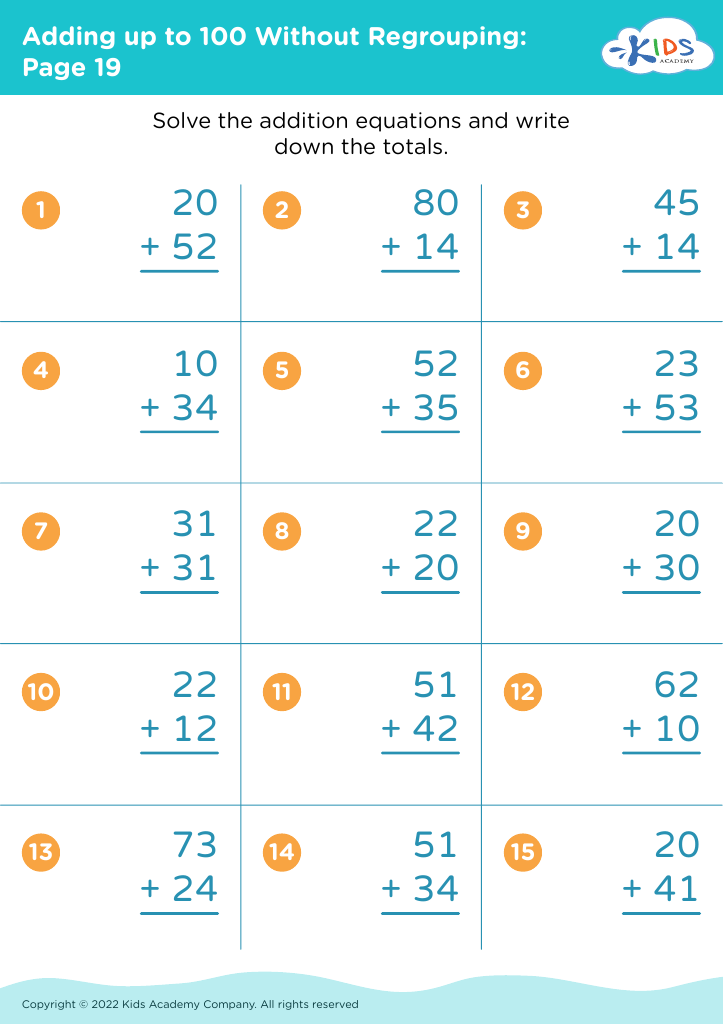
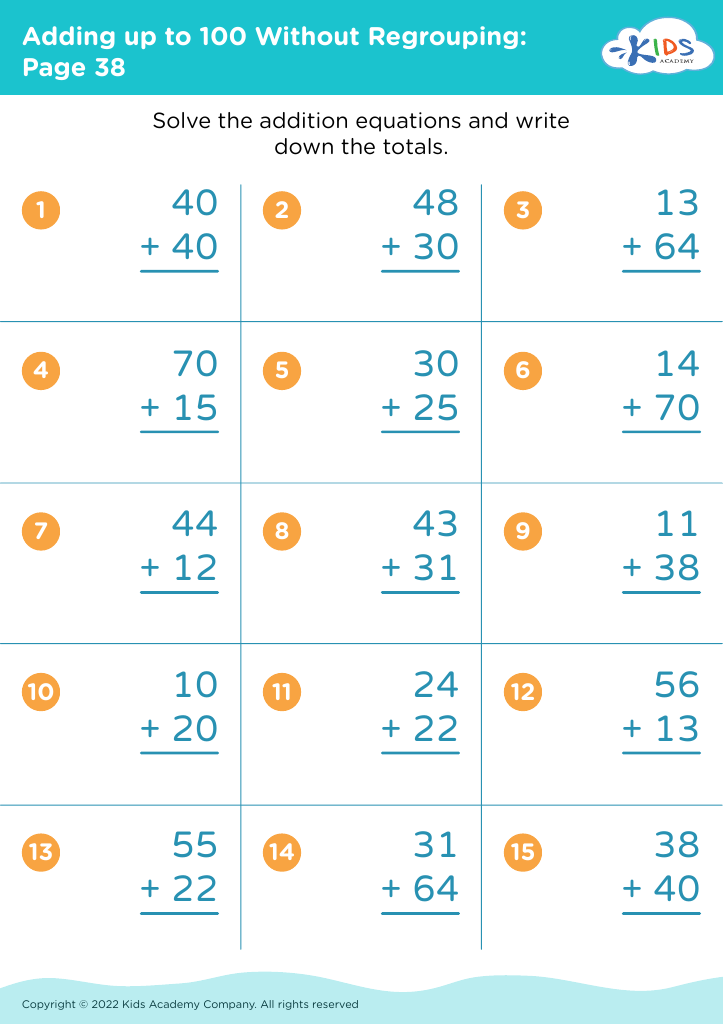
Explore our "Simplifying Fractions Adding Up to 100 Worksheets" designed for students aged 7-9! These engaging worksheets help young learners grasp the concept of simplifying fractions while enhancing their addition skills. With a focus on making math enjoyable, these resources provide a range of activities that challenge students to simplify fractions that total up to 100. Perfect for classroom use or at-home practice, these worksheets promote critical thinking and bolster math confidence. Empower your child’s learning experience with easy-to-follow instructions and fun exercises that make mastering this essential math skill exciting. Start simplifying fractions today for a brighter mathematical future!



%20(1).jpg)



Simplifying fractions that add up to 100 is an essential skill for children ages 7-9 as it lays a foundation for their mathematical understanding and critical thinking. First and foremost, mastering this concept enhances numerical literacy, teaching kids to manipulate numbers readily and improving their confidence in math. This skill also aids in understanding ratios and proportions, fundamental concepts seen in higher grades and everyday life.
Parents and teachers should prioritize this topic as it promotes problem-solving abilities. When students learn to simplify fractions, they develop an analytical mindset; they begin to see the connections between different mathematical concepts. Furthermore, this skill fosters patience and persistence; simplifying requires careful thinking, allowing children to practice focus and determination.
Additionally, the ability to simplify fractions can play a crucial role in real-world applications, such as cooking, budgeting, or measuring, making math relevant to students' lives. As math becomes increasingly integrated into various subjects and daily experiences, nurturing a strong foundational understanding in younger learners is pivotal. By encouraging proficiency in simplifying fractions, parents and teachers help prepare children for future academic challenges and instill a lifelong appreciation for mathematics.








