Filters

51 filtered results

Clear all filters
Favorites
With answer key
Interactive

51 filtered results

Difficulty Level

Grade


Check out this FREE Trial Lesson on Adding up to 100 for age 7-9!

Sorting Objects into 3 Categories

Favorites
With answer key
Interactive
  • 7-9
  • Understanding fractions
  • Adding up to 100
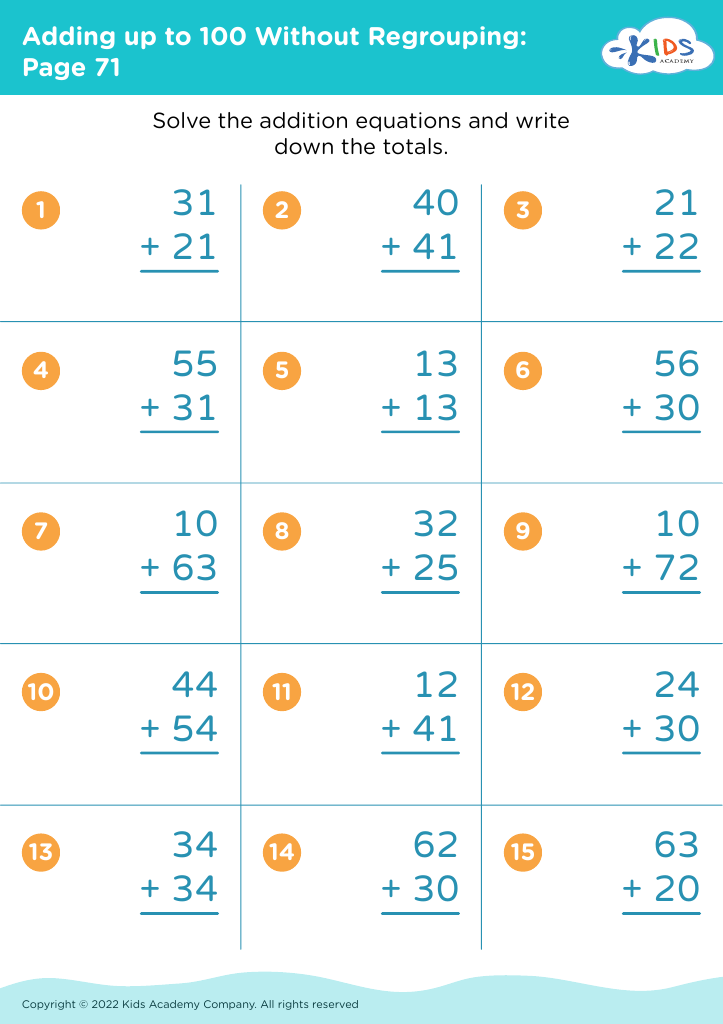
Adding up to 100 Without Regrouping: Page 71
Worksheet
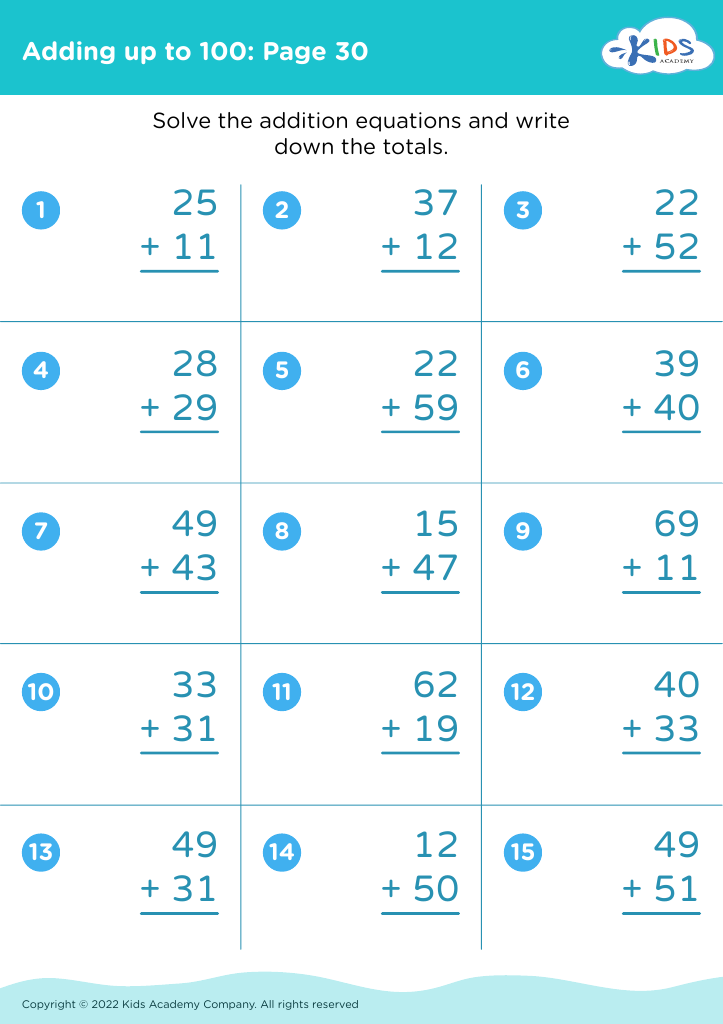
Adding up to 100: Page 30

Adding up to 100: Page 30

Adding up to 100: Page 30
Worksheet
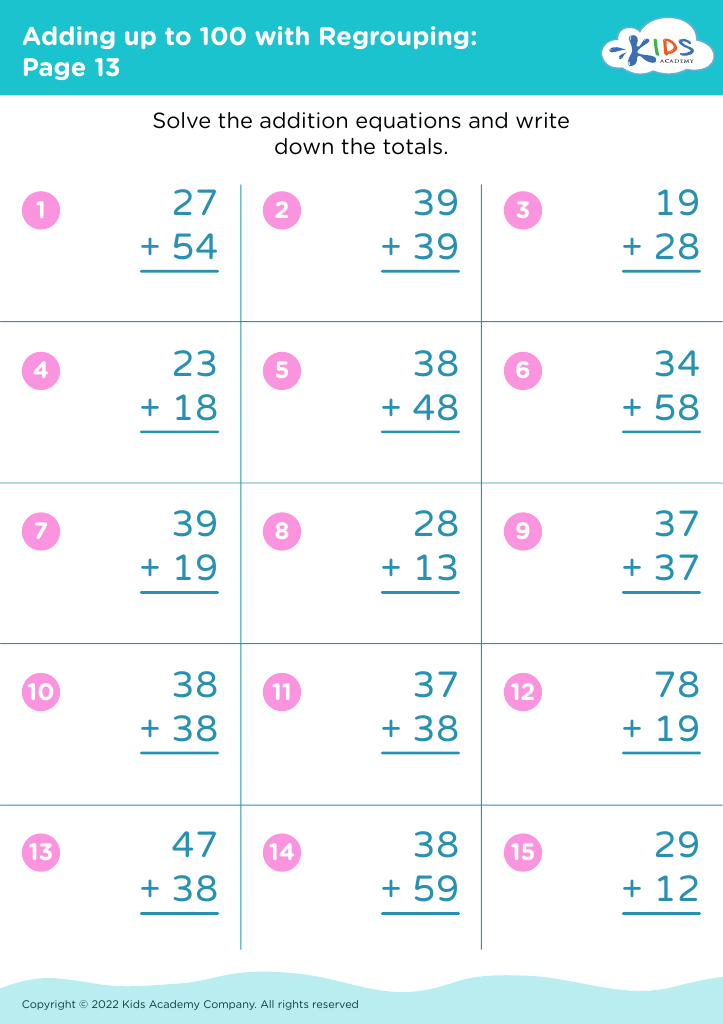
Adding up to 100 with Regrouping: Page 13
Worksheet
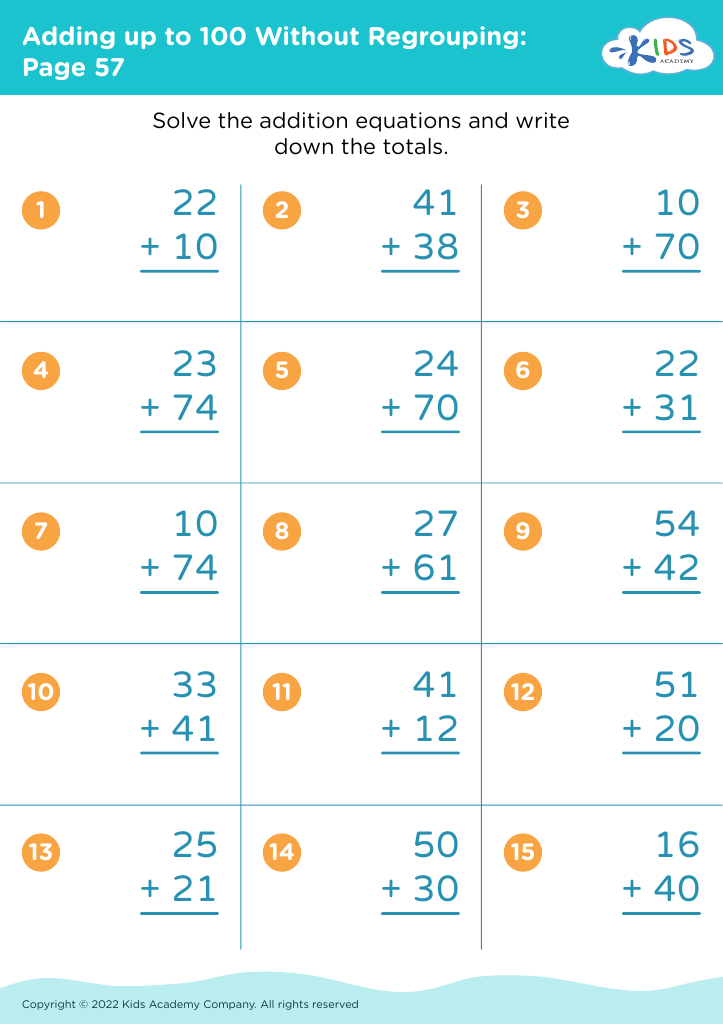
Adding up to 100 Without Regrouping: Page 57
Worksheet
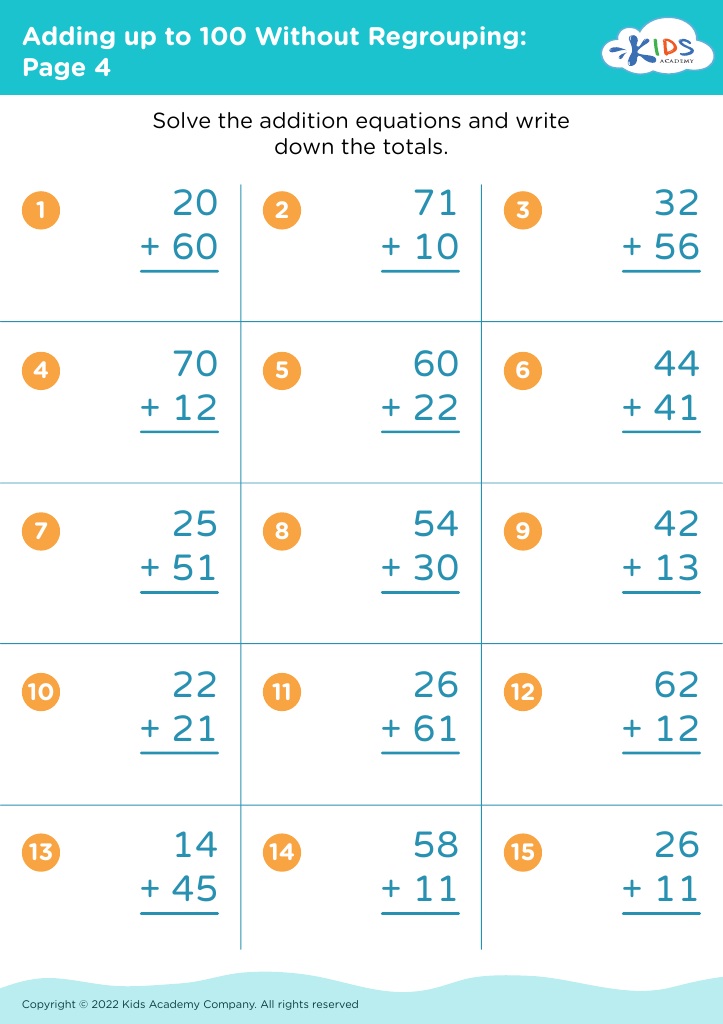
Adding up to 100 Without Regrouping: Page 4
Worksheet
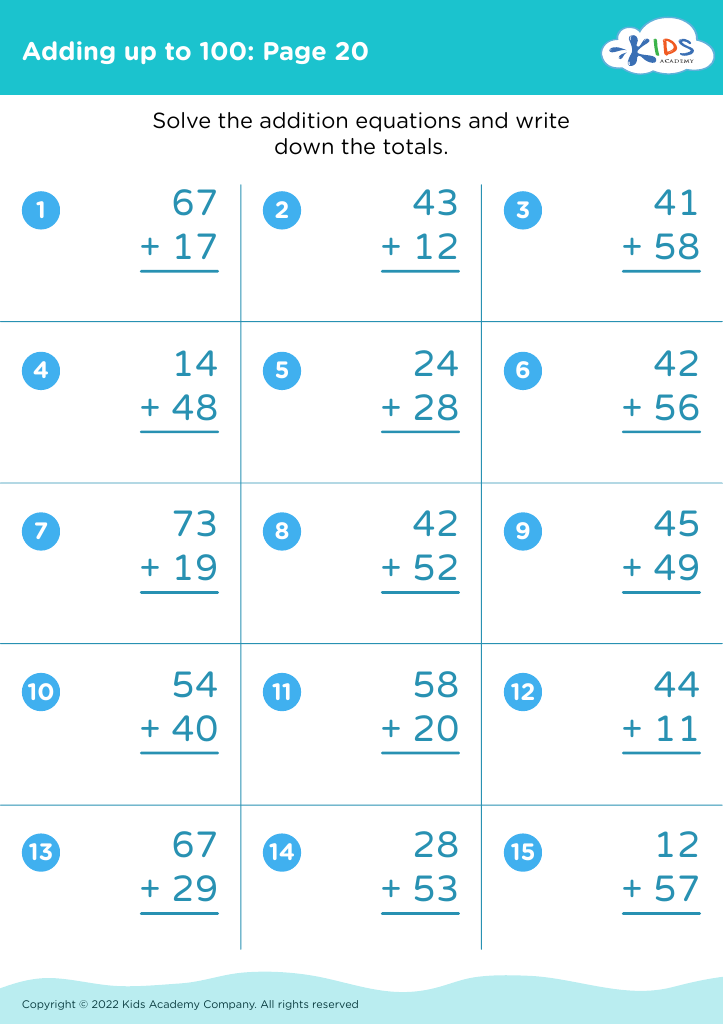
Adding up to 100: Page 20

Adding up to 100: Page 20

Adding up to 100: Page 20
Worksheet
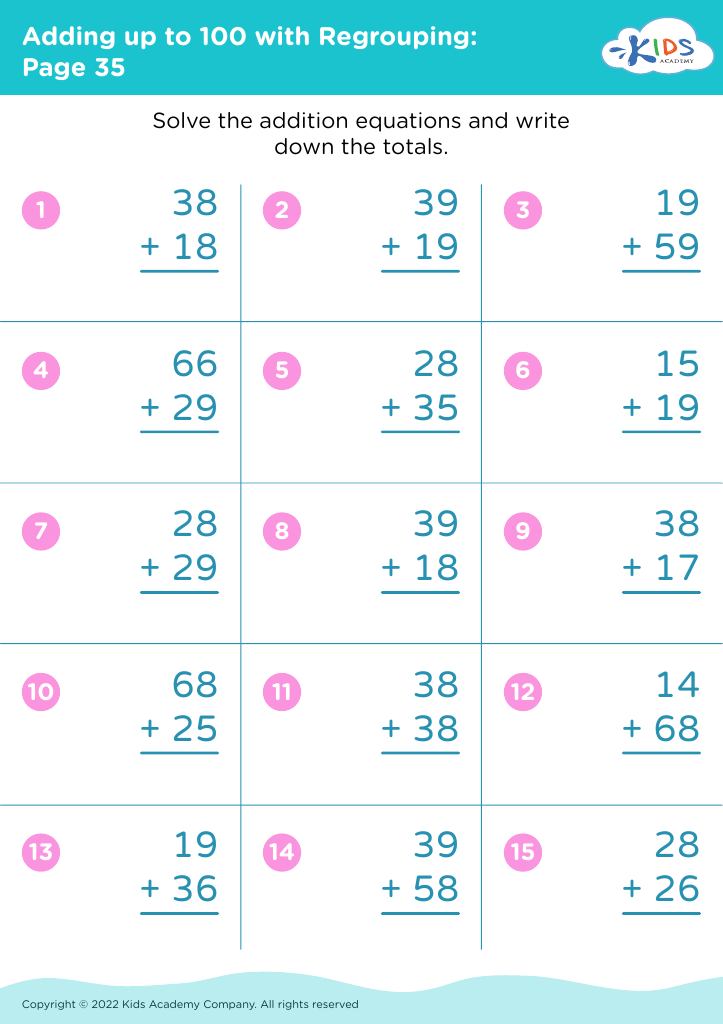
Adding up to 100 with Regrouping: Page 35
Worksheet
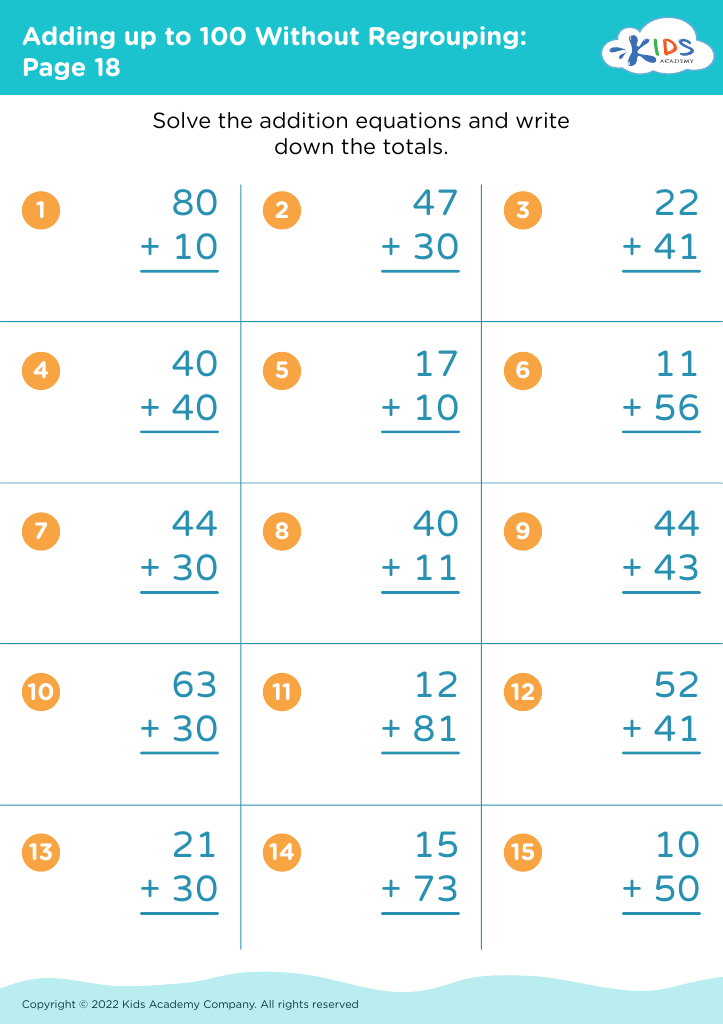
Adding up to 100 Without Regrouping: Page 18
Worksheet
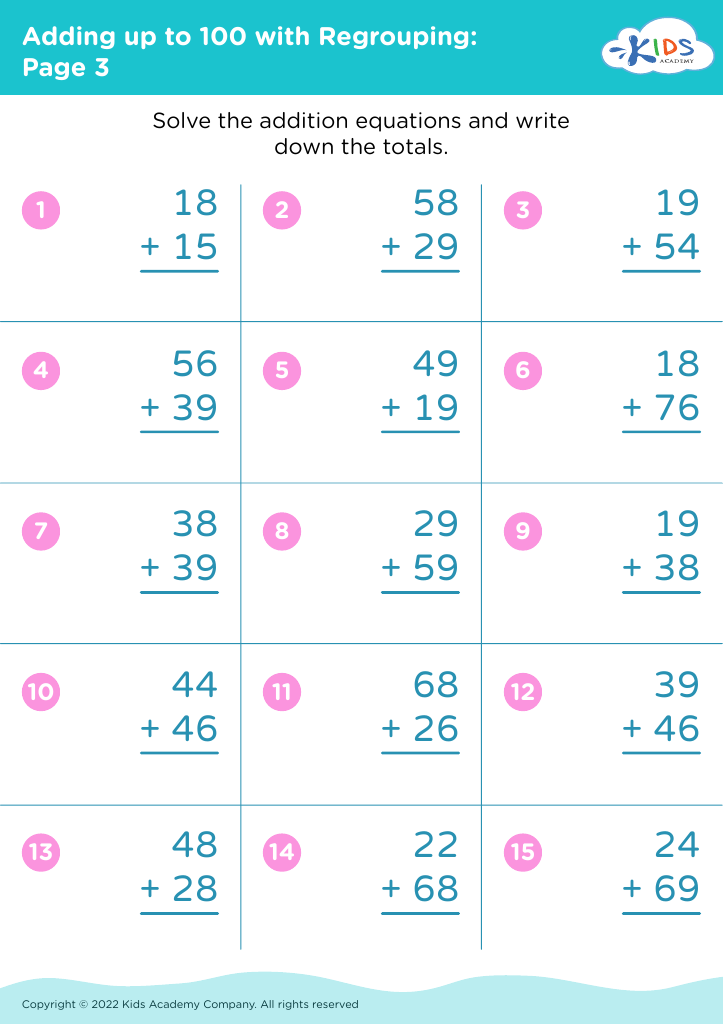
Adding up to 100 with Regrouping: Page 3
Worksheet
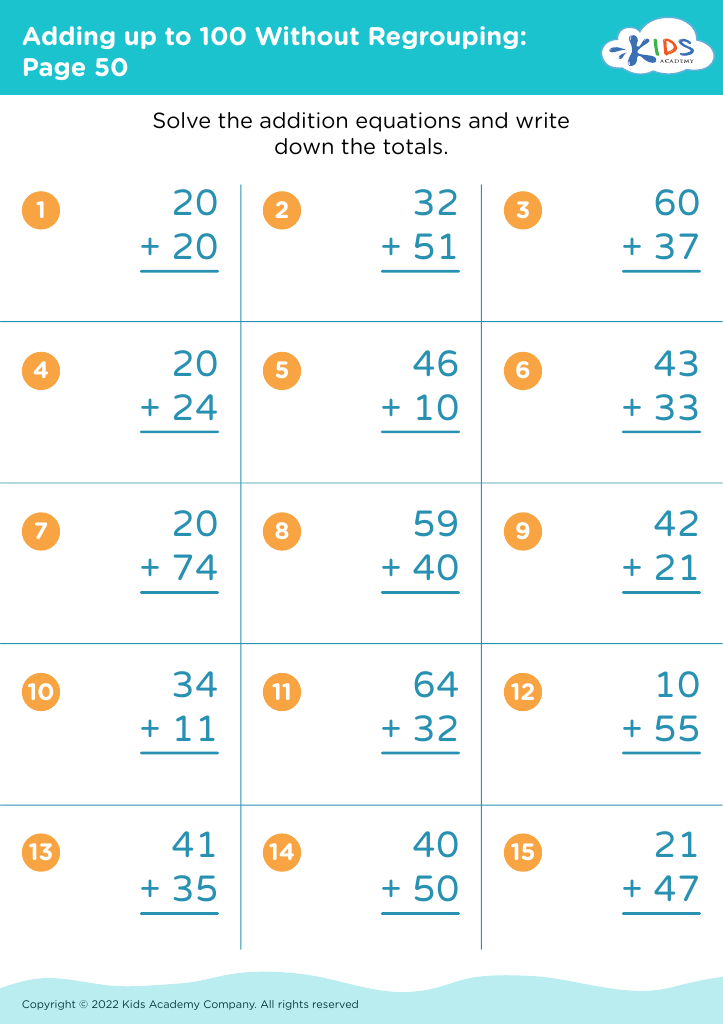
Adding up to 100 Without Regrouping: Page 50
Worksheet
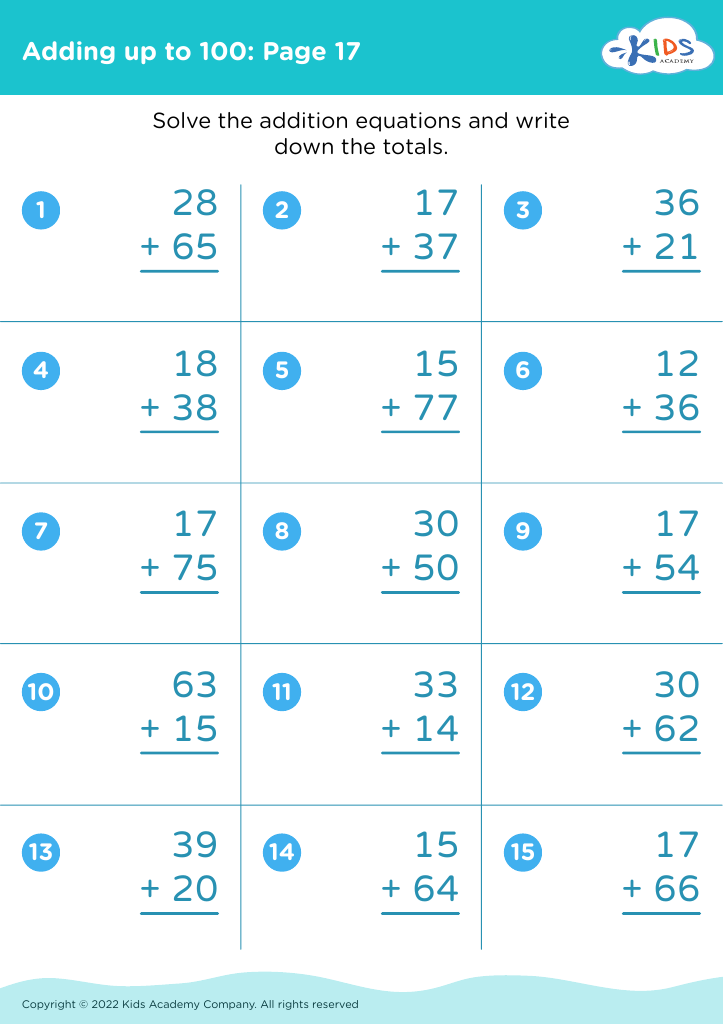
Adding up to 100: Page 17

Adding up to 100: Page 17

Adding up to 100: Page 17
Worksheet
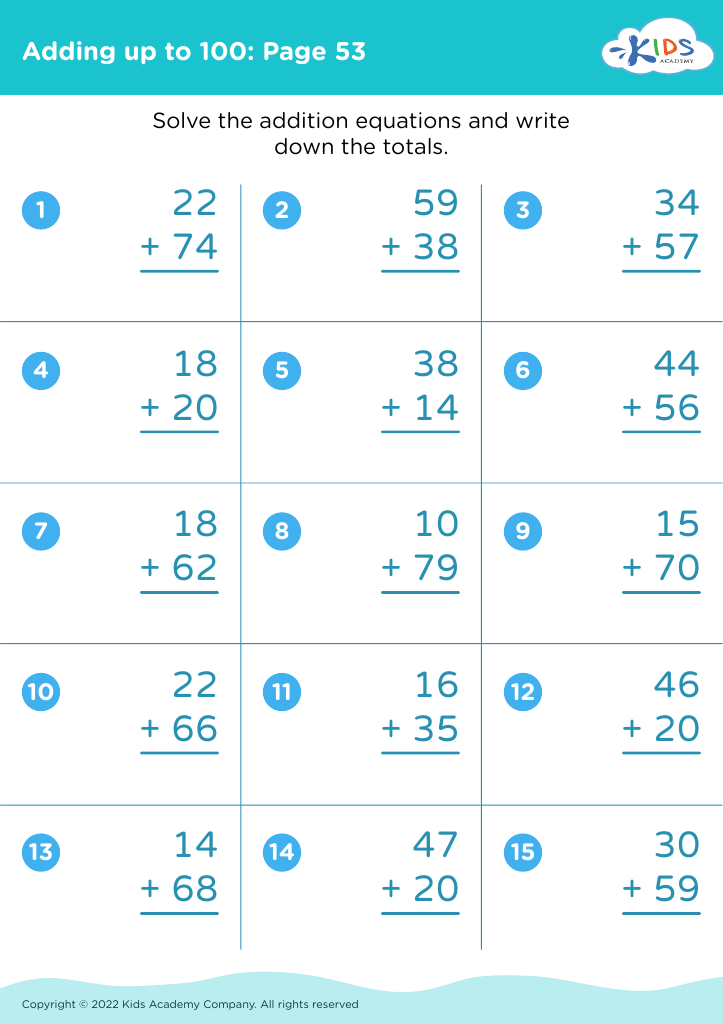
Adding up to 100: Page 53

Adding up to 100: Page 53

Adding up to 100: Page 53
Worksheet
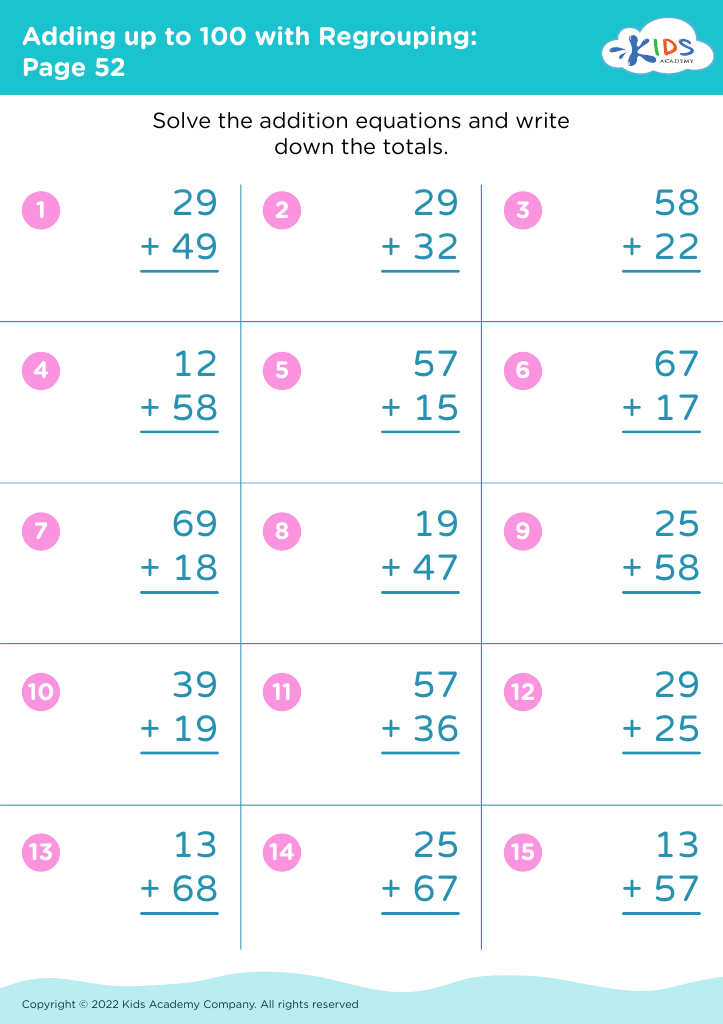
Adding up to 100 with Regrouping: Page 52
Worksheet
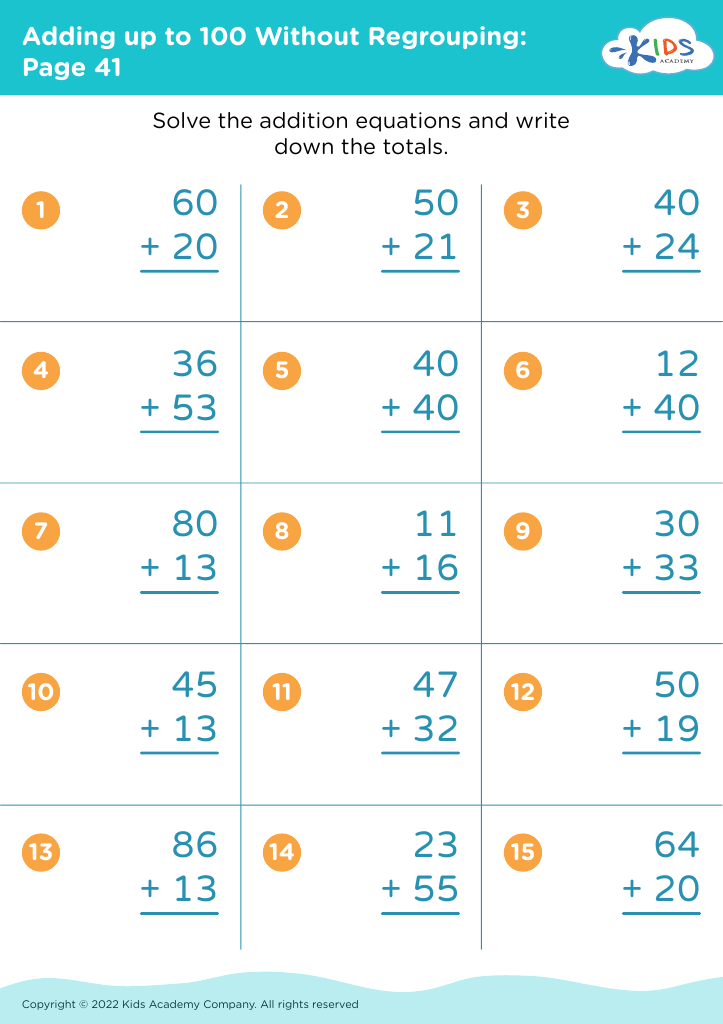
Adding up to 100 Without Regrouping: Page 41
Worksheet
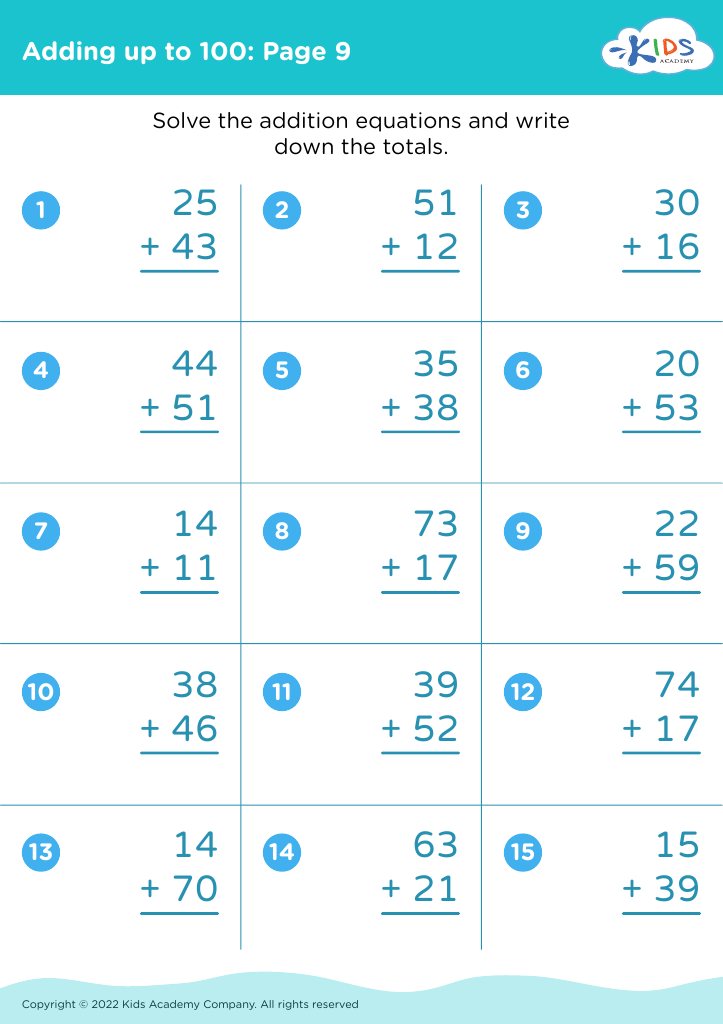
Adding up to 100: Page 9

Adding up to 100: Page 9

Adding up to 100: Page 9
Worksheet
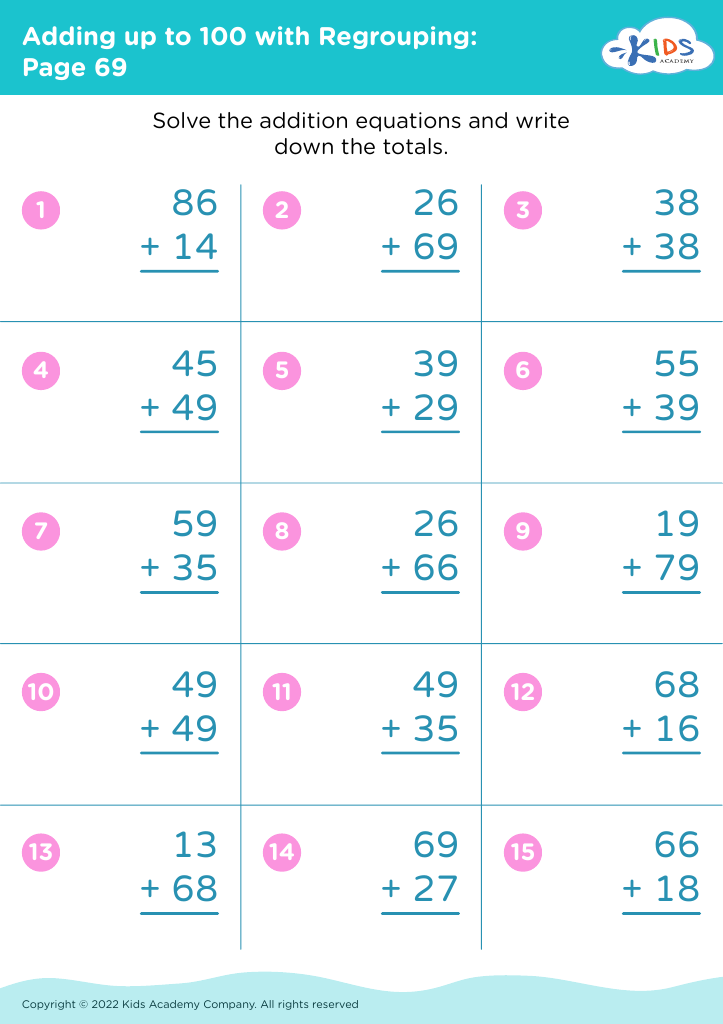
Adding up to 100 with Regrouping: Page 69
Worksheet
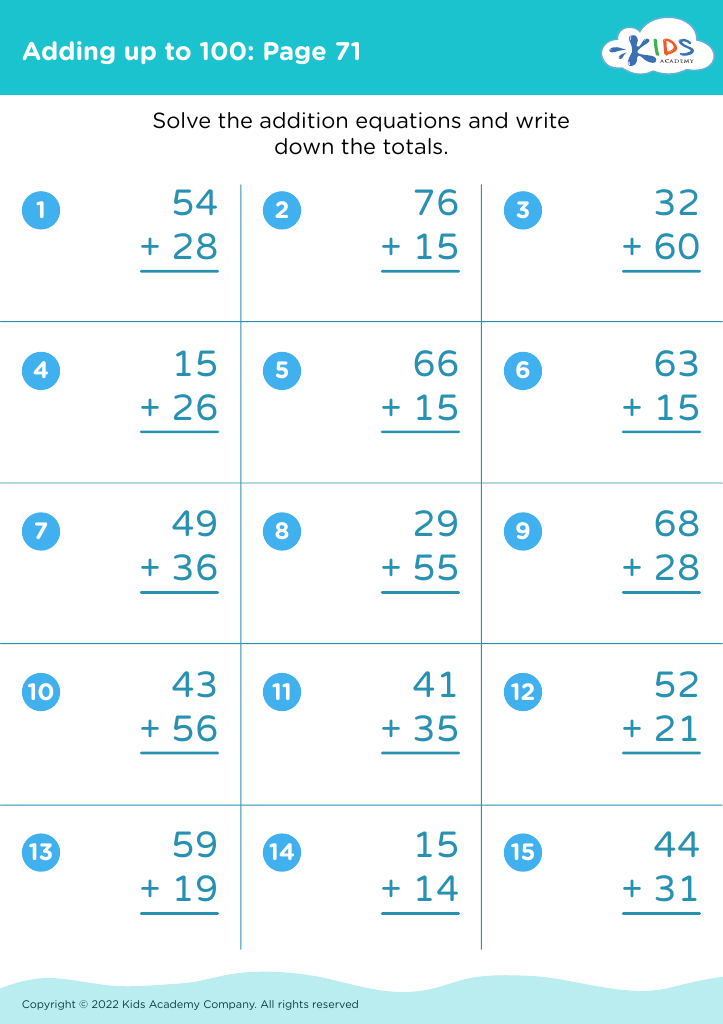
Adding up to 100: Page 71

Adding up to 100: Page 71

Adding up to 100: Page 71
Worksheet
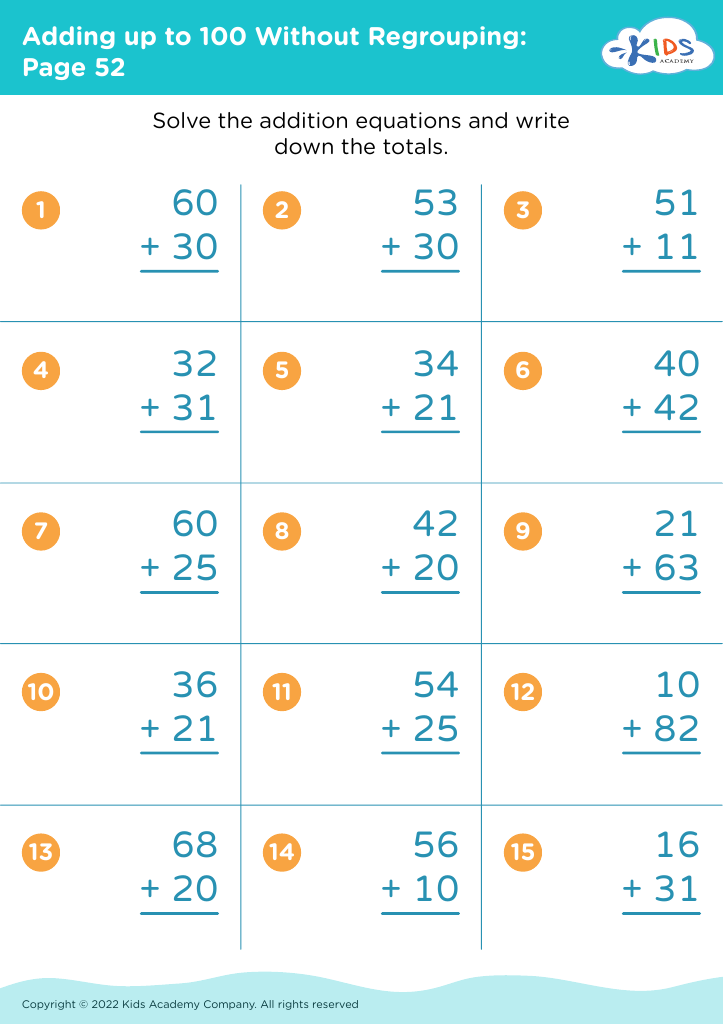
Adding up to 100 Without Regrouping: Page 52
Worksheet
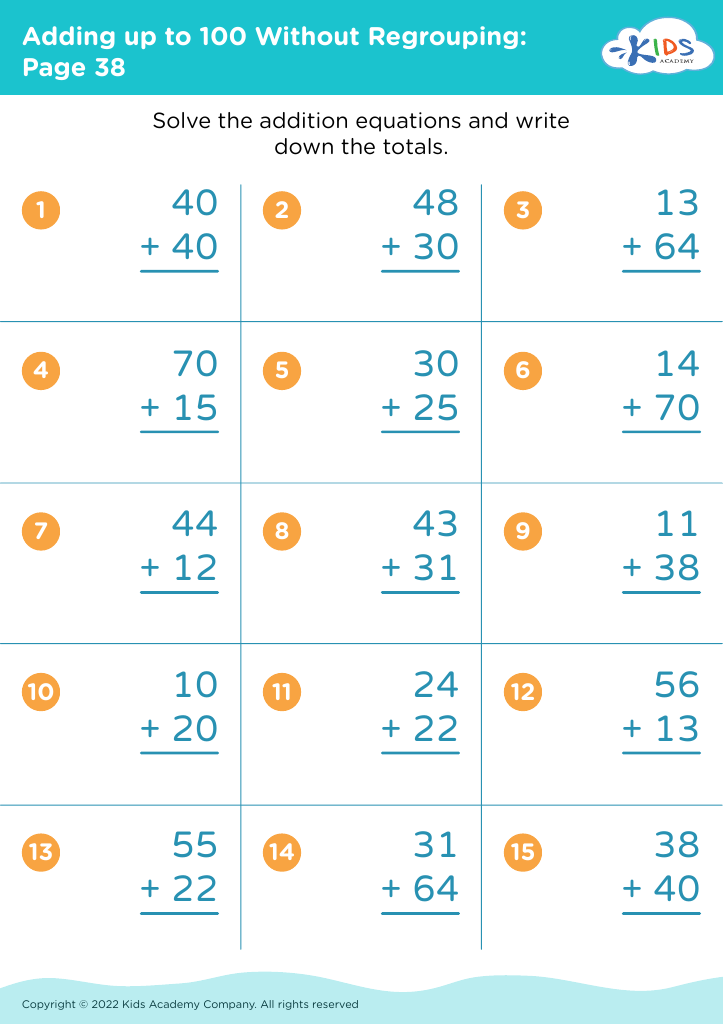
Adding up to 100 Without Regrouping: Page 38
Worksheet
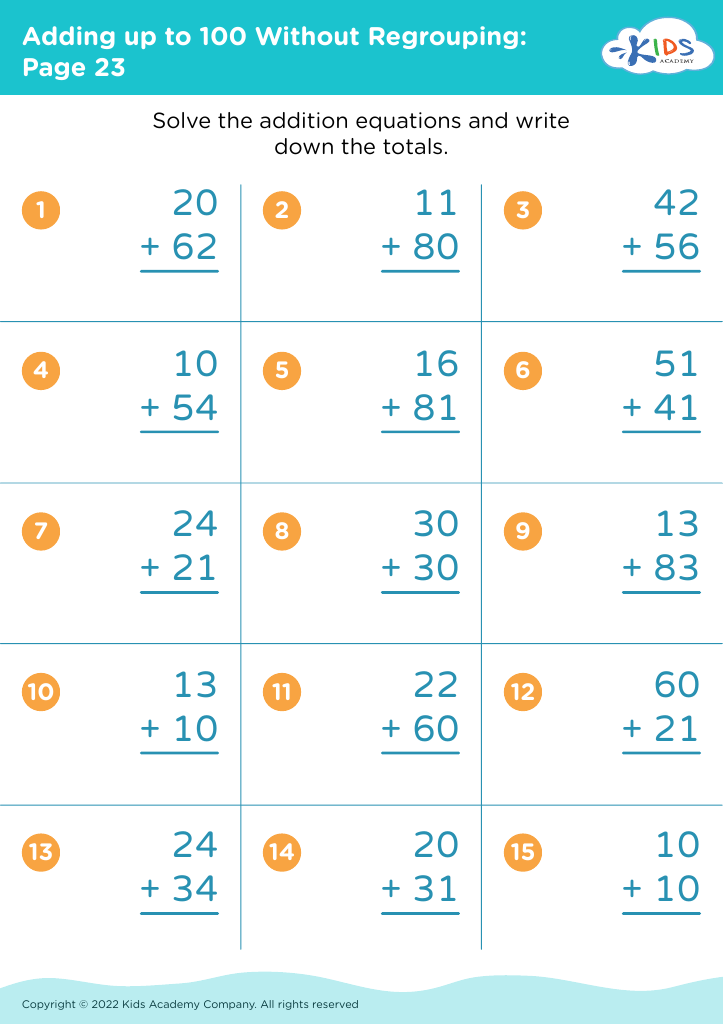
Adding up to 100 Without Regrouping: Page 23
Worksheet
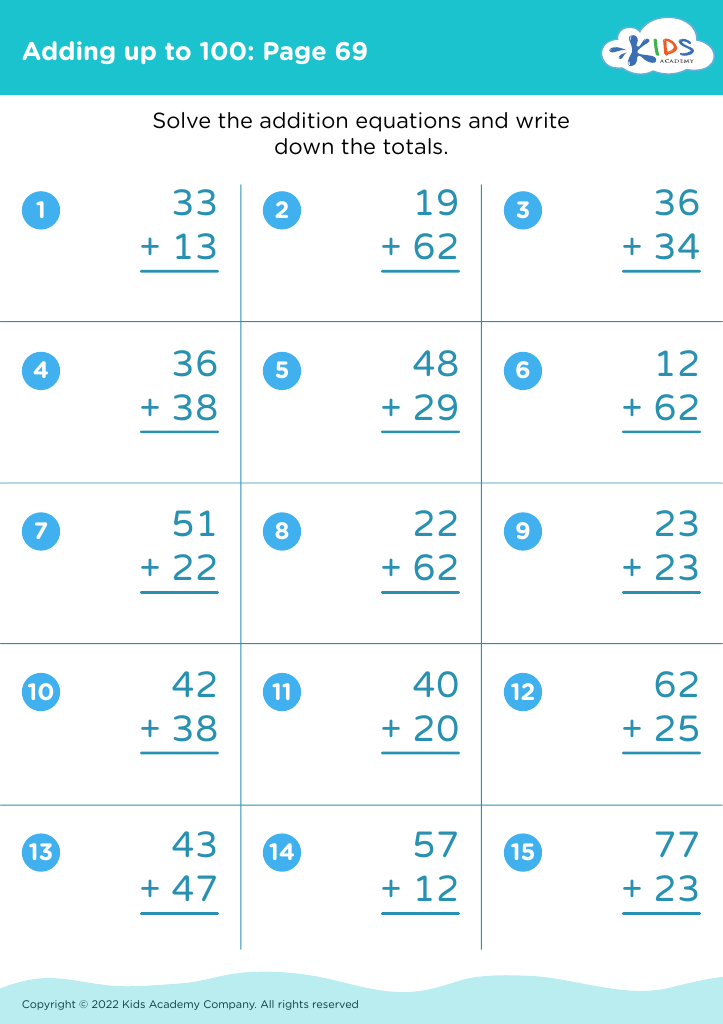
Adding up to 100: Page 69

Adding up to 100: Page 69

Adding up to 100: Page 69
Worksheet
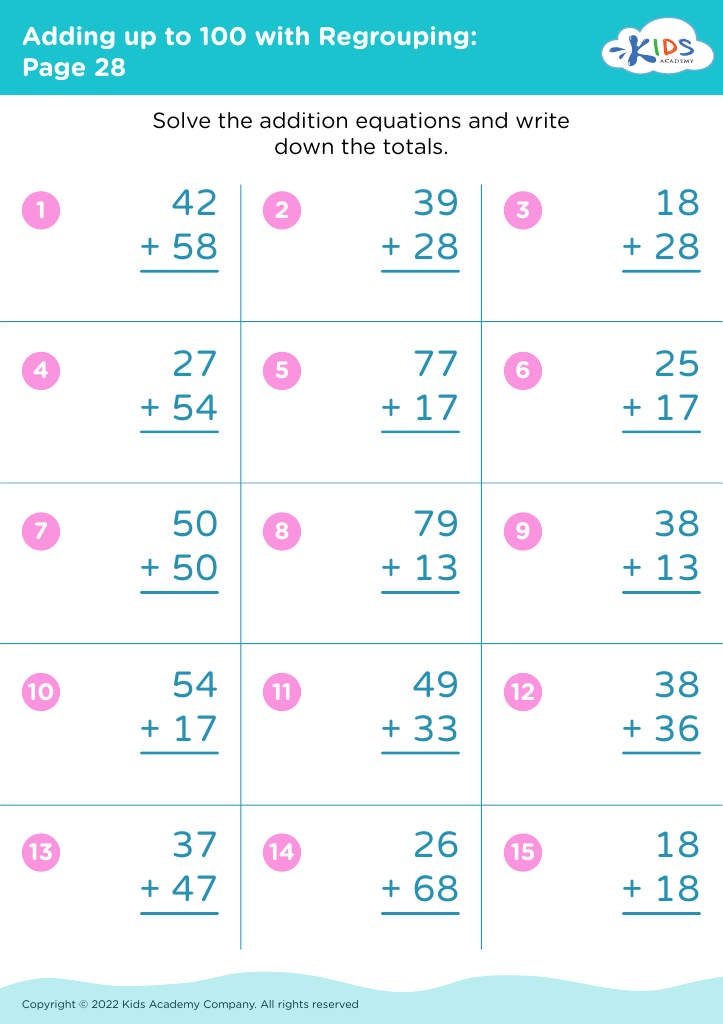
Adding up to 100 with Regrouping: Page 28
Worksheet
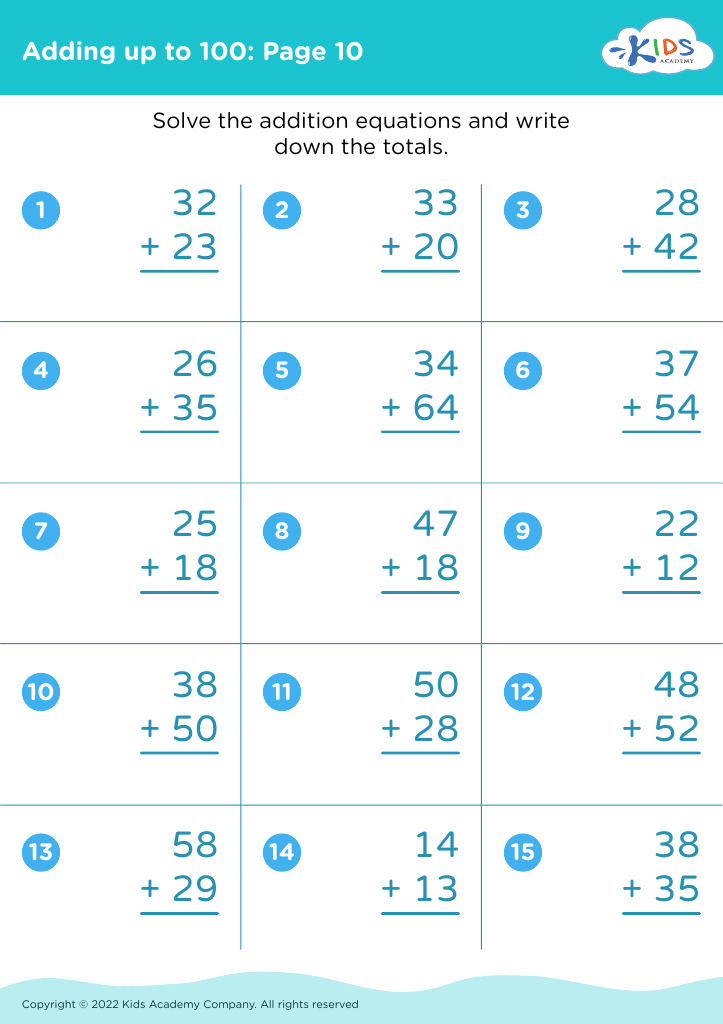
Adding up to 100: Page 10

Adding up to 100: Page 10

Adding up to 100: Page 10
Worksheet
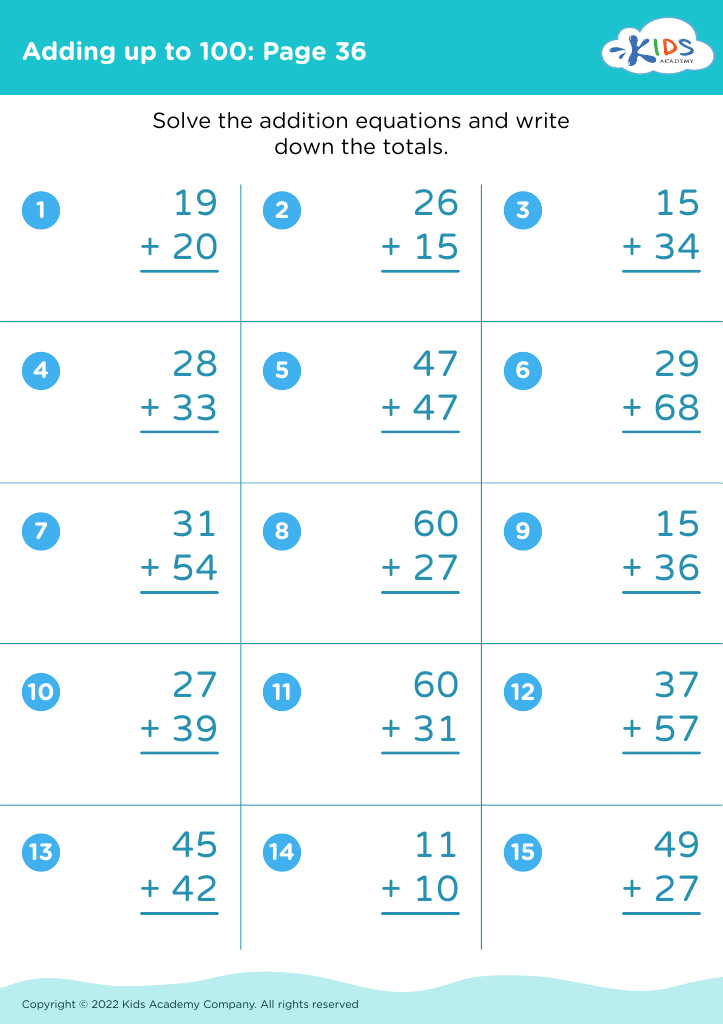
Adding up to 100: Page 36

Adding up to 100: Page 36

Adding up to 100: Page 36
Worksheet


Understanding fractions and their sums up to 100 is crucial for children ages 7-9 because it builds a strong mathematical foundation necessary for future learning. At this age, children are at a key developmental stage where their brains are particularly receptive to grasping numerical and spatial concepts. Learning about fractions helps them with number sense, improving their ability to understand parts of a whole, which is fundamental for numerous real-life applications such as cooking, time management, and budgeting.

First, mastering these concepts enhances cognitive skills like critical thinking and problem-solving. For instance, by figuring out how fractions add up to 100, children engage in analytical thinking and develop logical reasoning. This foundational mastery supports higher-level math topics like algebra and geometry, which are introduced in later grades.

Second, understanding fractions aids in scientific literacy. Experiments, measurements, and data analysis in science often require a good grasp of fractions.

Furthermore, early exposure to such crucial skills boosts confidence and fosters a positive attitude toward math, mitigating math anxiety. Parents and teachers play a pivotal role in making math exciting and accessible, ensuring children have the skills needed for academic success and everyday life. Prioritizing this knowledge ensures that children are not hindered in their educational journey and are equipped with essential life skills.