Vocabulary Building Adding up to 100 Worksheets for Ages 7-9
3 filtered results
-
From - To
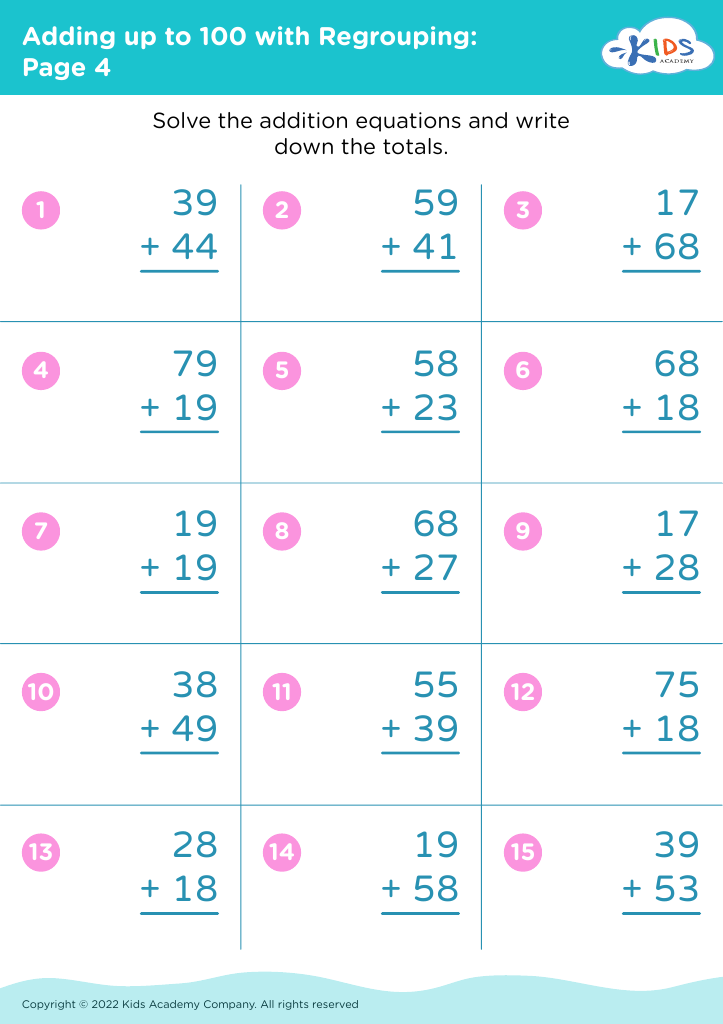
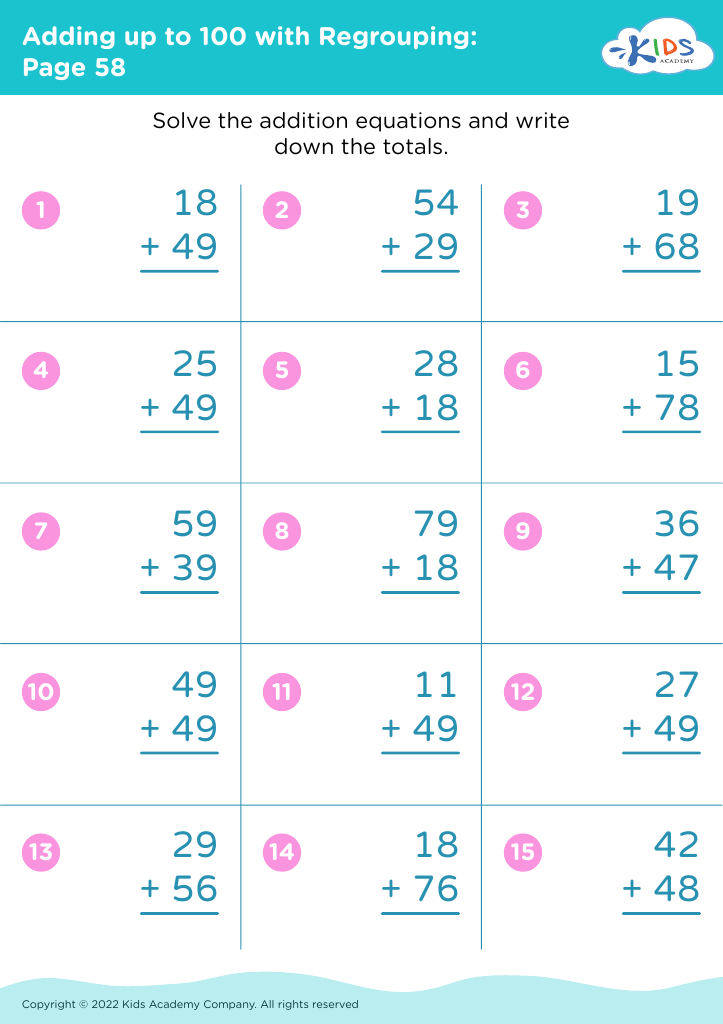
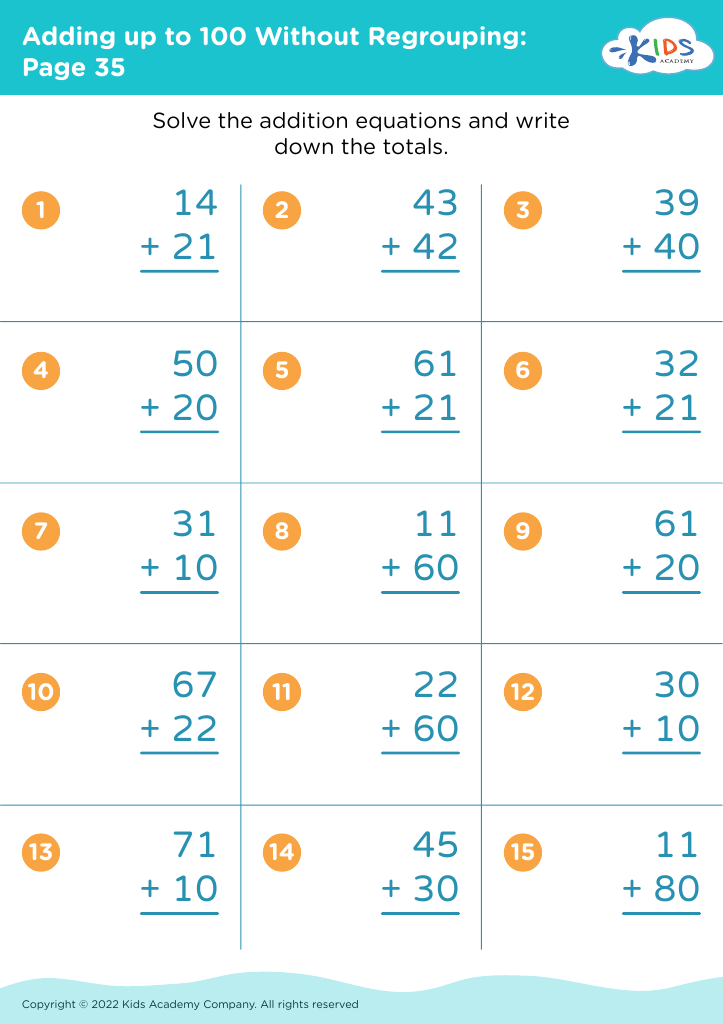
Explore our engaging "Vocabulary Building, Adding up to 100 Worksheets" designed specifically for ages 7-9. These resources not only enhance math skills as children practice addition up to 100 but also focus on expanding their vocabulary. Each worksheet integrates math and literacy, making learning fun and multidimensional. Kids build a strong foundation in arithmetic while simultaneously improving their language abilities. Perfect for home or classroom use, these worksheets support sustained engagement through well-crafted exercises that challenge and inspire young minds. Encourage your child's educational journey with our multifaceted learning tools, combining crucial math practice with essential vocabulary development.


%20(1).jpg)




Vocabulary building for ages 7-9 is vital for parents and teachers to invest in as it lays the foundation for literacy and overall academic success. Around these ages, children transition from learning to read to reading to learn. Expanding their vocabulary helps them comprehend more complex texts, enhancing their reading comprehension skills. Moreover, a robust vocabulary enables children to express their thoughts more clearly and confidently, enhancing both their written and oral communication.
In math, vocabulary understanding is crucial too. Terms and phrases being understood correctly can make a significant difference in problem-solving and understanding mathematical concepts. Making vocabulary building a fun part of learning math — as through activities like "adding up to 100" — helps integrate vocabulary skills with essential math skills, making both subjects come alive in an engaging way that can capture young minds.
Furthermore, fostering a diverse vocabulary early equips children with the critical thinking skills required to analyze new information and make connections. It builds a strong foundation for lifelong learning, fostering curiosity and academic self-esteem. Parents and teachers should prioritize vocabulary building to furnish children with the necessary tools to navigate their education and future successfully.








