Develop number recognition Addition & Subtraction Worksheets for Ages 7-9
5 filtered results
-
From - To
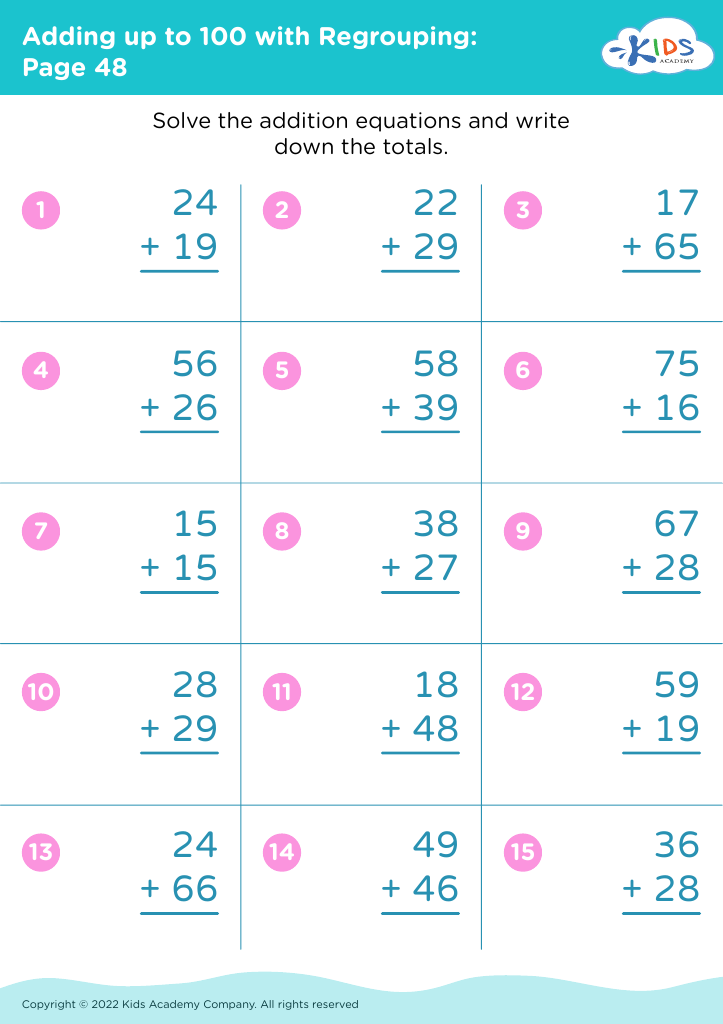
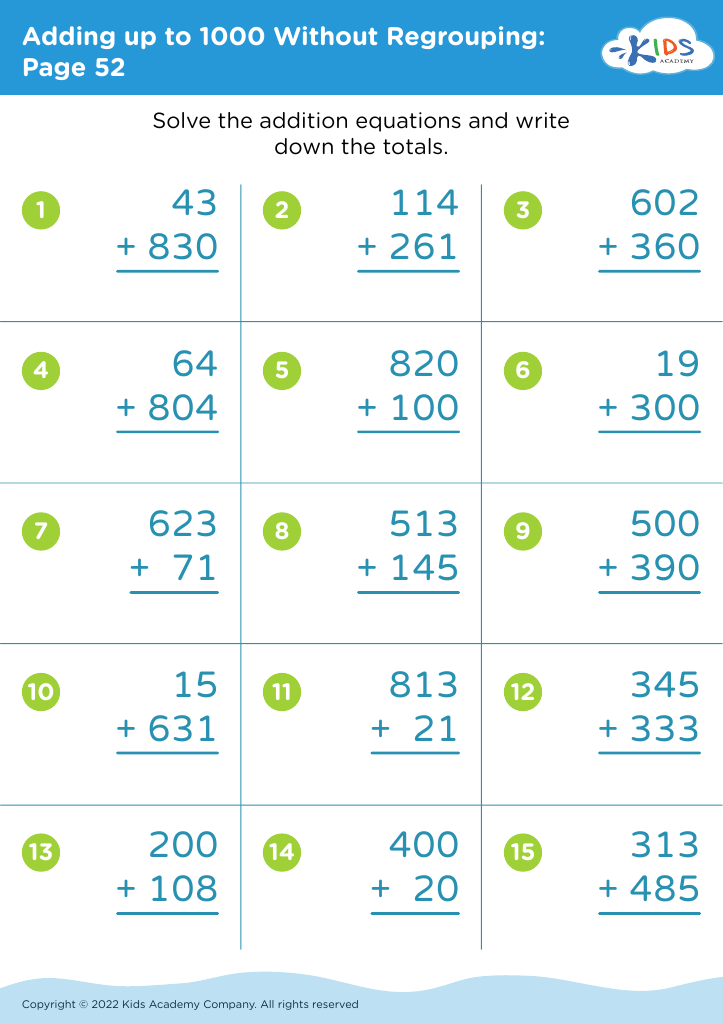
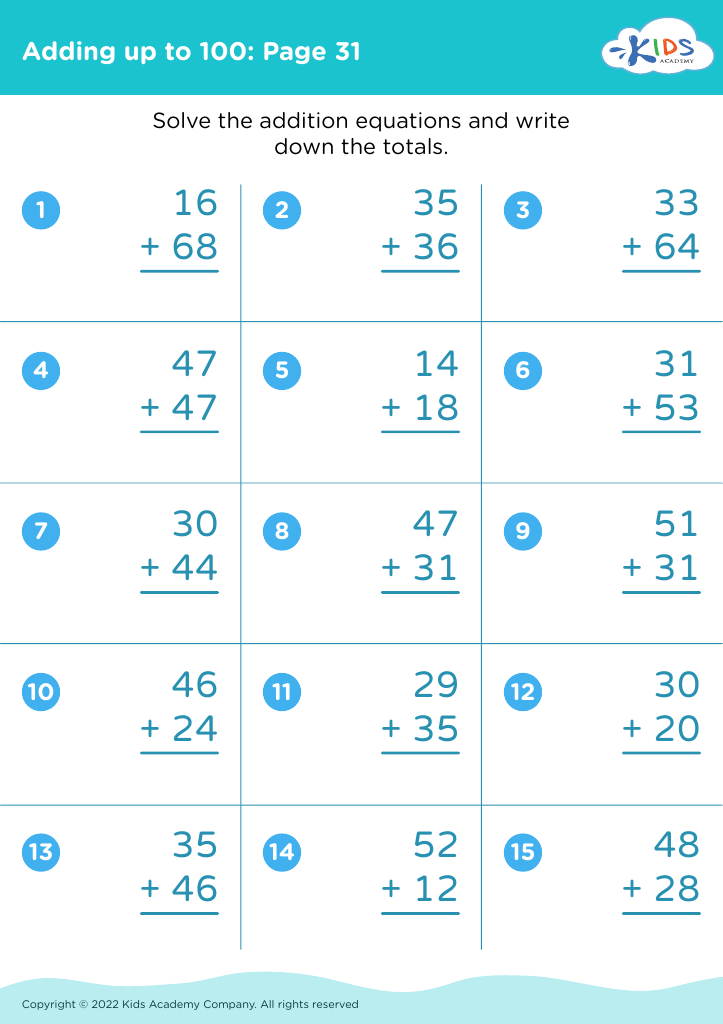
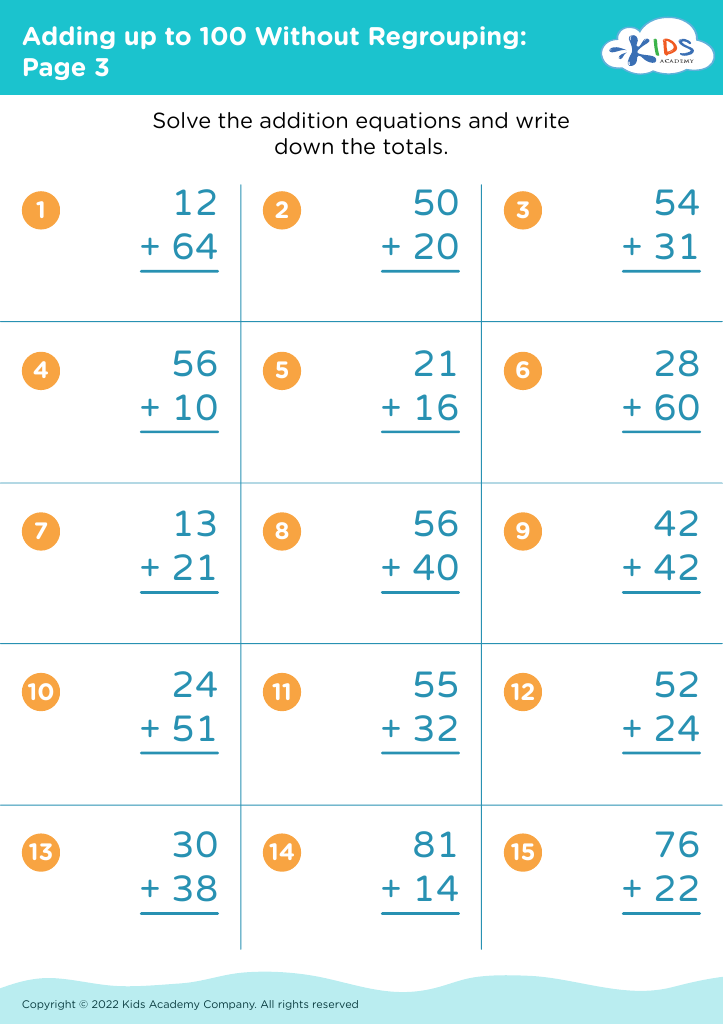
Enhance your child's arithmetic skills with our comprehensive Number Recognition Addition & Subtraction Worksheets, designed for ages 7-9. These engaging worksheets provide a fun and interactive way for young learners to develop essential addition and subtraction skills. Through colorful exercises, games, and problem-solving activities, kids will reinforce number sense, improve calculation accuracy, and build confidence in their math abilities. Perfect for use in the classroom or at home, these worksheets offer a balanced mix of challenges and excitement to keep students motivated and eager to learn. Download now to give your child a head start in math.
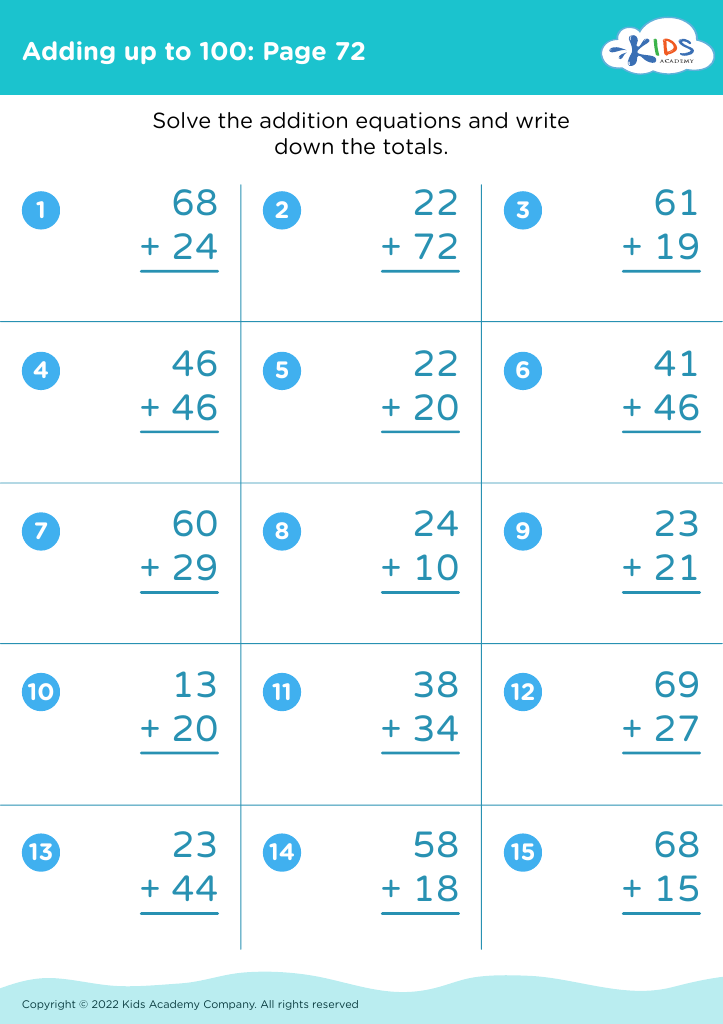








Parents and teachers should prioritize developing number recognition, addition, and subtraction skills for children aged 7-9 because these competencies form the foundation of mathematical understanding, crucial for future academic success. At this age, kids transition from concrete to more abstract thinking, enabling them to grasp essential concepts like number sense, arithmetic operations, and problem-solving strategies. Strong number recognition aids in identifying and working with numbers quickly and accurately, a skill necessary for more complex math tasks. Addition and subtraction, the building blocks of arithmetic, are integral in developing critical thinking and analytical skills.
Moreover, proficiency in these areas boosts a child's confidence and curiosity in mathematics, reducing math anxiety. Consistent practice enhances their ability to tackle real-life tasks requiring basic math, such as counting money, measuring ingredients, or understanding time. This also fosters independence and practical application of their skills outside the classroom.
In the long-term, foundational math skills correlate with better academic performance in advanced subjects like algebra, geometry, and computer science, fostering future opportunities in STEM careers. Therefore, investing time and effort in ensuring mastery of these skills at an early age sets children up for lifelong educational and professional success.








