Enhancing problem-solving skills Addition & Subtraction Worksheets for Ages 7-9
8 filtered results
-
From - To
Discover our "Enhancing Problem-Solving Skills: Addition & Subtraction Worksheets" designed for children ages 7-9. This resource focuses on developing critical thinking and analytical skills through engaging math problems. By practicing various addition and subtraction scenarios, kids will strengthen their mathematical reasoning and improve their ability to tackle real-life problem-solving situations. Our worksheets are vibrant and interactive, making learning fun while promoting essential cognitive skills. Perfect for classrooms or at-home learning, these materials encourage students to think independently and creatively solve math challenges. Empower your child's learning journey with our effective and enjoyable worksheets today!

Daisy Subtraction Quest Worksheet
 Assign to My Students
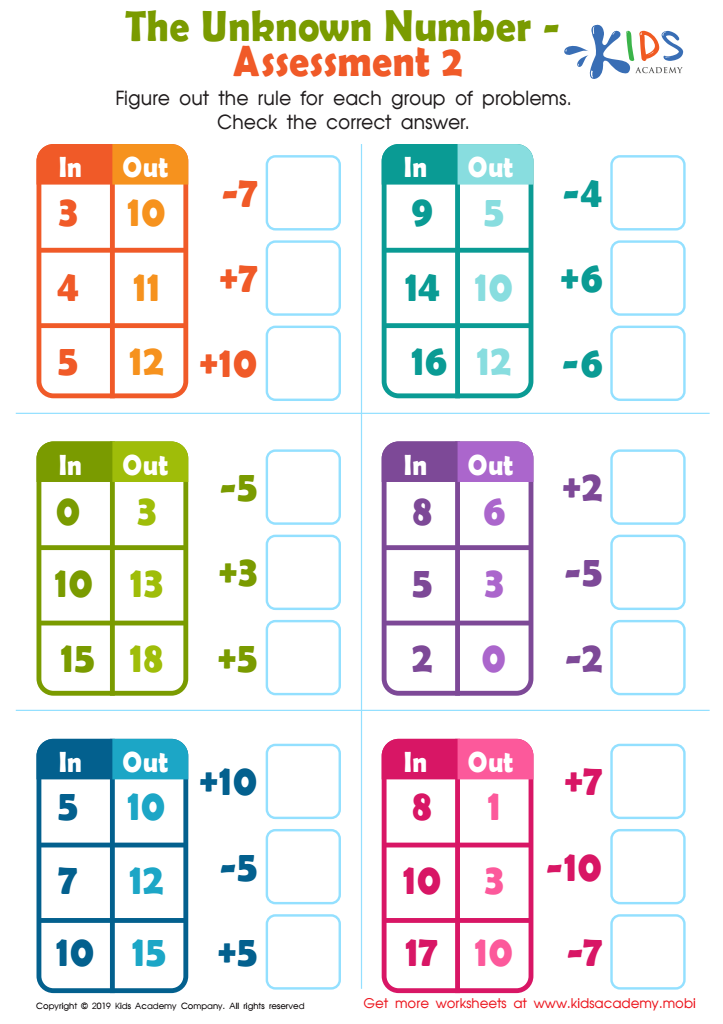
The Unknown Number - Assessment 2 Worksheet
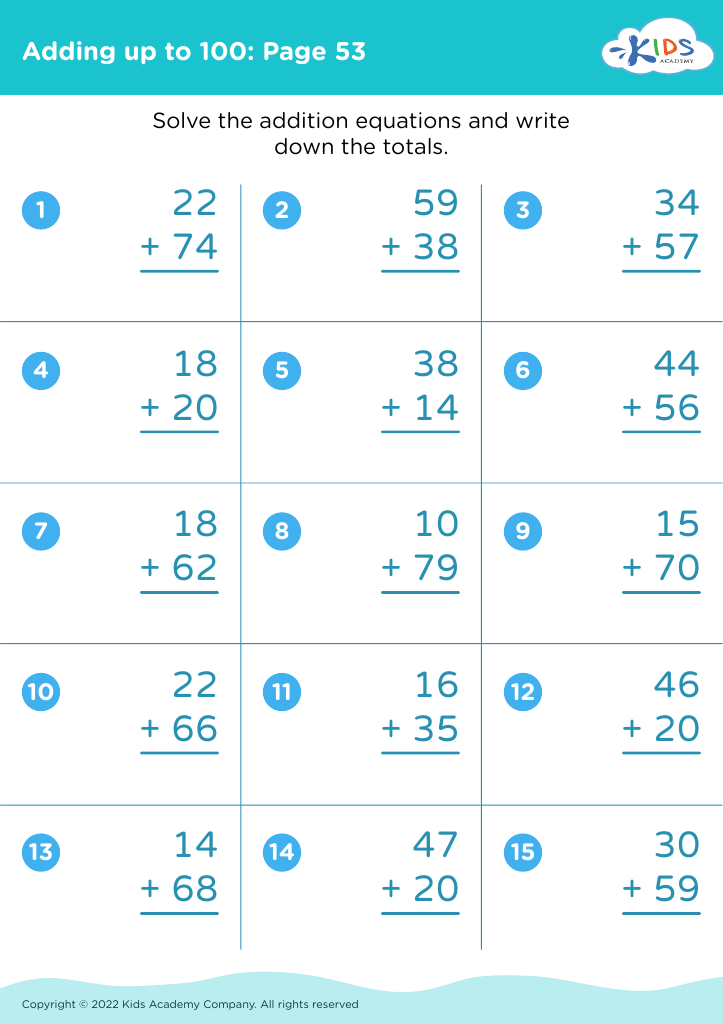
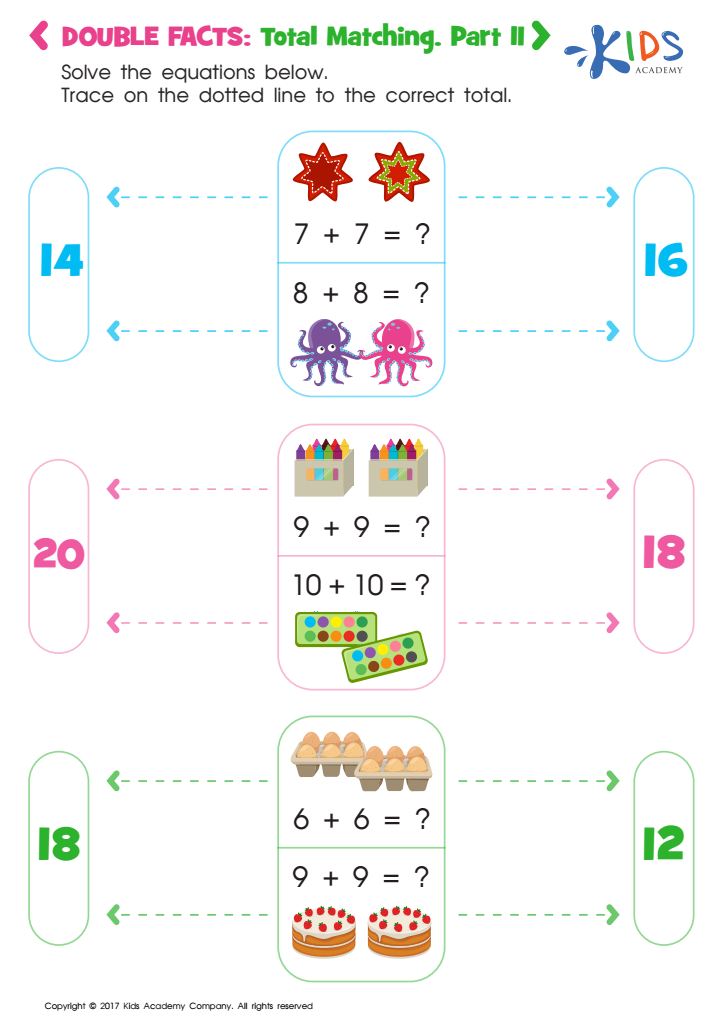
Double Facts: Total Matching 2 Worksheet
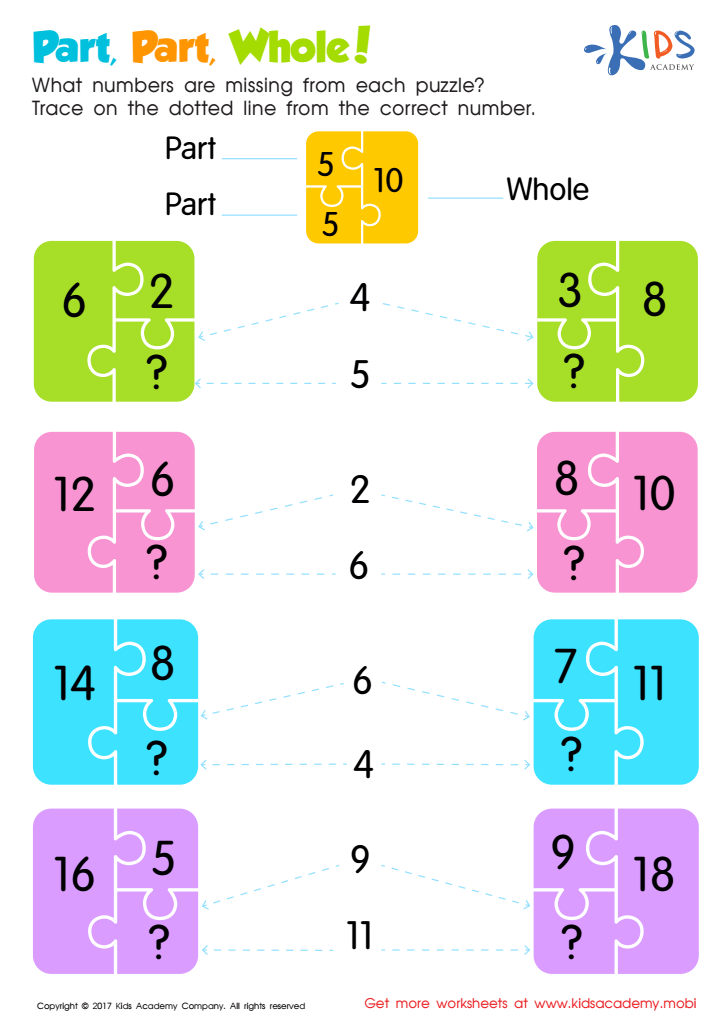
Part, Part, Whole Worksheet








Parents and teachers should prioritize enhancing problem-solving skills in addition and subtraction for children aged 7-9 because these foundational math skills are crucial for their overall cognitive development. At this age, children are transitioning from learning basic arithmetic to applying it in various real-life contexts, such as budgeting, measuring, and time management. Effective problem-solving lays the groundwork for critical thinking, which is vital as they encounter more complex subjects.
Moreover, mastering addition and subtraction enhances children’s confidence and encourages a positive attitude towards math. When they can approach problems methodically and find solutions, they foster a growth mindset. This resilience becomes essential not just in math, but in all aspects of learning.
Furthermore, these skills are interconnected with emotional and social development; children learn to approach challenges collaboratively, seeking help or offering solutions to peers. By enriching their problem-solving abilities, parents and teachers empower students to navigate both academic and everyday situations effectively.
Finally, early instruction in these skills can mitigate future struggles in mathematics, setting the stage for a more successful educational journey. Investing time and effort into fostering these abilities now pays dividends in shaping well-rounded, competent individuals.








