Improve reading skills Addition & Subtraction Worksheets for Ages 7-9 - Page 2
29 filtered results
-
From - To
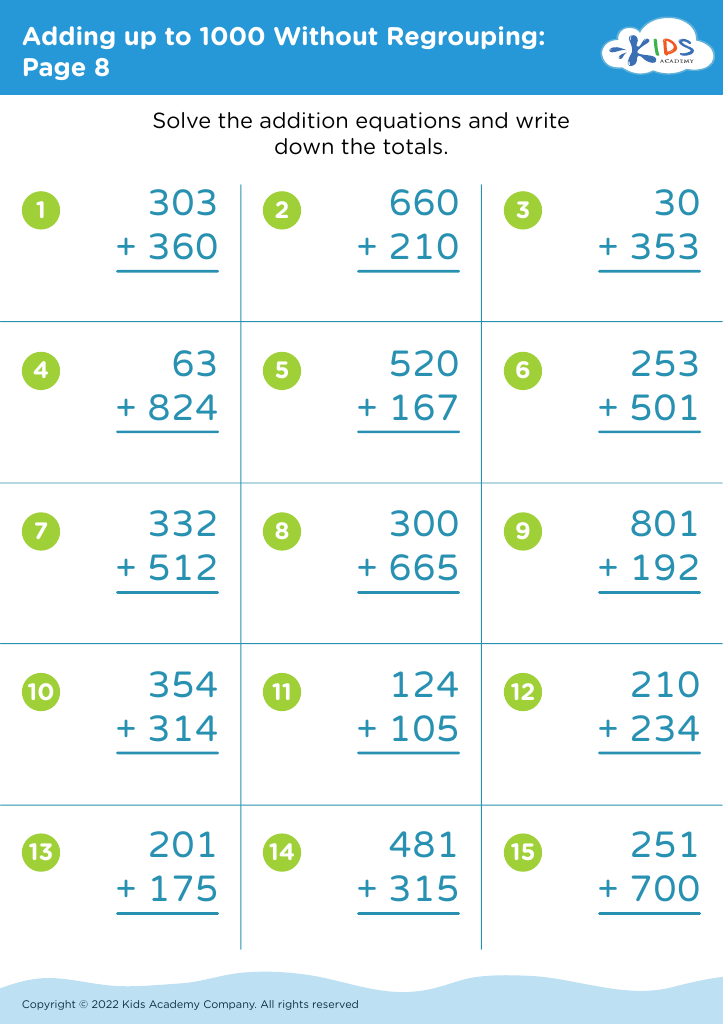
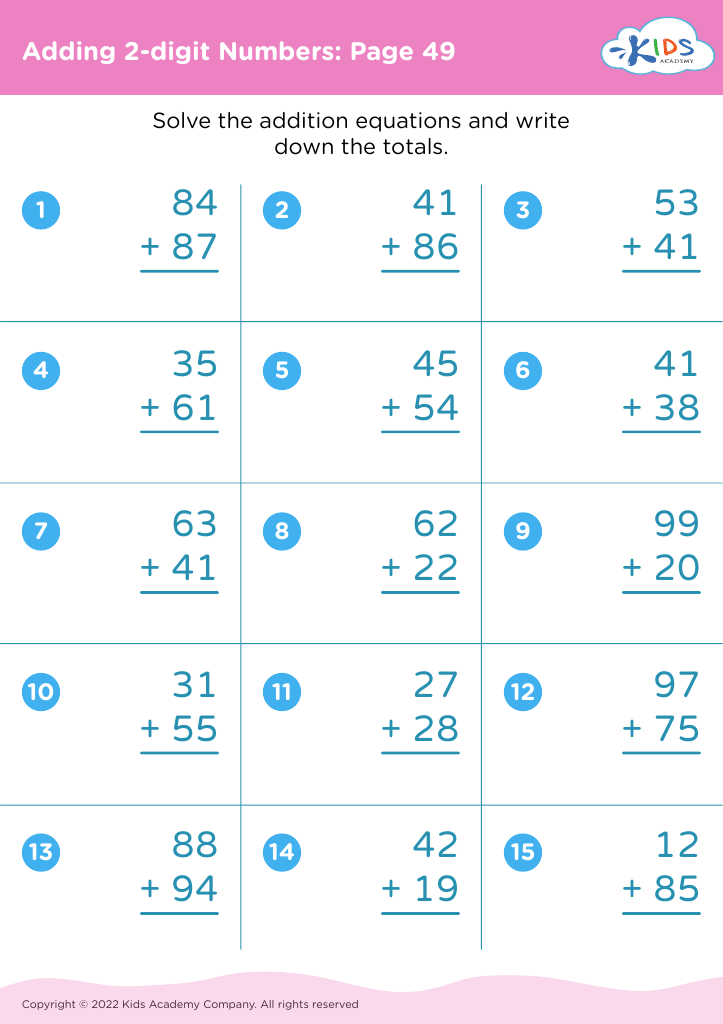
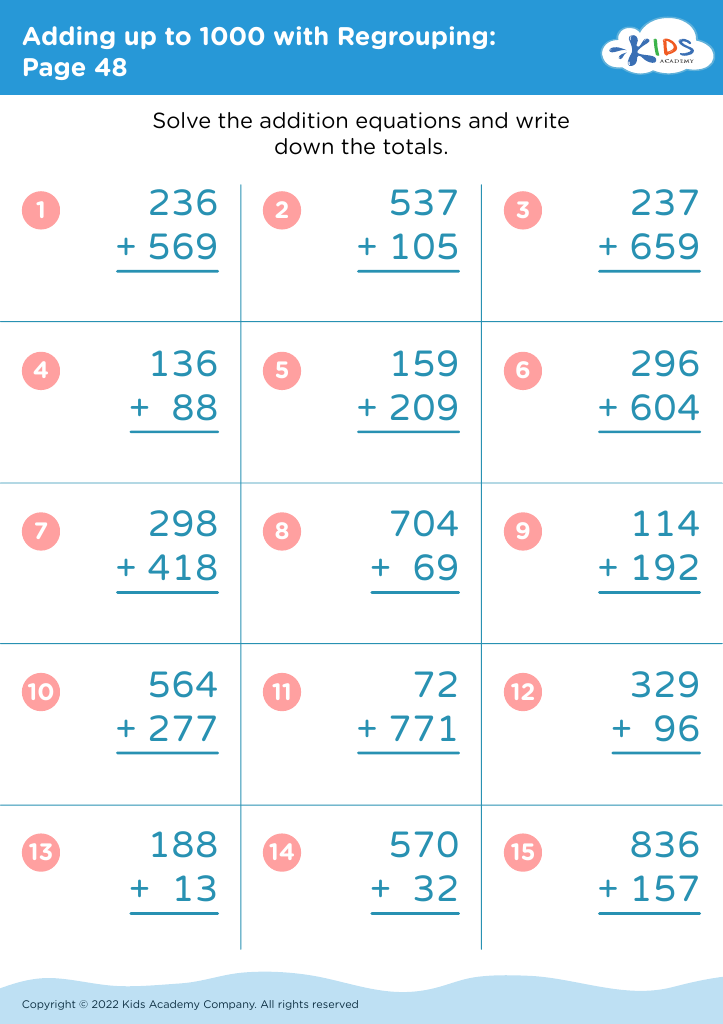
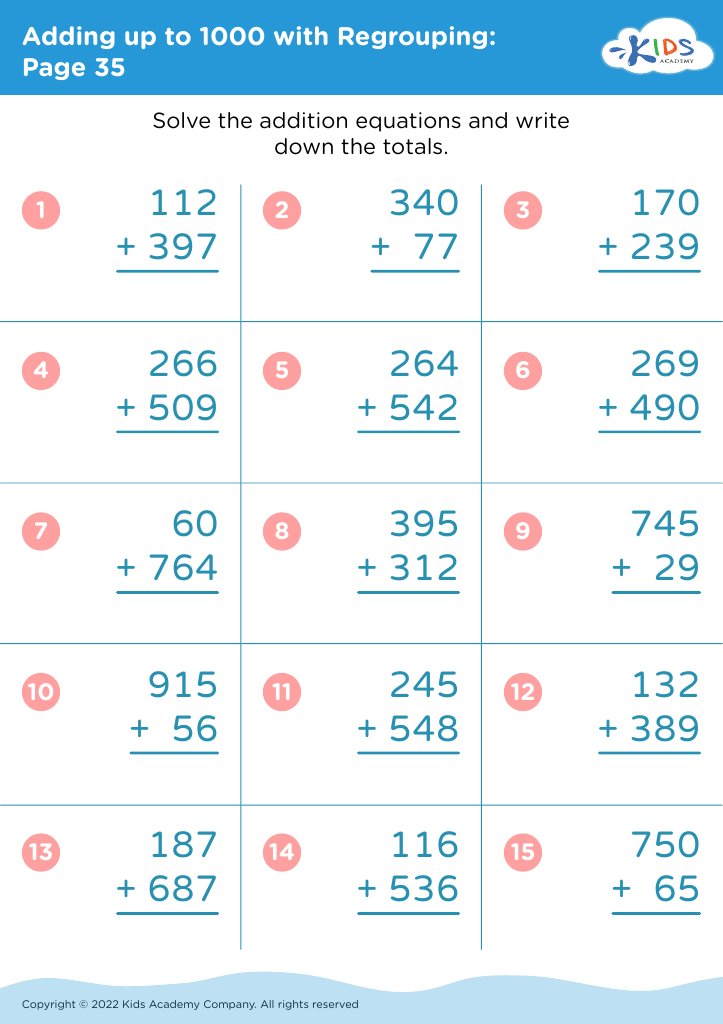
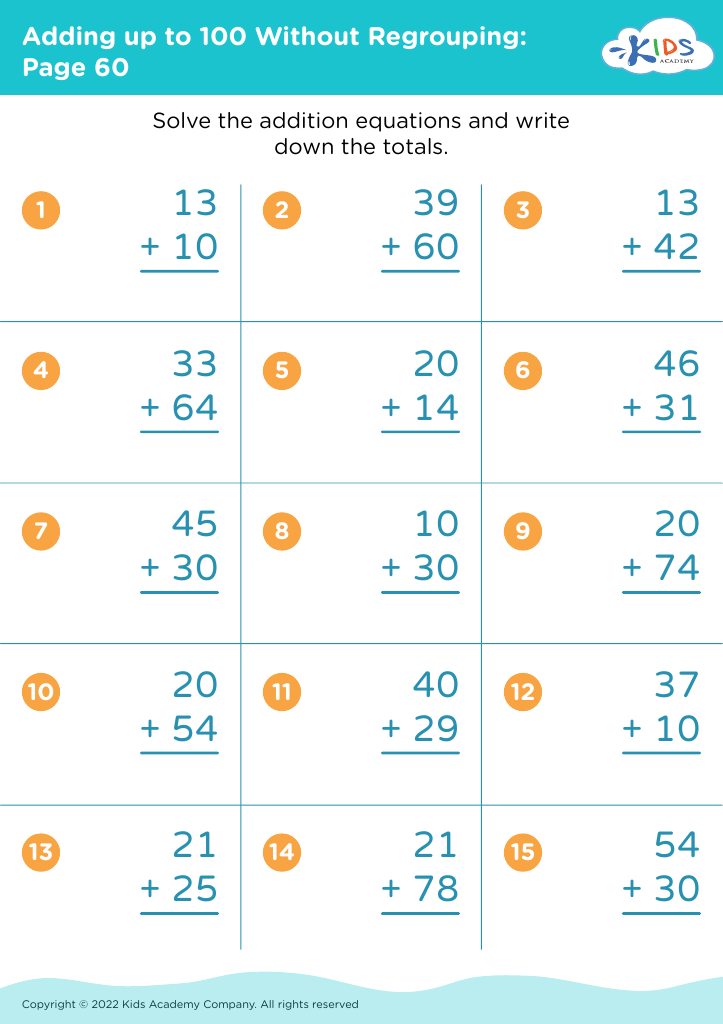


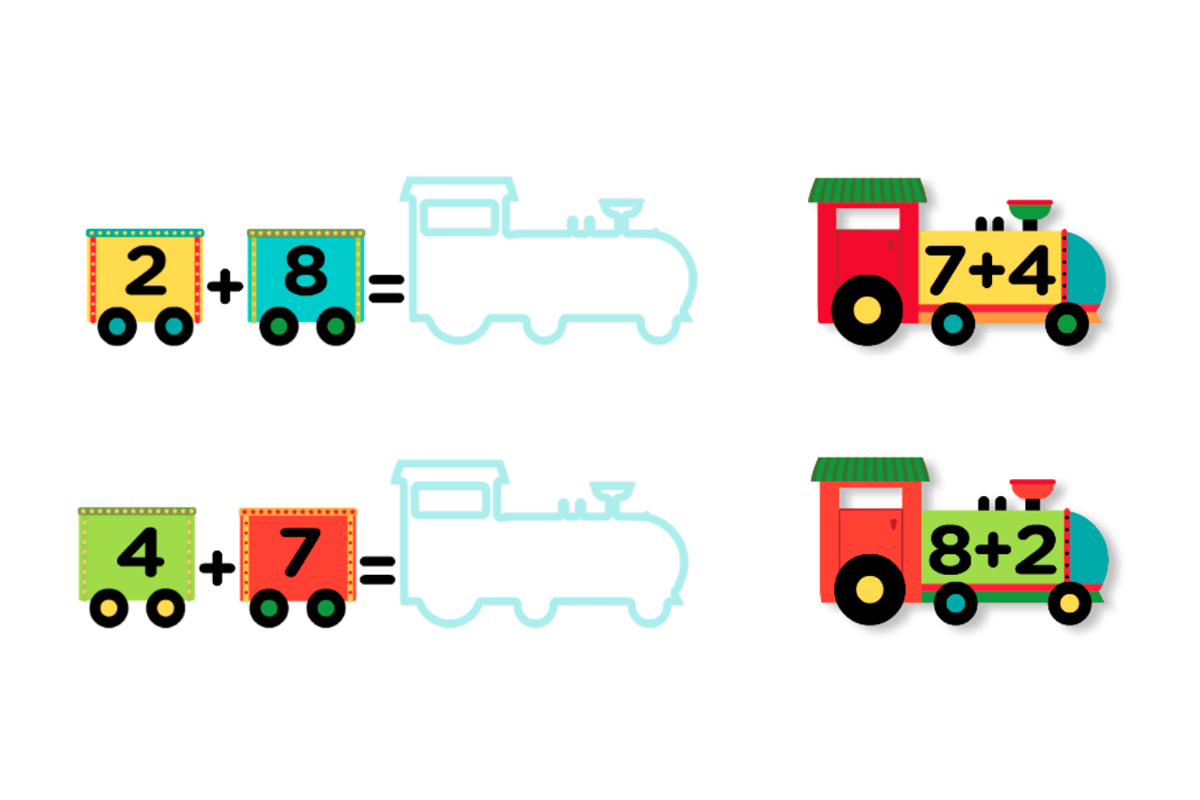





Improving reading skills and mastering addition and subtraction for children aged 7-9 are foundational to their academic success and overall cognitive development. At this age, children transition from "learning to read" to "reading to learn," so strong reading skills are essential for understanding and engaging with more complex texts across all subjects. Reading improves vocabulary, comprehension, and critical thinking, fostering a love for learning and increasing academic confidence.
Additionally, understanding addition and subtraction is crucial as these are the building blocks of all future math concepts. Proficiency in these basic arithmetic operations underpins more advanced topics like multiplication, division, fractions, and problem-solving, which are vital for higher-level math and science education. By feeling confident and skillful in these areas, children are more likely to develop positive attitudes toward math.
Therefore, parents and teachers need to support and nurture these skills early on. This sets the stage for future academic achievements and equips children with the essential tools for everyday life tasks, such as managing finances and logical decision-making. Investing time and resources in addressing these foundational skills ensures that children have a solid academic foundation, boosting their overall educational trajectory and self-esteem.








