
Mathematical reasoning Addition & Subtraction Worksheets for Ages 7-9
30 filtered results
Difficulty Level
Grade
Age
-
From - To
Subject
Activity
Standards
Discover our engaging Mathematical Reasoning Addition & Subtraction Worksheets designed specifically for children aged 7-9. These thoughtfully crafted worksheets promote critical thinking and help young learners master essential arithmetic skills through fun, interactive problems. By emphasizing mathematical reasoning, students will not only practice addition and subtraction but also develop their problem-solving abilities, enhancing their overall mathematical understanding. Our diverse range of exercises ensures that each child can find their level of challenge while building confidence in their skills. Perfect for classroom use or home practice, these worksheets are a valuable resource for nurturing a love for math in early learners. Get started today!
Favorites
With answer key
Interactive
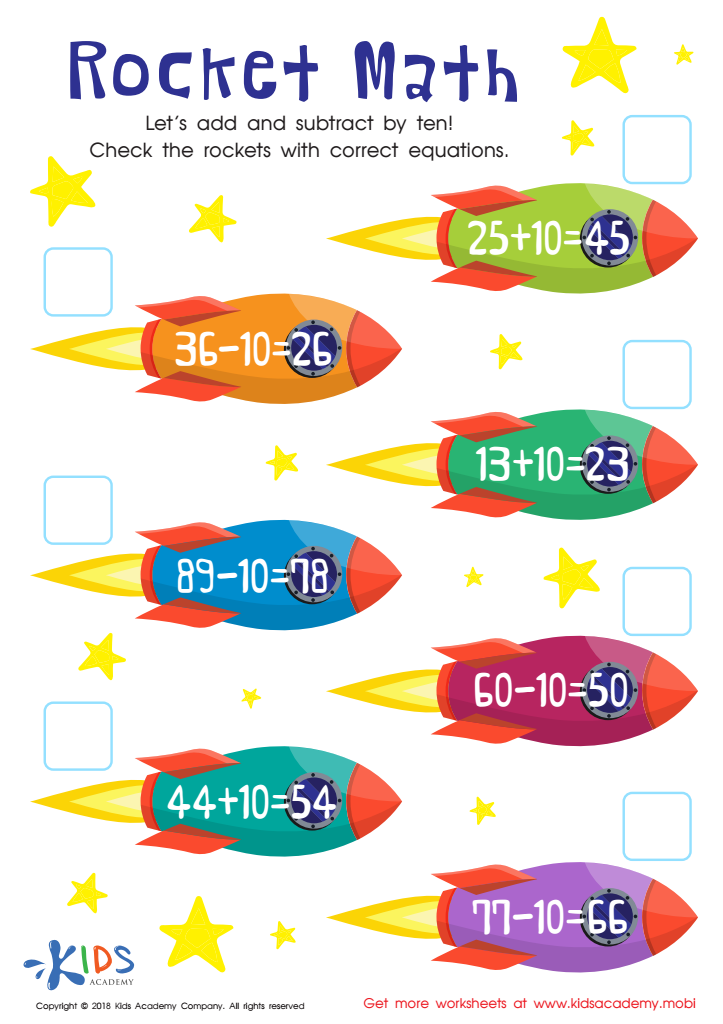
Rocket Math Worksheet
Your students will be math wizards in no time as they blast off on this exciting and colorful PDF worksheet. They'll use the 10s strategy to practice addition and subtraction, and they'll learn to skip count forwards and backwards. Keep them engaged and make learning fun!
 Assign to My Students
Rocket Math Worksheet
Worksheet
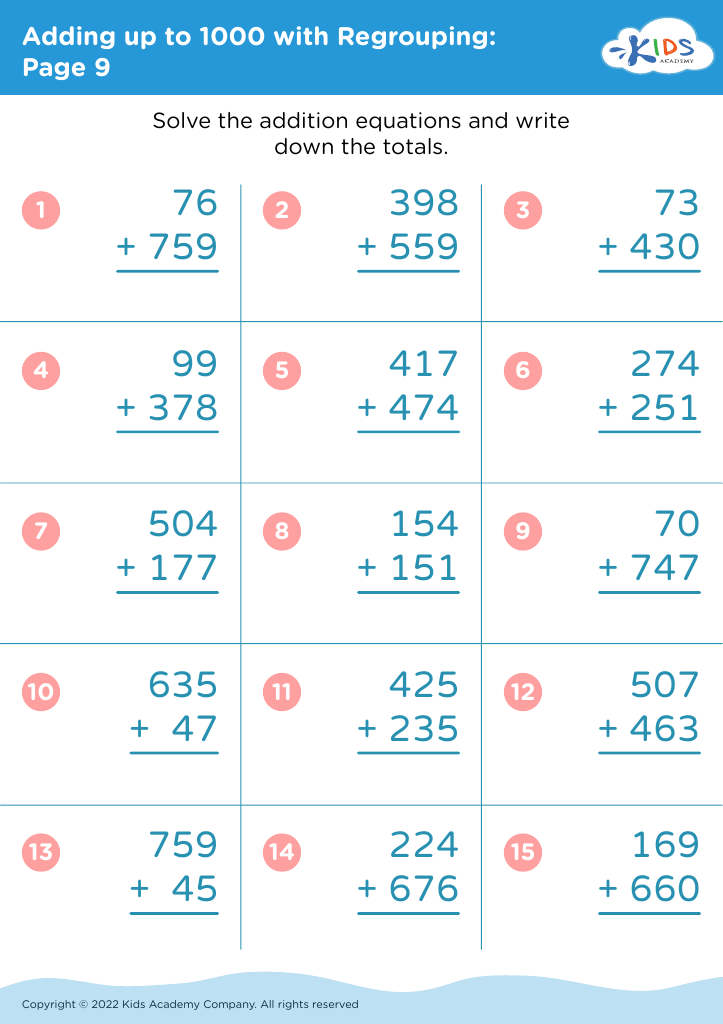
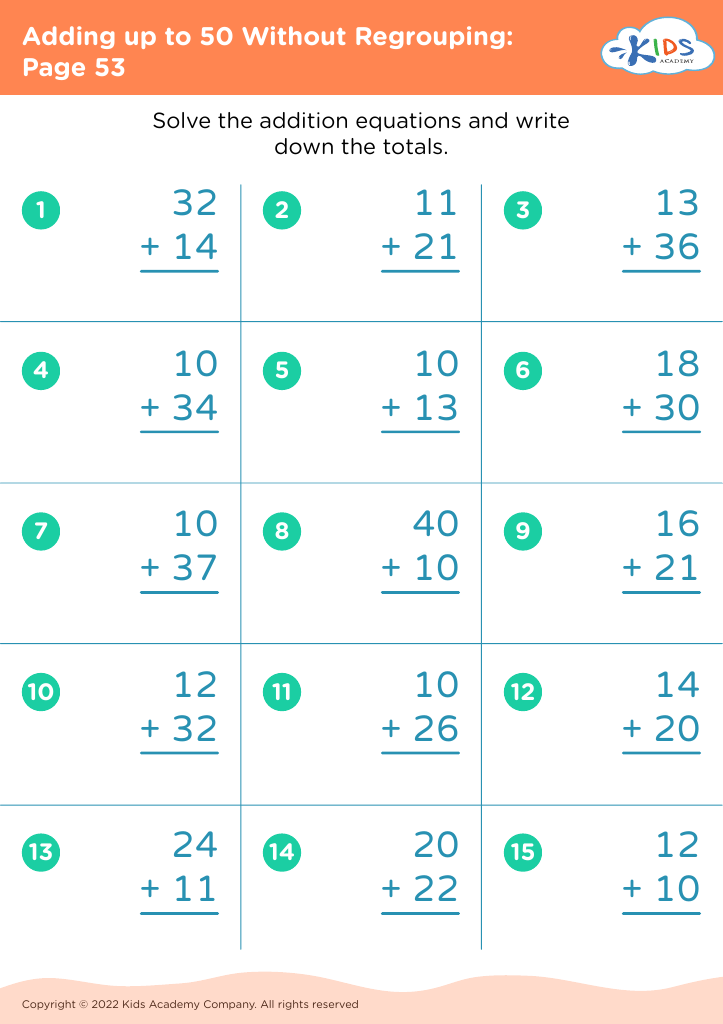
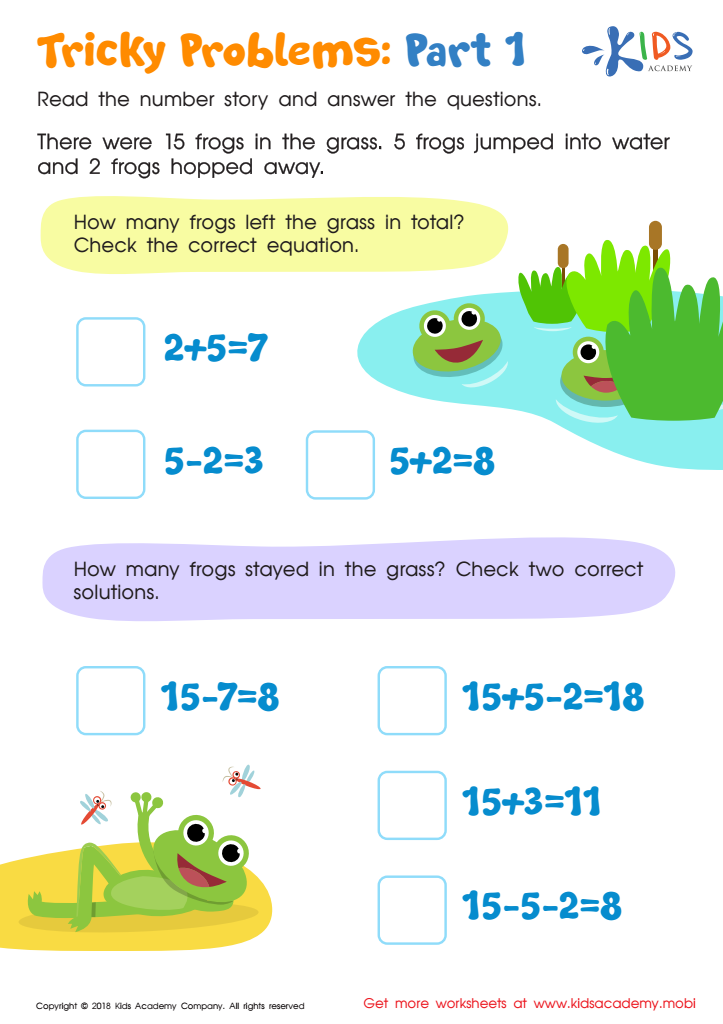
Tricky Problems Worksheet: Part 1
Visualizing word problems can help students solve them. This fun PDF worksheet encourages students to create mental images using math facts, then check boxes to match the equations for basic addition problems. It's a great way to build confidence in solving math.
Tricky Problems Worksheet: Part 1
Worksheet
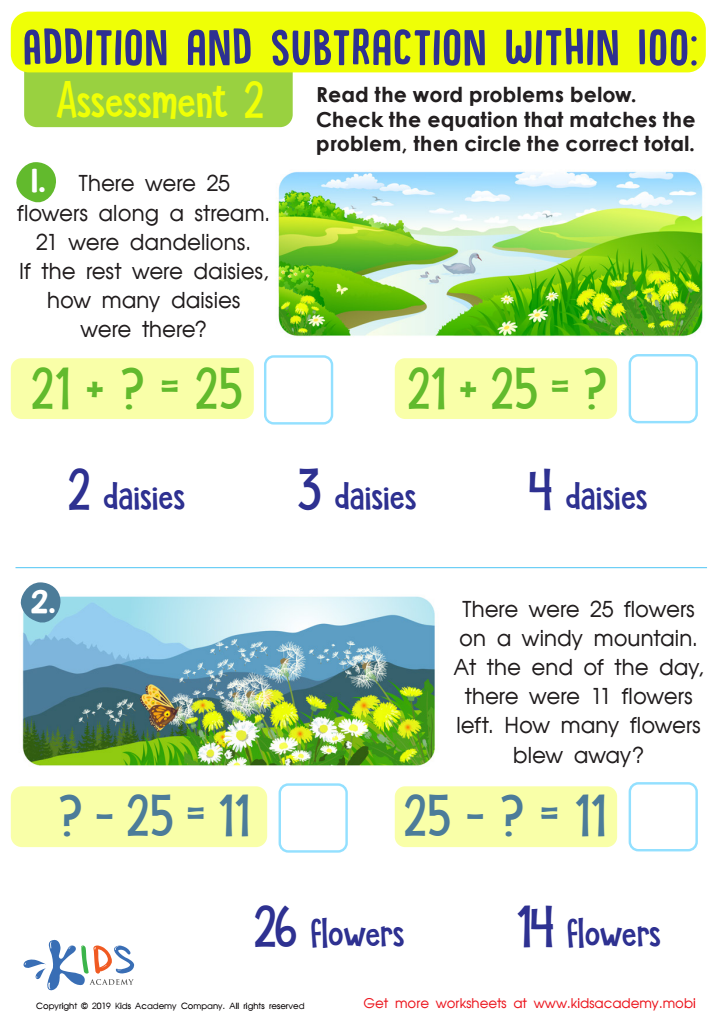
Assessment 2 Math Worksheet
Using fun exercises and pictures, you can get kids excited about math. With practice and reminders of what they've learnt, they'll be solving simple addition and subtraction equations with ease. Read the word problems in the picture to them, then help them check the equation and choose the correct answer.
Assessment 2 Math Worksheet
Worksheet
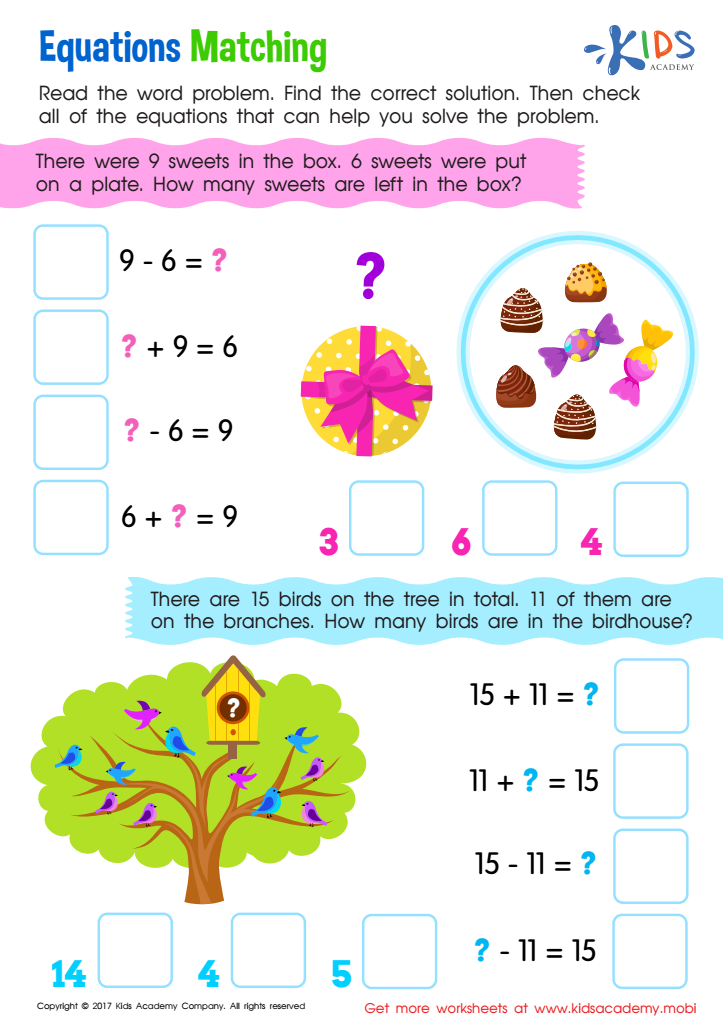
Equations Matching Word Problems Worksheet
Download this worksheet and give your young mathematician practice in solving equations using matching numbers and number family facts. They'll solve word problems, develop critical thinking and algebraic reasoning, and gain success with addition and subtraction.
Equations Matching Word Problems Worksheet
Worksheet
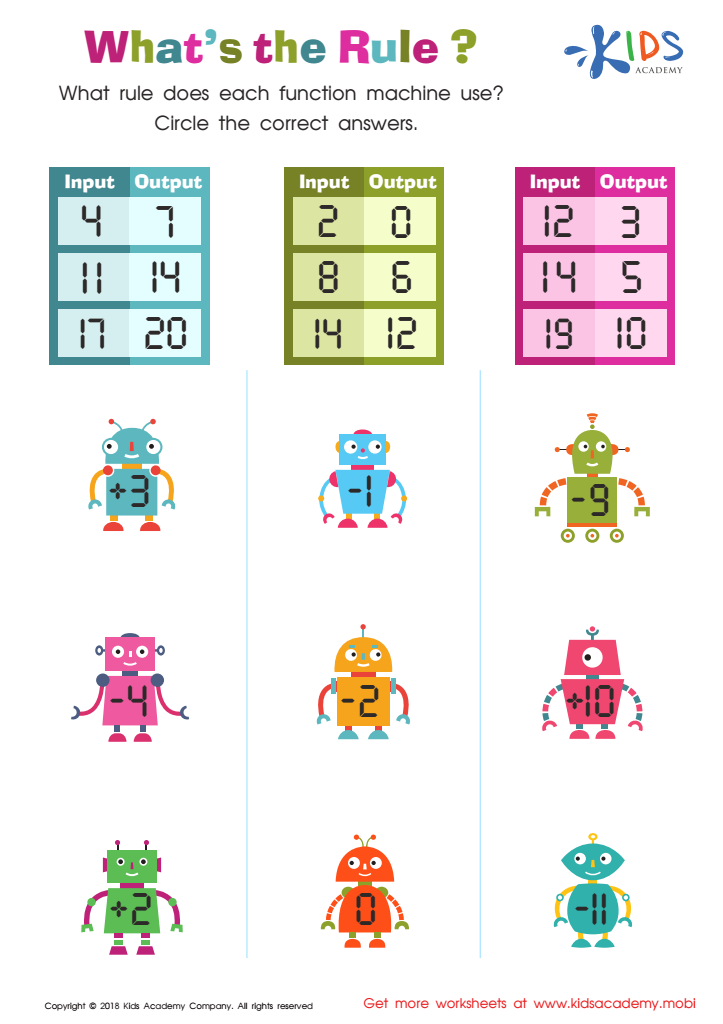
What's the Rule Worksheet
Robots are here to help your child find the relationship between each set of numbers! Adorably illustrated worksheets use vivid pictures that each contain a rule. Look at each function machine and find the pattern or relationship between the input and output. Then, complete the sheet by circling the correct answer!
What's the Rule Worksheet
Worksheet
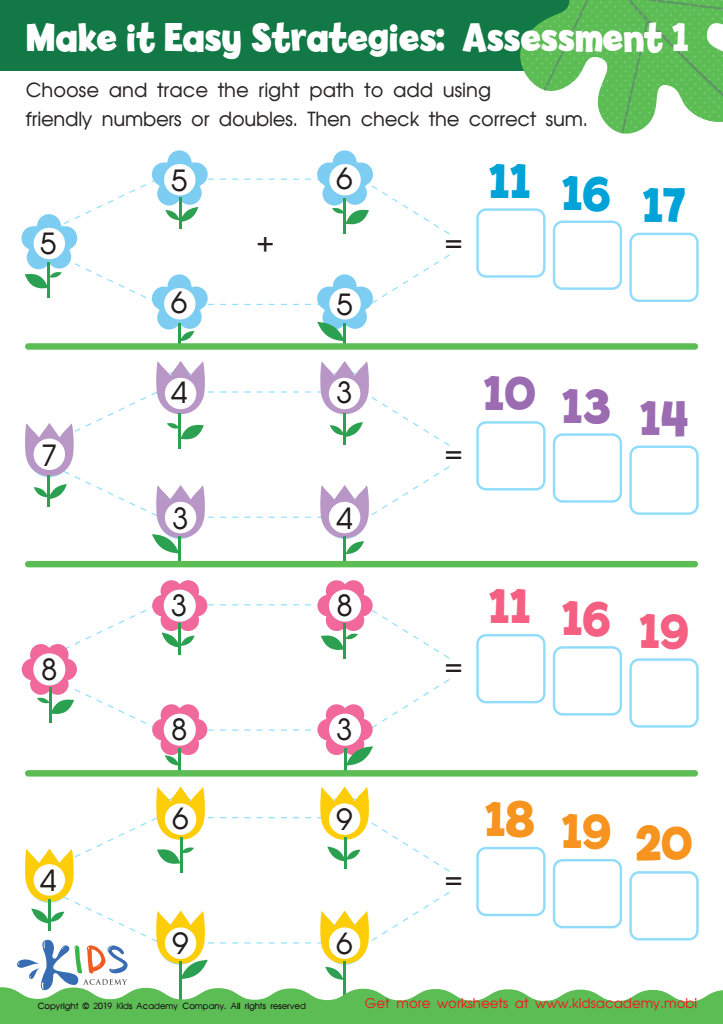
Make it Easy Strategies: Assessment 1 Worksheet
This tracing worksheet helps kids learn to add numbers and count with fun! Start by doing some simple math additions with your child. Guide them to trace the right path with friendly numbers or doubles, and check the sum. Make math enjoyable and rewarding while they learn!
Make it Easy Strategies: Assessment 1 Worksheet
Worksheet
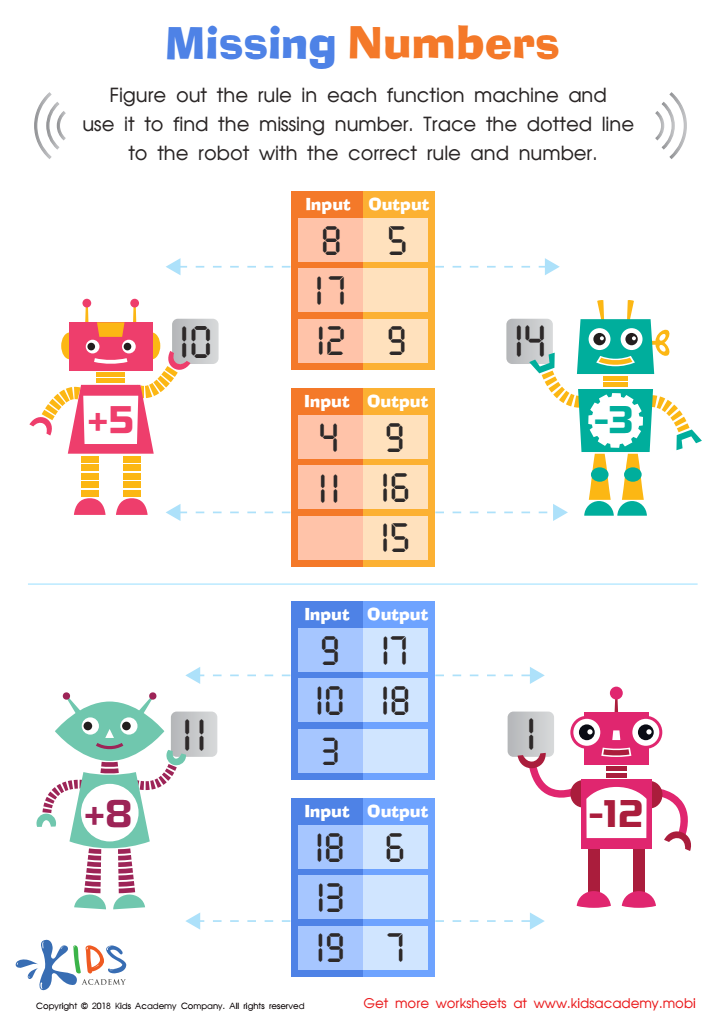
Missing Numbers Worksheet
Elementary students can learn the important pre-algebra skill of solving for missing numbers! Our robots guide them along with number-filled bellies and missing answers in their hands. Kids can examine the other numbers in each graph, use the rule to solve the missing number, and check their work with the missing number to ensure correctness.
Missing Numbers Worksheet
Worksheet
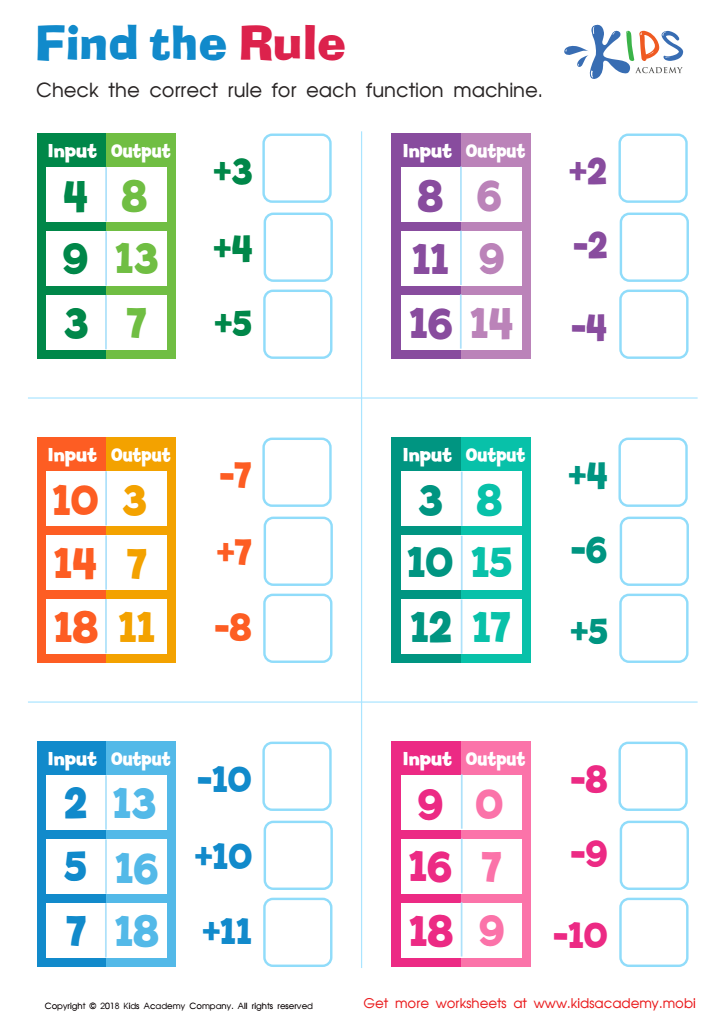
Find the Rule Worksheet
A function machine is an elementary math tool used to find an output by applying a rule, like addition or subtraction, to an input. Children use the diagram to understand the relationship between each input and output, with this worksheet helping them to analyze the machine and find the rule being used.
Find the Rule Worksheet
Worksheet
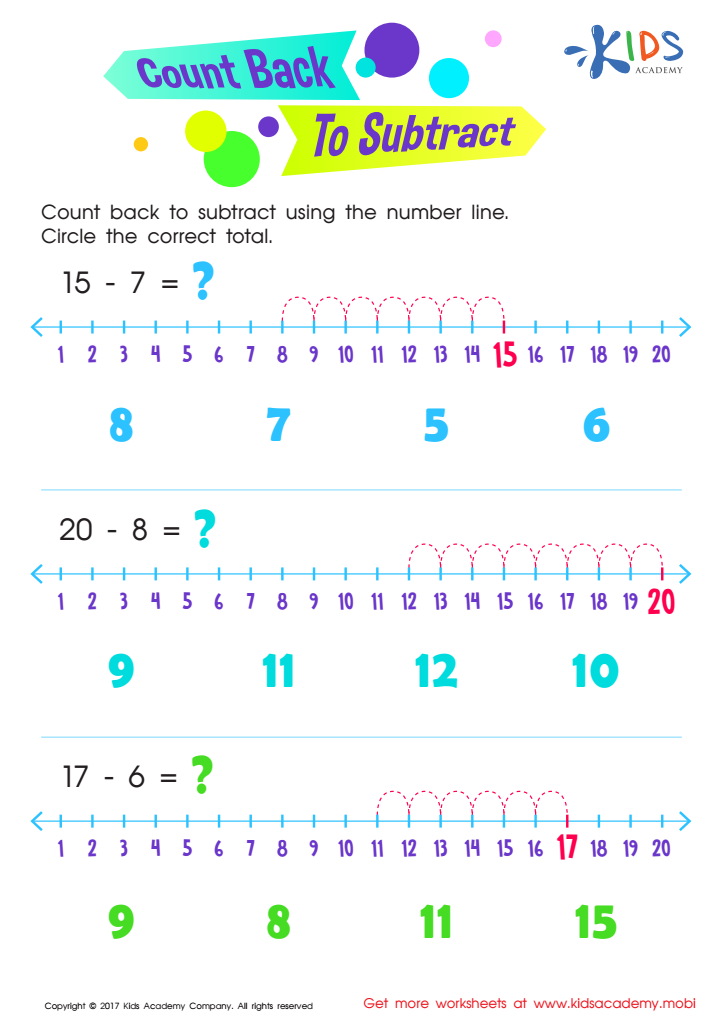
Count Back to Subtract Substraction Worksheet
With this worksheet, your child can visually see and count each number they’re subtracting.
This worksheet provides a number line to help your child master subtraction visually. Counting back on the line will give them a deeper understanding of the concept. It's a great way to teach subtraction and help children gain confidence with the subject.
Count Back to Subtract Substraction Worksheet
Worksheet
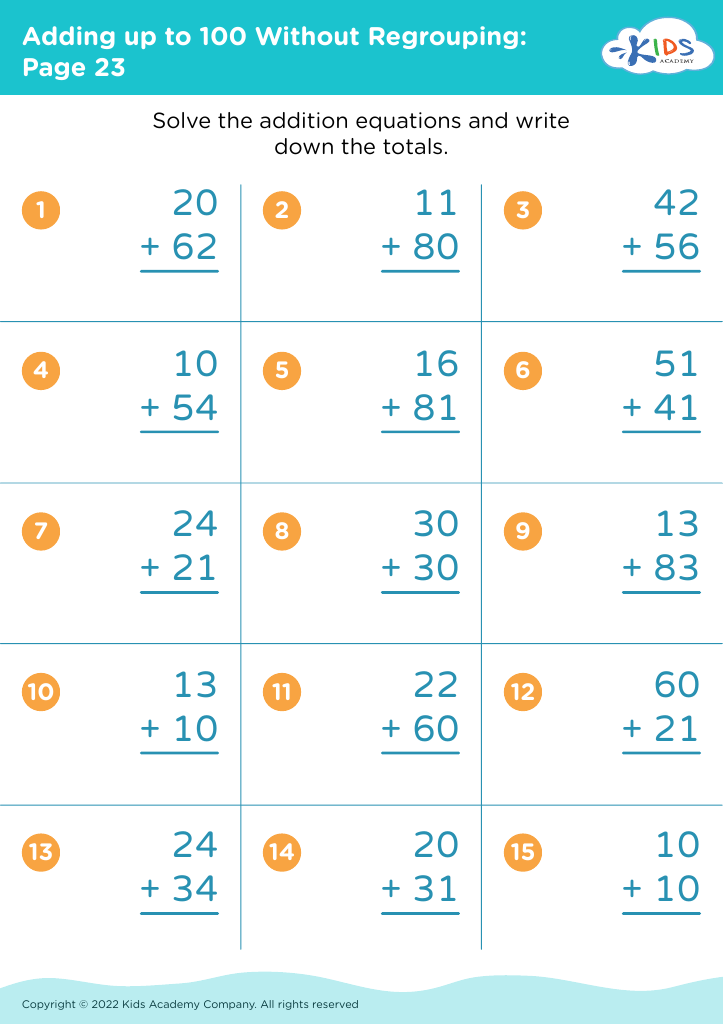
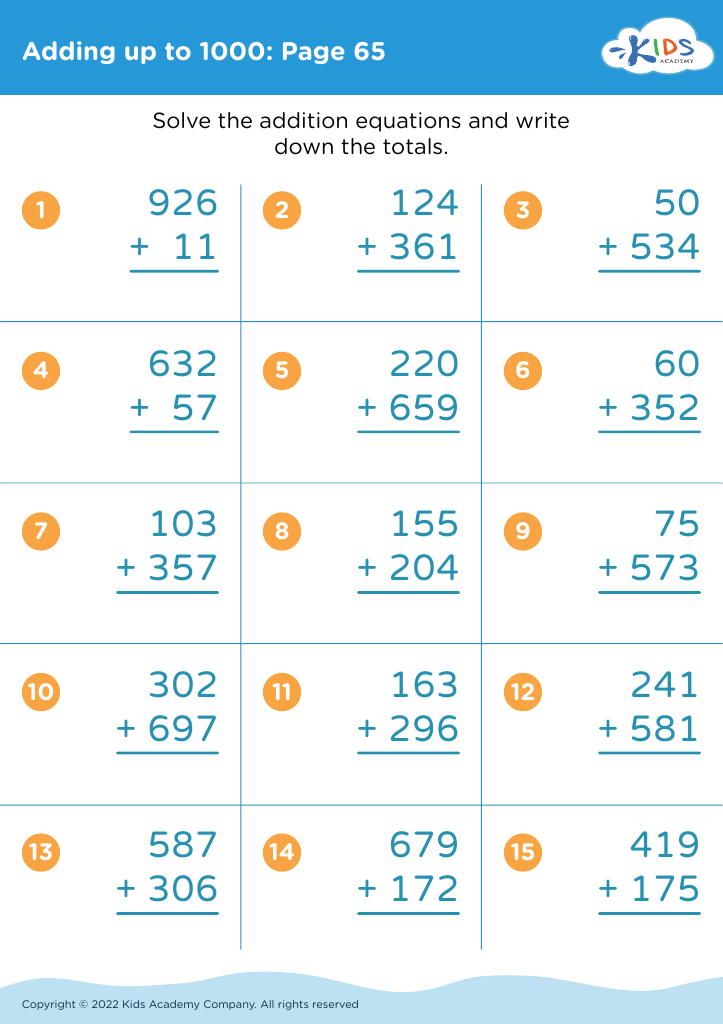
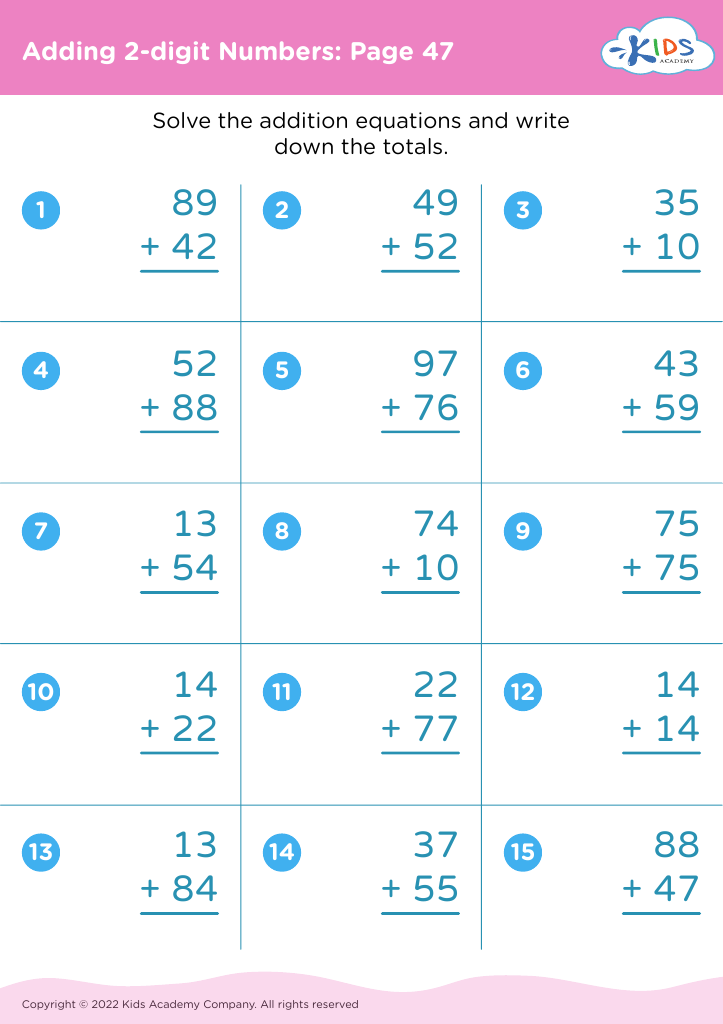
Join Kids Academy for Free
Who is primarily going to use this learning content?








Mathematical reasoning, particularly in addition and subtraction, is fundamental for children aged 7-9 as it establishes a foundation for more advanced mathematics and problem-solving skills later in life. During these formative years, children transition from basic arithmetic to understanding the underlying concepts that contribute to mathematical logic and reasoning.
Engaging in addition and subtraction helps students make connections between numbers and comprehend relationships such as part-whole, amount comparison, and the concept of difference. These conceptual insights lay the groundwork for deeper mathematical topics like multiplication, division, fractions, and algebra.
In addition, developing strong reasoning skills leads to increased confidence in mathematics, encouraging a positive attitude towards the subject. This age group is critical for nurturing a growth mindset, where mistakes are seen as learning opportunities. When parents and teachers emphasize mathematical reasoning, they help children cultivate critical thinking skills that are applicable across various disciplines; these skills are not just essential for math but are crucial for everyday decision-making and logical reasoning.
Thus, by investing time and effort in fostering these skills, parents and teachers empower children to become proficient, confident learners, better preparing them for academic success and real-world applications.








