Number comparison Addition & Subtraction Worksheets for Ages 7-9
3 filtered results
-
From - To
Explore our engaging Number Comparison Addition and Subtraction worksheets designed specifically for children ages 7-9! These worksheets help sharpen essential math skills by promoting understanding of number relationships through comparison. With a variety of exercises, students will learn to compare quantities, recognize larger and smaller numbers, and master addition and subtraction concepts. Perfect for both classroom and home use, our colorful, interactive worksheets motivate young learners, providing a solid foundation in math. Enhance your curriculum and foster a love for numbers with our exceptional resources that make learning fun and effective! Download your worksheets today!
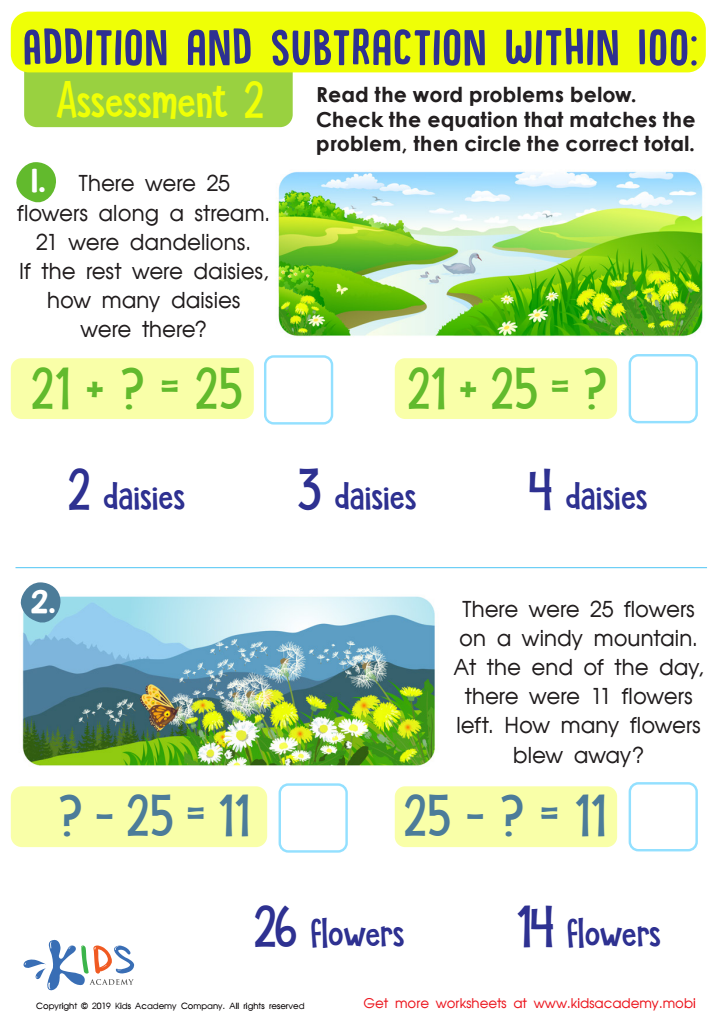
Assessment 2 Math Worksheet
 Assign to My Students
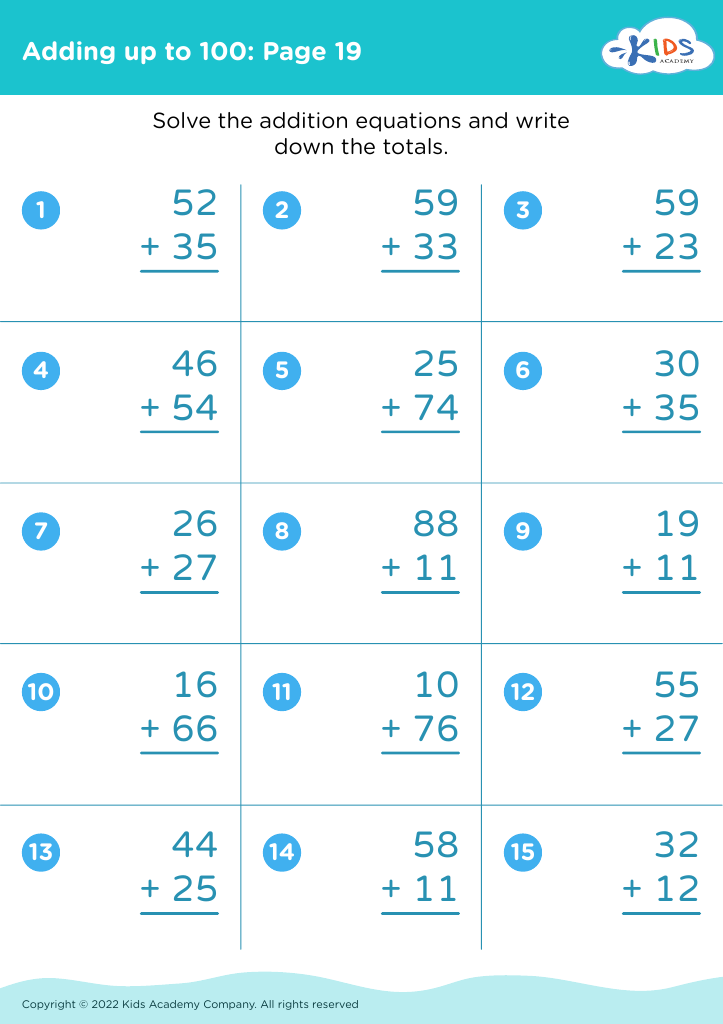
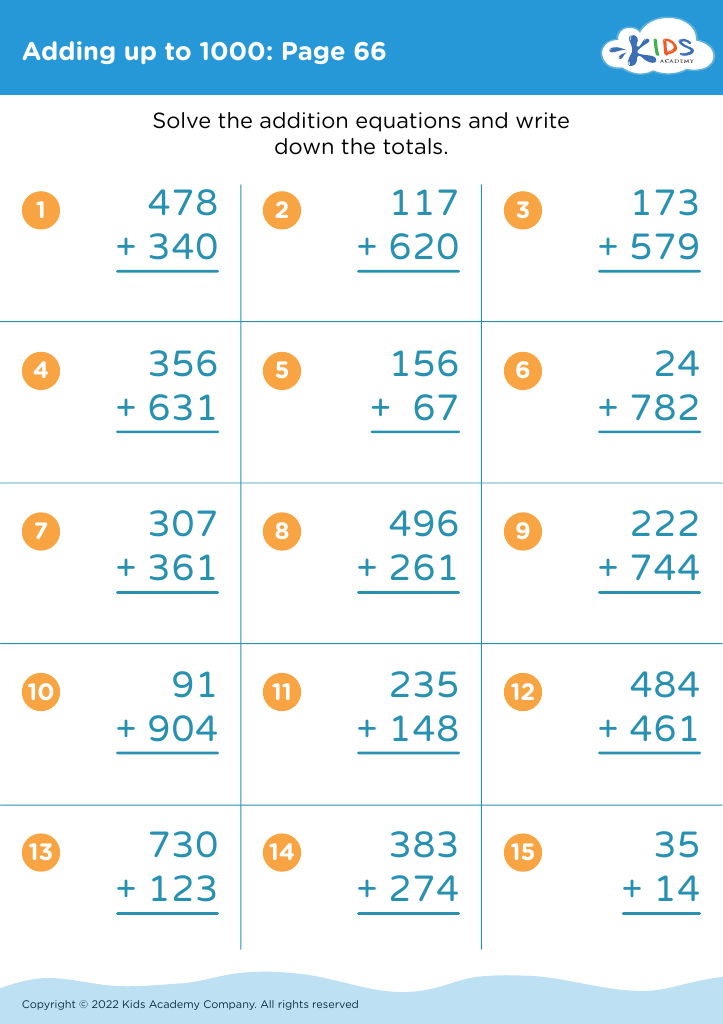








Parents and teachers should prioritize understanding number comparison, addition, and subtraction for children aged 7 to 9, as these are foundational skills essential for their mathematical development. At this stage, children are transitioning from concrete manipulation of numbers to more abstract reasoning, which is crucial for their future success in math.
Understanding number comparison helps children develop a sense of quantity and magnitude, enabling them to make informed decisions when solving problems. Recognizing which numbers are larger or smaller helps in refining their reasoning skills. Moreover, strong addition and subtraction skills underpin more complex mathematical concepts, such as multiplication and division. Mastery of these operations fosters confidence and encourages a positive attitude toward mathematics, reducing anxiety as the curriculum becomes more advanced.
Additionally, engaging in mathematical discussions and activities around these concepts promotes critical thinking and problem-solving skills. It also allows children to apply math in real-life contexts, reinforcing the importance of these skills beyond the classroom. Parents and teachers alike should work together to support mastery in these areas, utilizing games, visual aids, and discussions to create an engaging and enriching learning environment. Ultimately, this nurtures a child’s confidence and competence in math as they progress in their education.








