Pattern recognition Addition & Subtraction Worksheets for Ages 7-9
6 filtered results
-
From - To
Enhance your child's math skills with our engaging Pattern Recognition Addition & Subtraction Worksheets for ages 7-9! Designed to develop critical thinking, these worksheets focus on recognizing patterns in numbers, ensuring young learners grasp essential mathematical concepts. Each worksheet offers a variety of exercises that encourage children to explore relationships between numbers through addition and subtraction. With colorful illustrations and interactive activities, students will enjoy mastering their math fundamentals while improving their problem-solving abilities. Perfect for home or classroom use, these worksheets provide a fun and effective way to support your child's education. Start your child's journey to math success today!
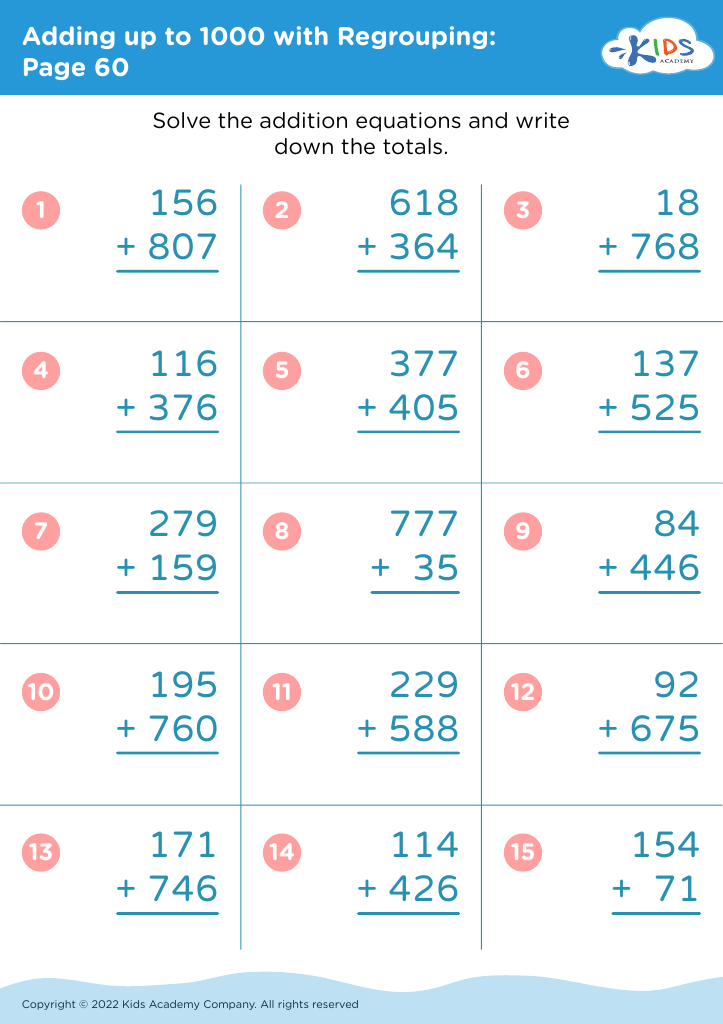
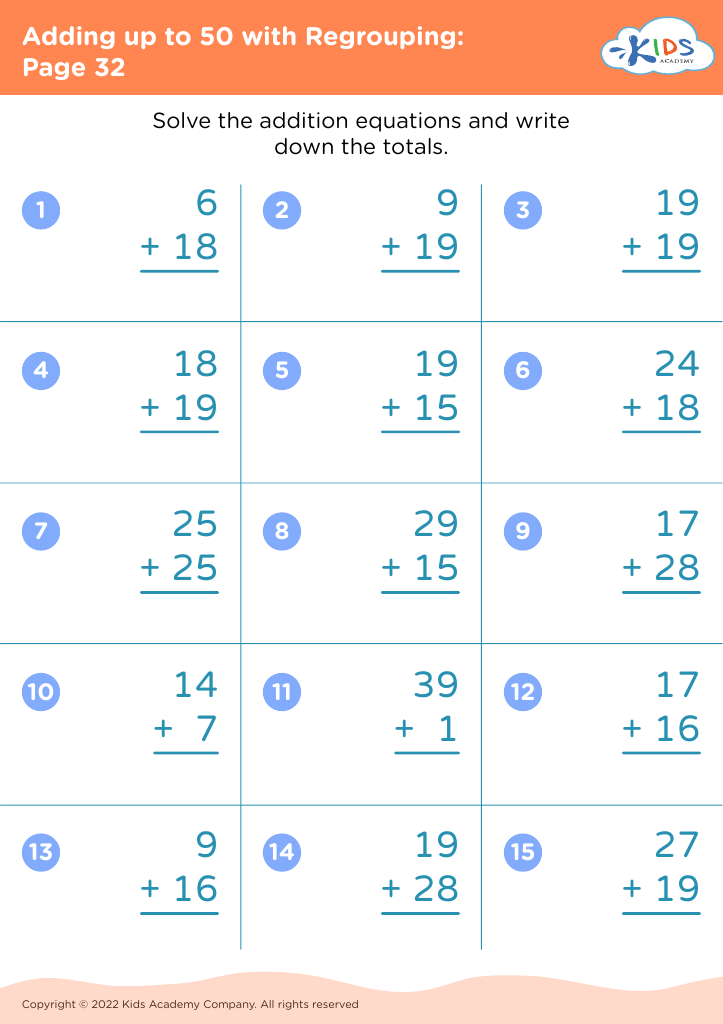
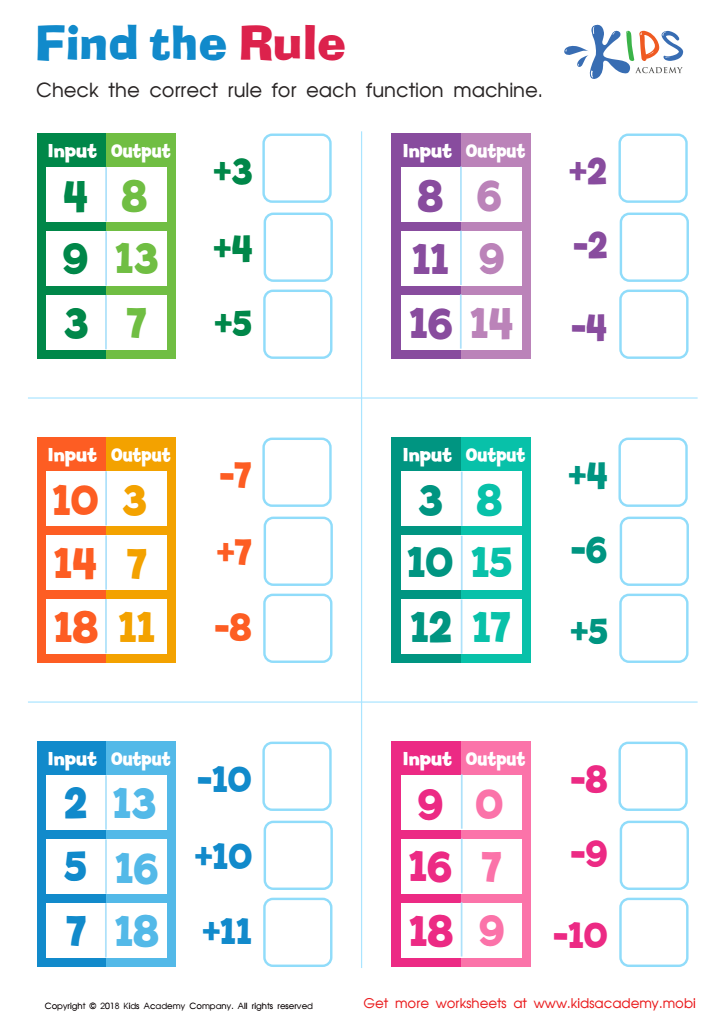
Find the Rule Worksheet
 Assign to My Students
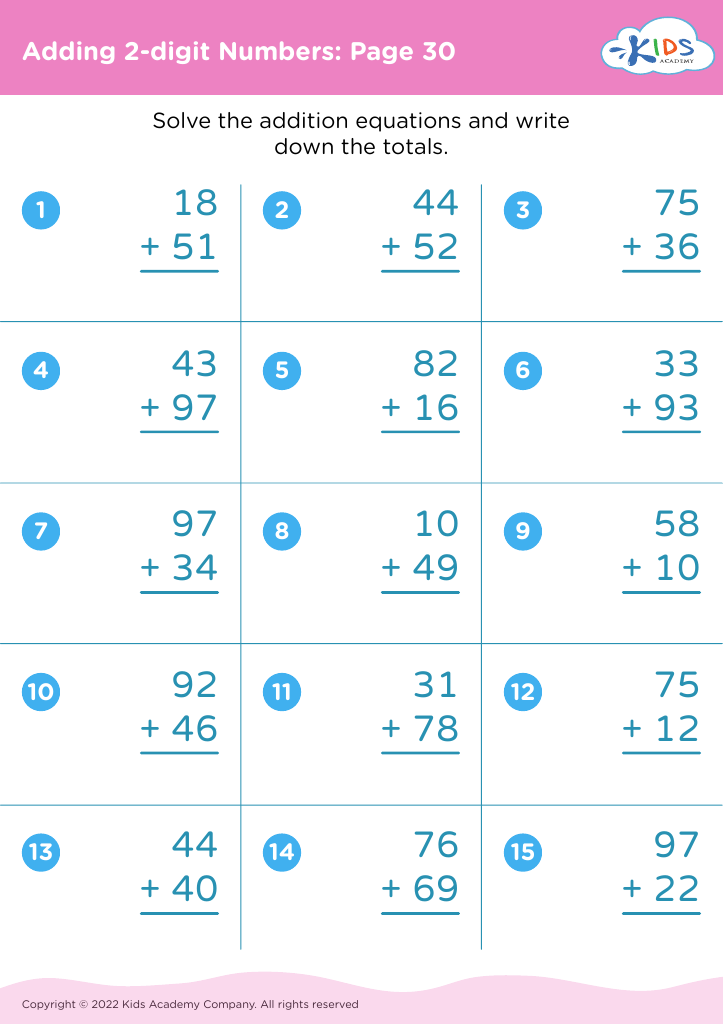
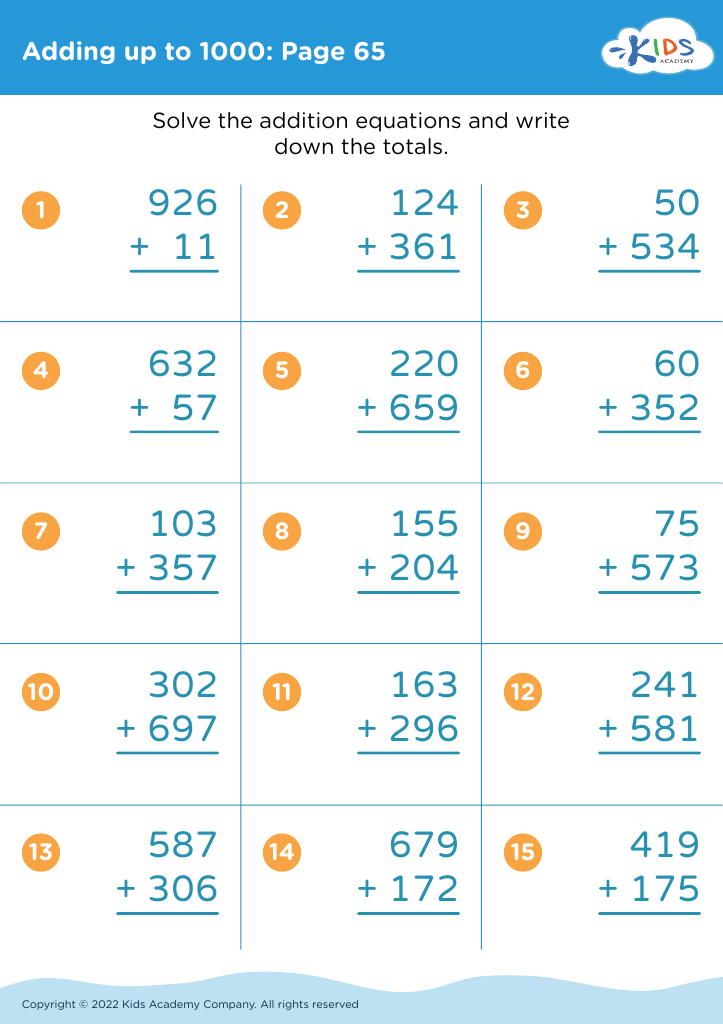
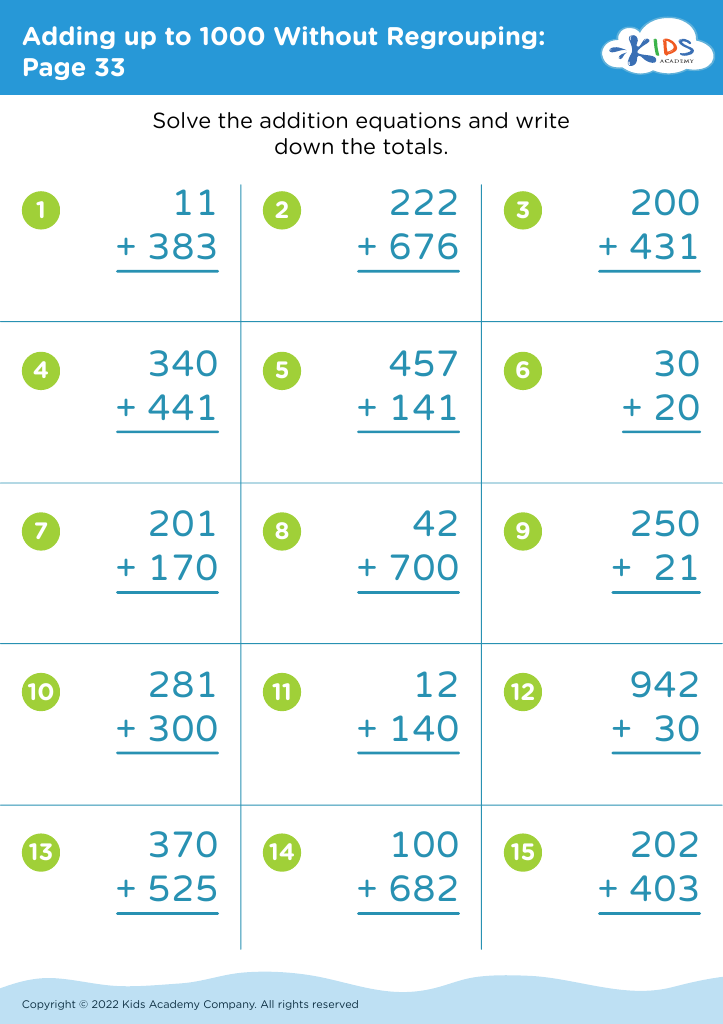








Pattern recognition in addition and subtraction is crucial for children aged 7-9 as it lays the groundwork for more advanced mathematical concepts. At this developmental stage, children are transitioning from basic arithmetic to more complex problem-solving skills. Recognizing patterns helps them understand numerical relationships, which can enhance their ability to predict outcomes and solve problems efficiently.
Parents and teachers should care about this because strong pattern recognition boosts conceptual understanding and retention. It encourages students to see beyond rote memorization of facts and embrace a deeper mathematical intuition. When students identify patterns, they can simplify calculations, making addition and subtraction less intimidating, especially when dealing with larger numbers.
Additionally, fostering pattern recognition helps develop critical thinking skills, enabling students to apply their knowledge in real-world situations. It can enhance their confidence in math, as they switch from feeling overwhelmed by numbers to finding joy in discovering relationships within math. This foundational skill not only benefits their mathematics education but also promotes overall cognitive development. Engaging students in pattern-based activities fosters a positive attitude towards math, empowering them for future challenges in academics and beyond. Thus, caring about this aspect in early education contributes significantly to their growth as learners.








