Understanding symmetry Addition & Subtraction Worksheets for Ages 7-9
25 filtered results
-
From - To
Explore our "Understanding Symmetry Addition & Subtraction Worksheets" designed for children ages 7-9! These engaging resources help young learners grasp the concept of symmetry while reinforcing their addition and subtraction skills. Through fun activities and colorful visuals, students will connect mathematical operations with symmetrical figures, enhancing their problem-solving abilities. Each worksheet encourages critical thinking while making math enjoyable. Ideal for classroom use or at-home learning, these worksheets support curriculum standards and foster a deep understanding of both symmetry and arithmetic. Download now and watch your child's confidence soar in math while exploring the beauty of symmetry!
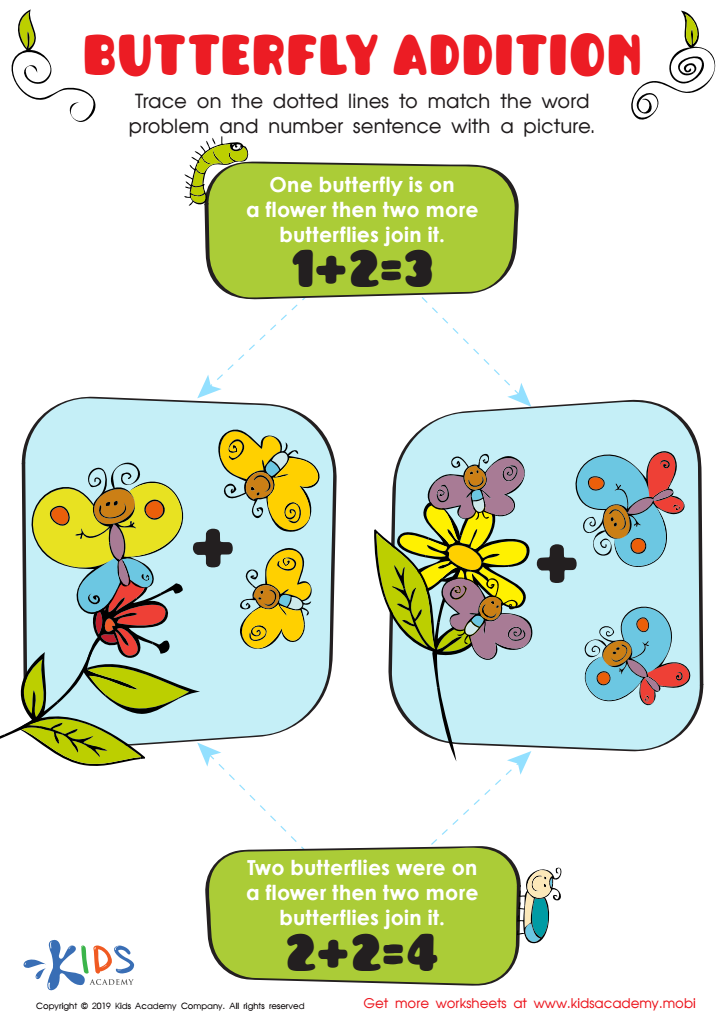
Butterfly Addition Worksheet
 Assign to My Students
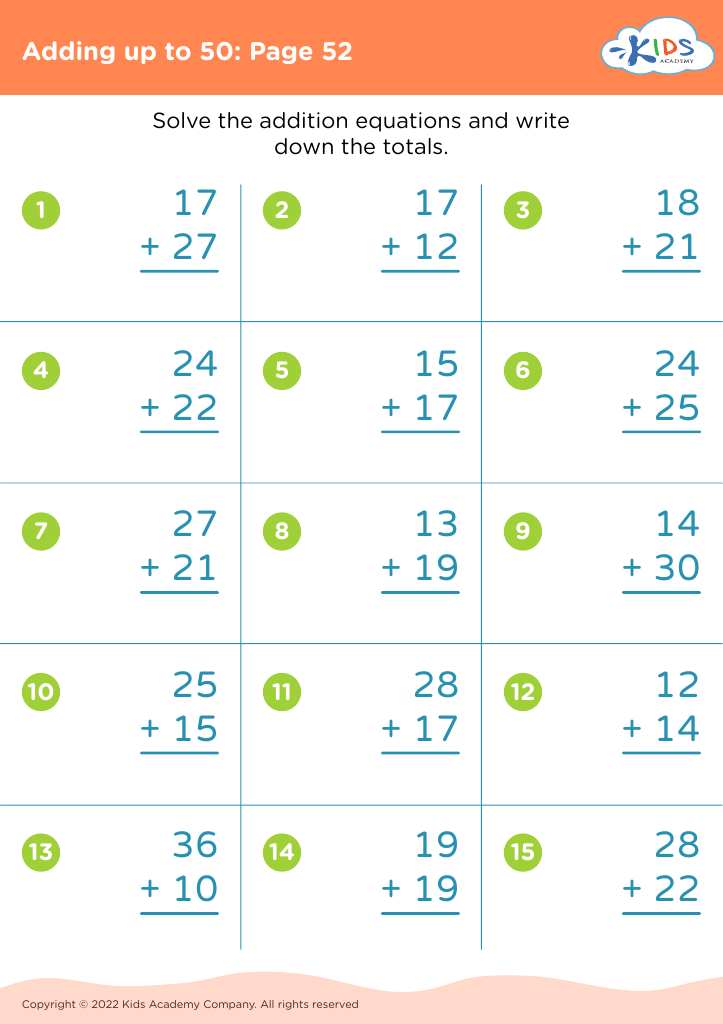
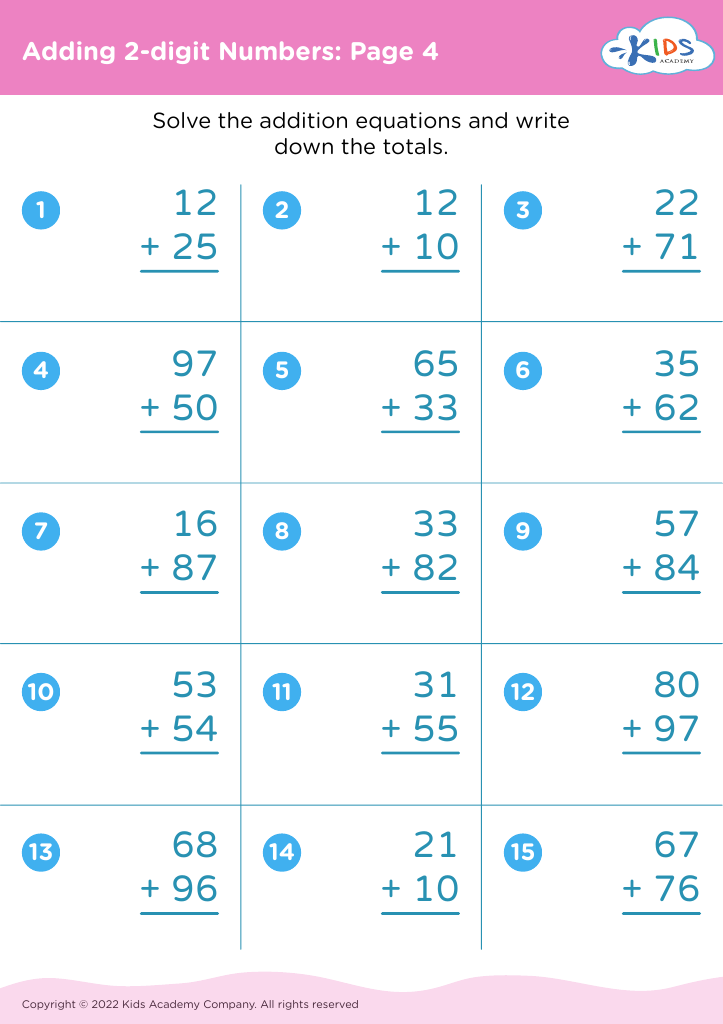
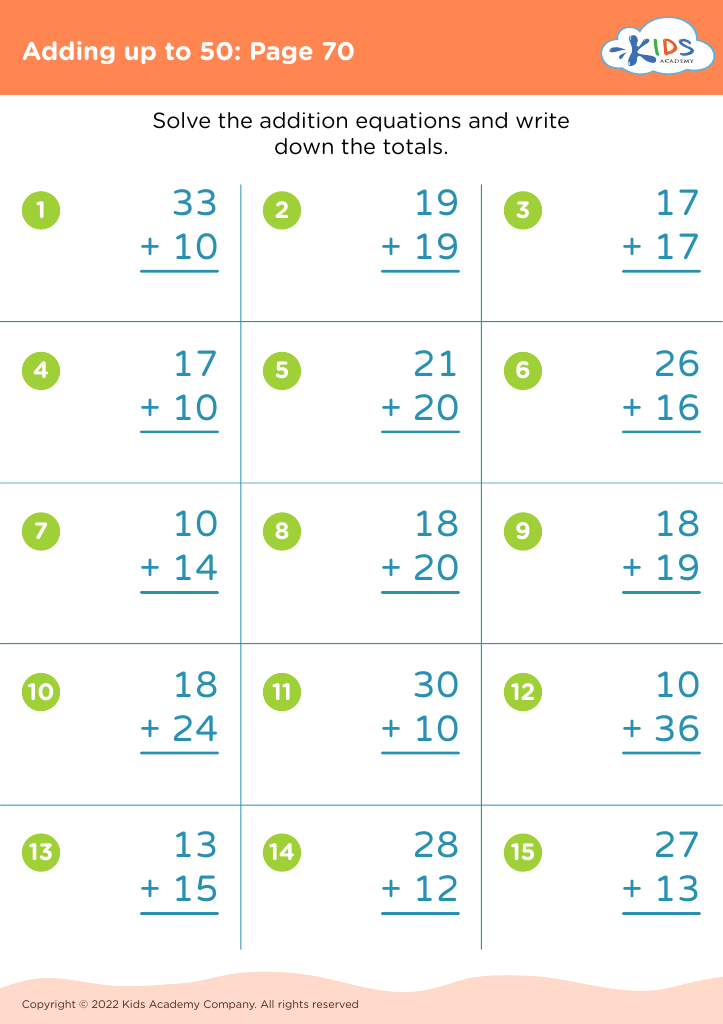
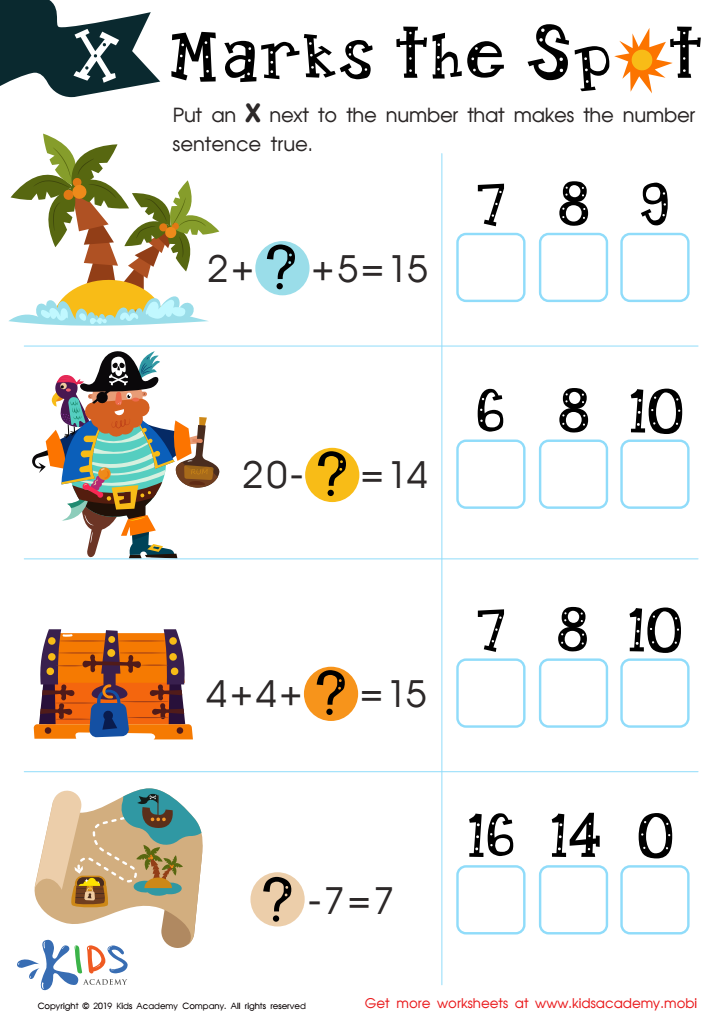
X Marks the Spot Worksheet
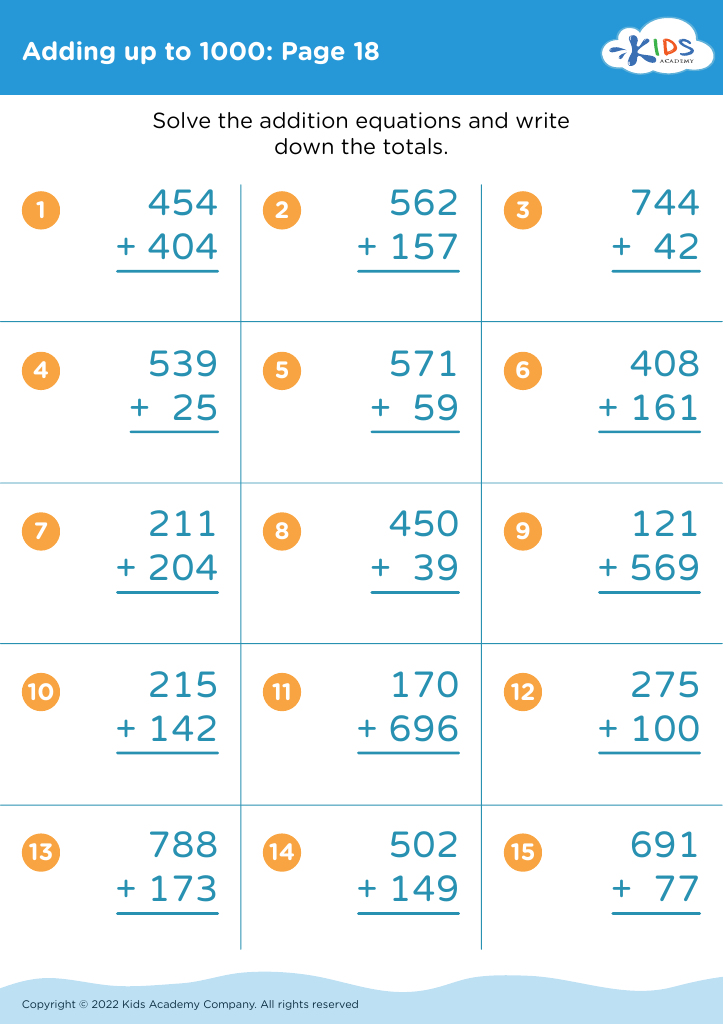
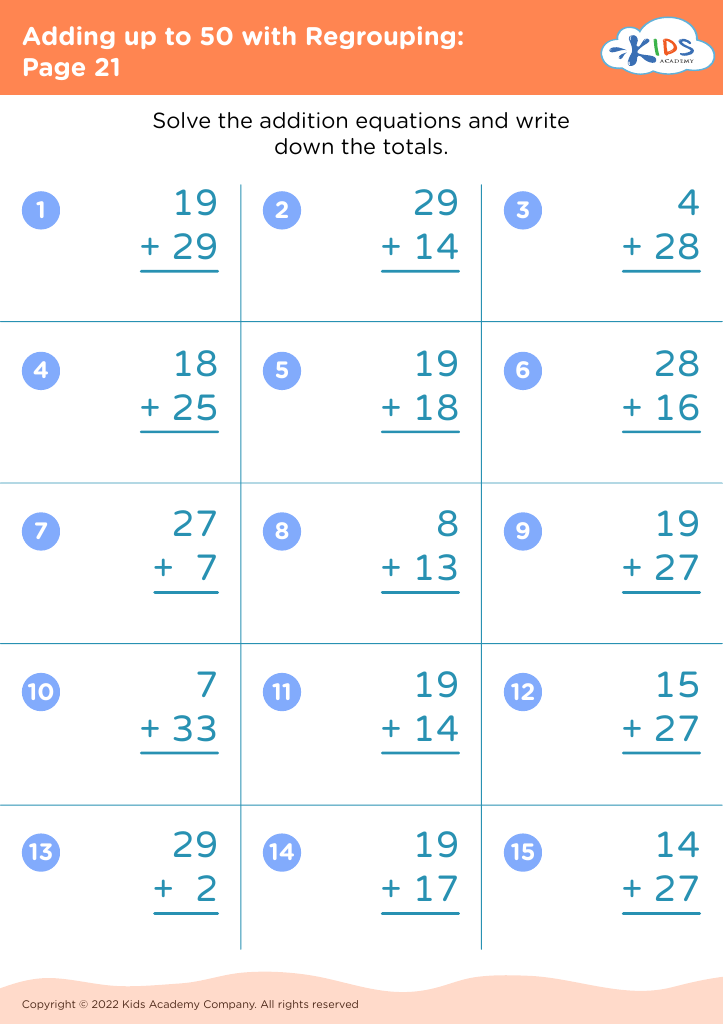
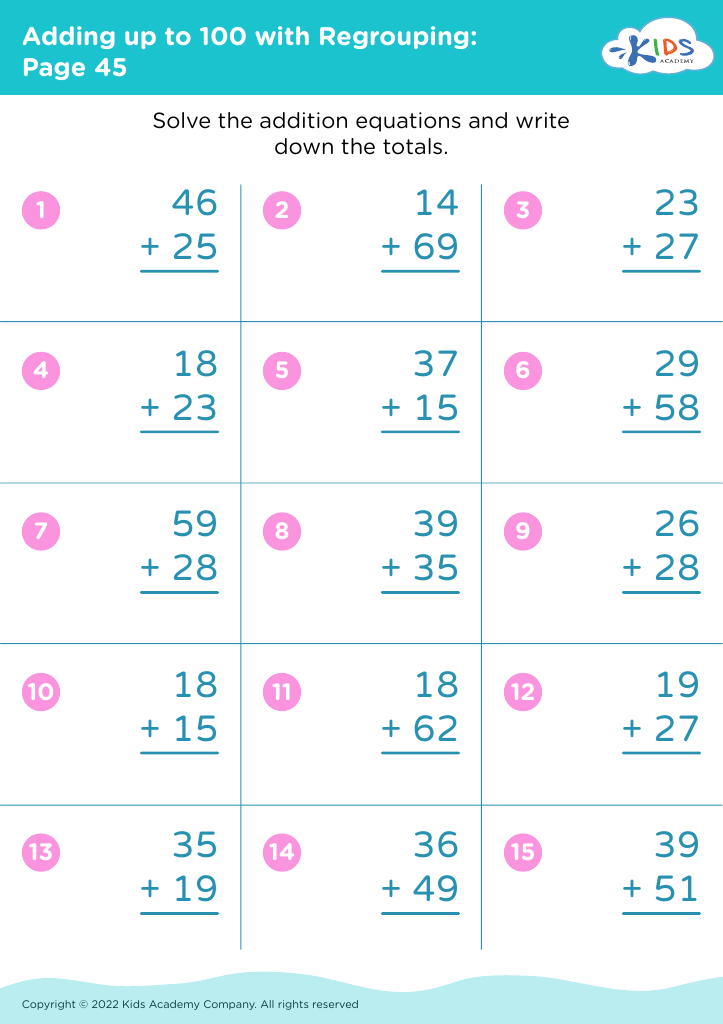
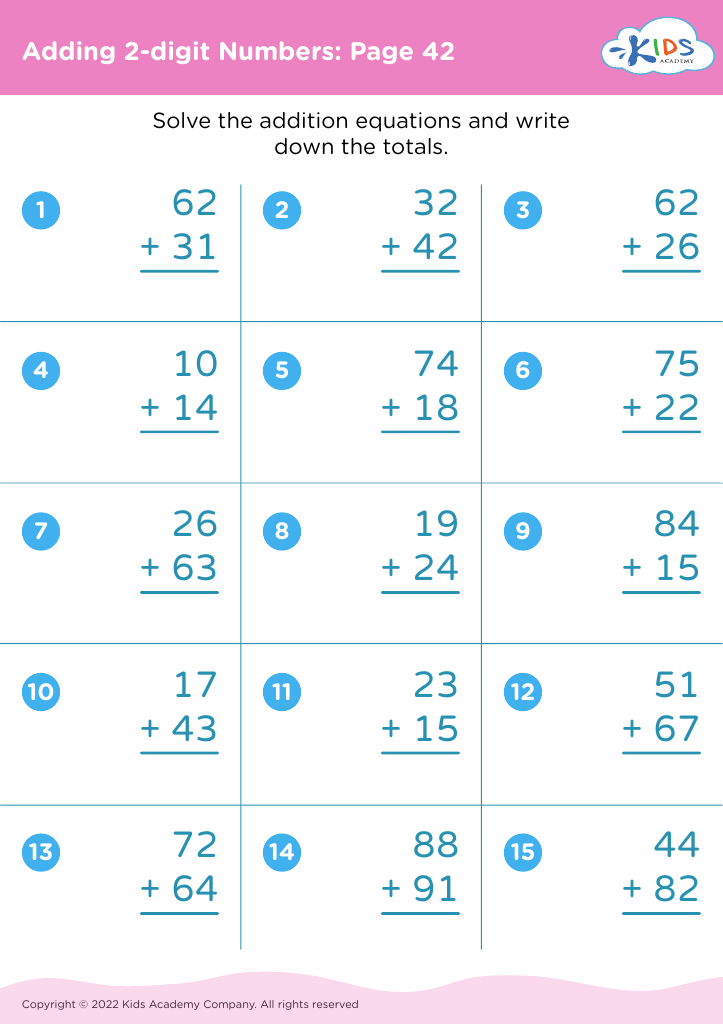








Understanding symmetry, addition, and subtraction is essential for children aged 7-9, not just for foundational math skills but also for cognitive development and problem-solving abilities. At this age, children are transitioning from concrete operational thought to more abstract reasoning. Recognizing symmetry enhances spatial awareness and promotes a better understanding of shapes and patterns, which are integral to more advanced math and science concepts later on.
Moreover, addition and subtraction are the building blocks of mathematics. Mastering these operations fosters numerical fluency and confidence, enabling students to tackle more complex problems in the future. When children grasp these concepts, they develop critical thinking skills through identifying relationships between numbers, which encourages logical reasoning.
For parents and teachers, emphasizing these skills can lead to improved academic performance, laying the groundwork for future learning in mathematics, science, and even arts. Engaging with children on these topics can also deepen the parent-child or teacher-student relationship, making learning a collaborative, enjoyable, and meaningful experience. This investment in their understanding not only supports their academic journey but also equips them with essential life skills for solving real-world problems. Thus, it’s imperative to give attention to these foundational concepts during this crucial developmental stage.








