Visual interpretation Addition & Subtraction Worksheets for Ages 7-9
4 filtered results
-
From - To
Discover our engaging Visual Interpretation Addition & Subtraction Worksheets designed specifically for children ages 7-9! These worksheets help young learners strengthen their math skills through visual aids, making abstract concepts accessible and fun. By incorporating images, charts, and diagrams, students can better understand addition and subtraction while enhancing their problem-solving abilities. Ideal for both classroom and home use, these resources encourage critical thinking and boost confidence in mathematical reasoning. Browse our collection of interactive worksheets that promote a hands-on approach to learning, and watch your child's mathematical understanding flourish as they enjoy this crucial educational tool!
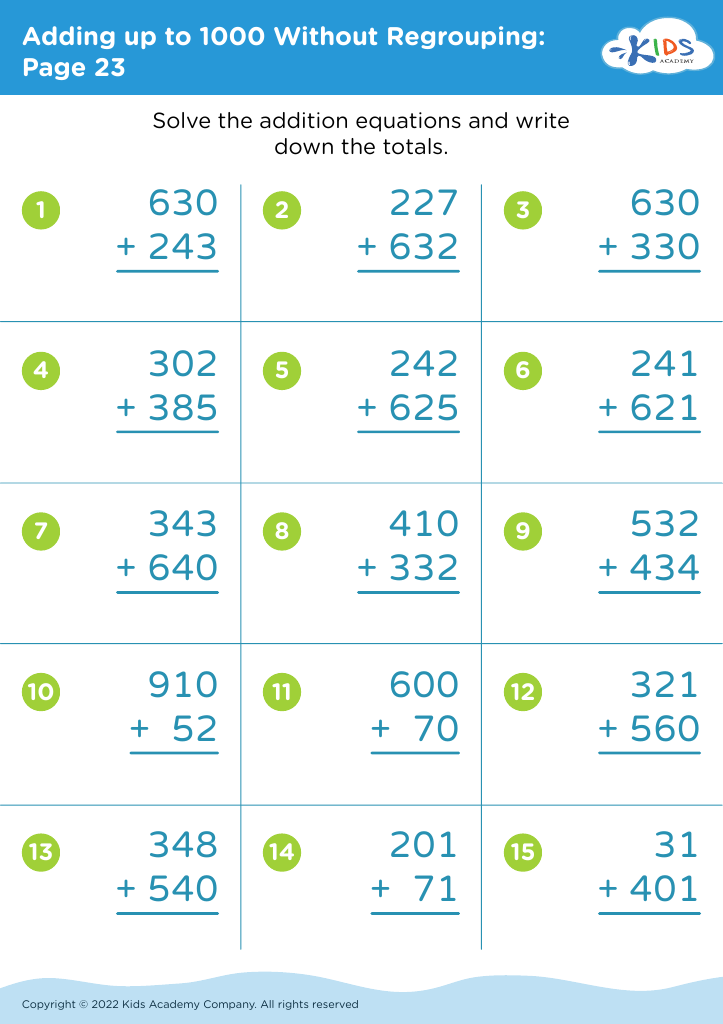
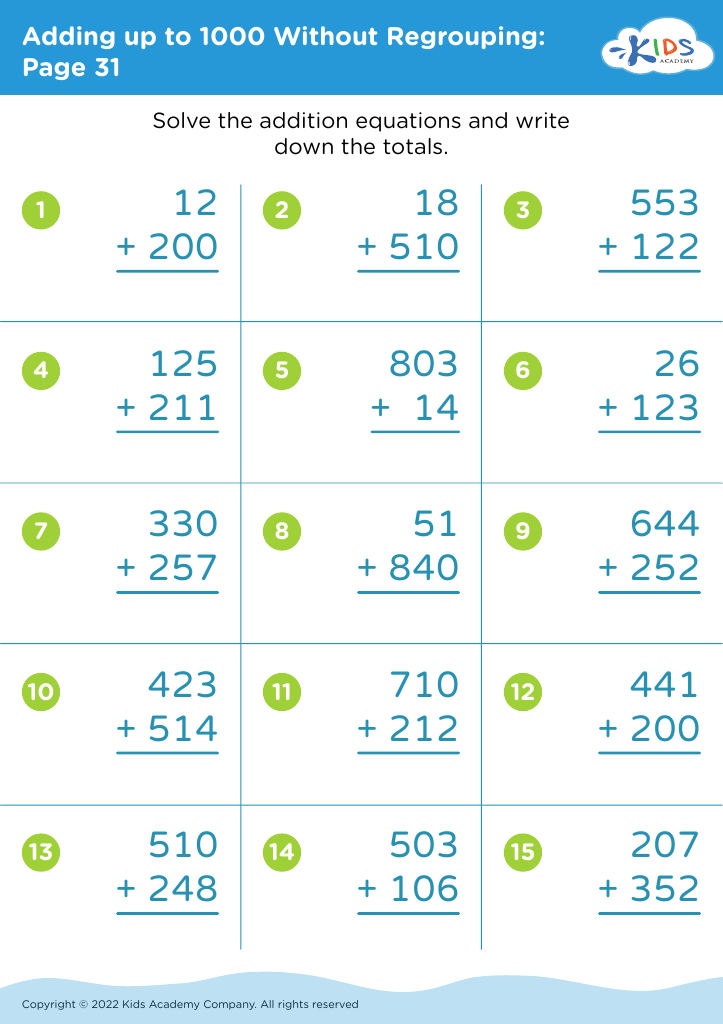
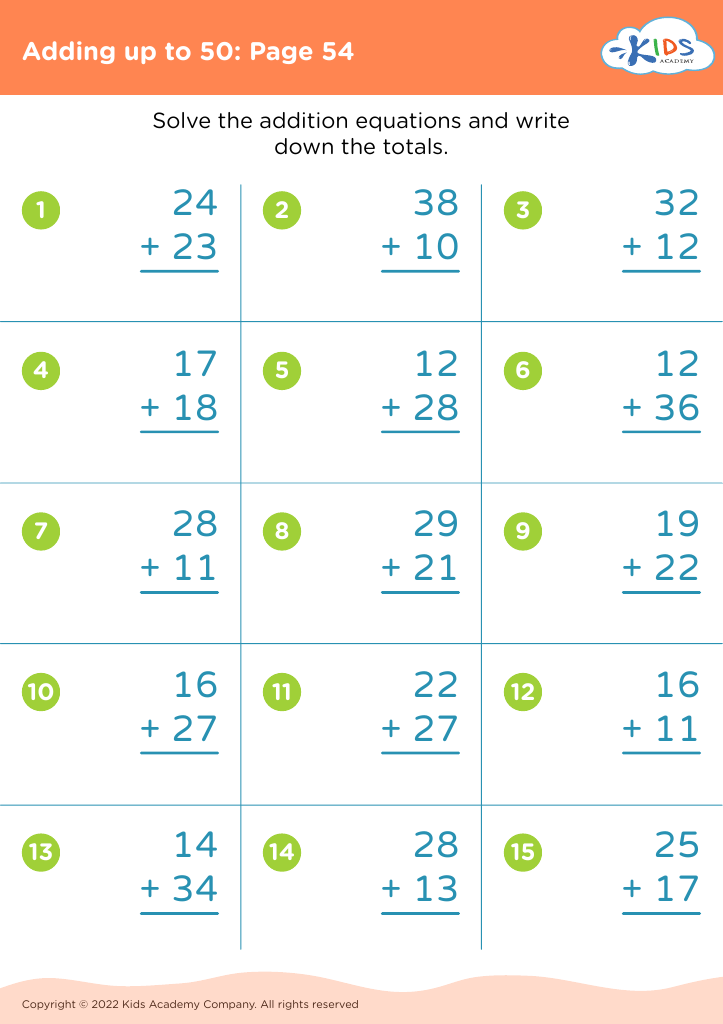
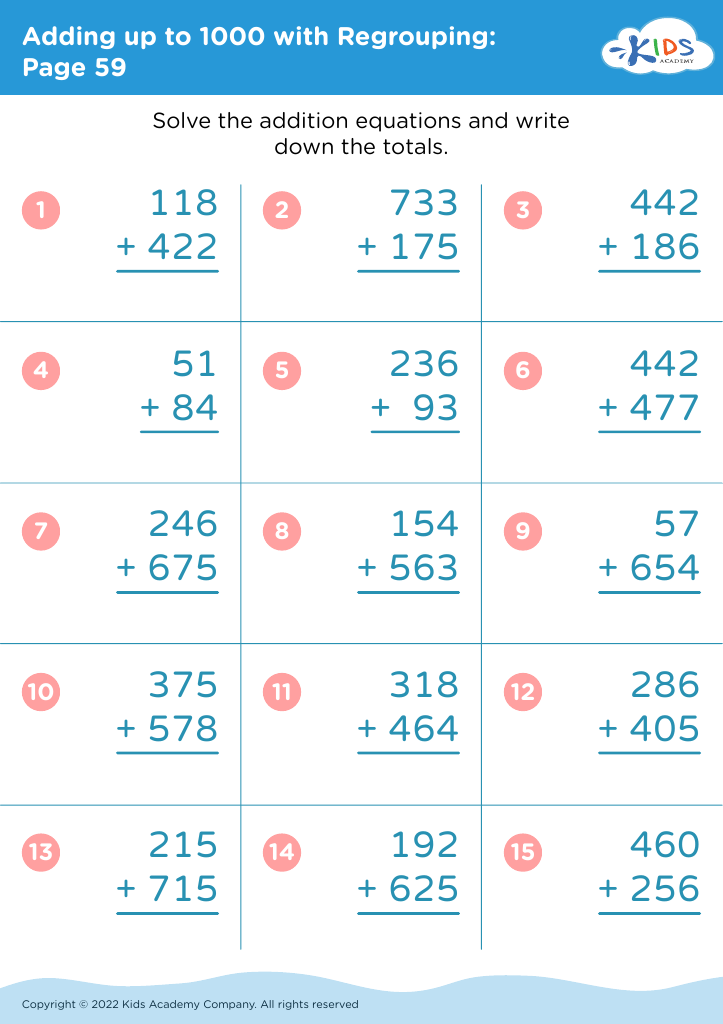








Visual interpretation of addition and subtraction is a crucial skill for children aged 7 to 9. During this developmental stage, students begin to grasp more abstract mathematical concepts. Visual representations, such as number lines, arrays, or drawings, help make these concepts tangible. By supporting children's ability to visualize problems, parents and teachers empower them to understand relationships between numbers and operations more clearly.
Using visual aids can help children break down complex problems into manageable parts. This not only enhances their problem-solving skills but also fosters a deeper understanding of mathematics. Additionally, visual interpretation builds confidence, as students can see their thought processes laid out in a way that's easy to follow.
At this age, children are often transitioning from concrete to abstract thinking. Engaging them in visual learning helps anchor their understanding and prepares them for more complex concepts ahead. Moreover, encouraging discussion around visual strategies promotes critical thinking and communication skills. When parents and teachers prioritize visual interpretation in addition and subtraction, they better equip students with essential mathematical framework they will rely on throughout their education, ultimately influencing their attitude towards math for years to come.








