Filters

16 filtered results

Clear all filters
Favorites
With answer key
Interactive

16 filtered results

Difficulty Level

Grade


Welcome to our Basic Addition Worksheets for Ages 7-9! Designed to strengthen foundational math skills, these engaging worksheets offer a variety of problems that promote learning through practice. Your child will develop confidence in addition with colorful graphics and interactive activities that keep learning fun. Our resources cater to diverse learning styles, ensuring every child finds success in mastering basic addition concepts. Perfect for home or classroom use, these worksheets provide clear instructions and progressively challenging exercises to foster math proficiency. Download and watch your young mathematician thrive with essential addition practice tailored just for them!
Check out this FREE Trial Lesson on Addition for age 7-9!

D

Favorites
With answer key
Interactive
  • 7-9
  • Basic Addition
  • Addition
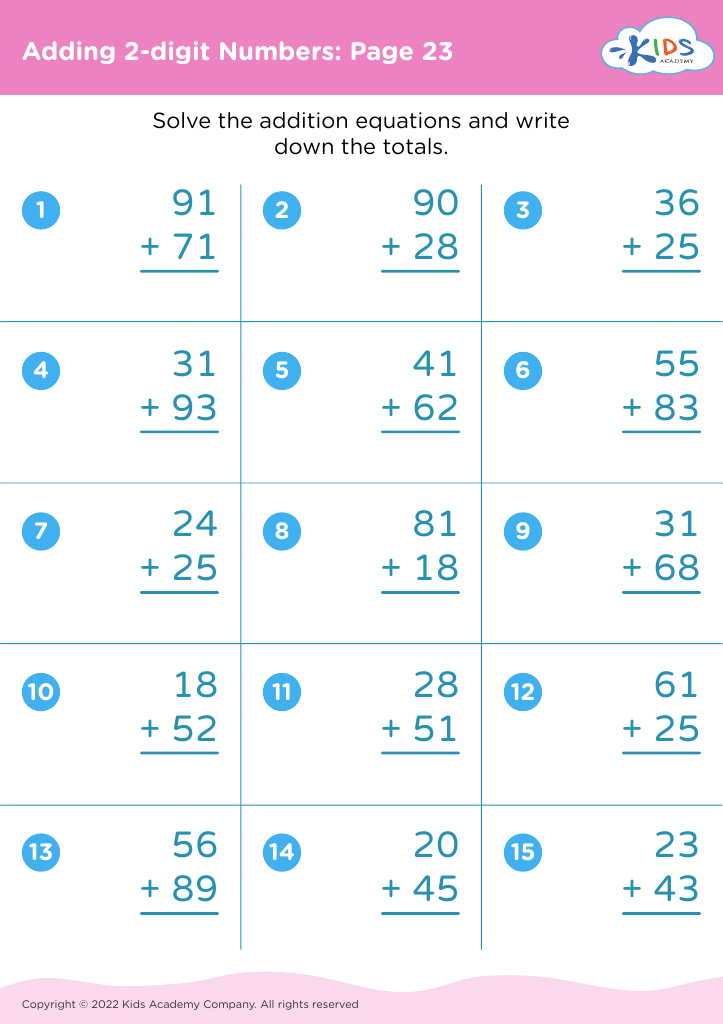
Adding 2-digit Numbers: Page 23

Adding 2-digit Numbers: Page 23

Adding 2-digit Numbers: Page 23
Worksheet
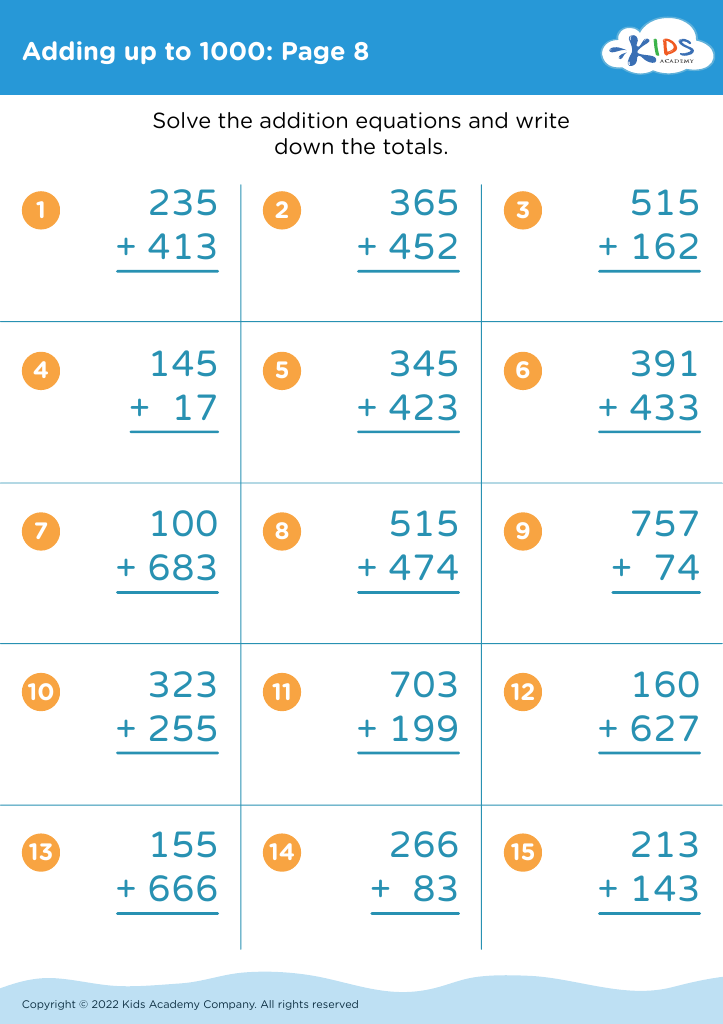
Adding up to 1000: Page 8

Adding up to 1000: Page 8

Adding up to 1000: Page 8
Worksheet
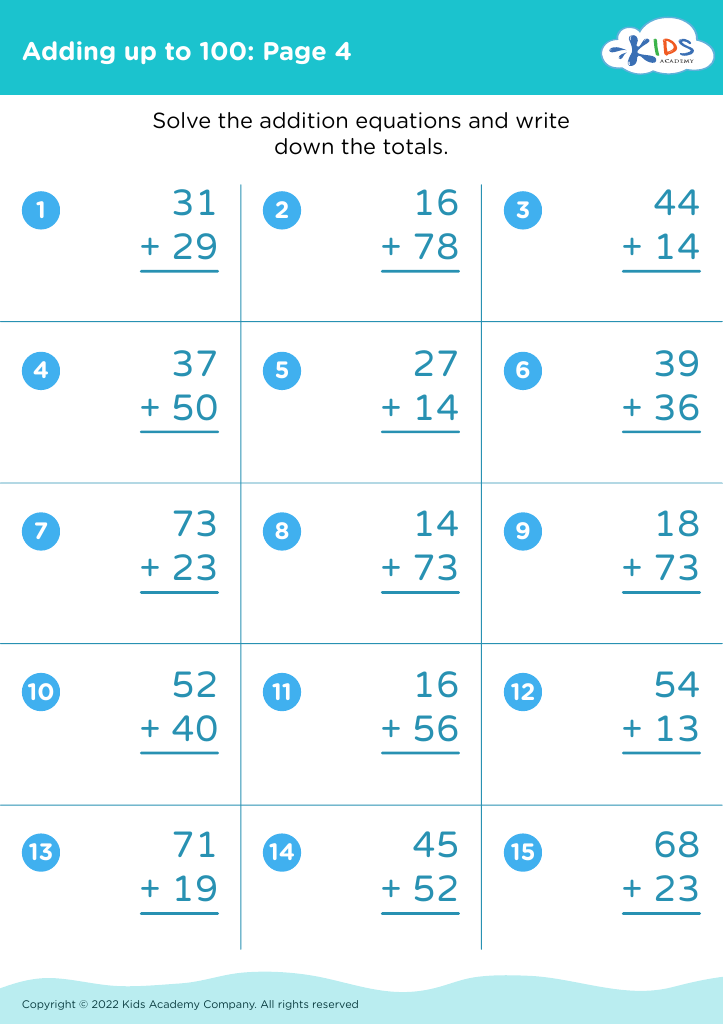
Adding up to 100: Page 4

Adding up to 100: Page 4

Adding up to 100: Page 4
Worksheet
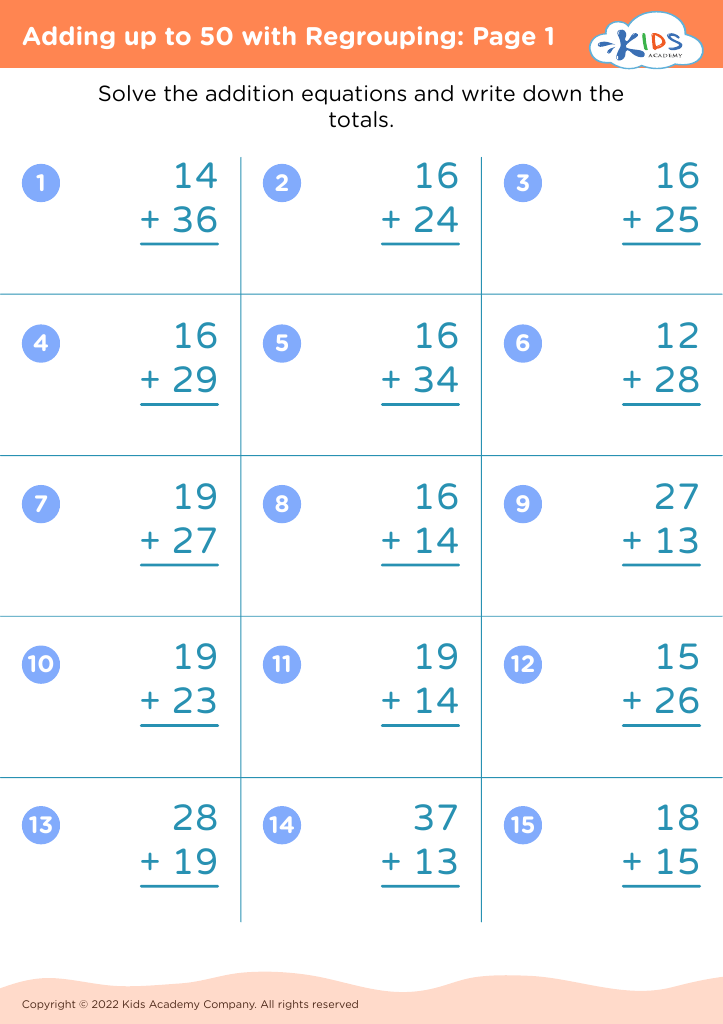
Adding up to 50 with Regrouping: Page 1
Worksheet
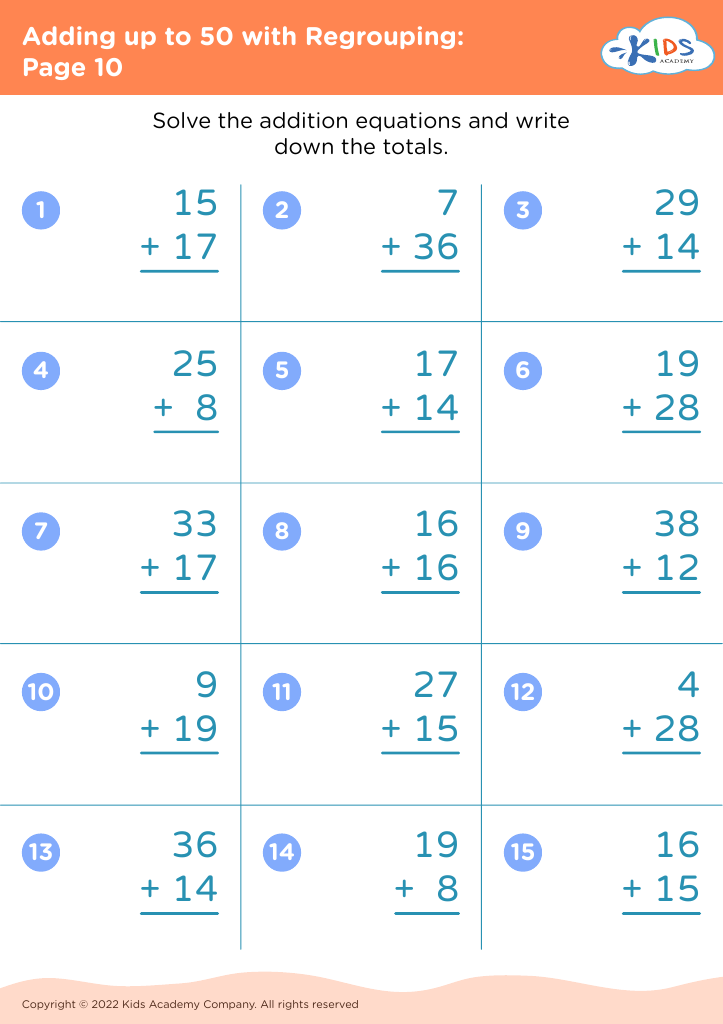
Adding up to 50 with Regrouping: Page 10
Worksheet
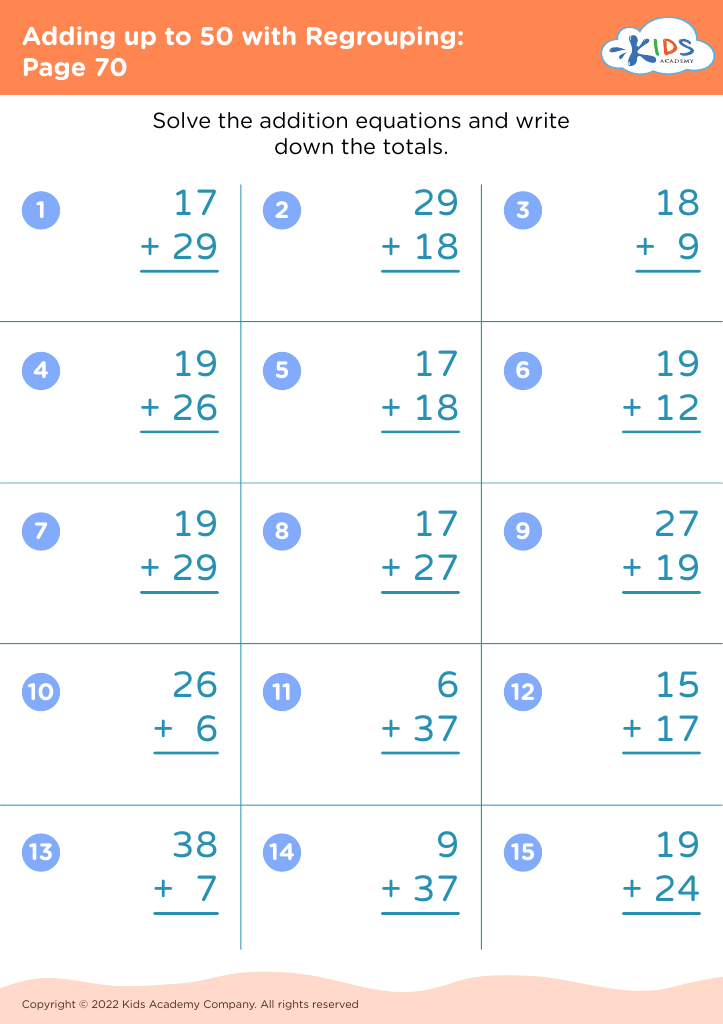
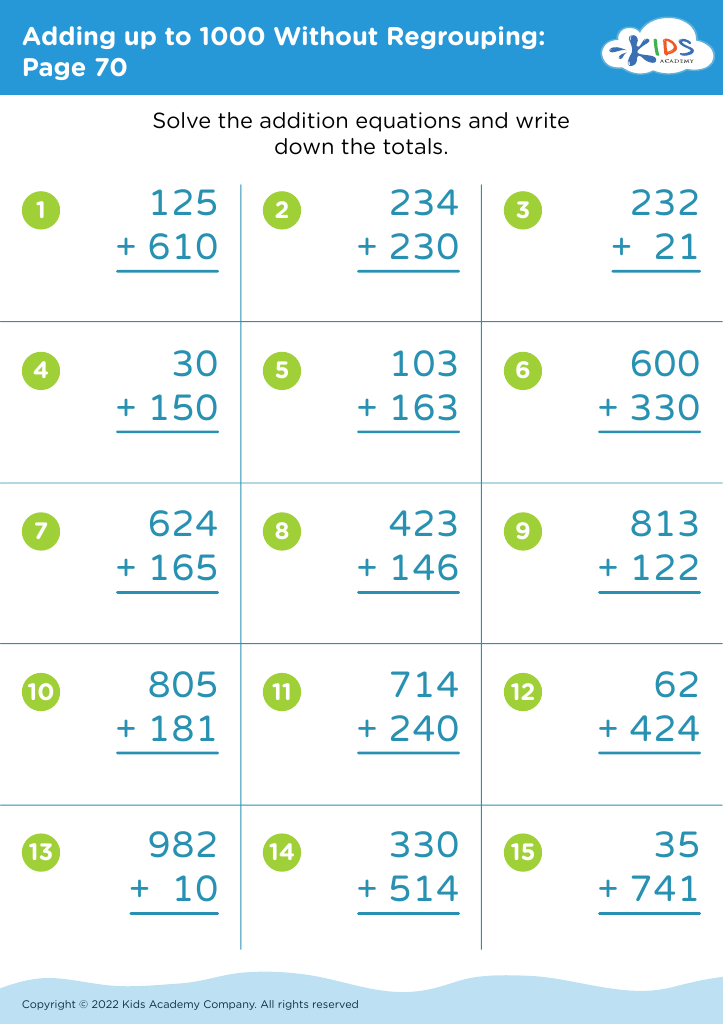
Adding up to 50 with Regrouping: Page 70
Worksheet
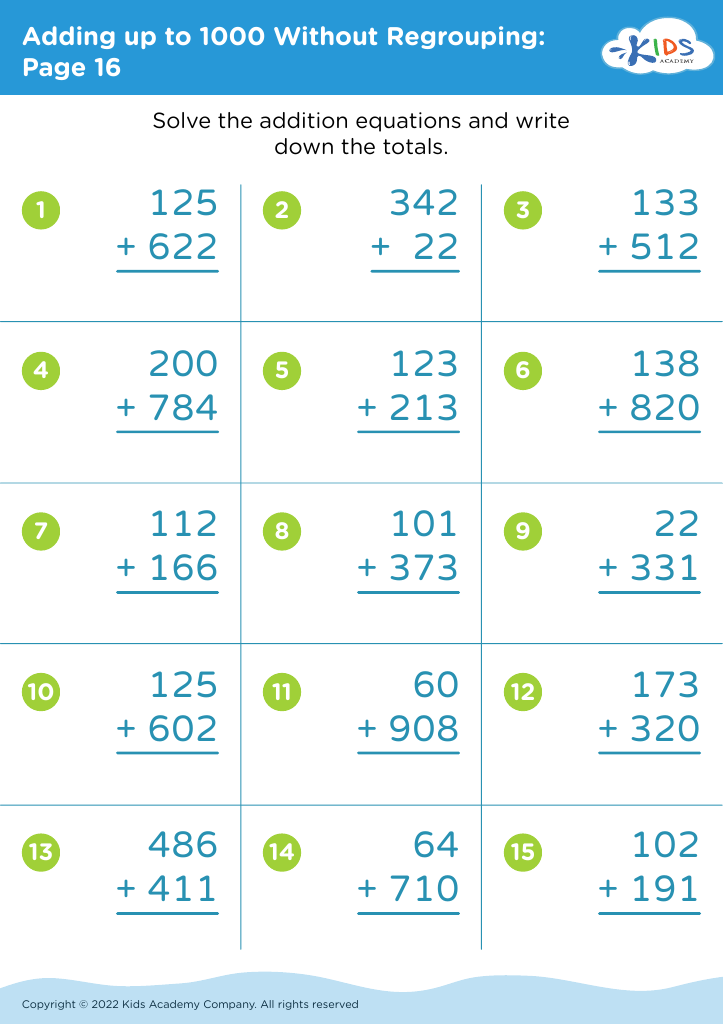
Adding up to 1000 Without Regrouping: Page 16
Worksheet
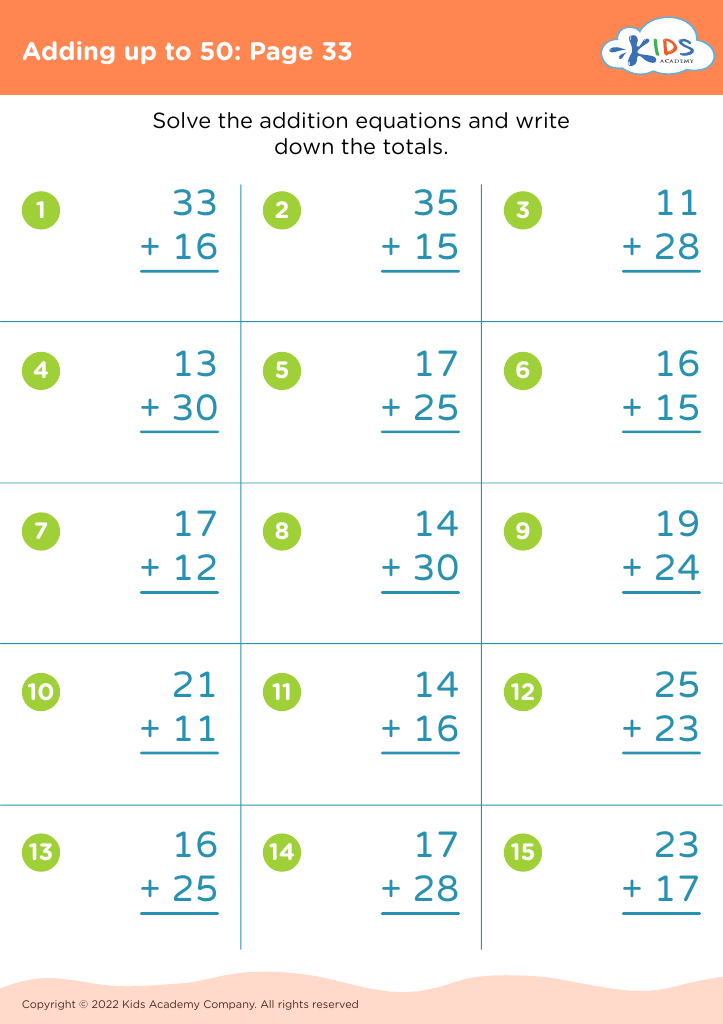
Adding up to 50: Page 33

Adding up to 50: Page 33

Adding up to 50: Page 33
Worksheet
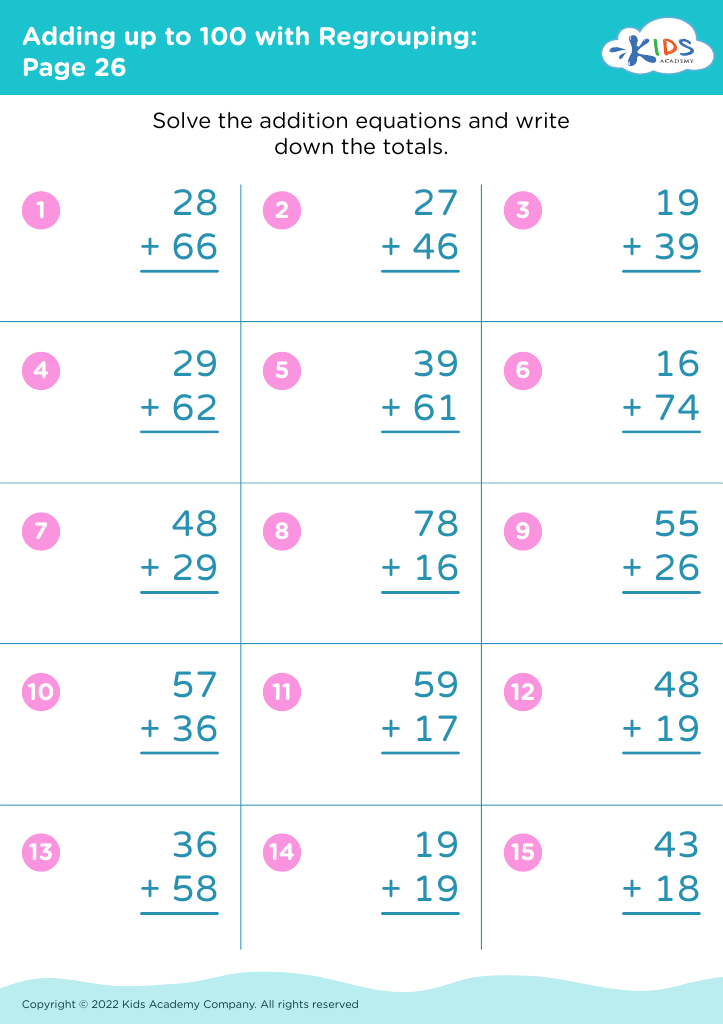
Adding up to 100 with Regrouping: Page 26
Worksheet
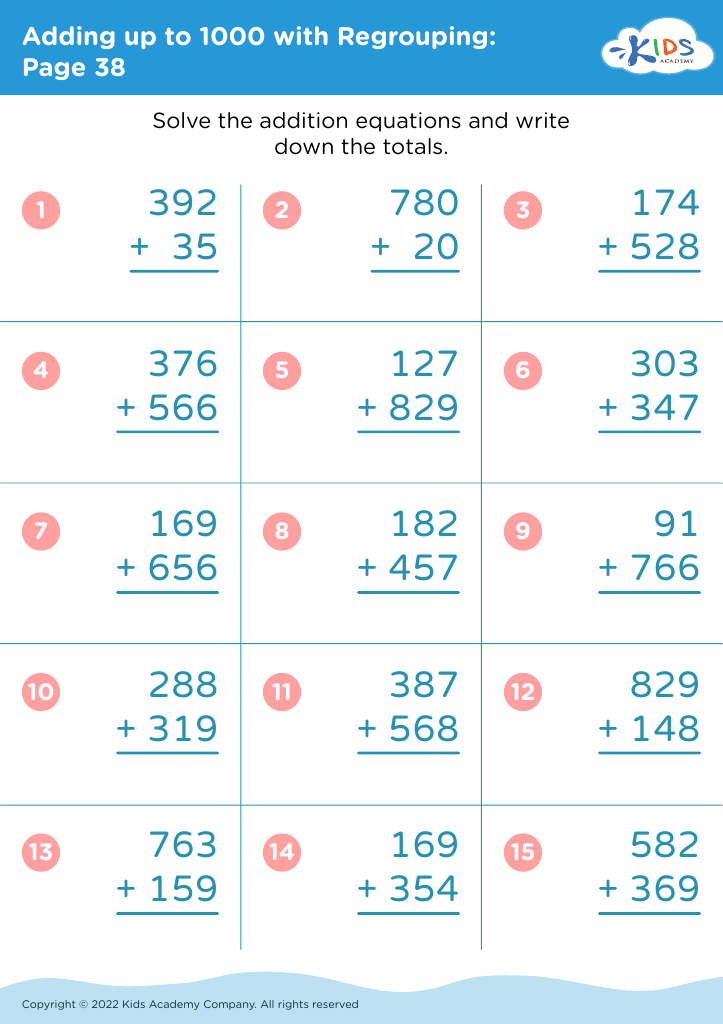
Adding up to 1000 with Regrouping: Page 38
Worksheet
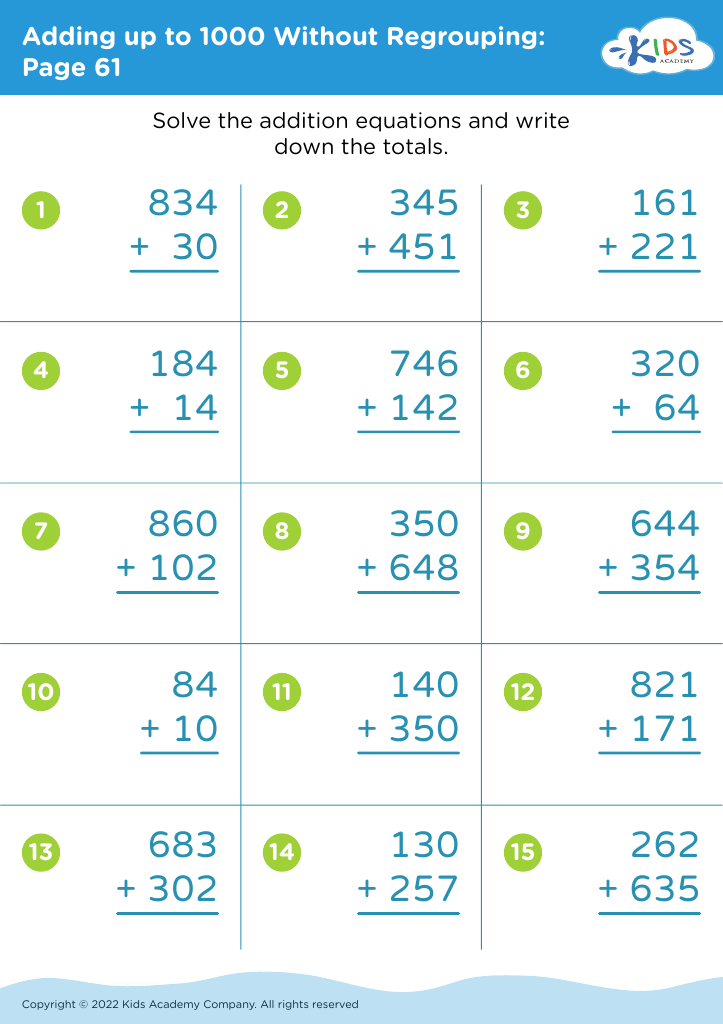
Adding up to 1000 Without Regrouping: Page 61
Worksheet
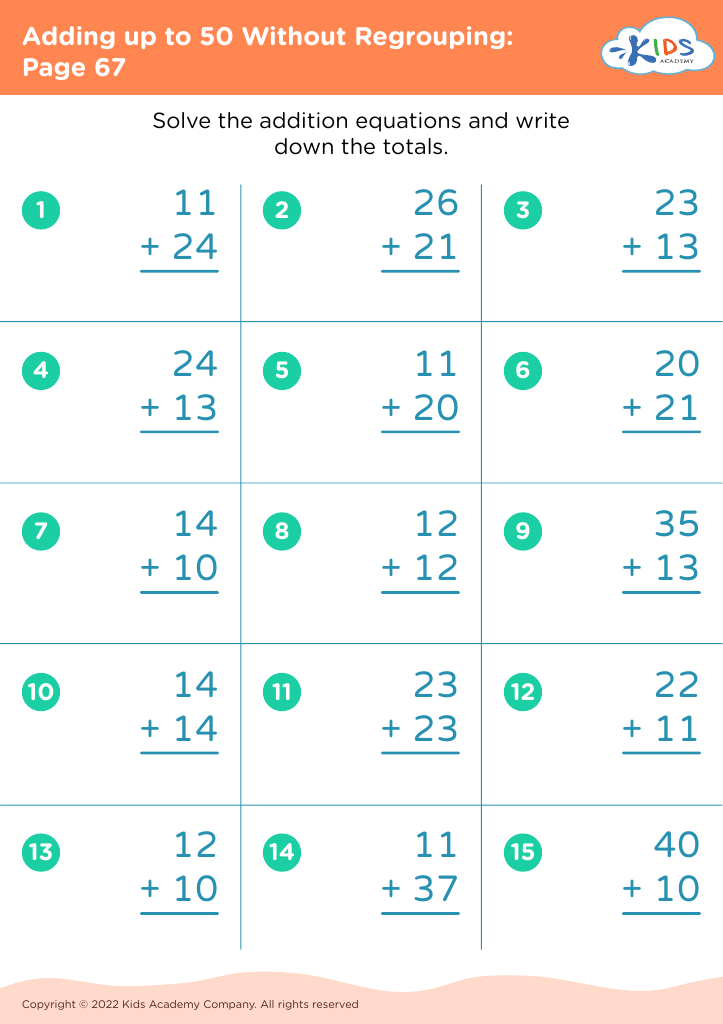
Adding up to 50 Without Regrouping: Page 67
Worksheet
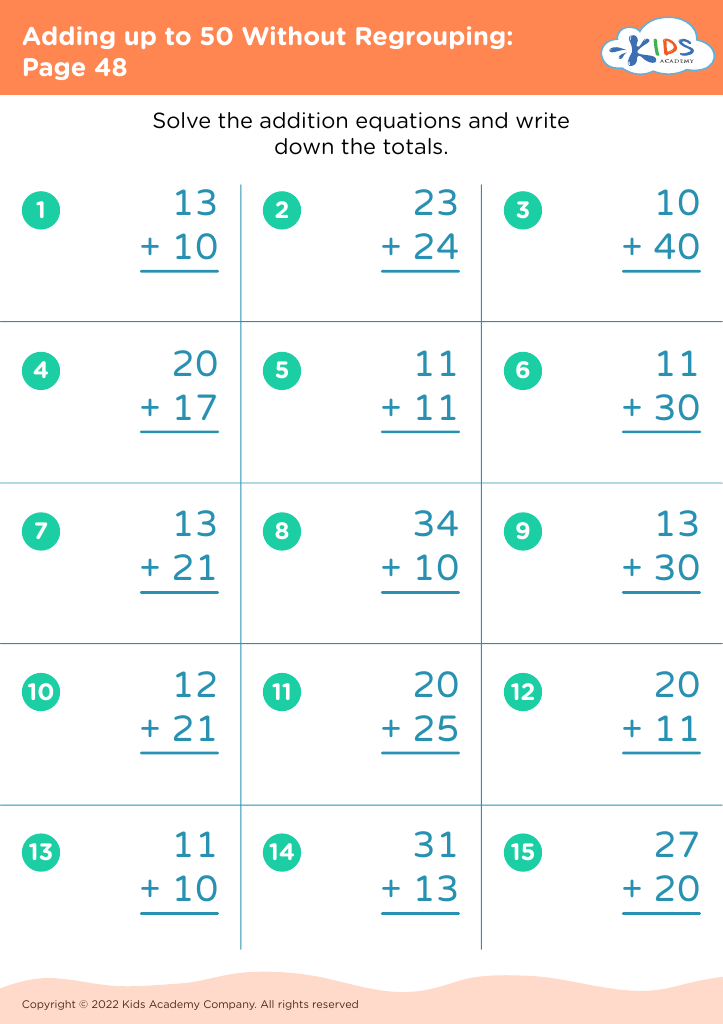
Adding up to 50 Without Regrouping: Page 48
Worksheet
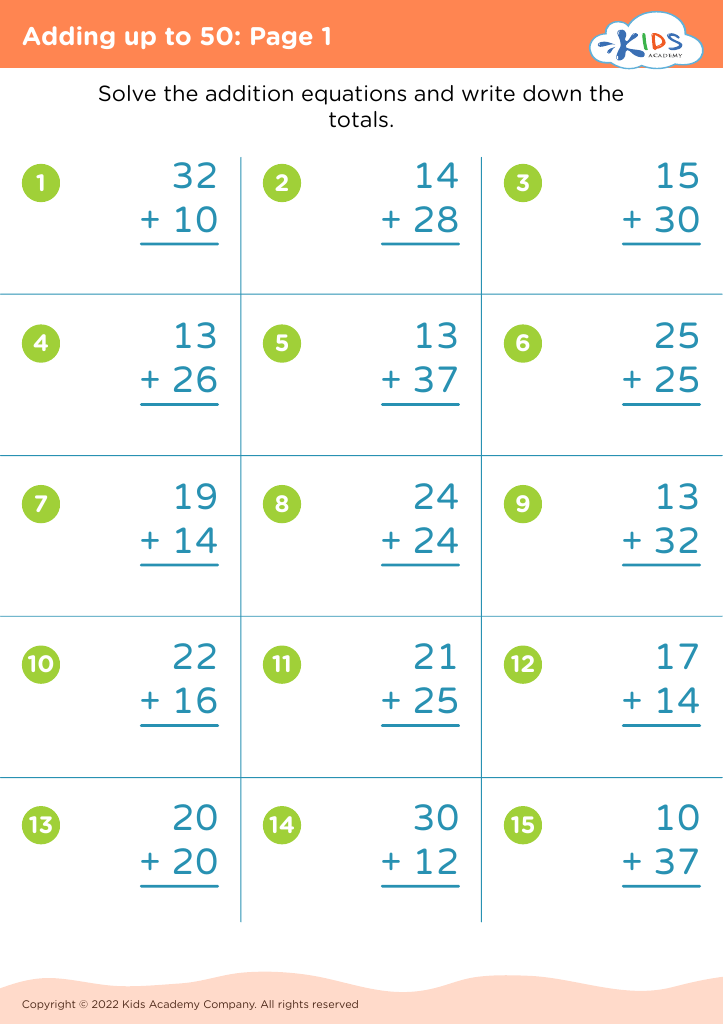
Adding up to 50: Page 1

Adding up to 50: Page 1

Adding up to 50: Page 1
Worksheet
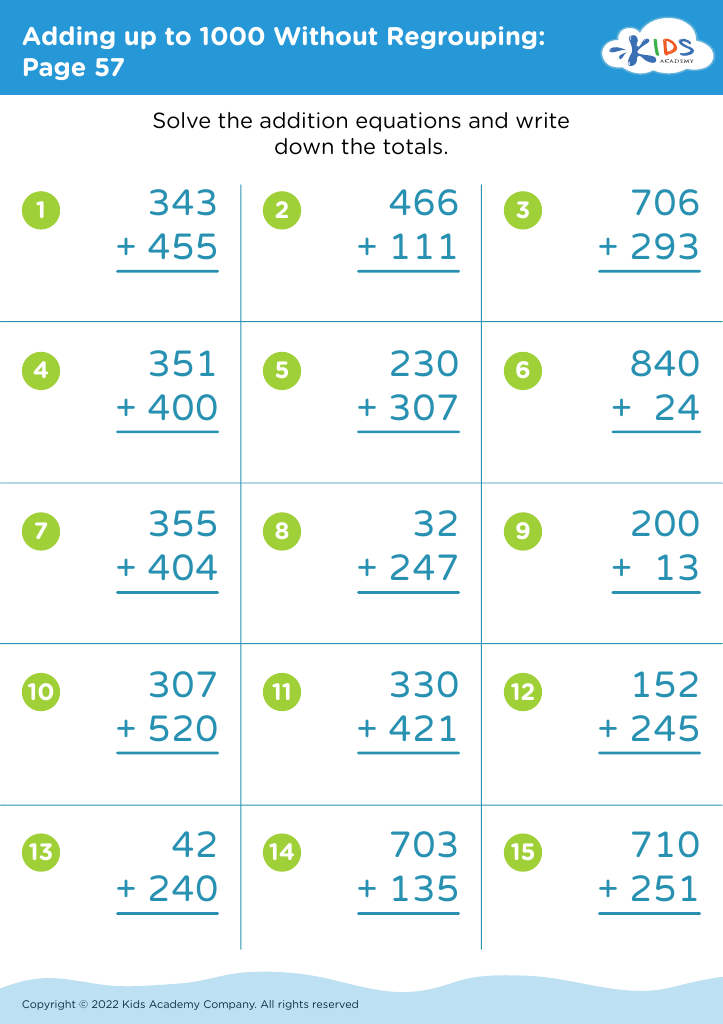
Adding up to 1000 Without Regrouping: Page 57
Worksheet
Adding up to 1000 Without Regrouping: Page 70
Worksheet


Basic addition is a foundational skill that plays a crucial role in a child’s overall academic development, particularly between ages 7-9. During this age, children are transitioning into more complex arithmetic operations, making a solid understanding of addition essential. Mastery of this skill not only enhances their confidence in mathematics but also prepares them for higher-level concepts such as subtraction, multiplication, and division.

Parents and teachers should care about fostering strong addition skills because fluency in basic addition is linked to improved problem-solving abilities and critical thinking. A solid grasp of addition helps children excel in everyday scenarios, like budgeting, shopping, and time management, establishing practical life skills early on. Furthermore, way these young learners approach math can shape their attitudes toward the subject; positive experiences with addition can foster a love for learning and greater persistence in tackling challenging topics.

Engaging children in fun and interactive addition activities can foster a deeper understanding and enable them to see the relevance of math in real life. By prioritizing basic addition, parents and teachers set a strong foundation for future mathematical success, ultimately empowering children to become competent and confident learners.