Develop problem-solving skills Addition Worksheets for Ages 7-9
6 filtered results
-
From - To
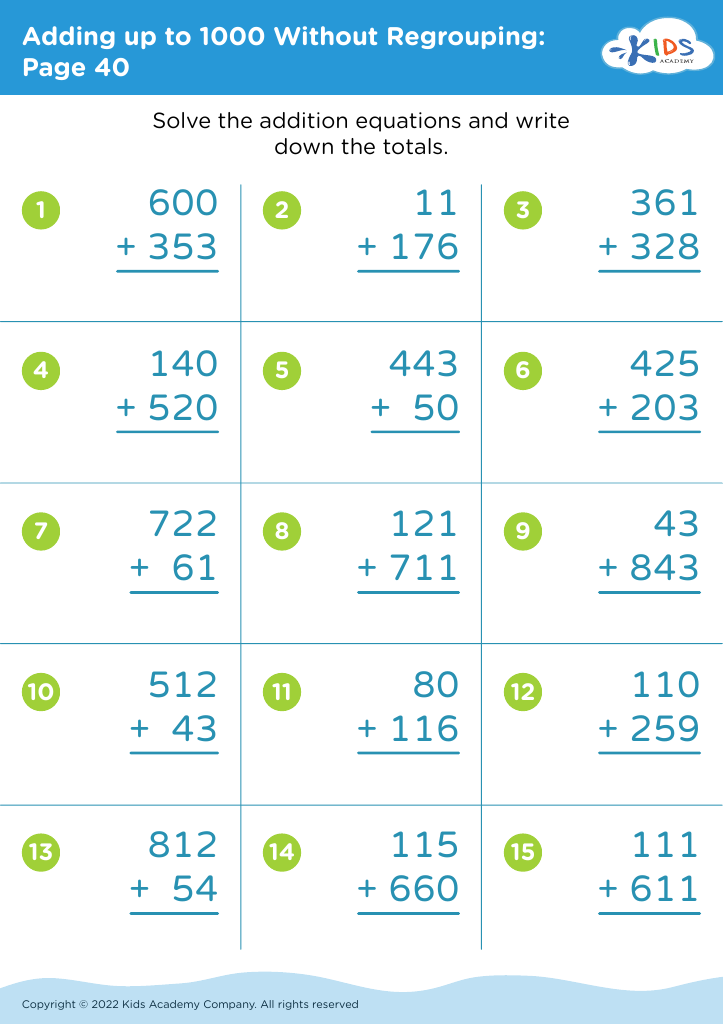
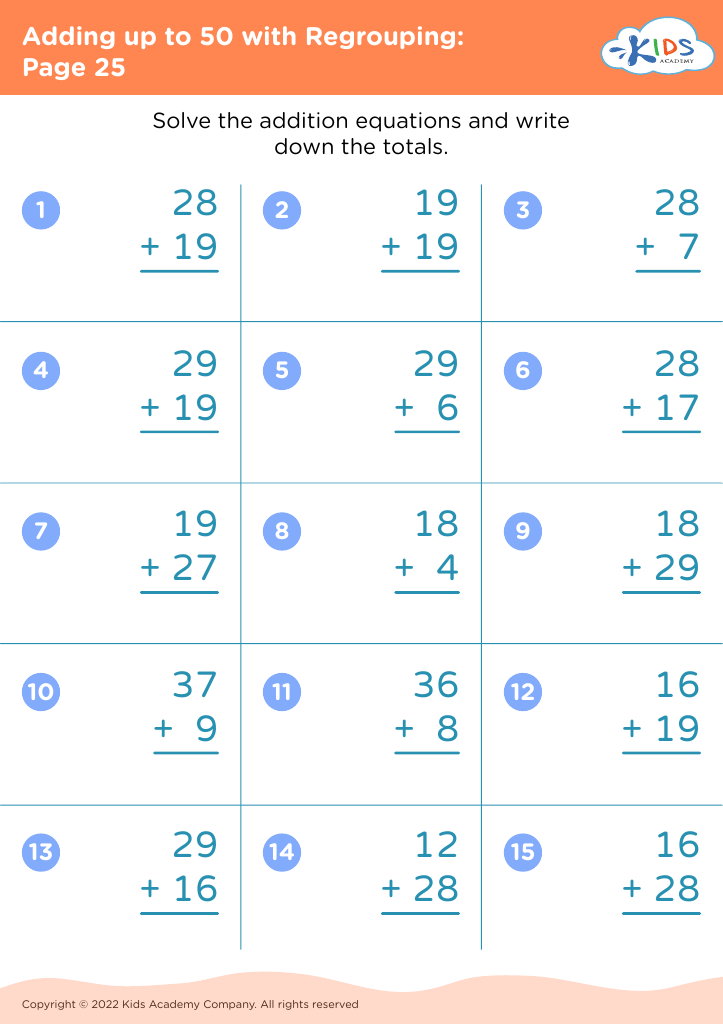
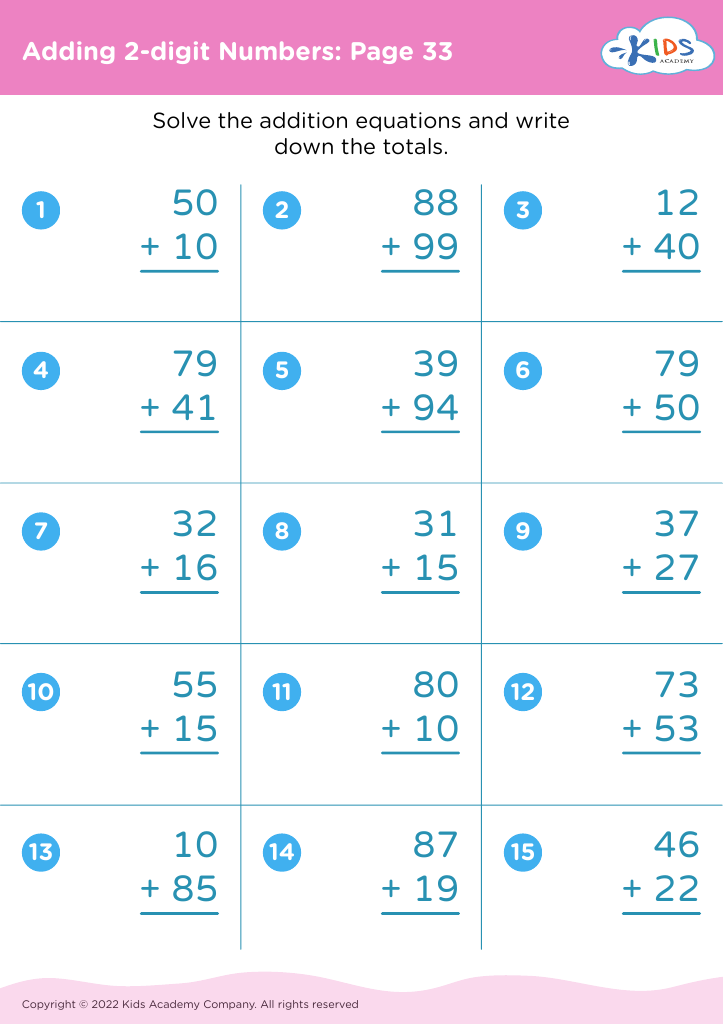
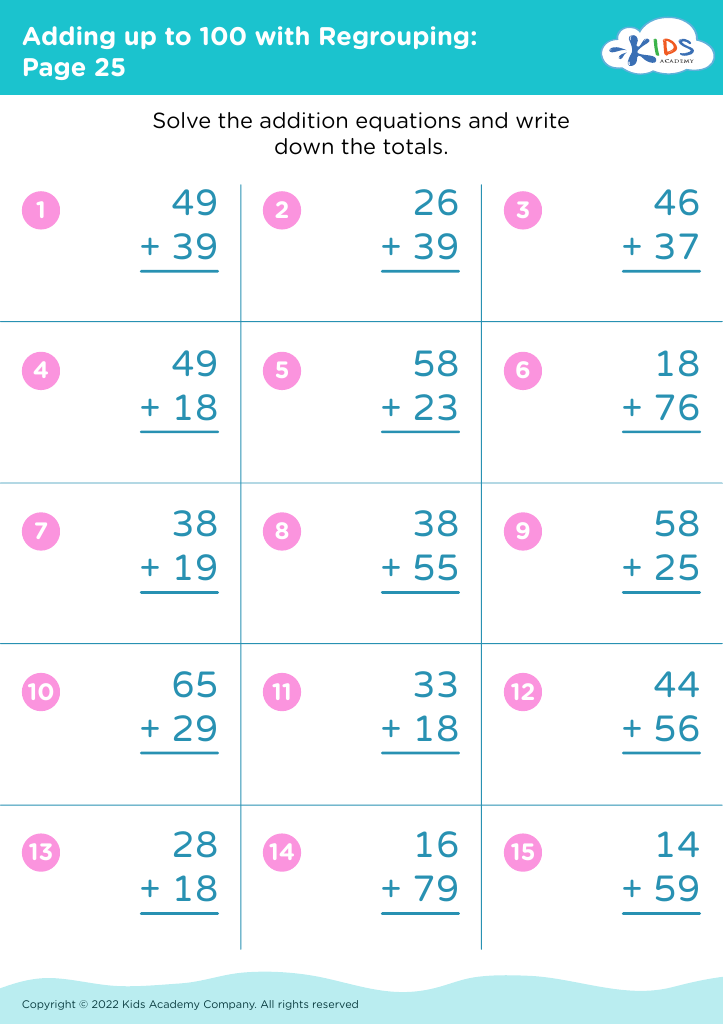
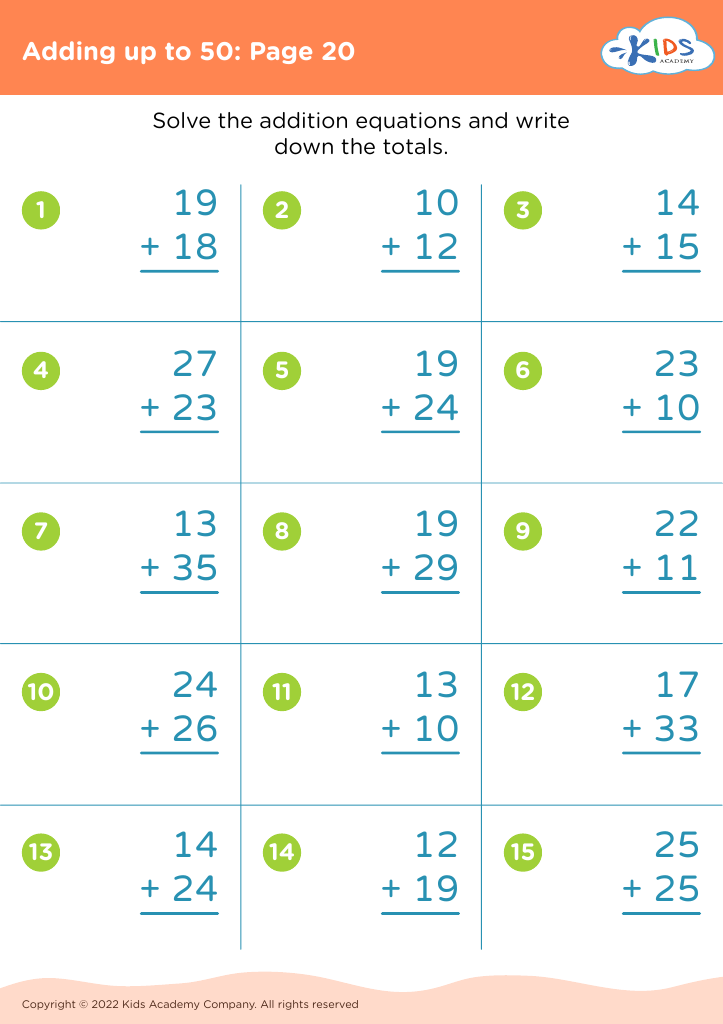
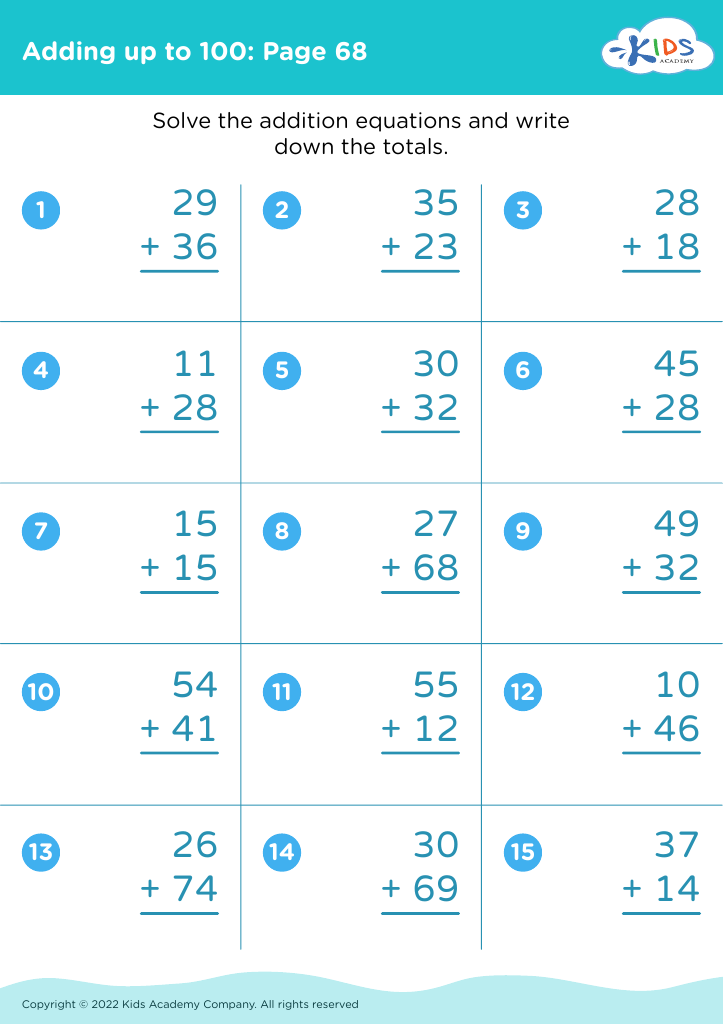
Enhance your child's problem-solving abilities with our interactive Addition Worksheets for ages 7-9. Our carefully crafted activities engage young learners with fun and challenging problems designed to strengthen their understanding of addition. Each worksheet is tailored to develop critical thinking and improve mathematical confidence. Ideal for home or classroom use, these resources make learning enjoyable while promoting essential skills. Start your child's journey towards math mastery and nurture their problem-solving talents with our expertly designed worksheets. Perfect for parents and educators seeking effective tools to support young mathematicians. Explore our worksheets now and watch your child's abilities flourish!








Fostering problem-solving skills in addition for children aged 7-9 is crucial for multiple reasons. At this developmental stage, kids are typically building foundational math skills that they will rely on throughout their education. Understanding and mastering addition is not just about being able to calculate sums; it enhances logical thinking, decision-making, and cognitive processes.
First, strong problem-solving skills in addition can improve academic performance in math, setting children up for future success in more complex mathematical concepts. It encourages mental arithmetic, bolstering memory and improving focus. Students who are competent in addition can approach math problems with confidence, reducing math anxiety and fostering a positive attitude toward the subject.
Moreover, mastering these skills extends beyond the classroom. Basic math is a part of everyday life, from shopping to managing time effectively. Early exposure to problem-solving in addition helps children develop critical thinking and persistence, traits that are beneficial throughout life. Teachers and parents nurturing these skills early on will see their students and children equipped with tools that promote independent thinking and reasoning.
In summary, developing problem-solving skills in addition aids overall cognitive development, supports academic success, and equips children with practical, lifelong skills. Ensuring proficiency in these areas also prepares kids to handle more complex problems with confidence and ease.








