Developing problem-solving skills Addition Worksheets for Ages 7-9
5 filtered results
-
From - To
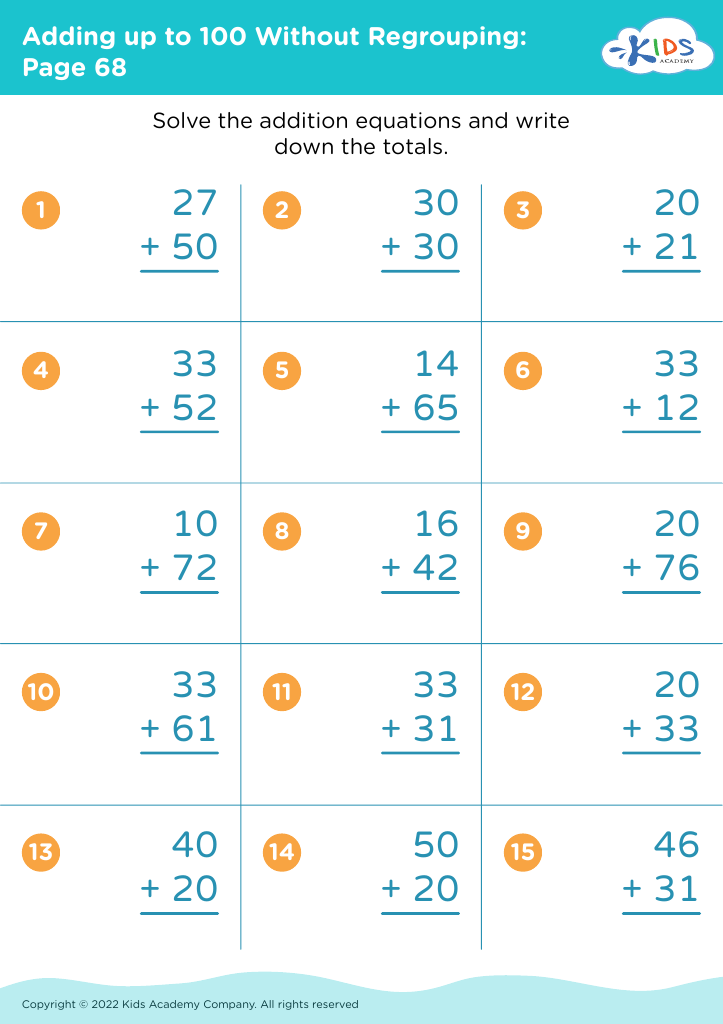
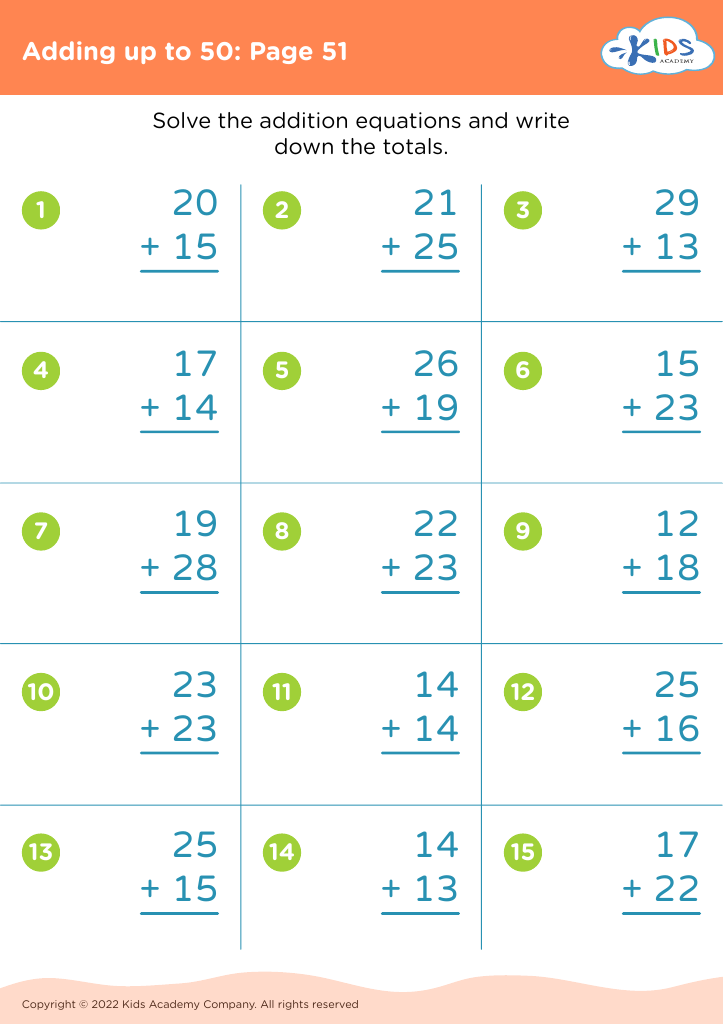
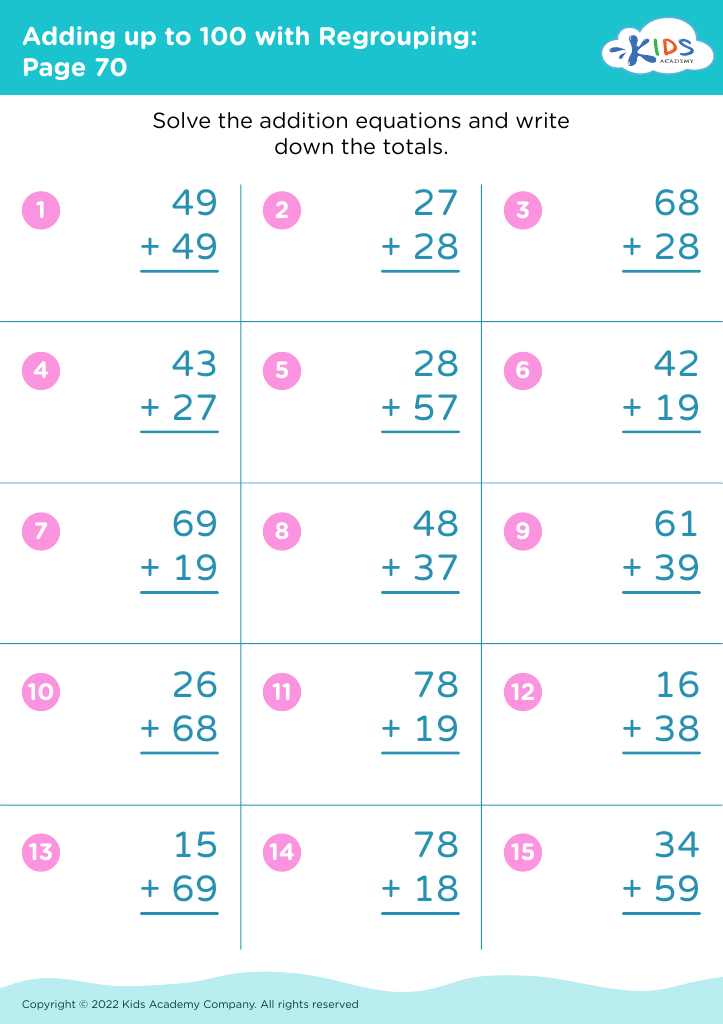
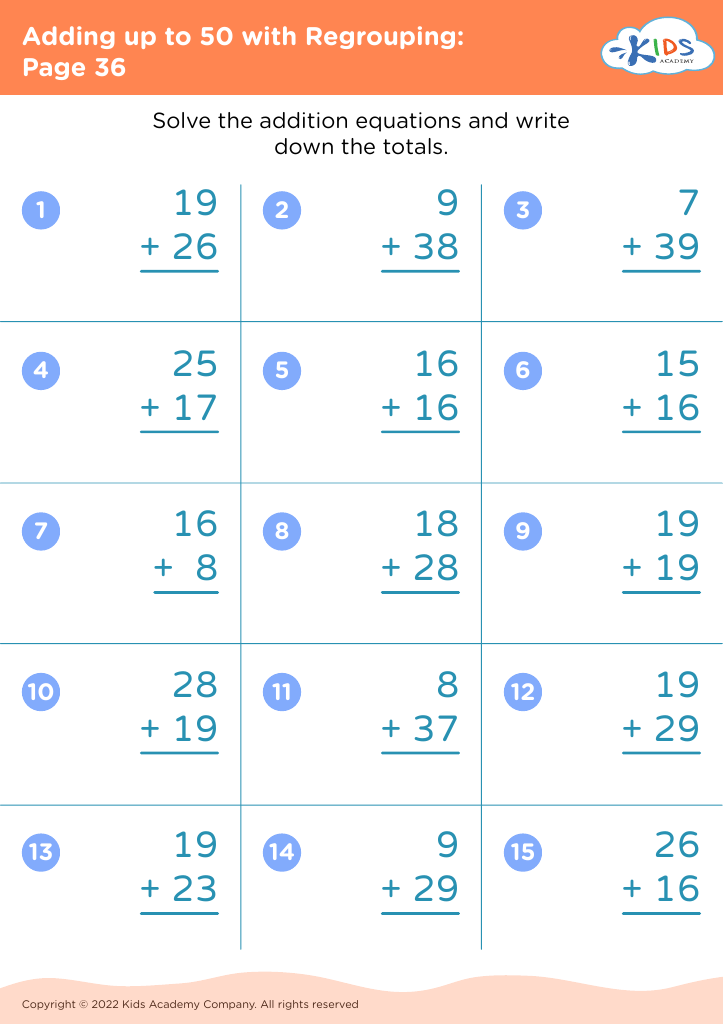
Enhance your child's mathematical abilities with our "Developing Problem-Solving Skills Addition Worksheets" tailored for ages 7-9. These engaging worksheets are designed to strengthen critical thinking and analytical skills through fun and interactive addition challenges. Each activity encourages students to approach problems systematically, fostering a deeper understanding of addition concepts. Our resources promote independent learning, boosting confidence while enhancing problem-solving techniques. Ideal for classroom or at-home practice, these worksheets cater to different learning styles and abilities, ensuring every child can benefit. Equip your child with essential skills for academic success while making math enjoyable and rewarding! Explore our worksheets today!
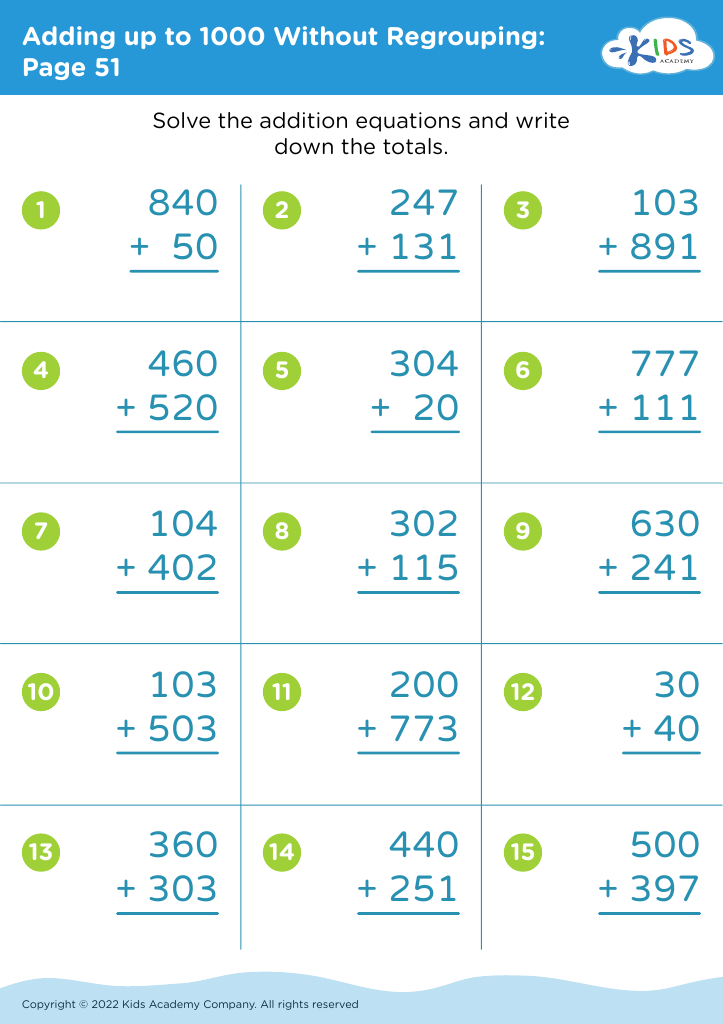








Developing problem-solving skills in addition for children aged 7-9 is crucial for several reasons. At this stage, children are refining their understanding of numbers and mathematical concepts, making it the perfect time to foster analytical thinking and resilience. Problem-solving equips students with the ability to approach challenges methodically, encouraging them to explore multiple strategies and solutions.
Moreover, strong problem-solving skills in mathematics transcend the subject itself; they enhance critical thinking across various life situations. Children learn to break down complex problems into manageable steps, fostering independence and confidence in their abilities. This lays a foundation for a growth mindset, where mistakes are viewed as learning opportunities rather than failures.
For teachers and parents, implementing problem-solving activities not only enhances academic performance but also strengthens a child's overall reasoning and cognitive skills. Engaging children in collaborative problem-solving tasks promotes teamwork and communication, essential skills in today’s increasingly complex world. Furthermore, when parents show interest and involvement in their child's problem-solving journey, it reinforces the value of perseverance and exploration. Through targeted support in addition, educators and caregivers can profoundly influence children's mathematical competence and life skills, setting them on a path to future successes.








