
Handwriting practice Addition Worksheets for Ages 7-9
5 filtered results
Difficulty Level
Grade
Age
-
From - To
Subject
Activity
Standards
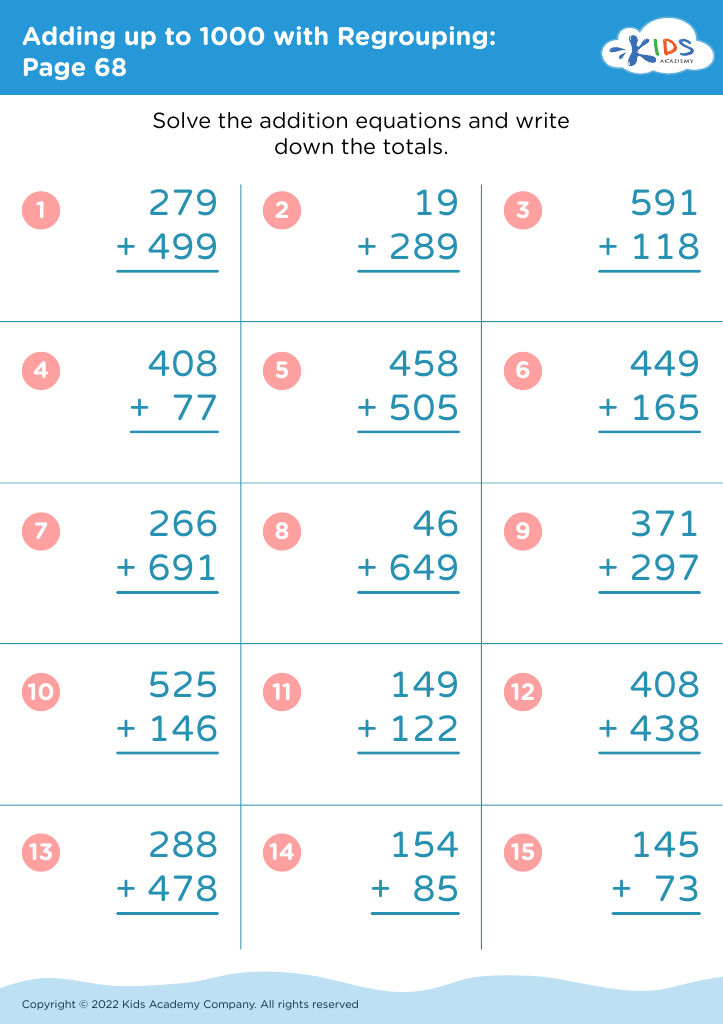
Welcome to our Handwriting Practice Addition Worksheets page for Ages 7-9! These carefully designed worksheets combine math and writing skills, helping young learners enhance their handwriting while mastering addition concepts. Perfect for reinforcing learning at home or in the classroom, our engaging exercises promote neat writing and improve number formation. Each worksheet includes fun visuals and progressively challenging problems to keep children motivated. With a variety of activities to choose from, your child will enjoy practicing addition and handwriting, setting a strong foundation for future learning. Download our printable worksheets today and watch their skills flourish!
Favorites
With answer key
Interactive
Join Kids Academy for Free
Who is primarily going to use this learning content?








Handwriting practice for children aged 7-9 is crucial for multiple reasons. At this stage of development, children are refining their fine motor skills, which are essential for effective writing. Engaging in consistent handwriting practice helps strengthen the muscles in their hands and fingers, leading to better control and coordination. This increased dexterity can also translate into improved performance in other areas, such as art and typing.
Additionally, handwriting plays a significant role in cognitive development. Studies have shown that writing by hand can enhance learning as it engages different parts of the brain, leading to better memory retention and comprehension. Creating clear, legible handwriting allows children to express their ideas more confidently, fostering a love for writing and communication.
Moreover, good handwriting develops organizational skills and attention to detail, attributes that are beneficial not just in academics but in everyday life. This practice also cultivates a sense of pride and accomplishment as children see their own progress over time. By prioritizing handwriting practice, parents and teachers help children build a strong foundation in literacy skills, enabling them to succeed in their educational journey and beyond. Thus, fostering confidence, creativity, and effective communication in young learners is undeniably vital.








