Improve number recognition Addition Worksheets for Ages 7-9
15 filtered results
-
From - To
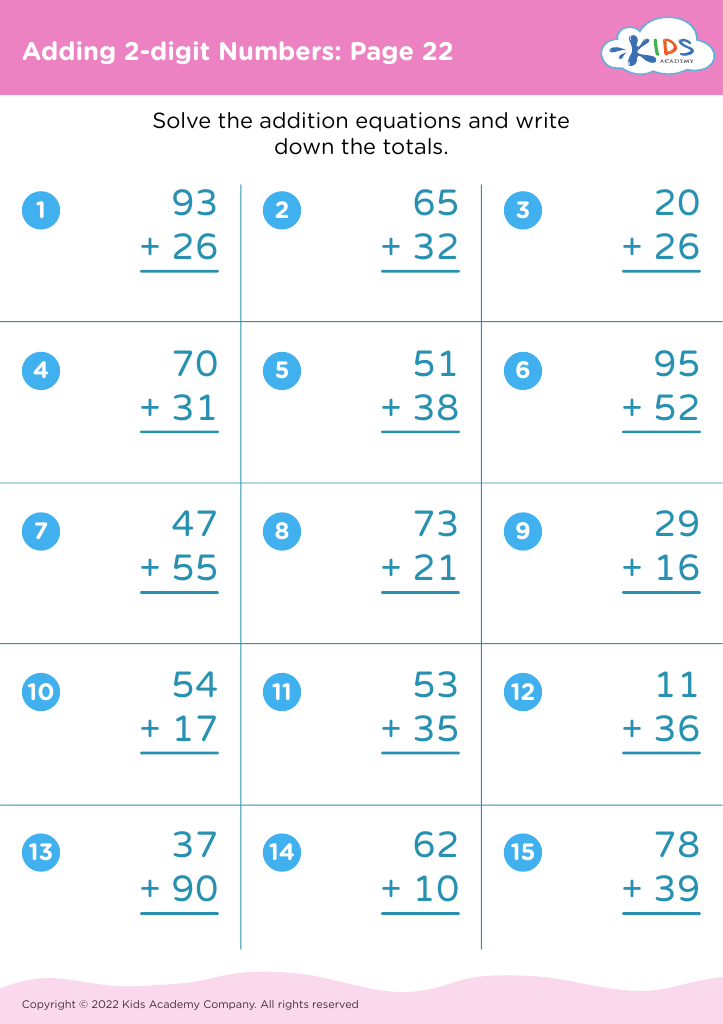
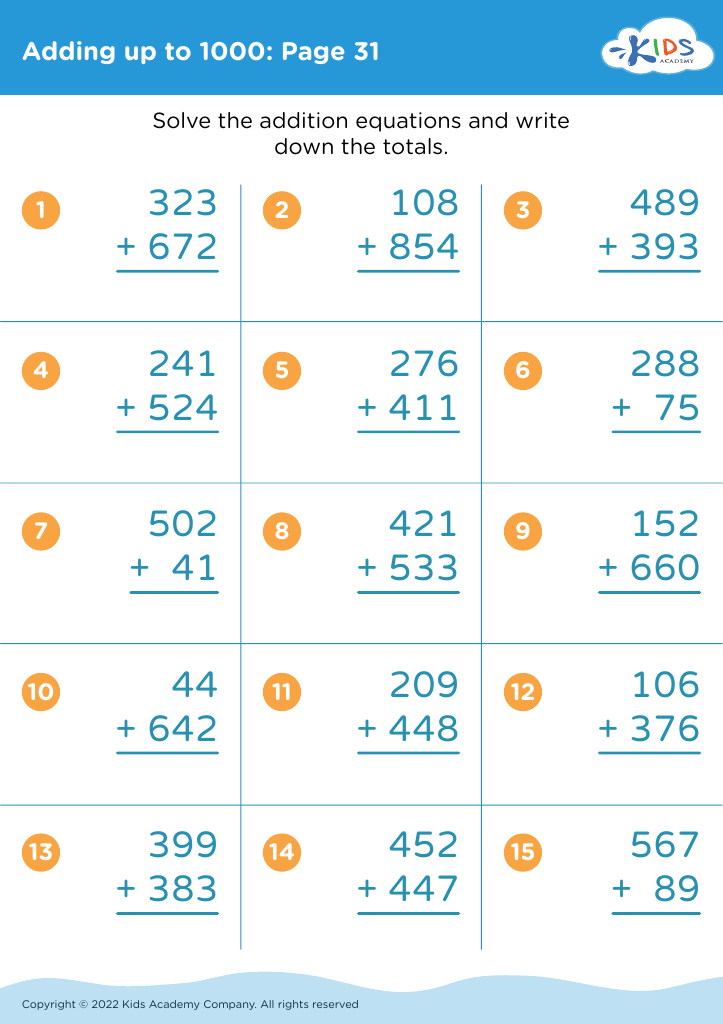
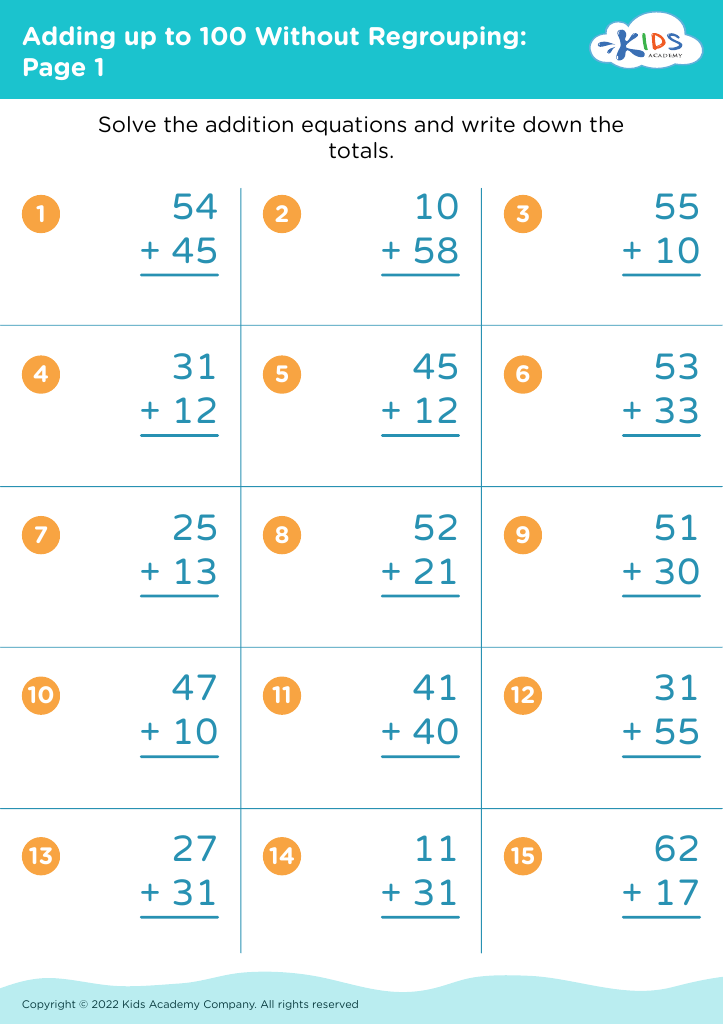
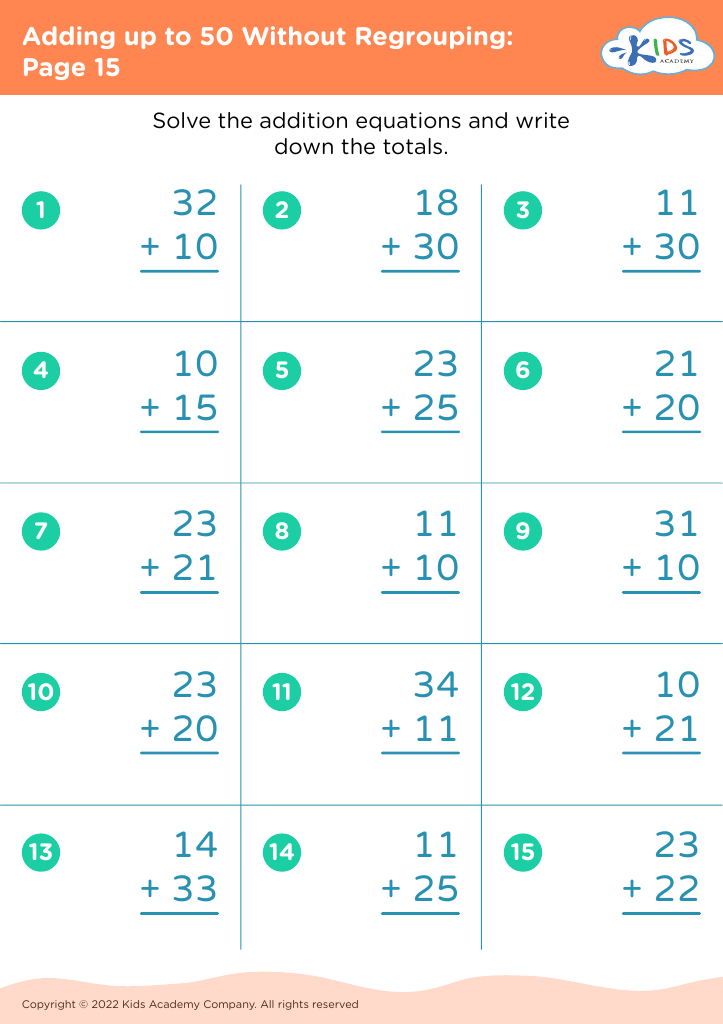
Boost your child's math skills with our "Improve Number Recognition Addition Worksheets for Ages 7-9". Designed to enhance number recognition and addition fluency, these engaging worksheets offer a variety of fun exercises tailored for young learners. Each activity is crafted to build confidence and proficiency in adding numbers, ensuring kids not only understand the concepts but also enjoy learning. Our worksheets are perfect for practice at home or in the classroom, providing a solid foundation for more advanced math topics. Spark your child's interest in math and watch them succeed with our expertly designed addition worksheets!
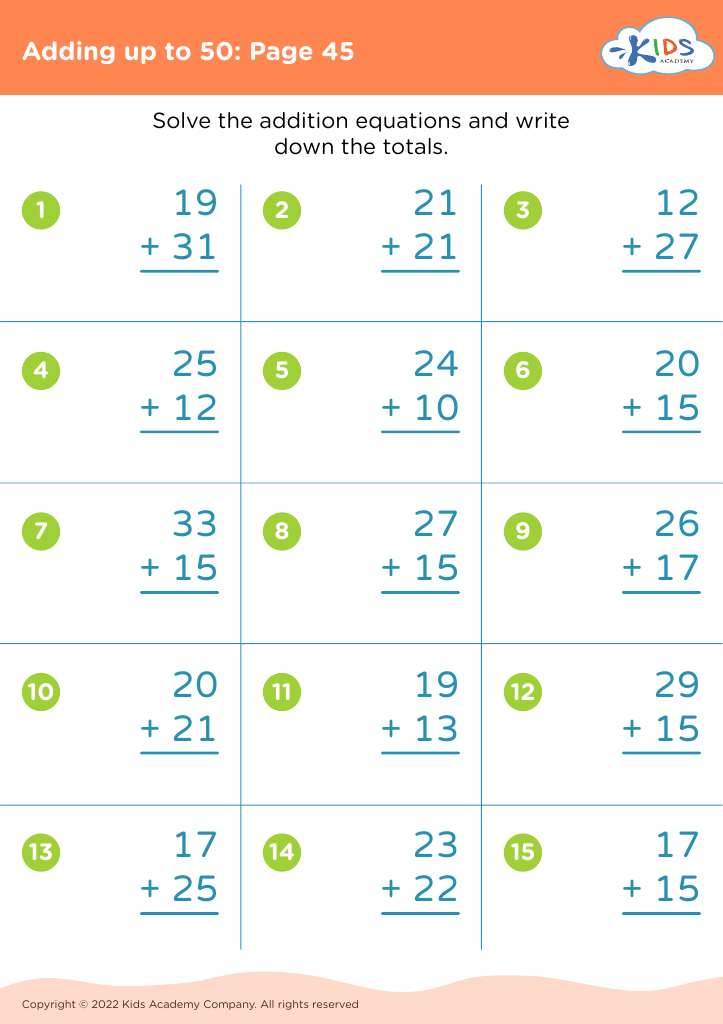
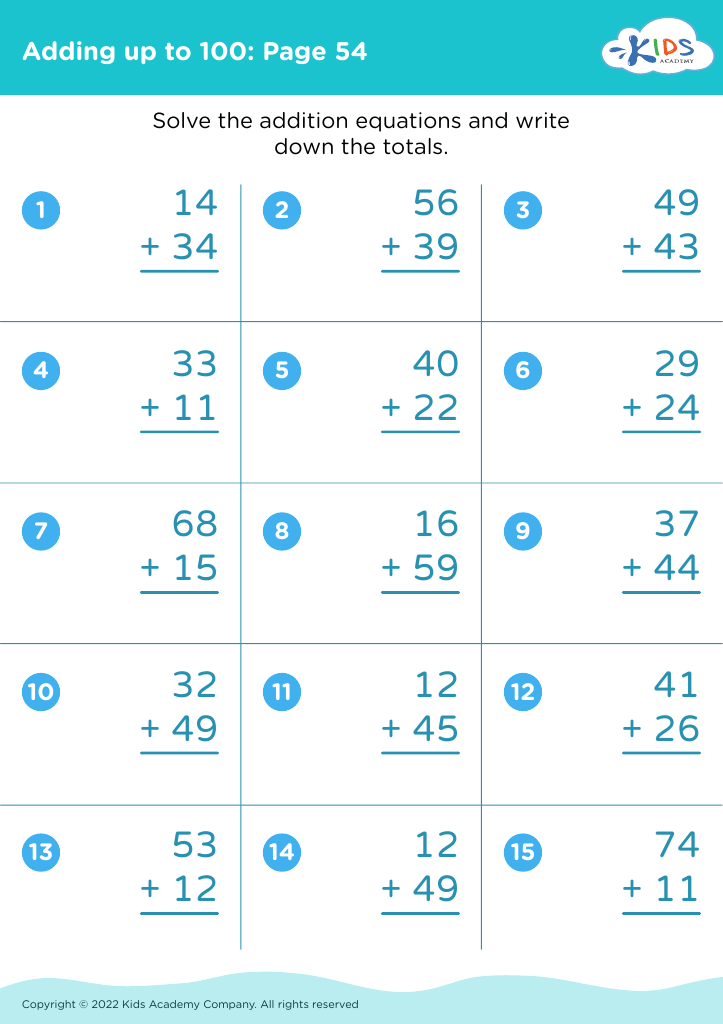
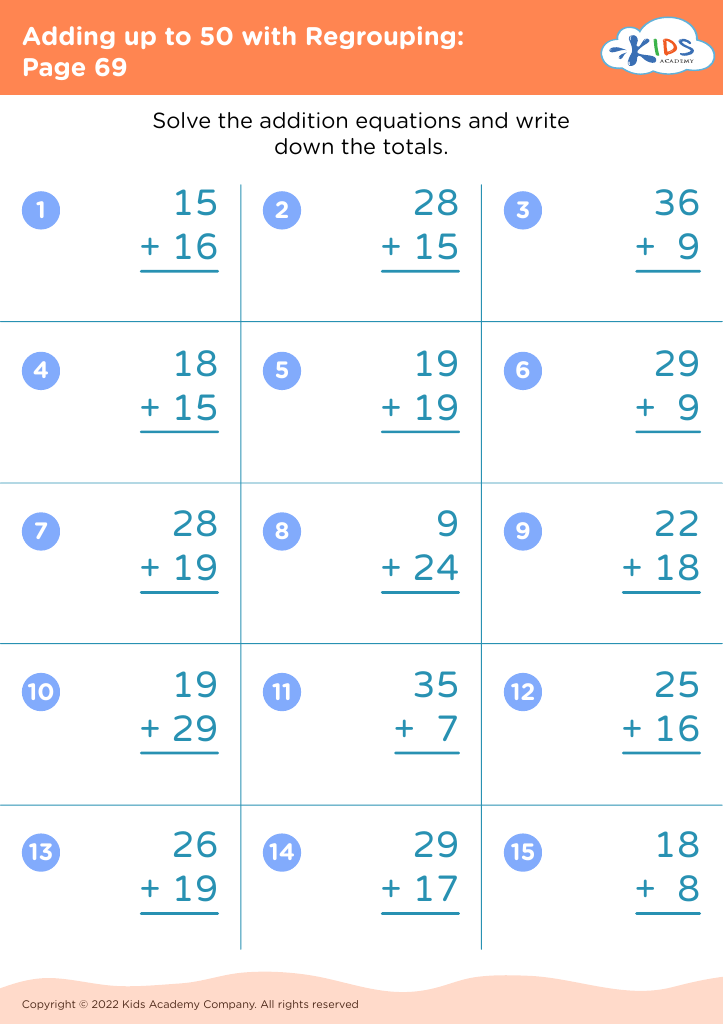
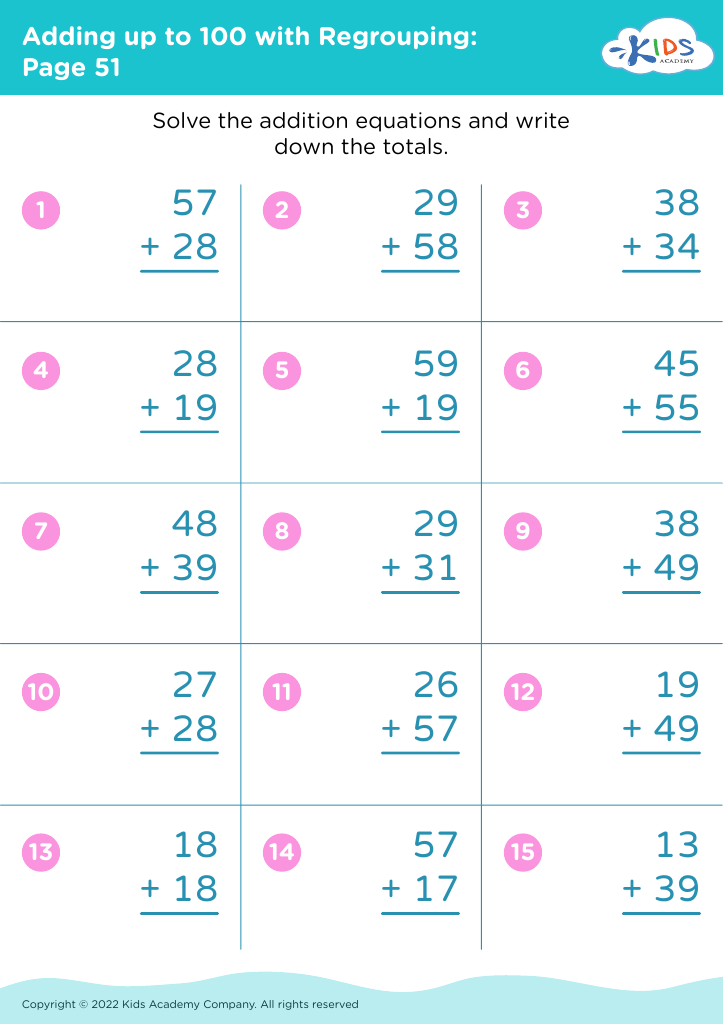
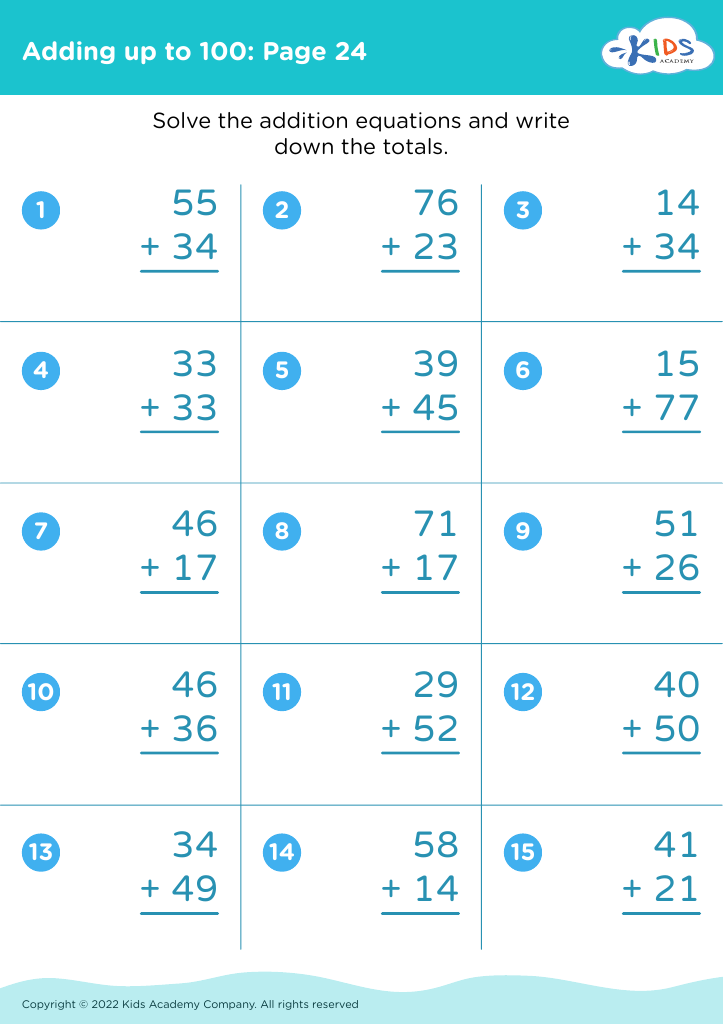
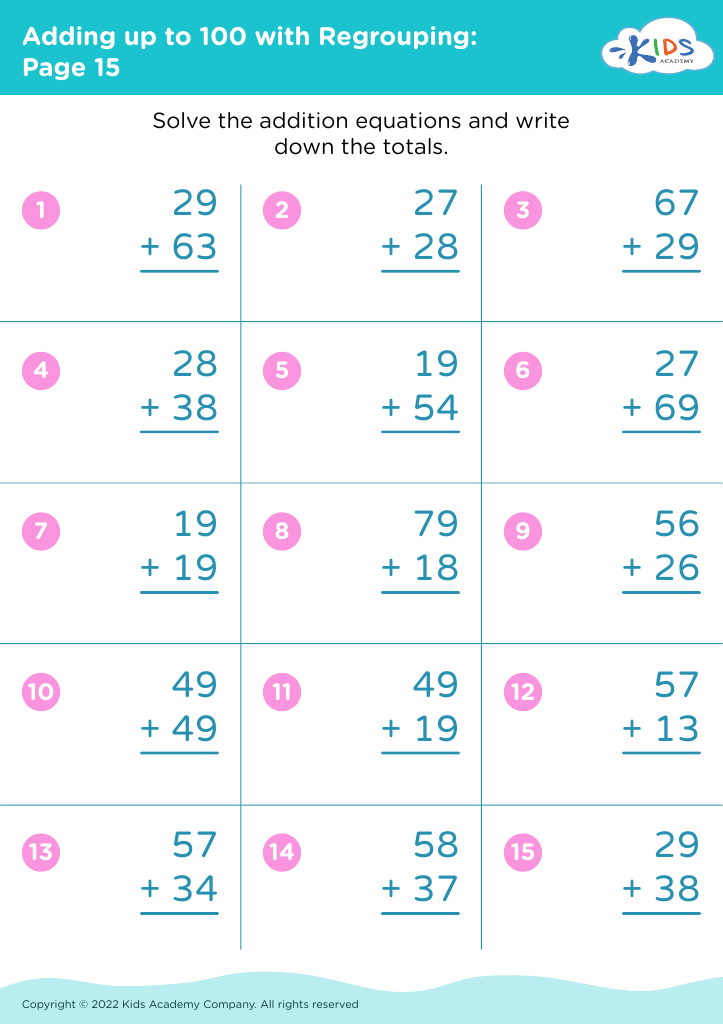
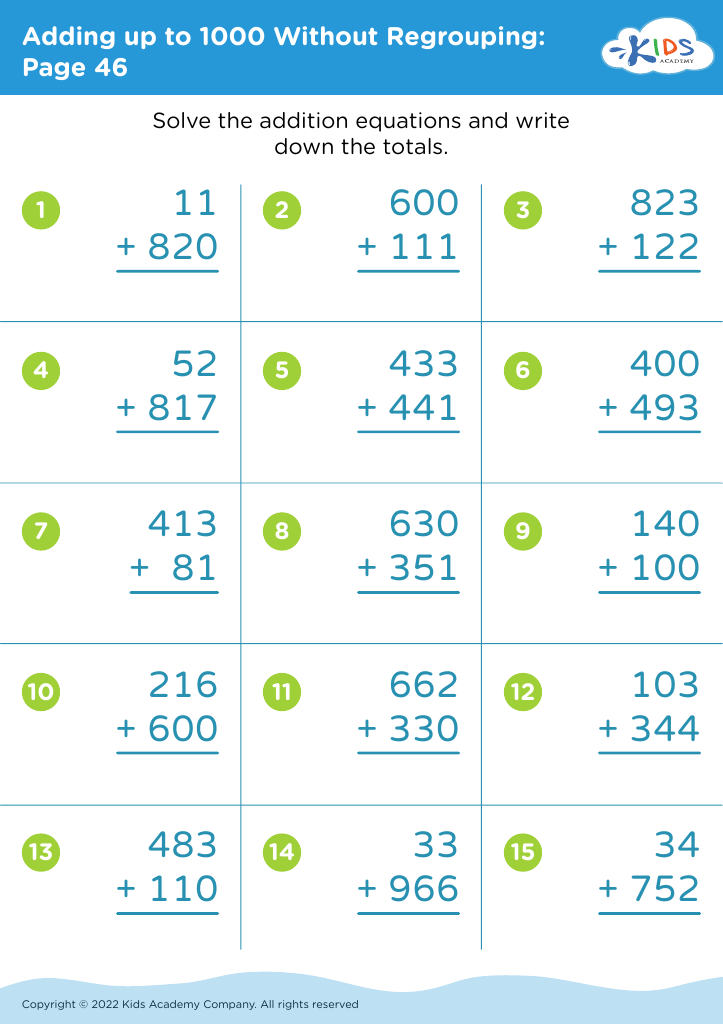
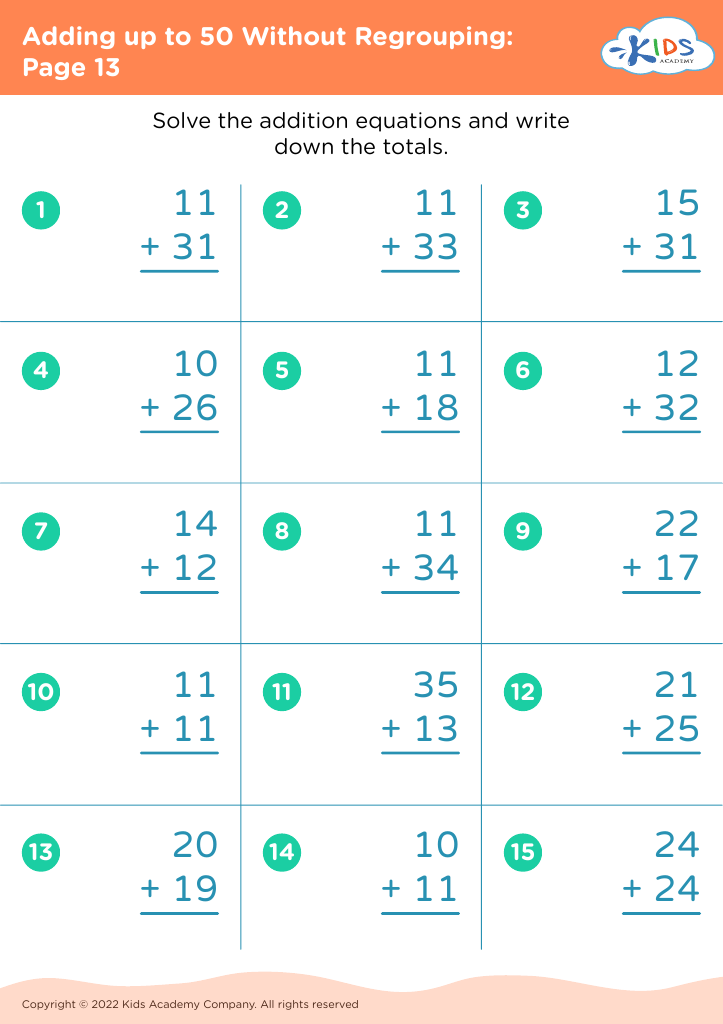
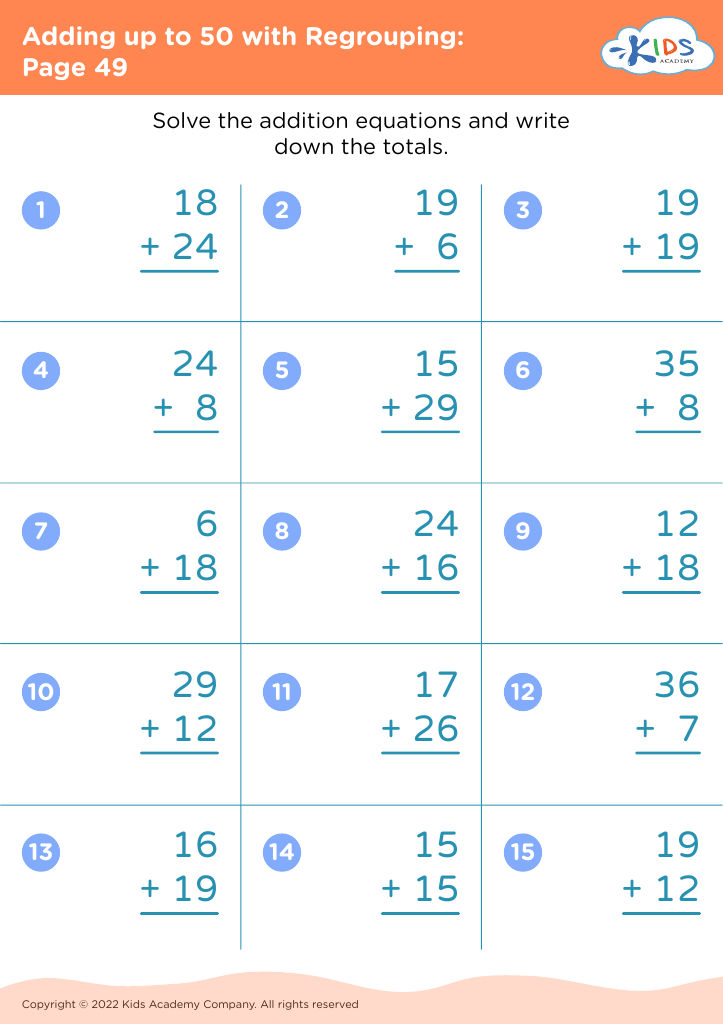
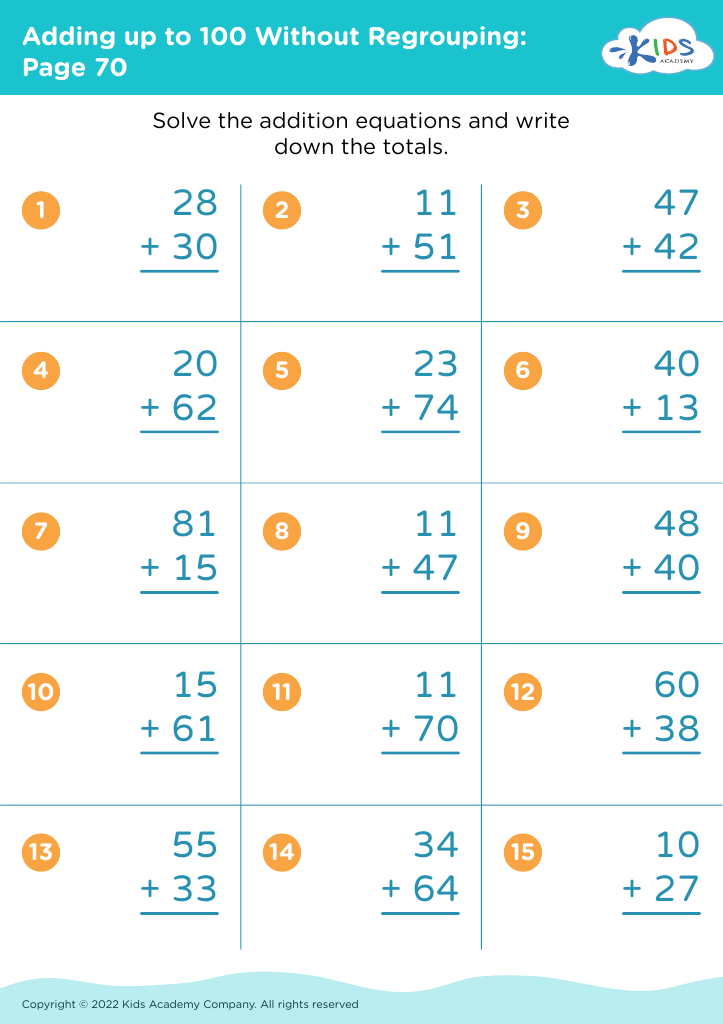
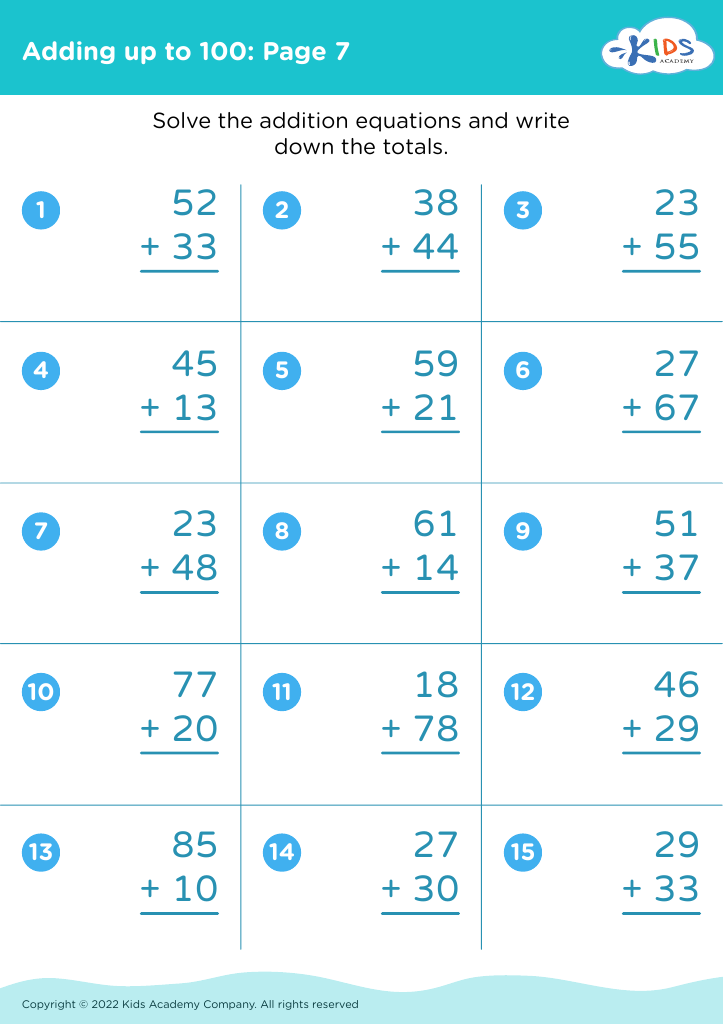








Parents and teachers should care about improving number recognition and addition skills for children ages 7-9 because these foundational math skills are critical in setting the stage for future academic success. At this age, children are at a key developmental stage where their brains are highly receptive to learning new concepts. Number recognition helps children understand that numbers are symbols representing quantities, which is fundamental for grasping more advanced mathematical concepts.
Addition is one of the most basic yet essential arithmetic skills. Proficiency in addition serves as the building block for learning other operations like subtraction, multiplication, and division. Early mastery of these skills can boost a child's confidence and foster a positive attitude toward mathematics, which is often a challenging subject for many students.
Furthermore, strong number recognition and addition skills have practical life applications. These skills are employed in everyday tasks such as making purchases, telling time, and following recipes, enhancing a child's independence and problem-solving abilities.
Finally, academic performance in elementary mathematics has been linked to future success in not just STEM fields, but also in critical thinking and analytical areas across the board. Hence, focusing on improving these basic skills early on provides children with tools and confidence needed for academic and real-world situations, paving the way for a successful future.








