Learn new vocabulary Addition Worksheets for Ages 7-9
4 filtered results
-
From - To
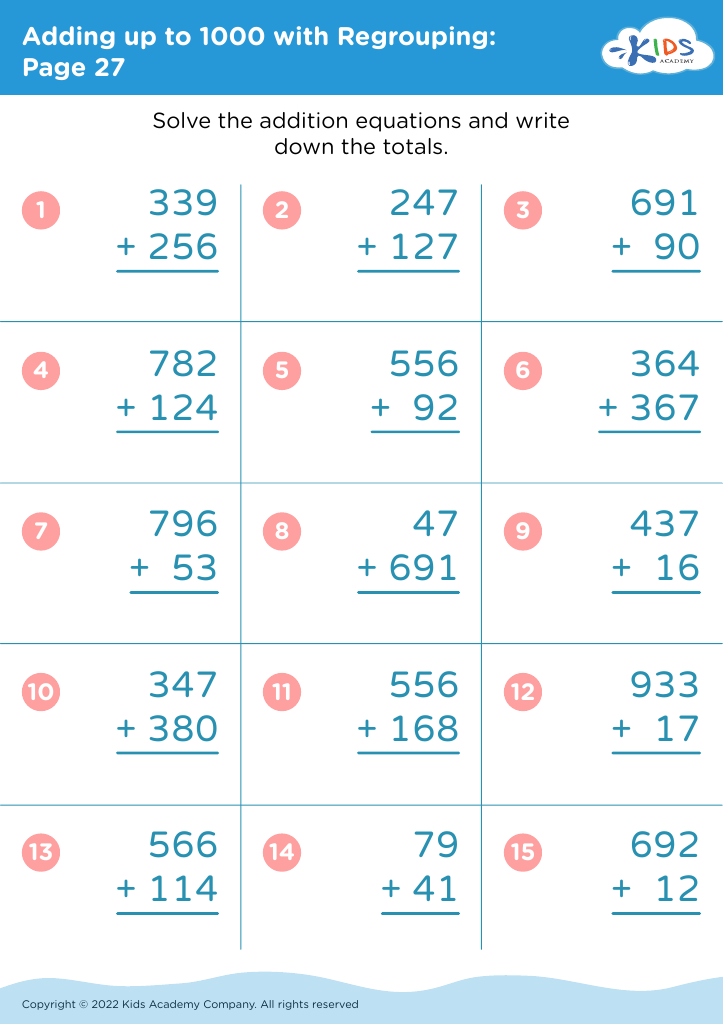
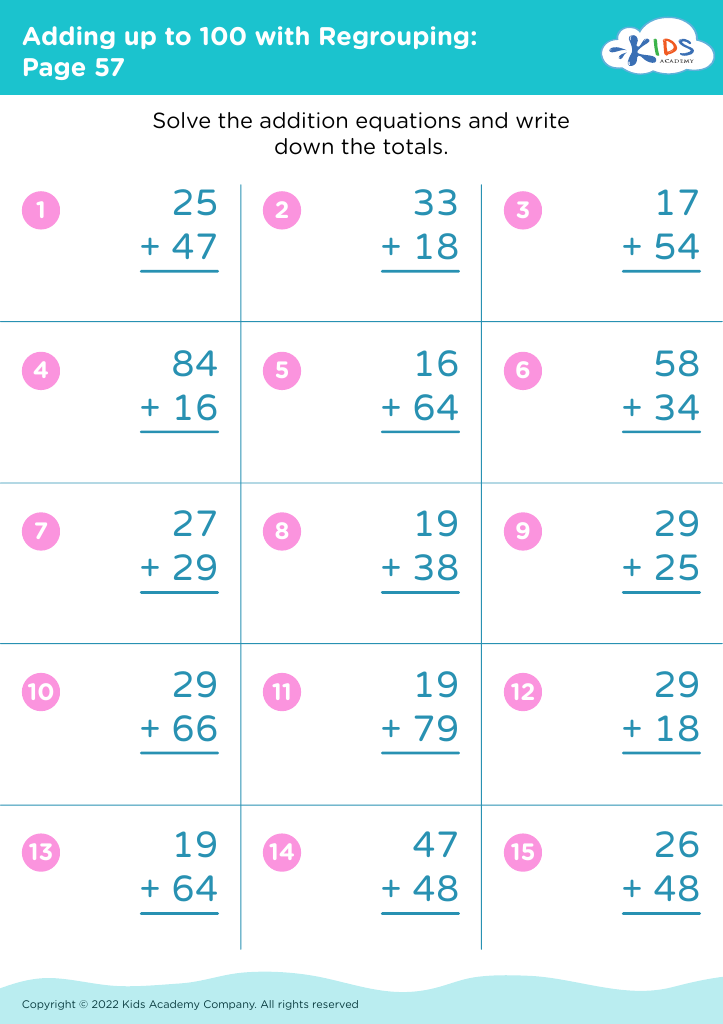
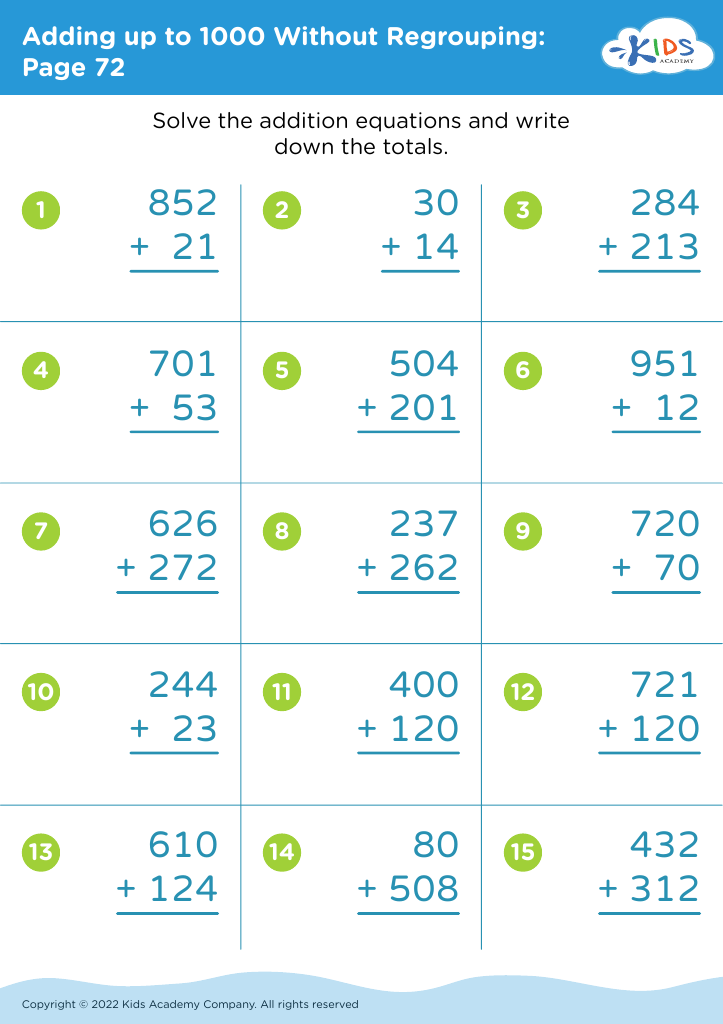
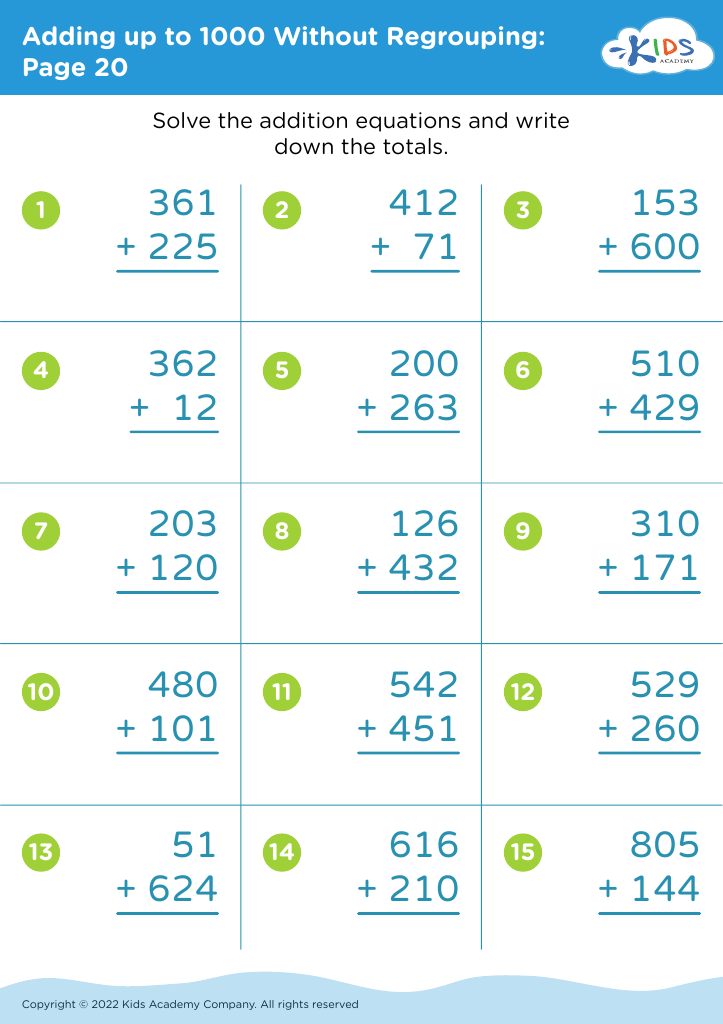
Boost your child's mathematical skills and vocabulary with our "Learn New Vocabulary Addition Worksheets," designed specifically for ages 7 to 9. These engaging worksheets not only offer practice with addition but also introduce essential math terminology, helping young learners build a strong foundation. Each worksheet includes colorful illustrations and interactive activities that make learning fun and effective. Children will develop their comprehension of key concepts while honing their addition skills, all in an age-appropriate manner. Perfect for home or classroom use, these resources encourage students to explore, engage, and excel in math. Start enhancing your child’s mathematical vocabulary today!








Parents and teachers should care about teaching new vocabulary related to addition for children ages 7-9 because vocabulary development is crucial for mathematical understanding and overall academic success. At this age, students transition from basic arithmetic to more complex math concepts, which often use specific vocabulary that can enhance comprehension. Terms like "sum," "more than," "equals," "addend," and "total" are fundamental for grasping addition processes and solving problems confidently.
Furthermore, a strong math vocabulary helps students communicate their thoughts and reasoning effectively, facilitating collaboration during group activities and boosting their problem-solving skills. When children understand the language of math, they are more likely to visualize and articulate their thought processes.
Also, robust vocabulary acquisition is linked to higher reading and writing proficiency. New vocabulary in addition lays the groundwork for understanding word problems, which is an essential skill in real-world applications of math. For parents, encouragement at home can reinforce school learning, while teachers can integrate vocabulary games and engaging activities into their lessons. Together, parents and educators can provide a solid foundation that not only supports projects in the classroom but also fosters a lifelong appreciation for mathematics.








