
Matching skills Addition Worksheets for Ages 7-9
3 filtered results
Difficulty Level
Grade
Age
-
From - To
Subject
Activity
Standards
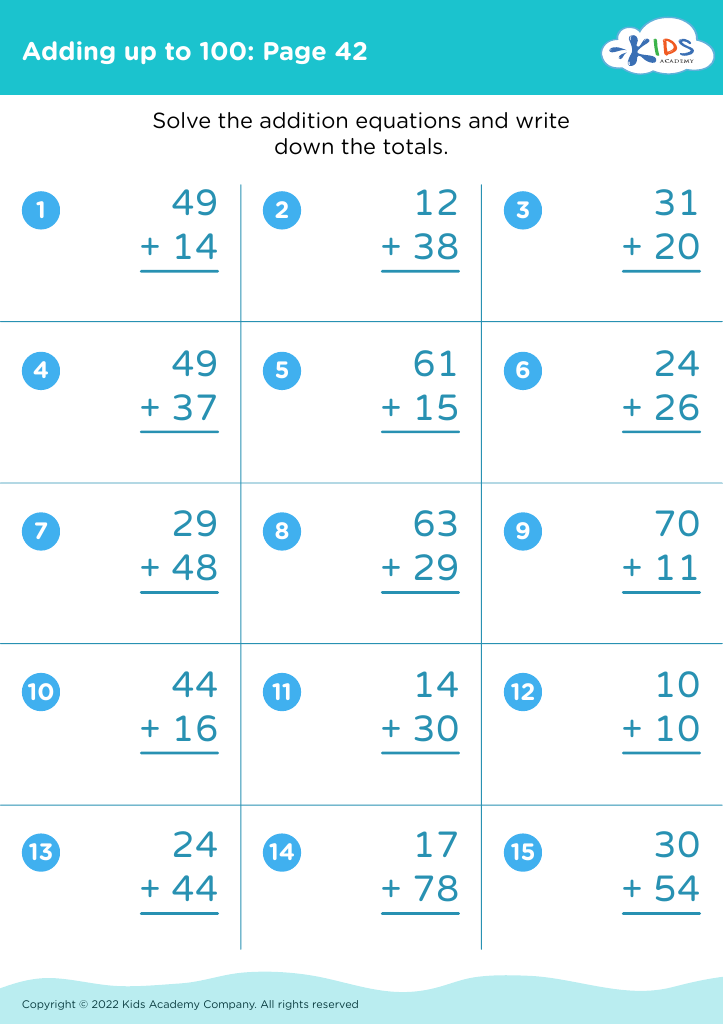
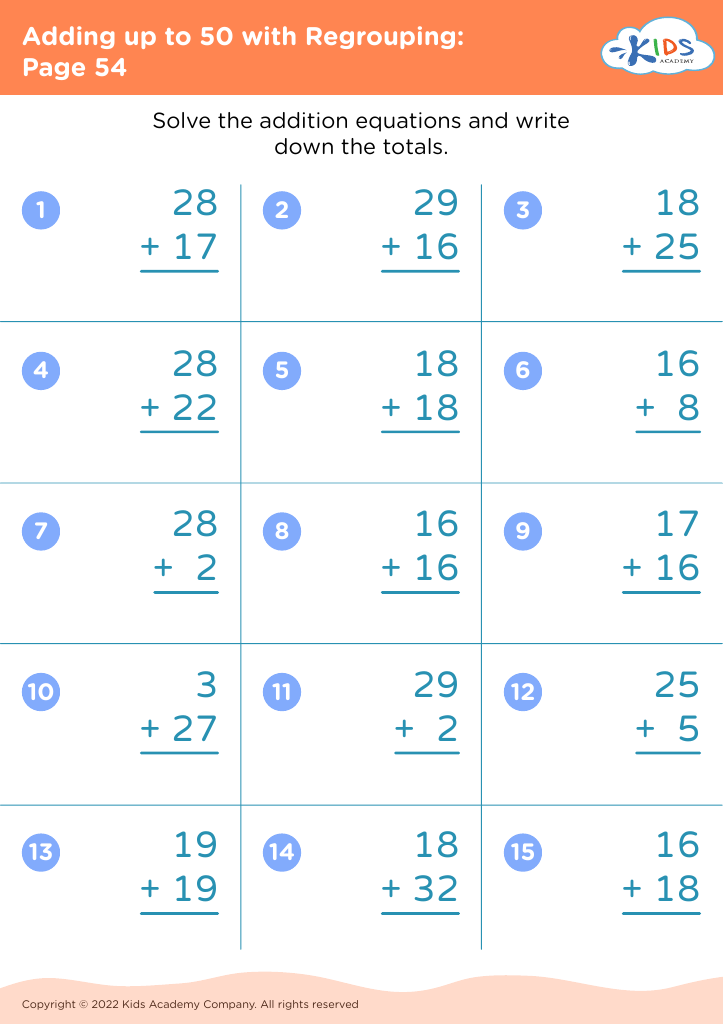
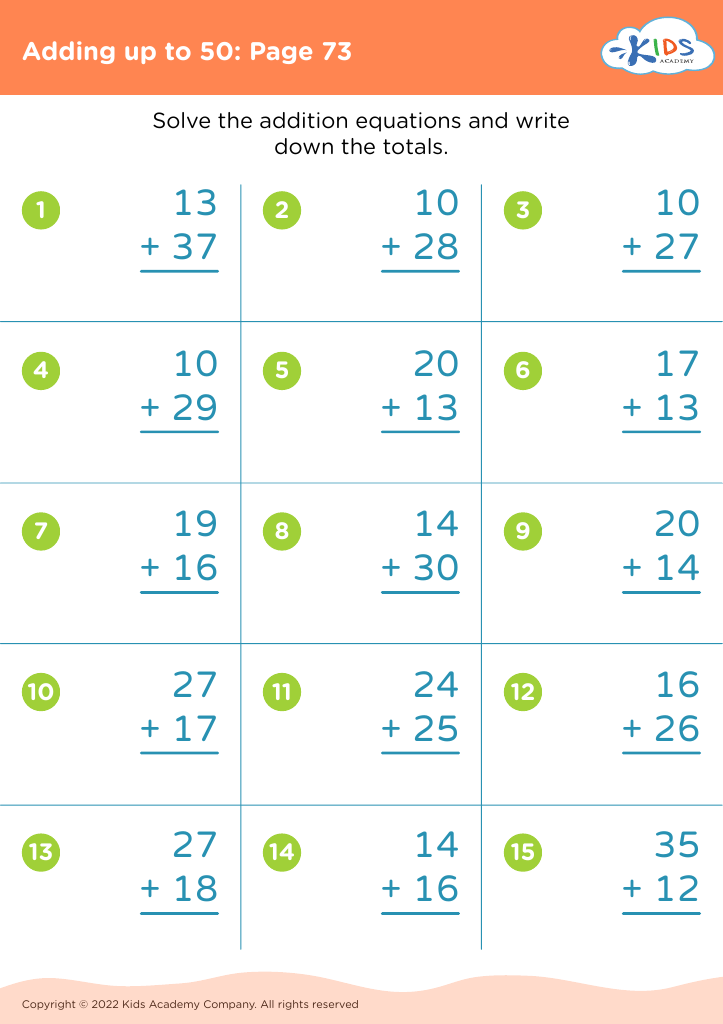
Discover our engaging Matching Skills Addition Worksheets designed specifically for children aged 7-9! These interactive worksheets help young learners enhance their addition skills by matching quantities with the correct sums. With varied exercises that encourage critical thinking and reinforce mathematical concepts, students will enjoy practicing addition in a fun and effective way. Ideal for home or classroom use, these worksheets cater to diverse learning styles. Equip your child with the foundational skills needed for future success in math. Explore our collection today and watch your child's confidence and proficiency in addition grow! Perfect for both parents and teachers.
Favorites
With answer key
Interactive
Join Kids Academy for Free
Who is primarily going to use this learning content?





.jpg)


Matching skills in addition are crucial for children aged 7-9 as they establish the foundation for future mathematical learning. During this developmental stage, children are transitioning from simple arithmetic to more complex problem-solving and critical-thinking skills. Mastering matching addition skills allows them to recognize number patterns and relationships, enhancing their mathematical fluency.
This skill promotes cognitive development as children learn to associate different representations of numbers, such as symbols, words, and physical objects. For parents and teachers, fostering these skills is essential for building confidence in students. When children can successfully match and solve addition problems, they develop a sense of competence, reducing anxiety around mathematics.
Moreover, reinforcing matching skills in a fun and engaging manner can create positive associations with math, making it more enjoyable. Effective teaching strategies can include games, puzzles, and interactive activities that encourage active participation. Lastly, these skills not only support addition but also lay the groundwork for understanding concepts in subtraction, multiplication, and division later on. Therefore, investing time and resources into matching skills will yield long-term benefits in children's mathematical proficiency and overall academic success.








