Problem-solving practice Addition Worksheets for Ages 7-9
14 filtered results
-
From - To
Discover our engaging Problem-Solving Practice Addition Worksheets, designed specifically for children aged 7 to 9! These worksheets employ fun and relatable scenarios to enhance your child’s ability to solve addition problems in real-life contexts. Each sheet encourages critical thinking and fosters a deeper understanding of math concepts while keeping learning enjoyable. With a variety of problems that gradually increase in complexity, students will build confidence in their skills, preparing them for future math challenges. Perfect for home or classroom use, our worksheets help students develop essential problem-solving abilities while mastering addition. Equip your young learners with the tools they need to succeed!
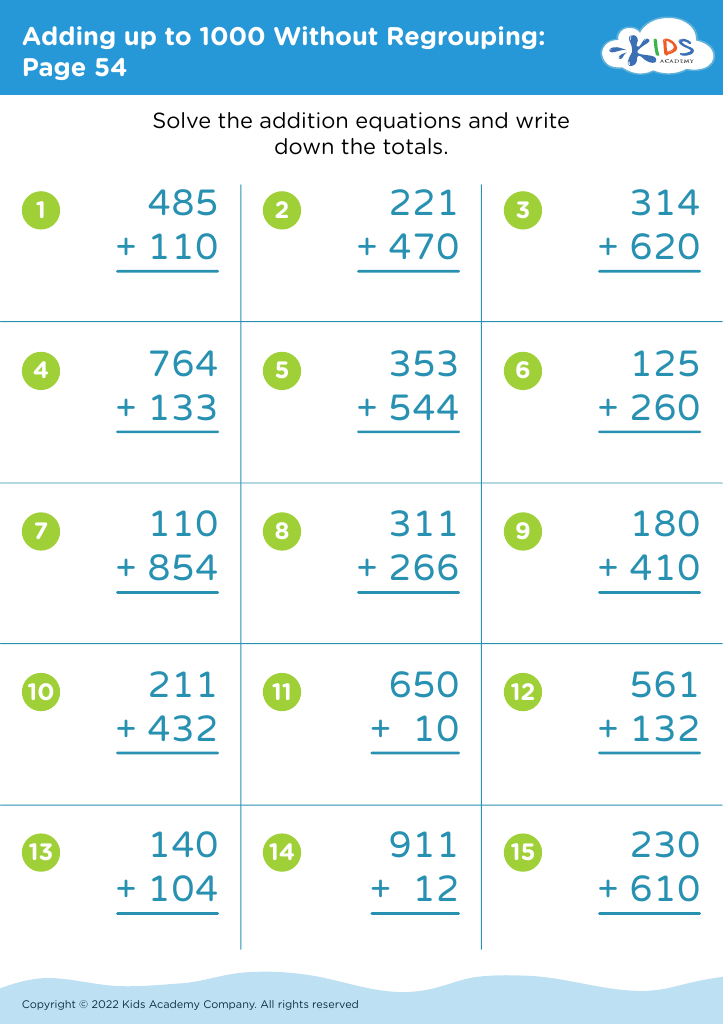
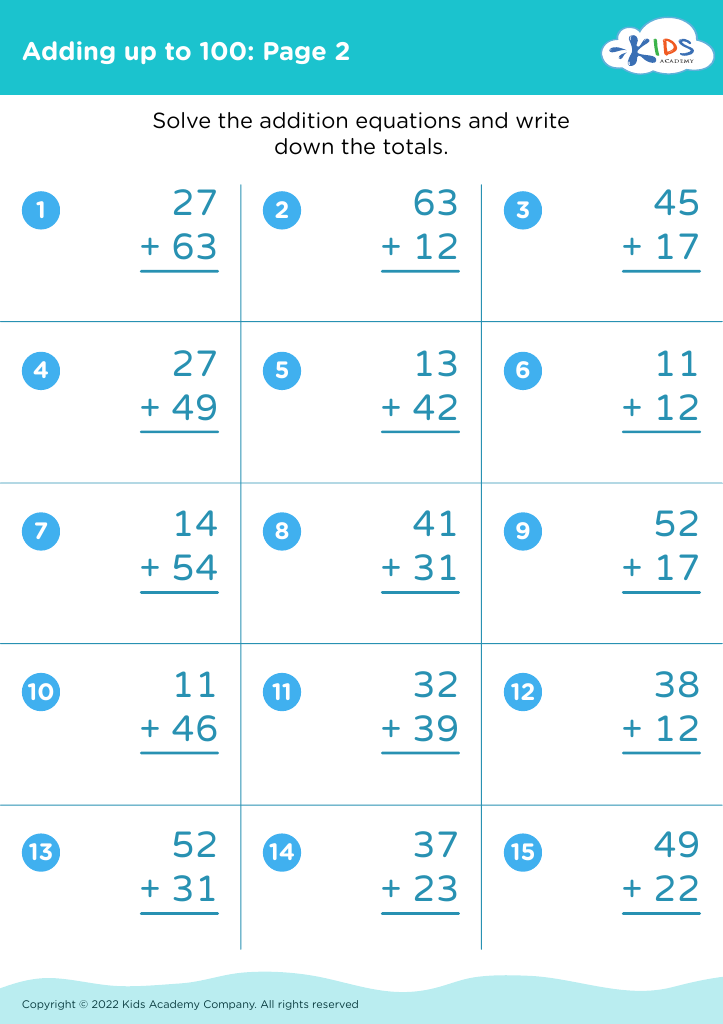
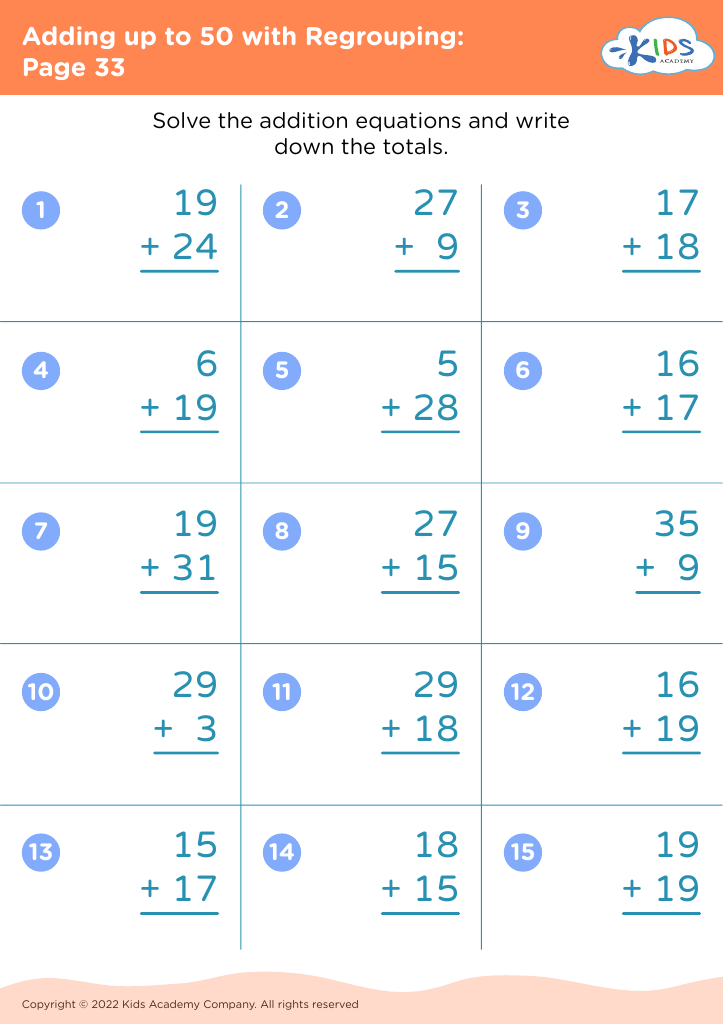

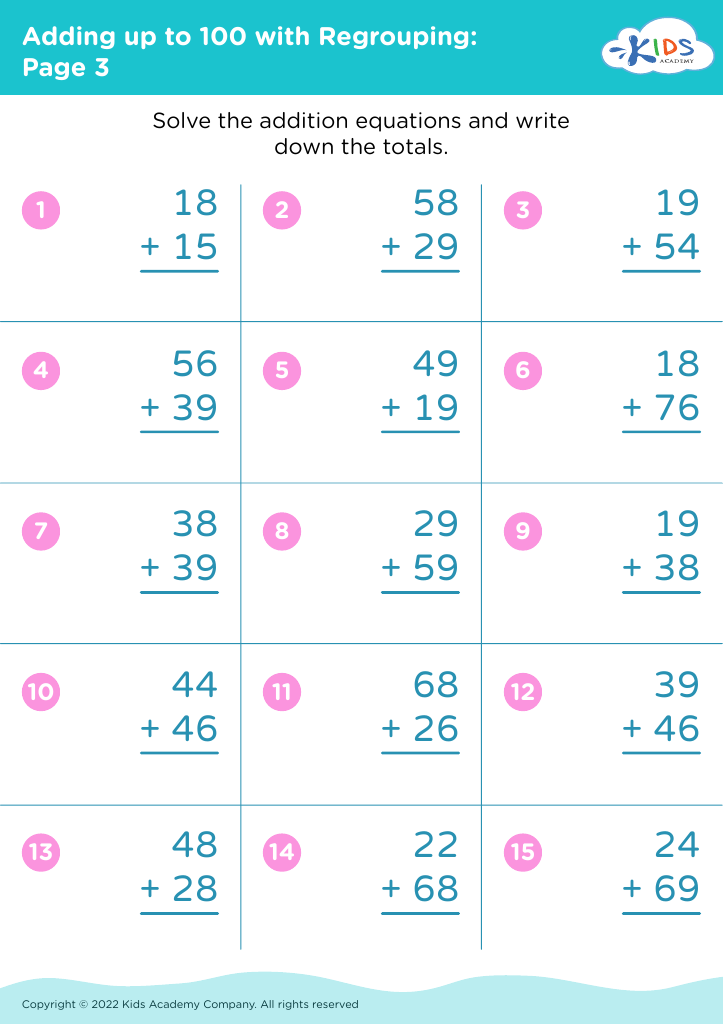
Addition with Regrouping Worksheet
 Assign to My Students
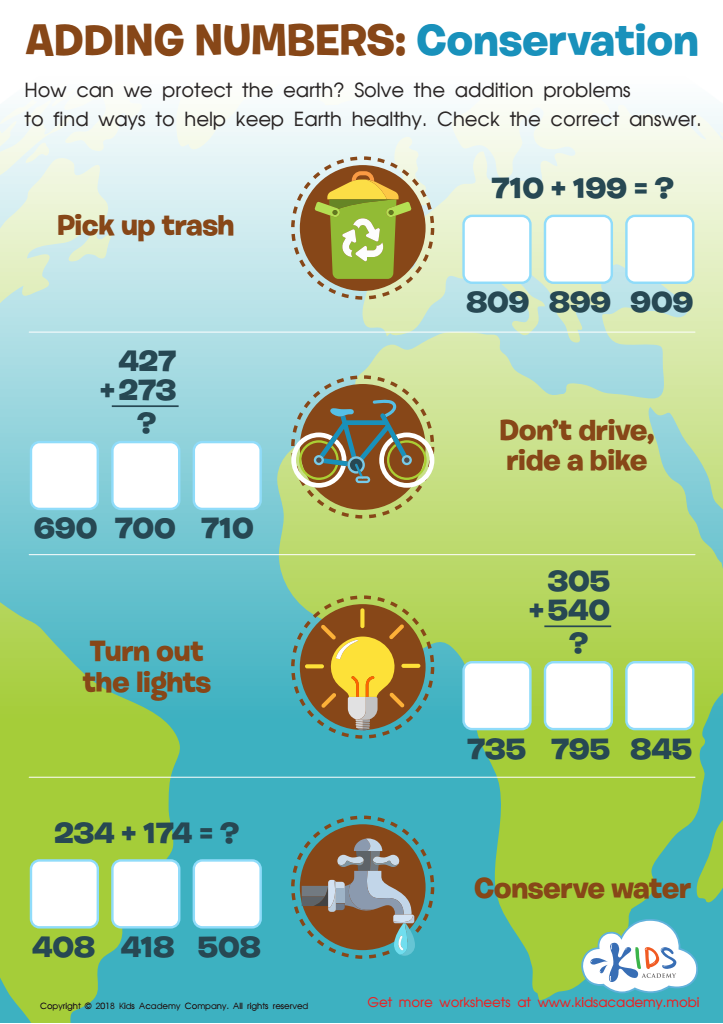
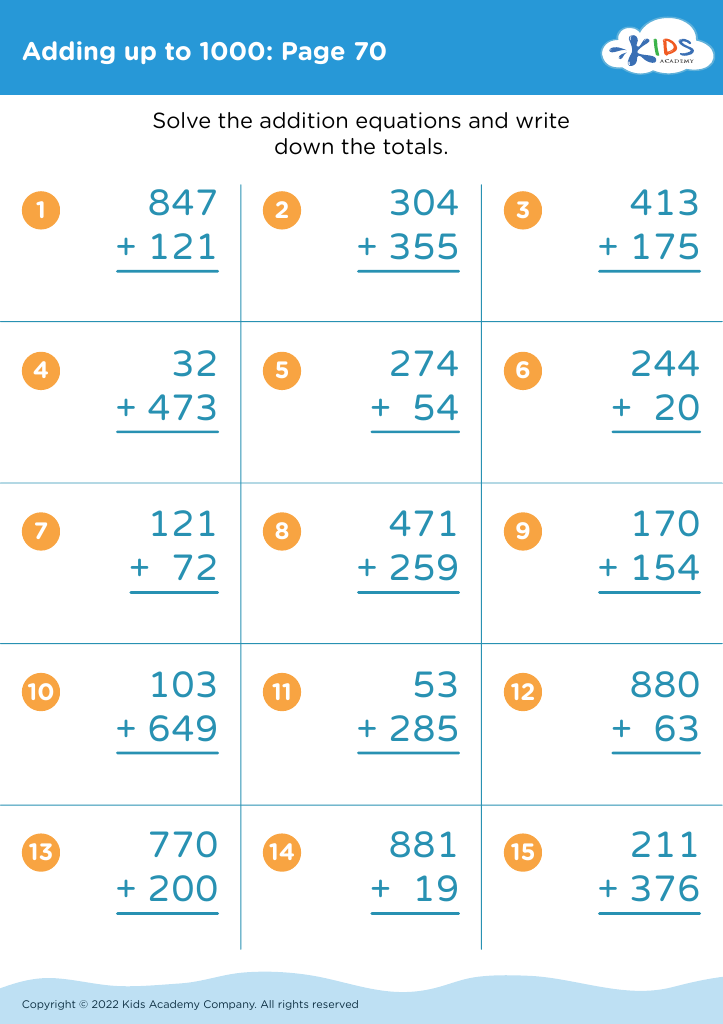
Adding Numbers: Conservation Worksheet
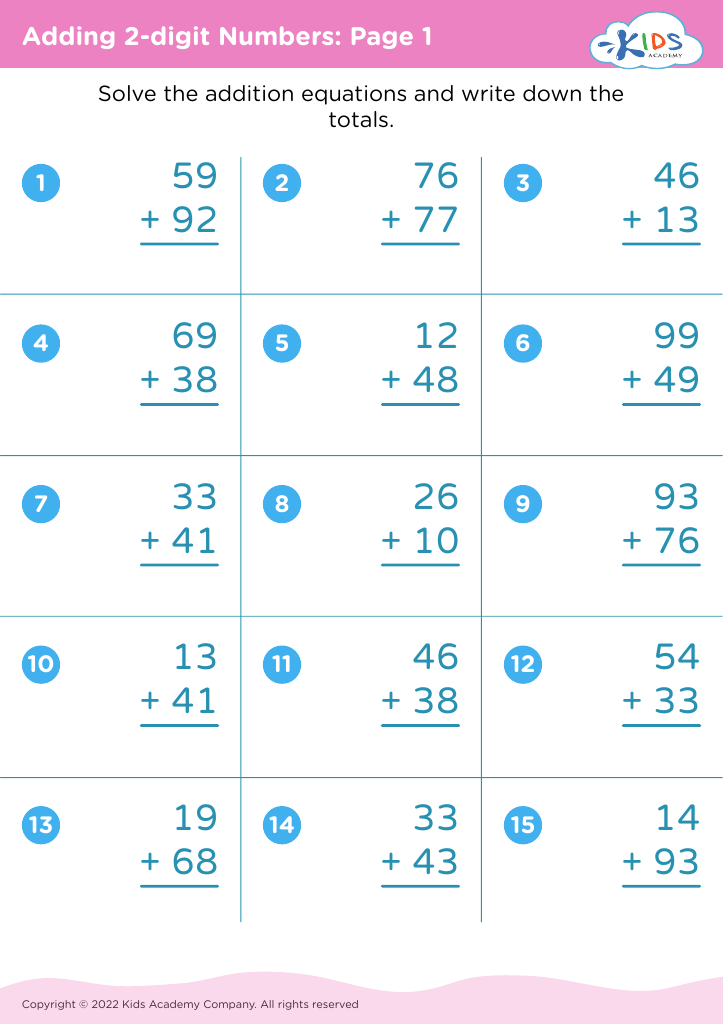
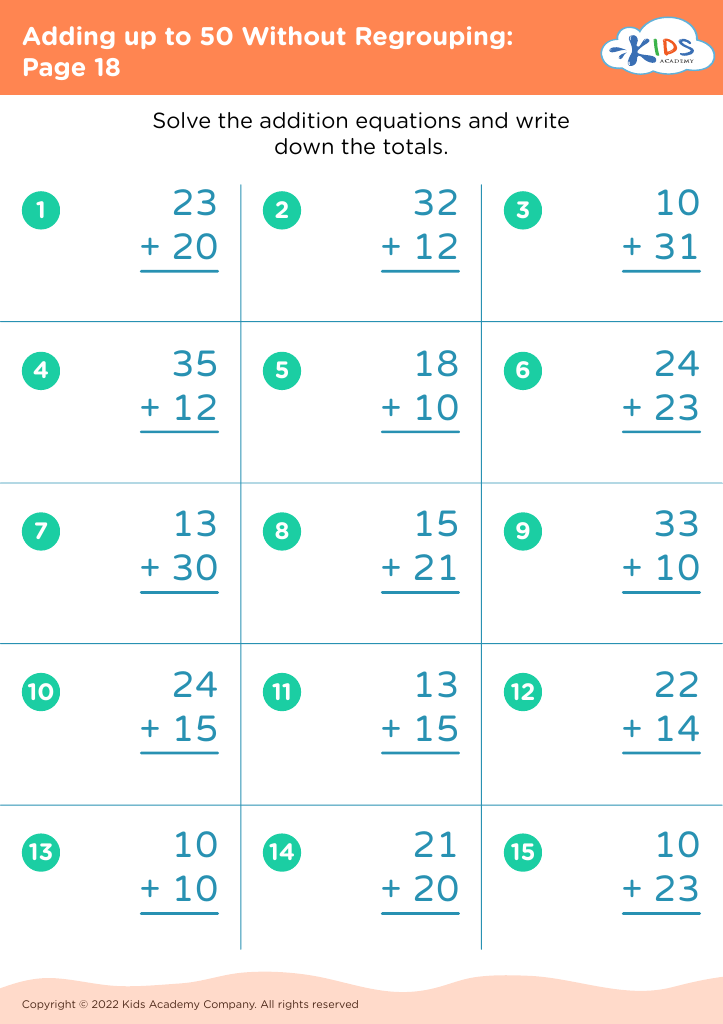
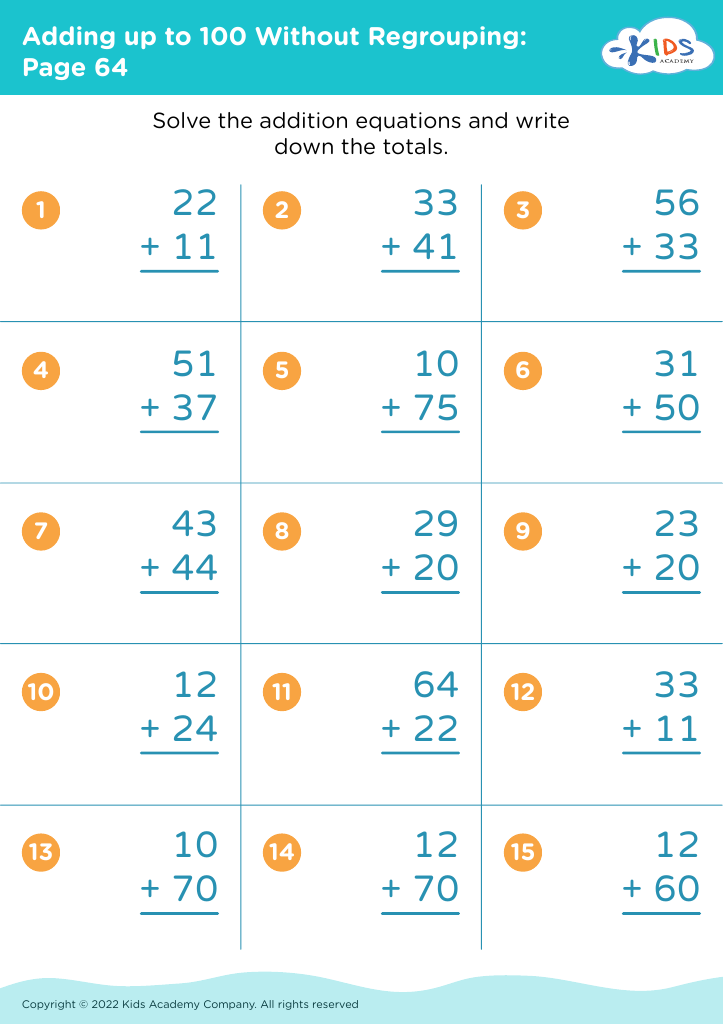
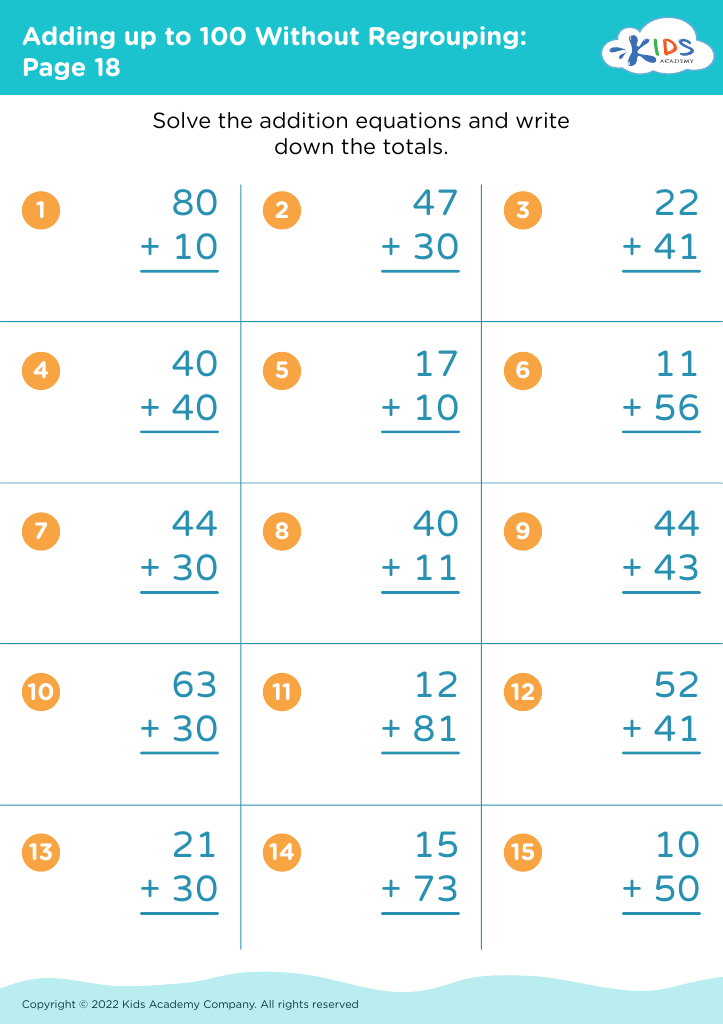
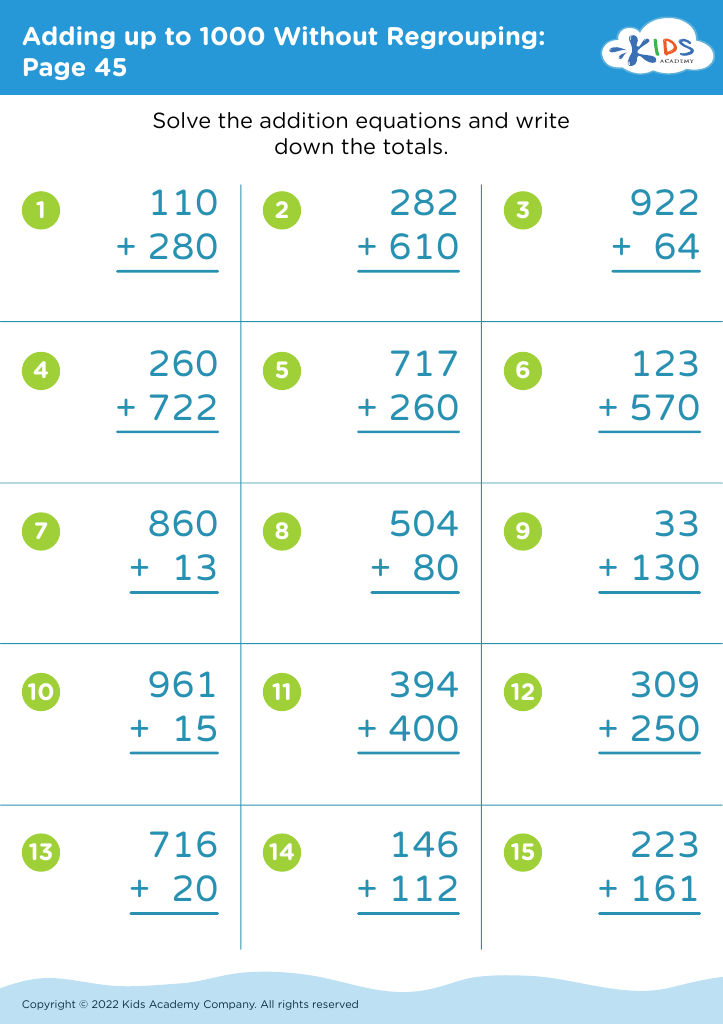








Problem-solving practice in addition for ages 7-9 is crucial for several reasons. First, this age group is at a vital stage in their cognitive development, where they begin to understand not just basic arithmetic, but also how to apply these skills to real-world scenarios. Engaging children in problem-solving activities allows them to develop critical thinking skills, as they learn to interpret and approach various mathematical challenges.
Secondly, this practice enhances their numerical fluency. While rote memorization of addition facts is important, the ability to solve word problems fosters a deeper understanding of numbers and relationships between them. It helps children to see multiplication as repeated addition and to grasp the concept of grouping or sharing.
Furthermore, these skills are foundational for future mathematical learning. As children progress in their education, they will encounter more complex concepts that depend on solid addition skills. This early problem-solving exposure builds confidence and resilience, helping them tackle challenges both in mathematics and in other subjects. Ultimately, investing in problem-solving practice makes math a more engaging experience, turning it into a tool for not only academic improvement but also personal empowerment and life skills.
Therefore, parents and teachers play a pivotal role in nurturing these essential skills.








