Filters

102 filtered results

Clear all filters
Favorites
With answer key
Interactive

102 filtered results

Difficulty Level

Grade


Check out this FREE Trial Lesson on Addition for age 7-9!

Match Objects that Fit Together

Favorites
With answer key
Interactive
  • 7-9
  • Problem-Solving Skills
  • Addition
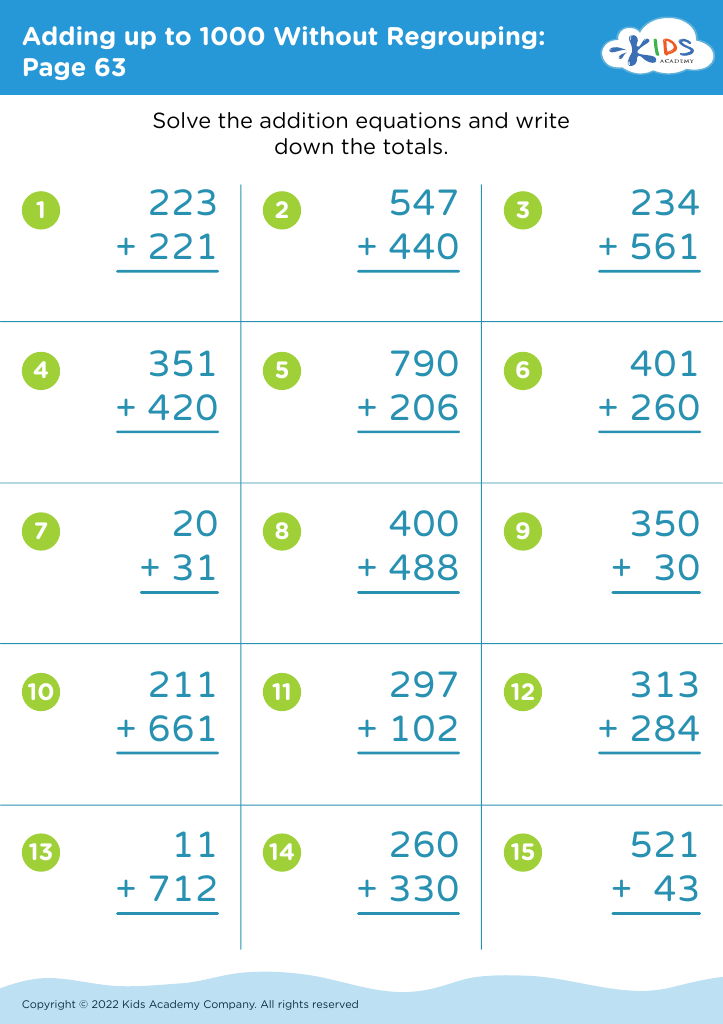
Adding up to 1000 Without Regrouping: Page 63
Worksheet
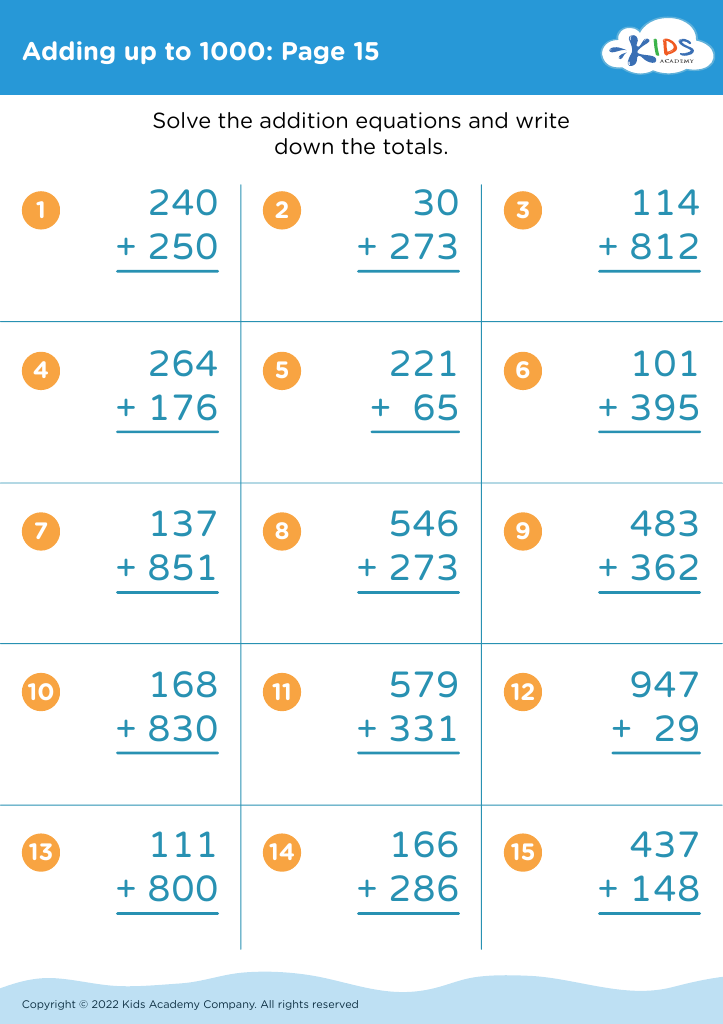
Adding up to 1000: Page 15

Adding up to 1000: Page 15

Adding up to 1000: Page 15
Worksheet
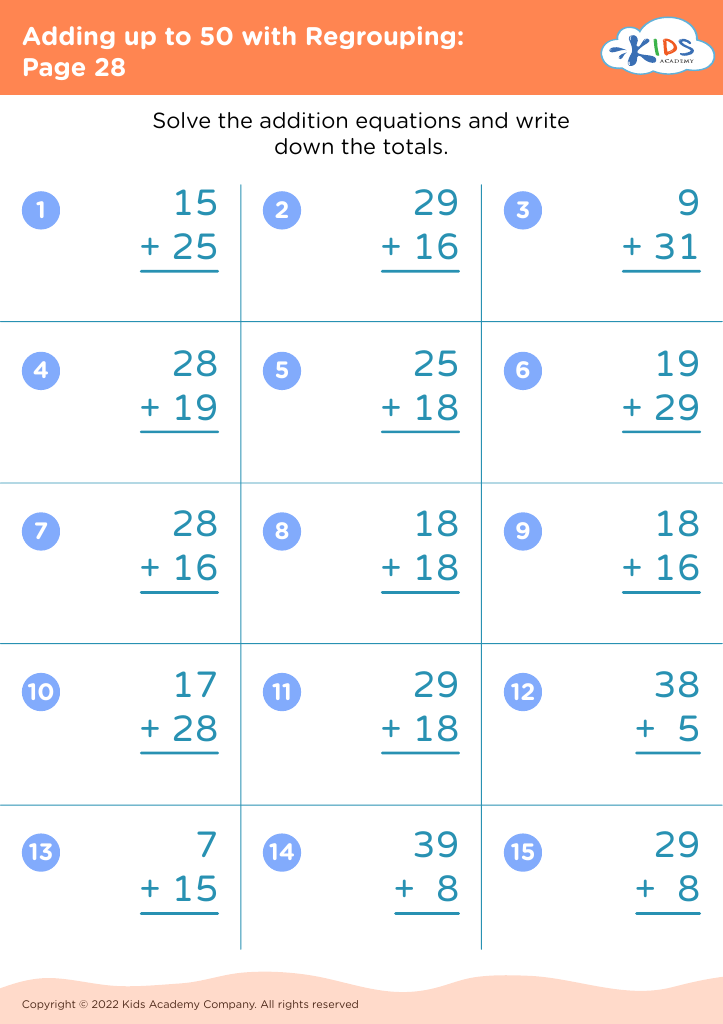
Adding up to 50 with Regrouping: Page 28
Worksheet
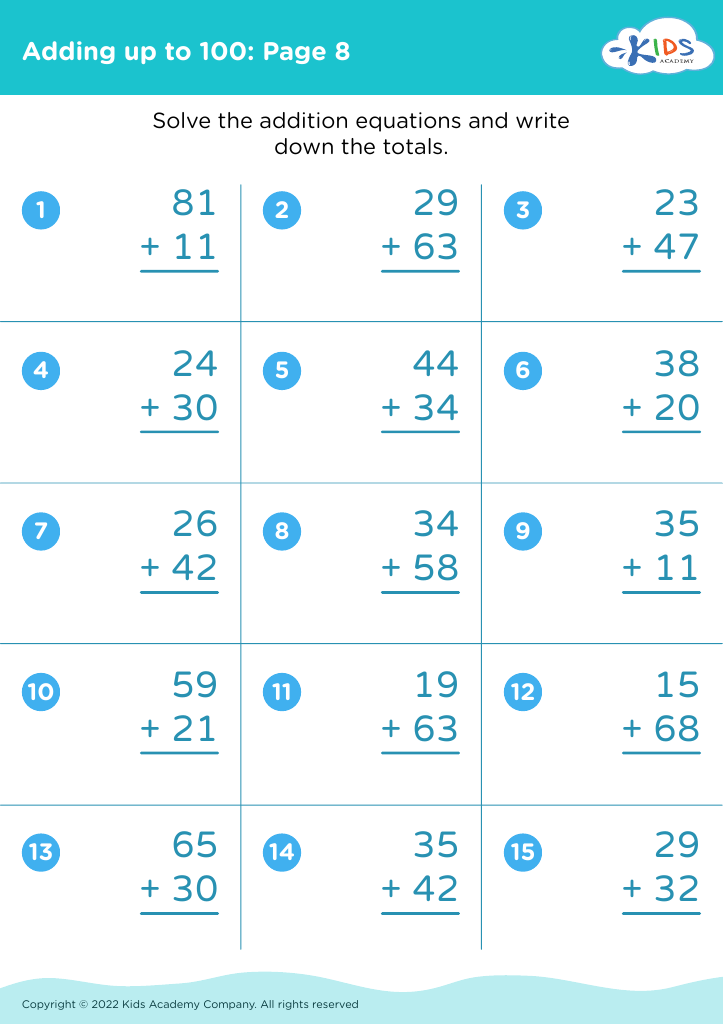
Adding up to 100: Page 8

Adding up to 100: Page 8

Adding up to 100: Page 8
Worksheet
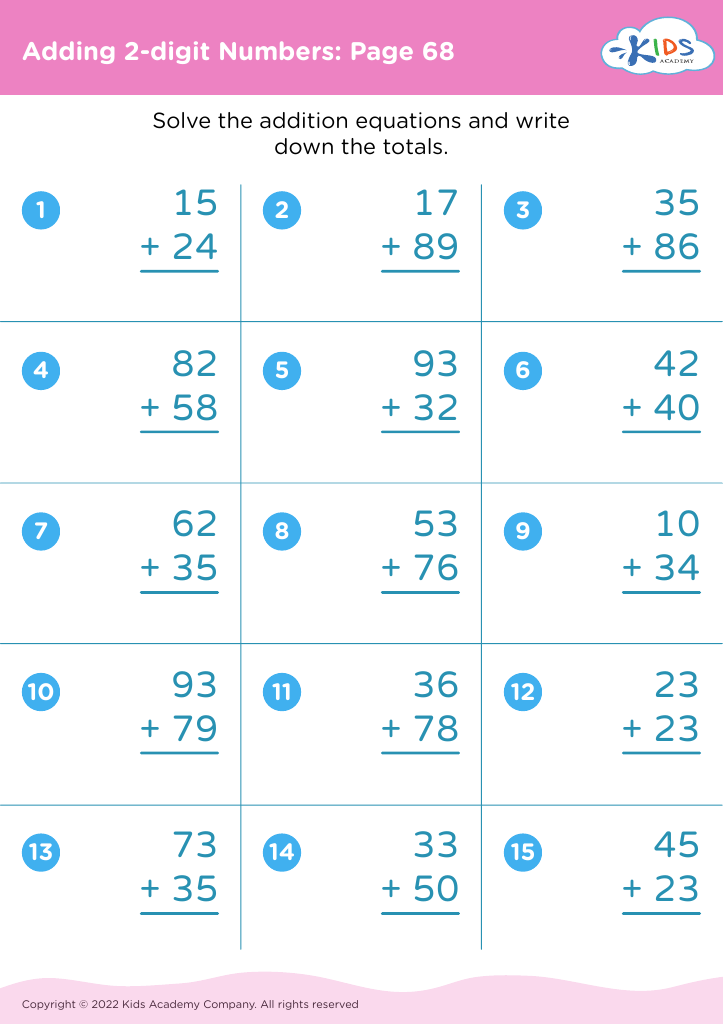
Adding 2-digit Numbers: Page 68

Adding 2-digit Numbers: Page 68

Adding 2-digit Numbers: Page 68
Worksheet
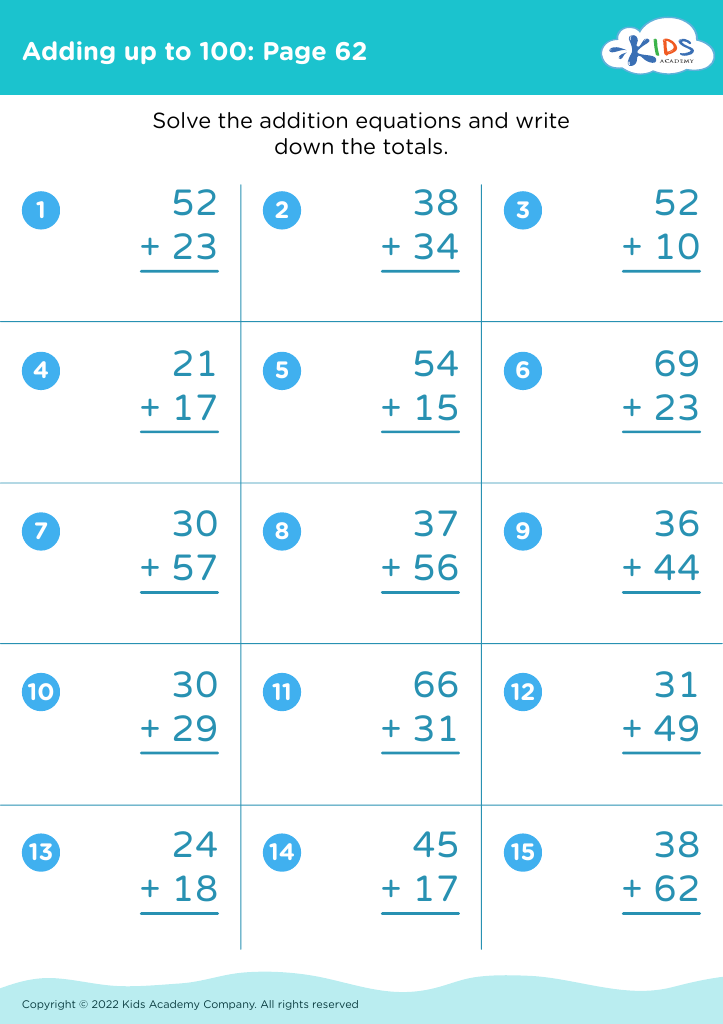
Adding up to 100: Page 62

Adding up to 100: Page 62

Adding up to 100: Page 62
Worksheet
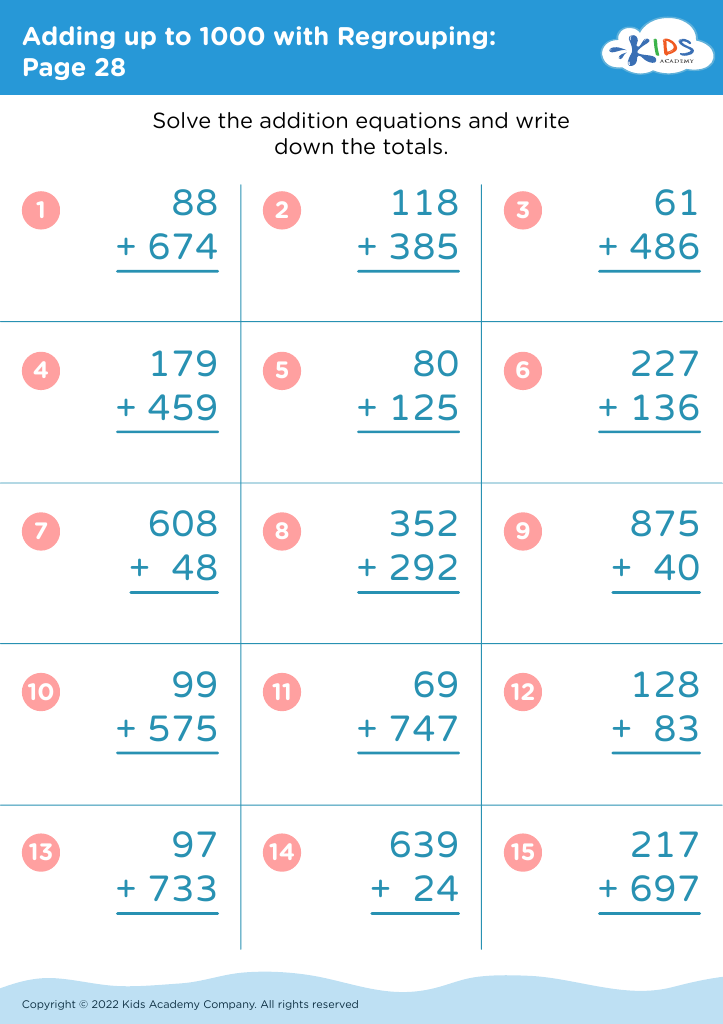
Adding up to 1000 with Regrouping: Page 28
Worksheet
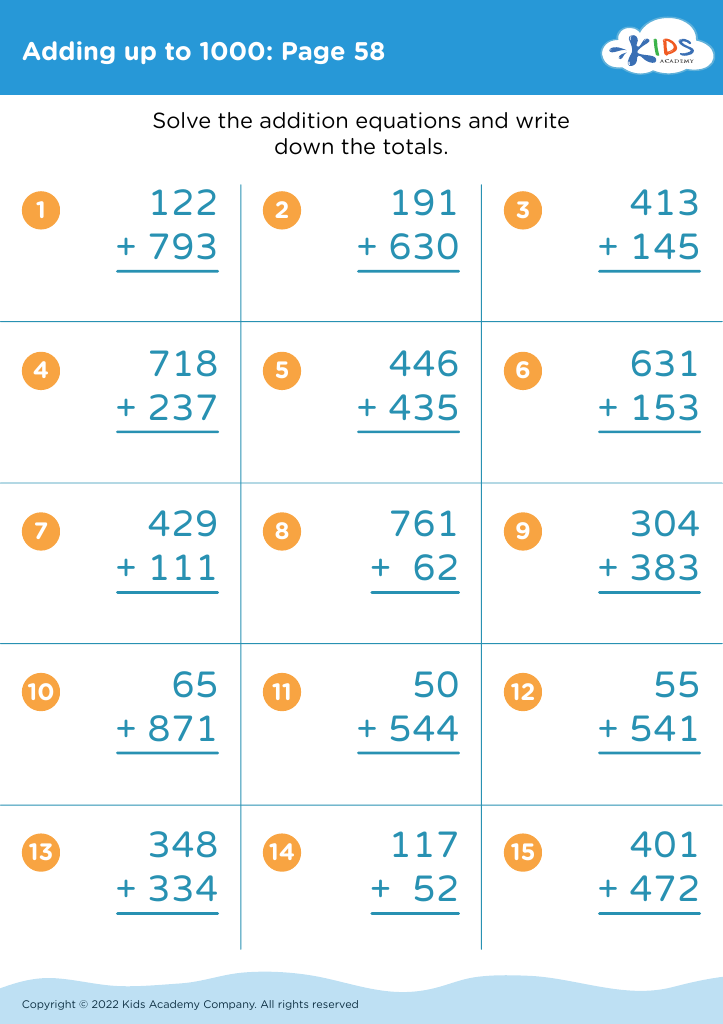
Adding up to 1000: Page 58

Adding up to 1000: Page 58

Adding up to 1000: Page 58
Worksheet
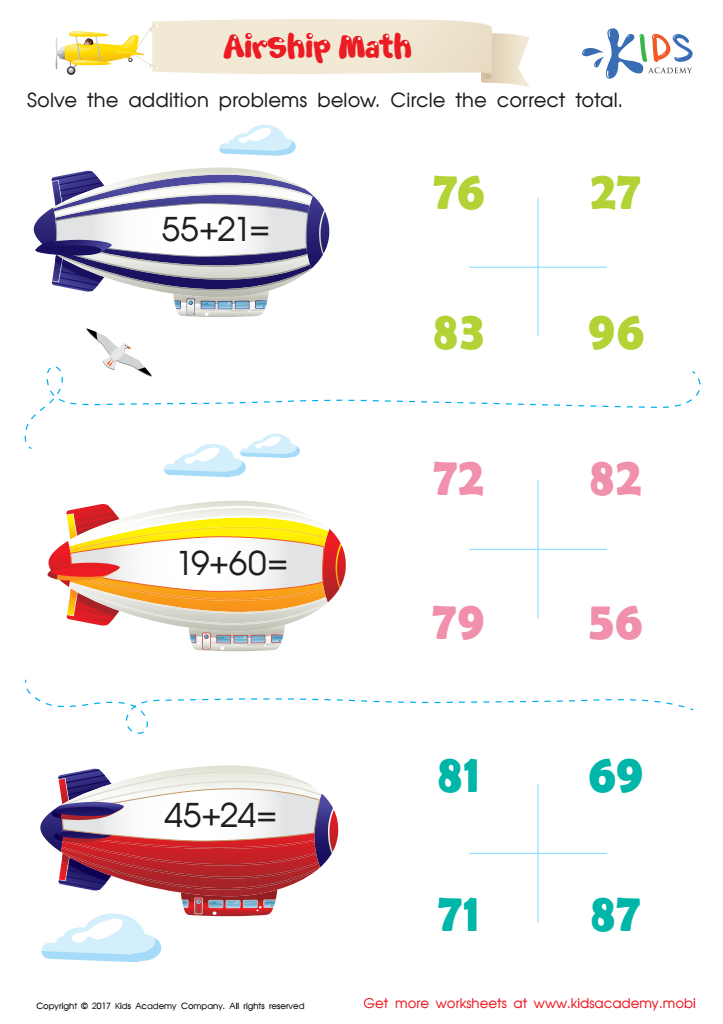
Simple addition printable PDF worksheet

Airship Math Addition Printable

It features fun themes and engaging pictures to make solving problems fun and hassle-free. In only minutes, your child will practice and hone vital math skills!
Airship Math Addition Printable
Worksheet
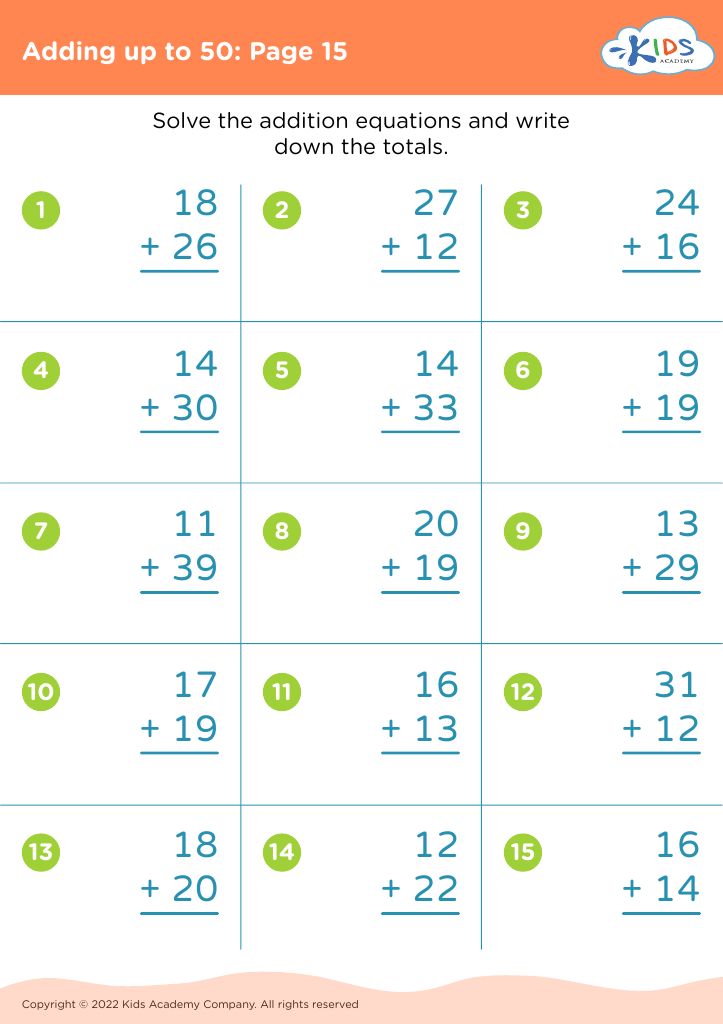
Adding up to 50: Page 15

Adding up to 50: Page 15

Adding up to 50: Page 15
Worksheet
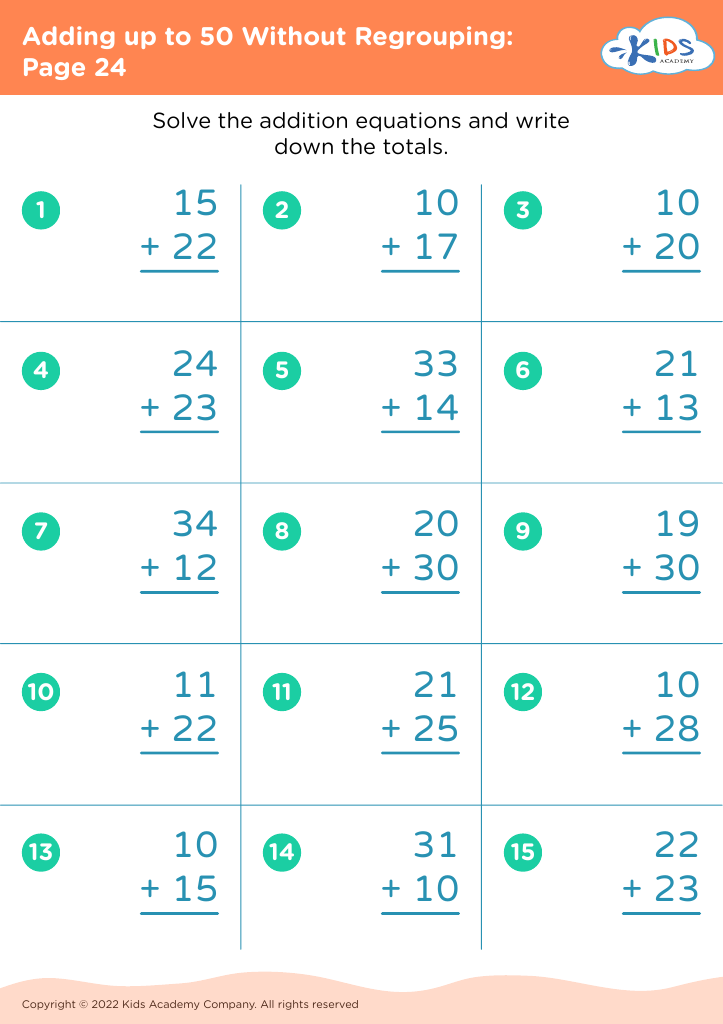
Adding up to 50 Without Regrouping: Page 24
Worksheet
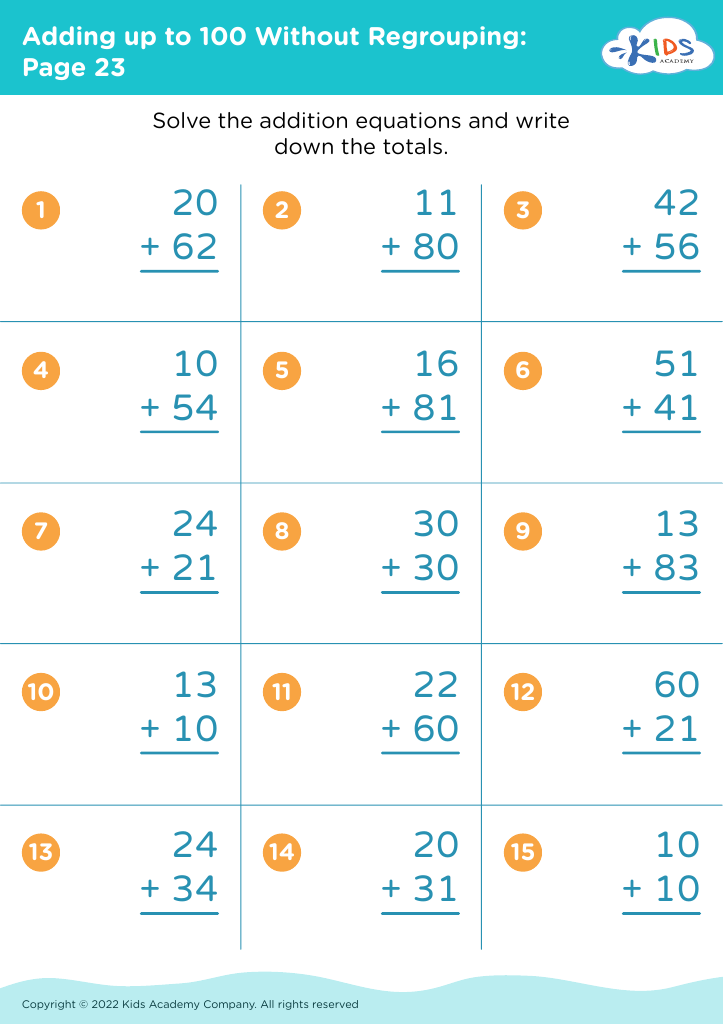
Adding up to 100 Without Regrouping: Page 23
Worksheet
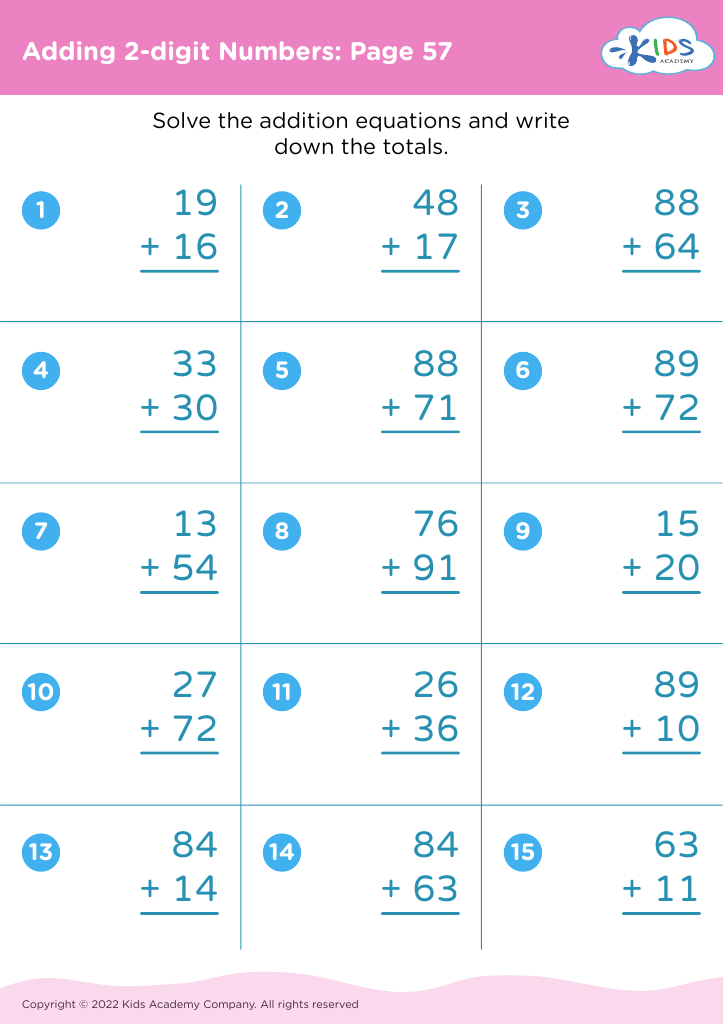
Adding 2-digit Numbers: Page 57

Adding 2-digit Numbers: Page 57

Adding 2-digit Numbers: Page 57
Worksheet
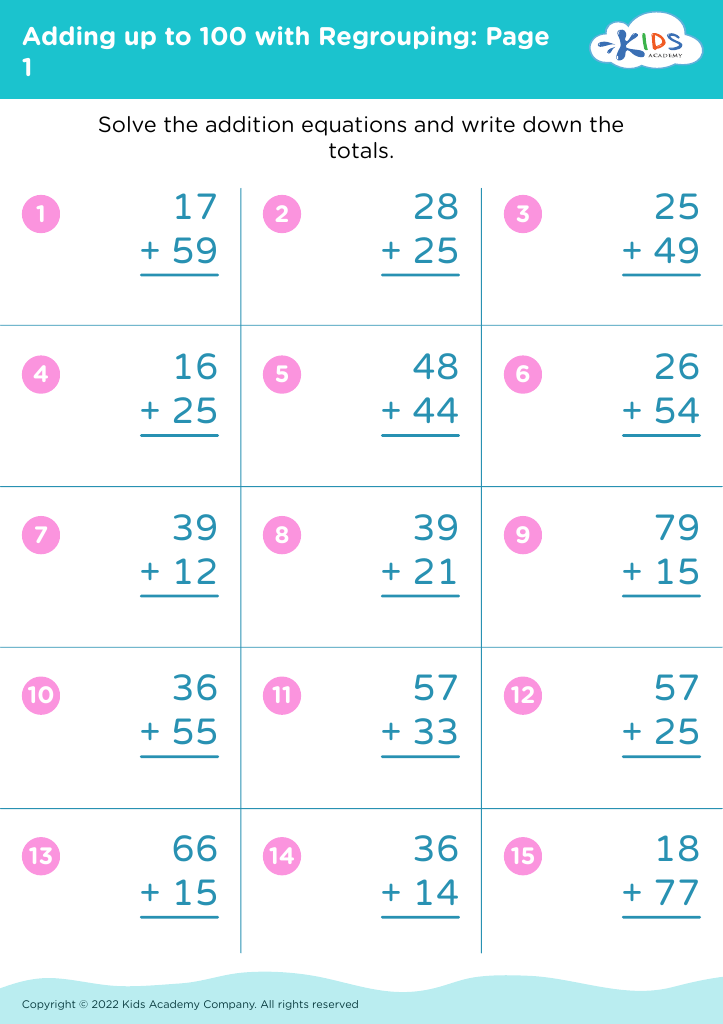
Adding up to 100 with Regrouping: Page 1
Worksheet
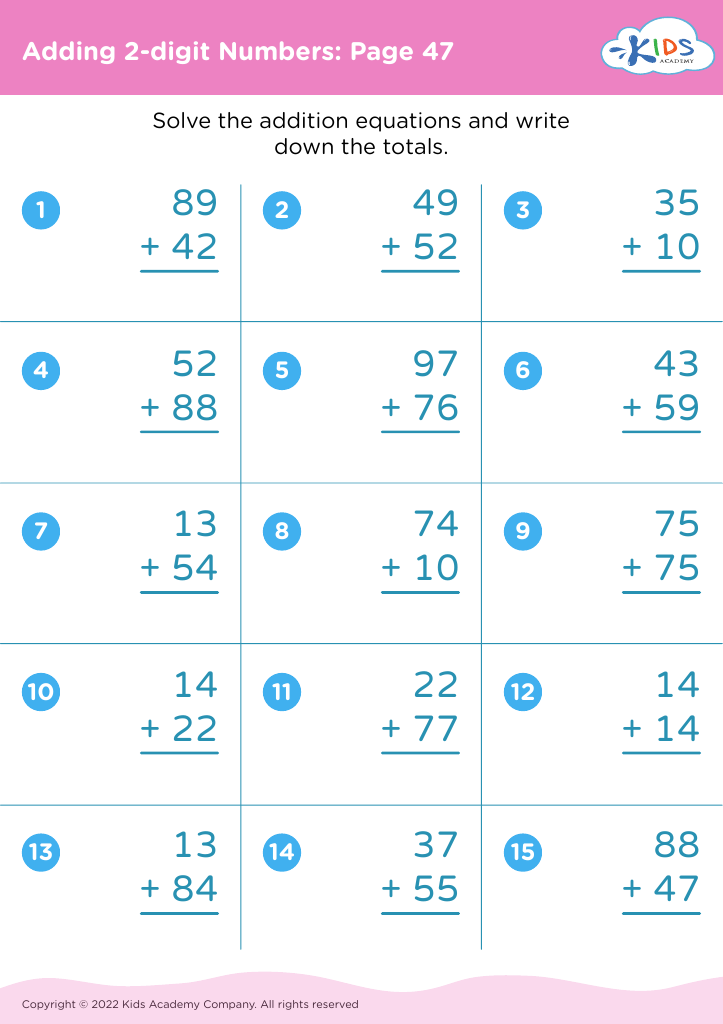
Adding 2-digit Numbers: Page 47

Adding 2-digit Numbers: Page 47

Adding 2-digit Numbers: Page 47
Worksheet
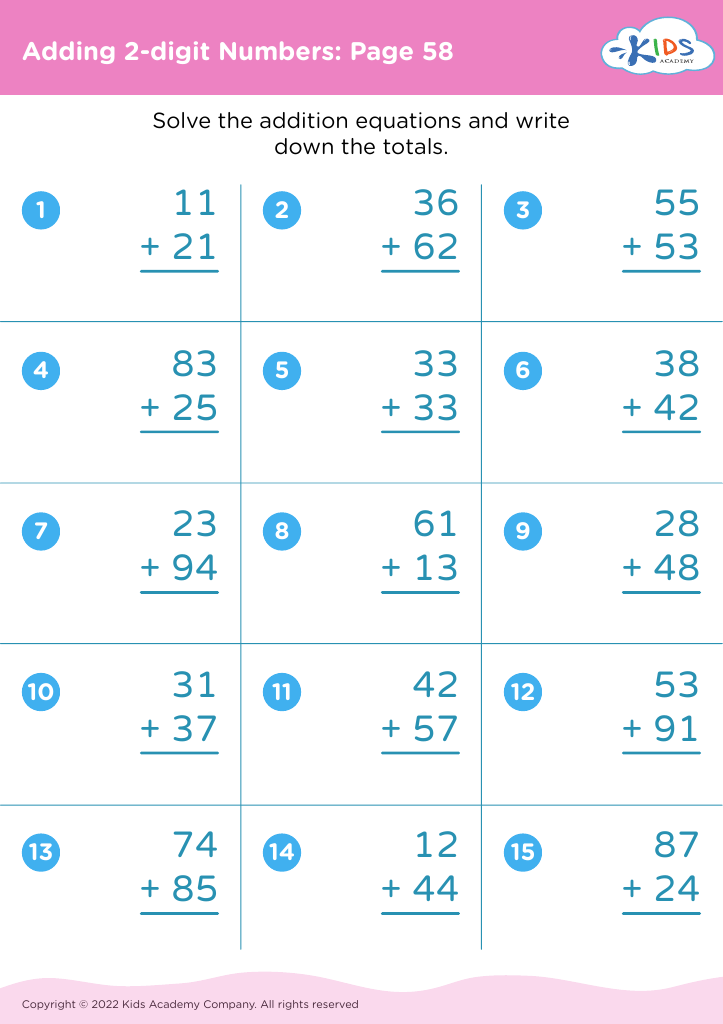
Adding 2-digit Numbers: Page 58

Adding 2-digit Numbers: Page 58

Adding 2-digit Numbers: Page 58
Worksheet
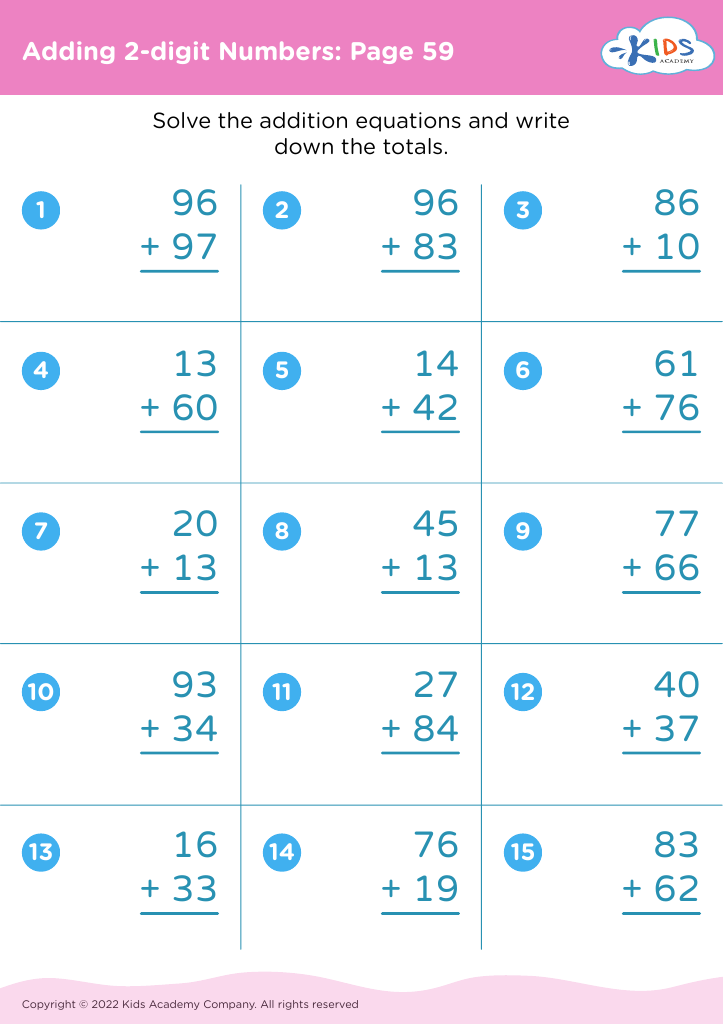
Adding 2-digit Numbers: Page 59

Adding 2-digit Numbers: Page 59

Adding 2-digit Numbers: Page 59
Worksheet
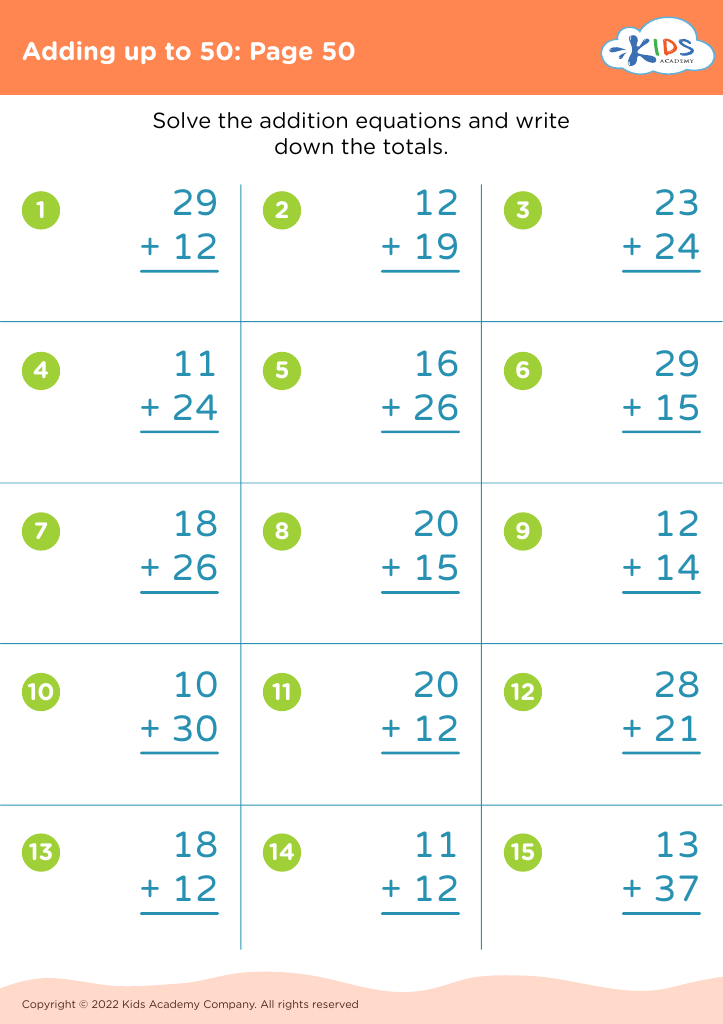
Adding up to 50: Page 50

Adding up to 50: Page 50

Adding up to 50: Page 50
Worksheet
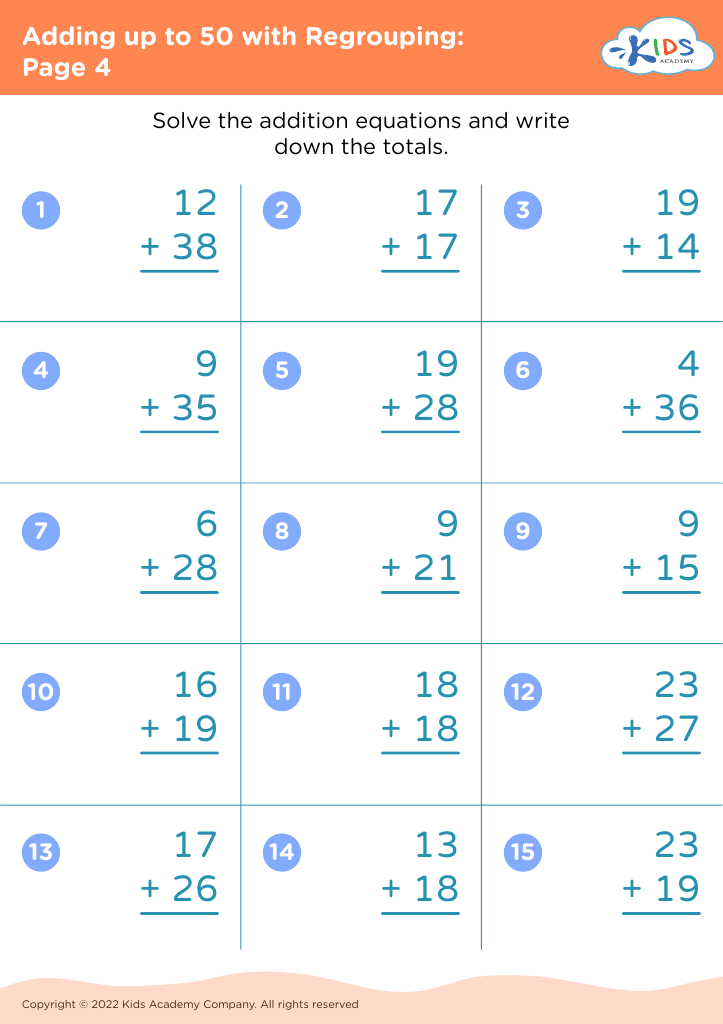
Adding up to 50 with Regrouping: Page 4
Worksheet
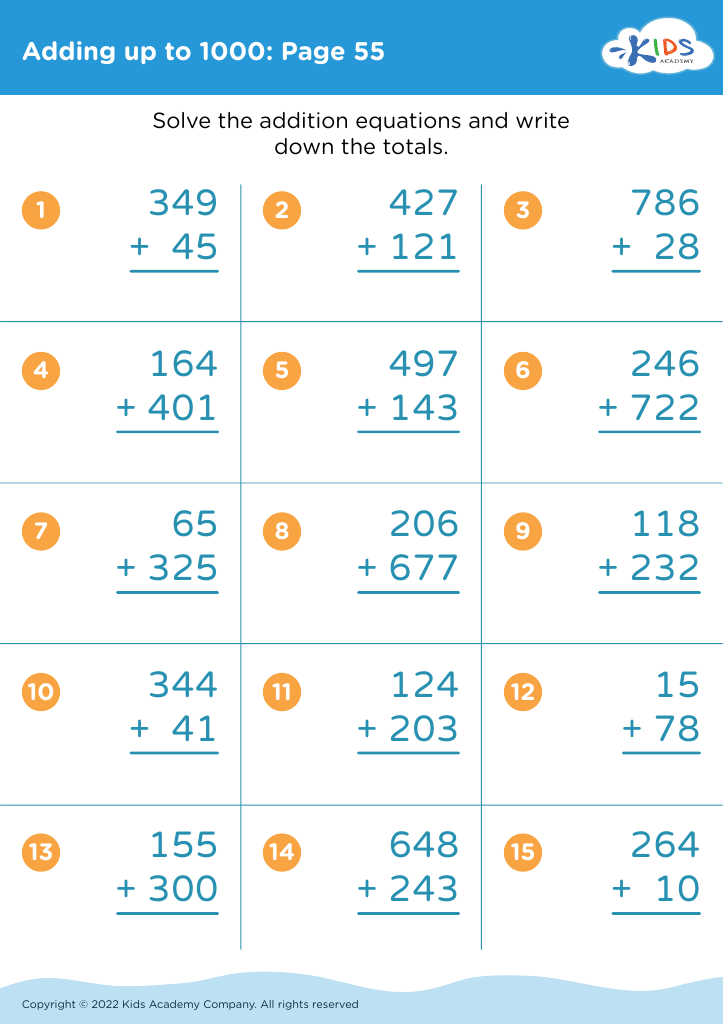
Adding up to 1000: Page 55

Adding up to 1000: Page 55

Adding up to 1000: Page 55
Worksheet
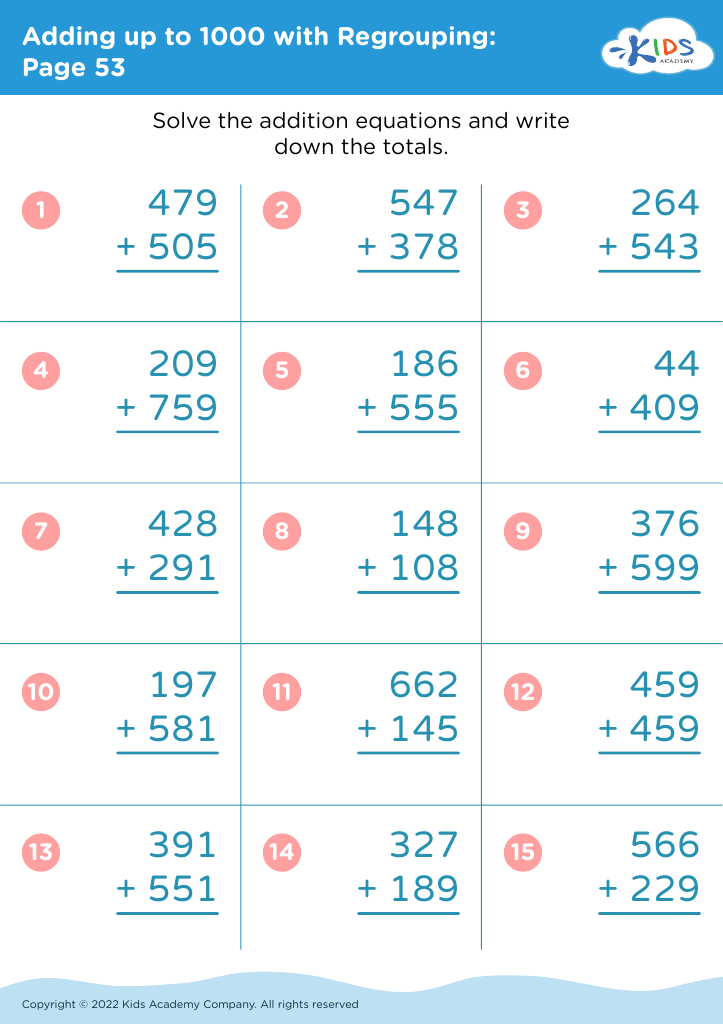
Adding up to 1000 with Regrouping: Page 53
Worksheet
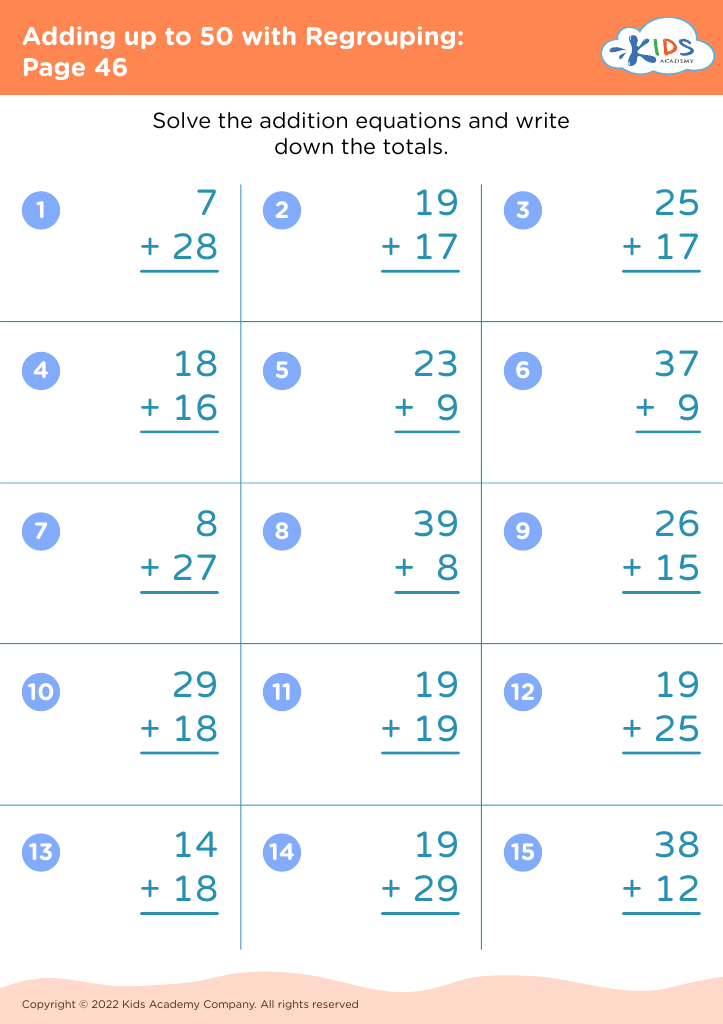
Adding up to 50 with Regrouping: Page 46
Worksheet
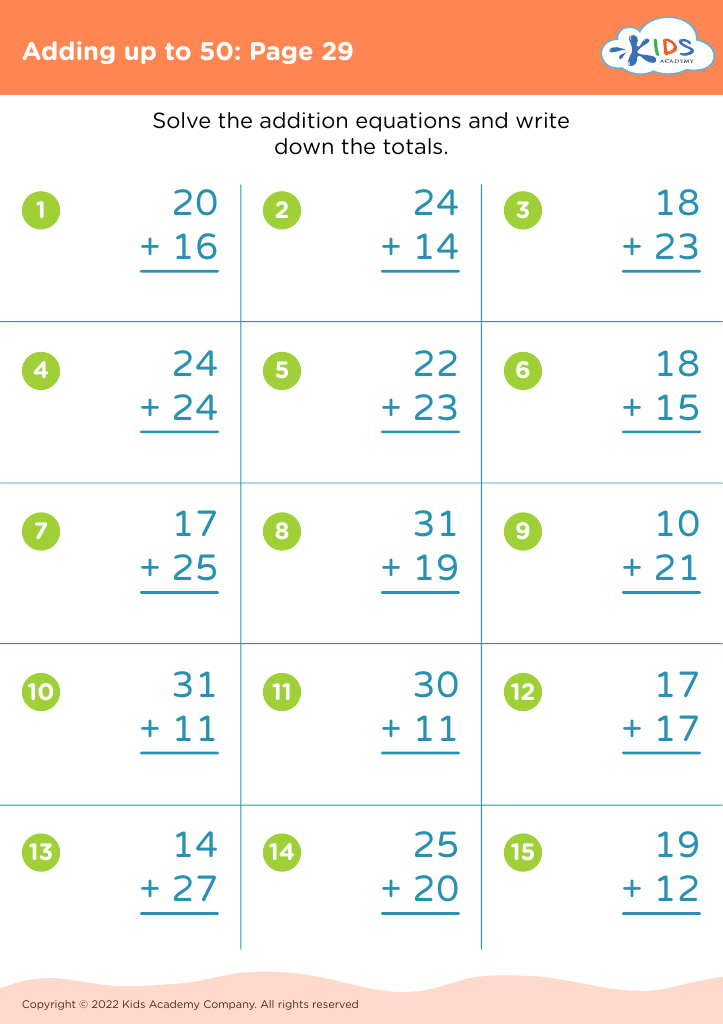
Adding up to 50: Page 29

Adding up to 50: Page 29

Adding up to 50: Page 29
Worksheet
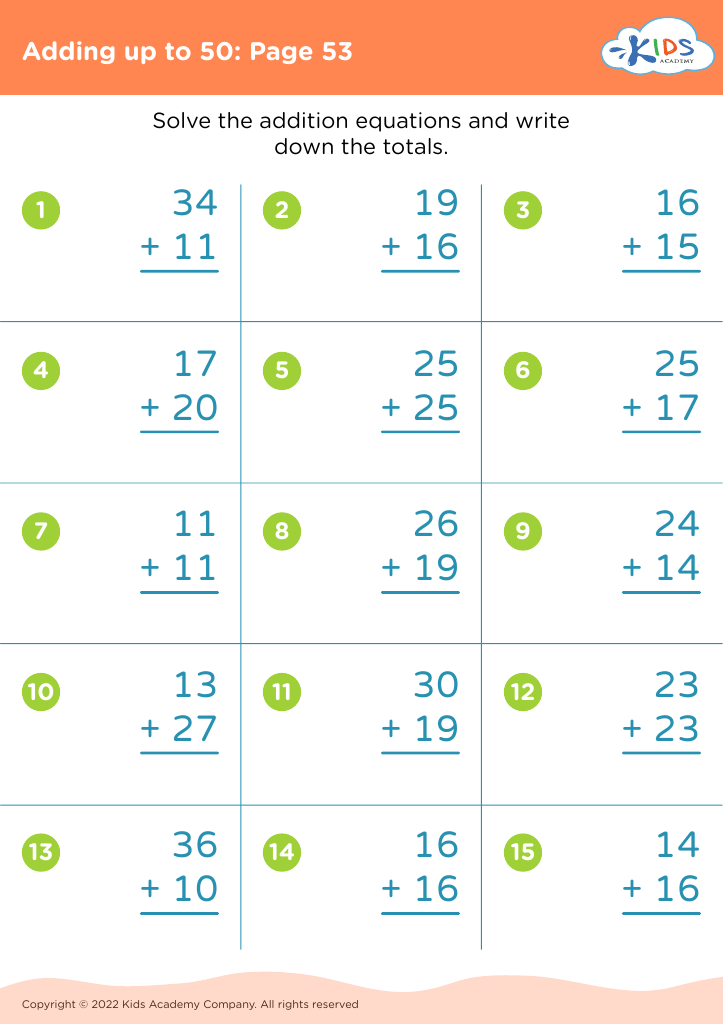
Adding up to 50: Page 53

Adding up to 50: Page 53

Adding up to 50: Page 53
Worksheet


Parents and teachers should prioritize the development of problem-solving skills in children aged 7-9, particularly in the context of addition, because these skills lay the foundation for critical thinking and mathematics proficiency. At this age, children are transitioning from concrete understanding of numbers to more abstract reasoning. Cultivating problem-solving skills helps them recognize patterns, make connections between concepts, and approach challenges with confidence.

Furthermore, strong problem-solving abilities are essential for academic success across various subjects, as they foster analytical thinking, creativity, and perseverance. When children learn to approach addition problems using different strategies—such as visualization, breaking down numbers, and estimation—they not only improve their calculation skills, but also enhance their overall cognitive flexibility.

Encouraging children to engage with addition problems collaboratively allows them to communicate their thought processes, learn from peers, and develop interpersonal skills. This hands-on approach makes math more accessible and enjoyable while reducing anxiety around numeracy.

Ultimately, equipping young learners with effective problem-solving skills in addition empowers them to face not just math challenges, but any problems they encounter in their academic journey and daily life, fostering a love for learning and a growth mindset as they mature.