Filters

21 filtered results

Clear all filters
Favorites
With answer key
Interactive

21 filtered results

Difficulty Level

Grade


Discover our engaging Recognizing Patterns Addition Worksheets designed for children aged 7-9! These worksheets provide a fun and interactive way for young learners to strengthen their addition skills while identifying and understanding numerical patterns. By incorporating visual aids and diverse problem types, our resources promote critical thinking and boost confidence in math. Perfect for both classroom and home use, these worksheets cater to various learning styles, ensuring that every child can thrive. Enhance your child’s mathematical abilities and foster a love for learning with our thoughtfully crafted, easily accessible worksheets today! Explore the world of patterns in mathematics!
Check out this FREE Trial Lesson on Addition for age 7-9!

A

Favorites
With answer key
Interactive
  • 7-9
  • Recognizing Patterns
  • Addition
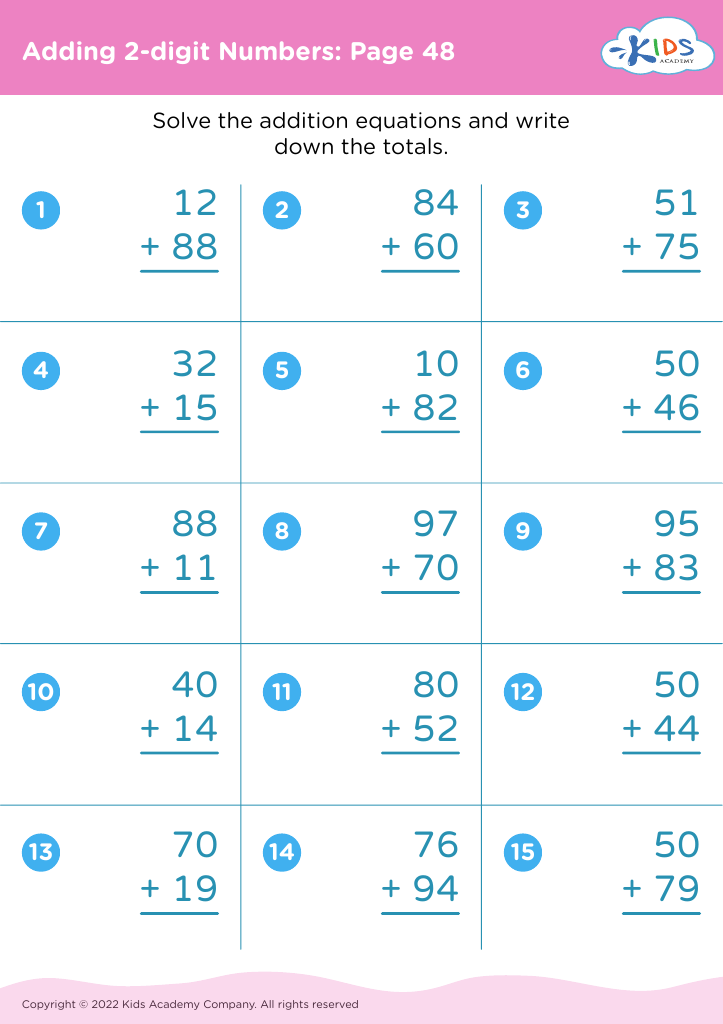
Adding 2-digit Numbers: Page 48

Adding 2-digit Numbers: Page 48

Adding 2-digit Numbers: Page 48
Worksheet
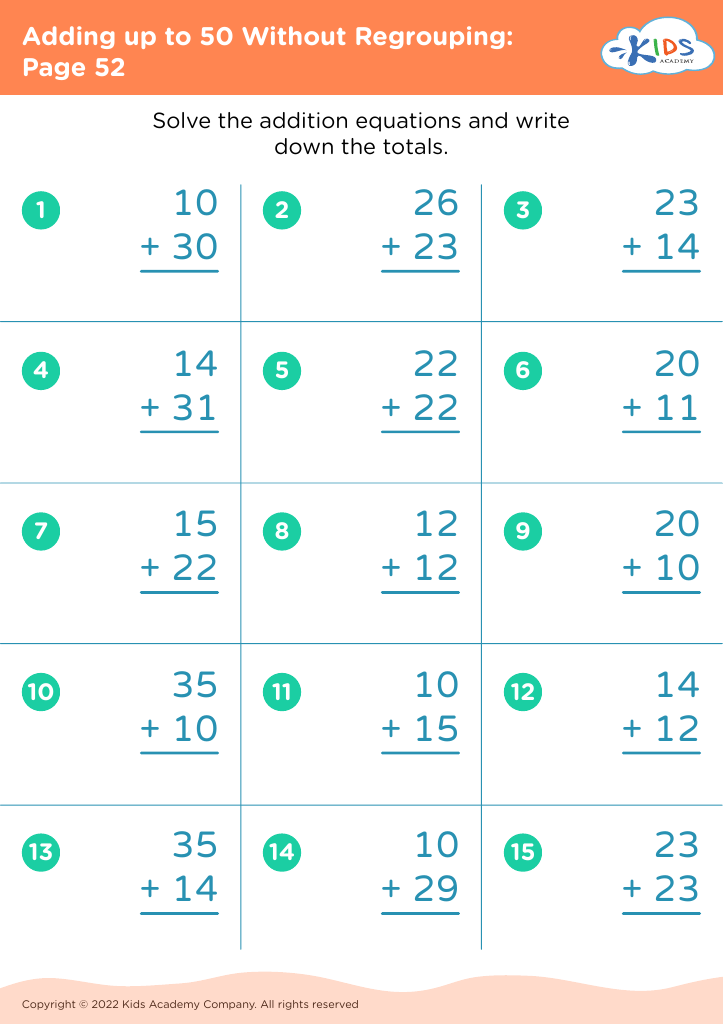
Adding up to 50 Without Regrouping: Page 52
Worksheet
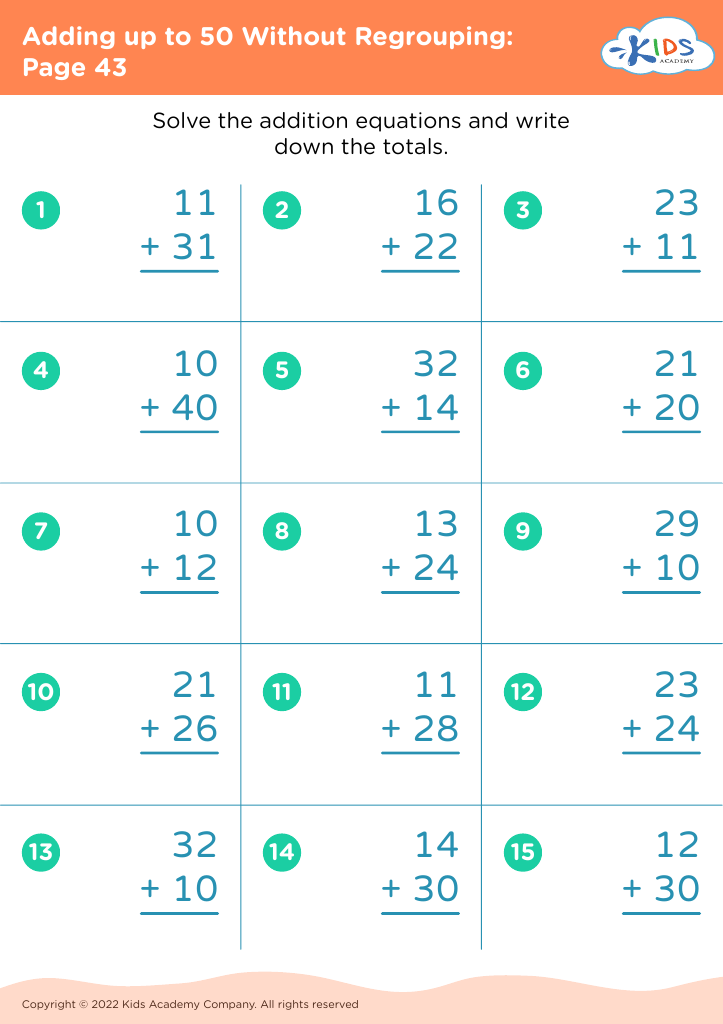
Adding up to 50 Without Regrouping: Page 43
Worksheet
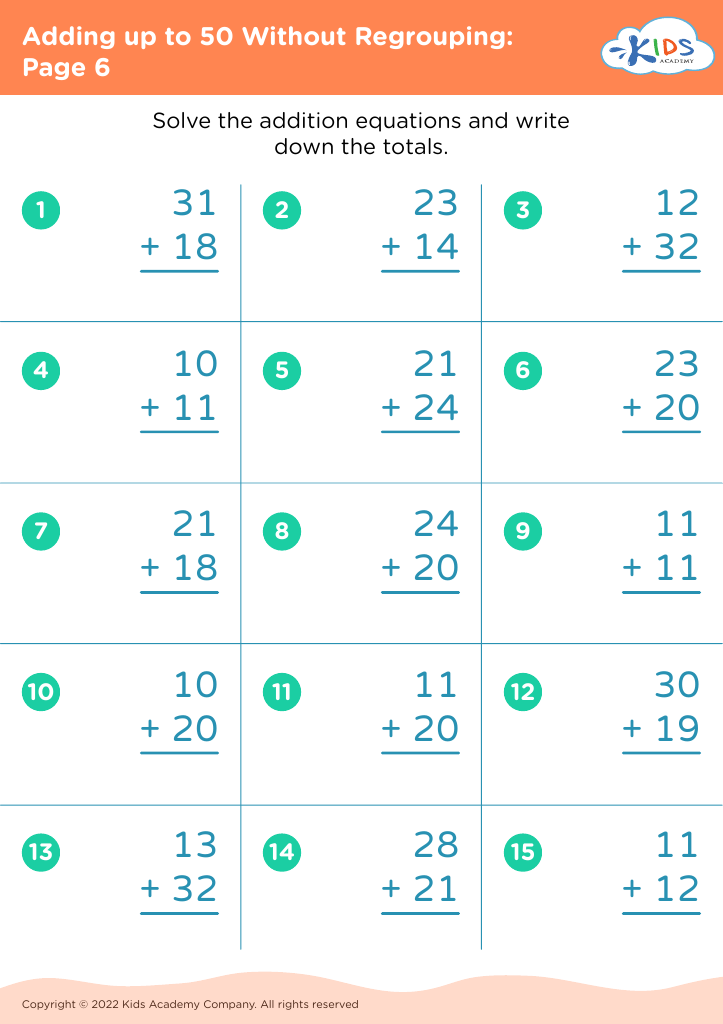
Adding up to 50 Without Regrouping: Page 6
Worksheet
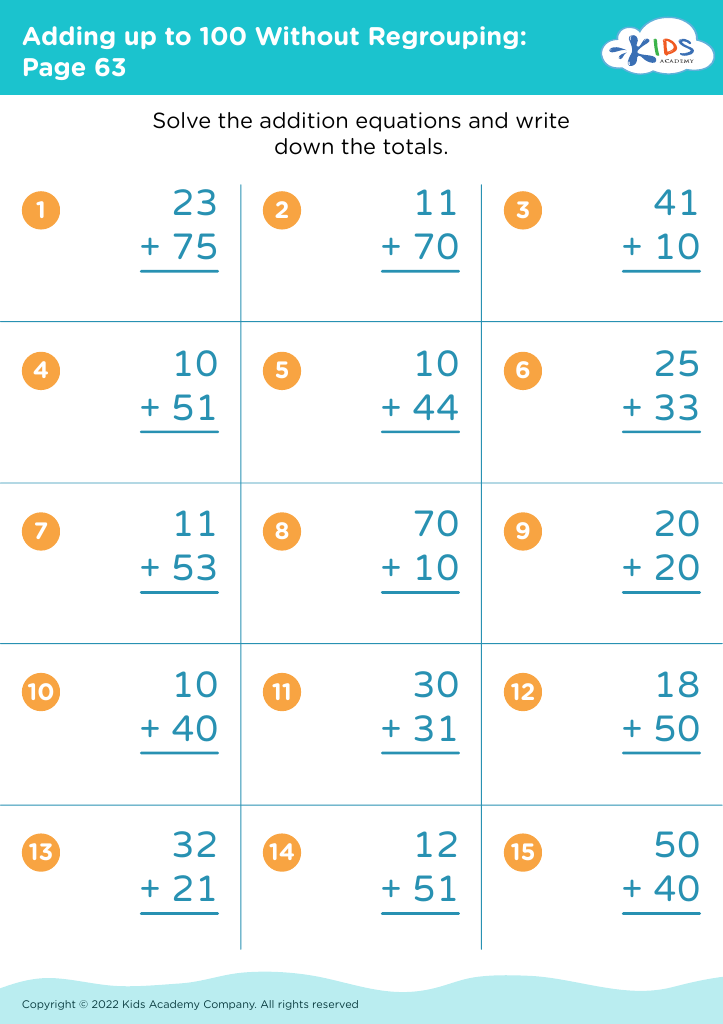
Adding up to 100 Without Regrouping: Page 63
Worksheet
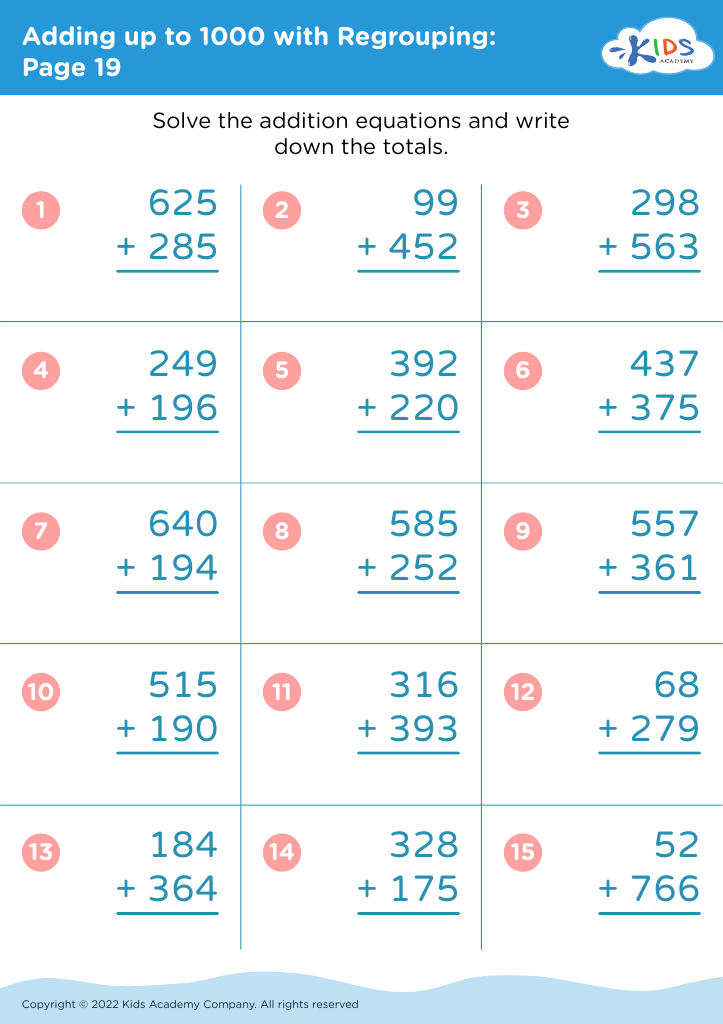
Adding up to 1000 with Regrouping: Page 19
Worksheet
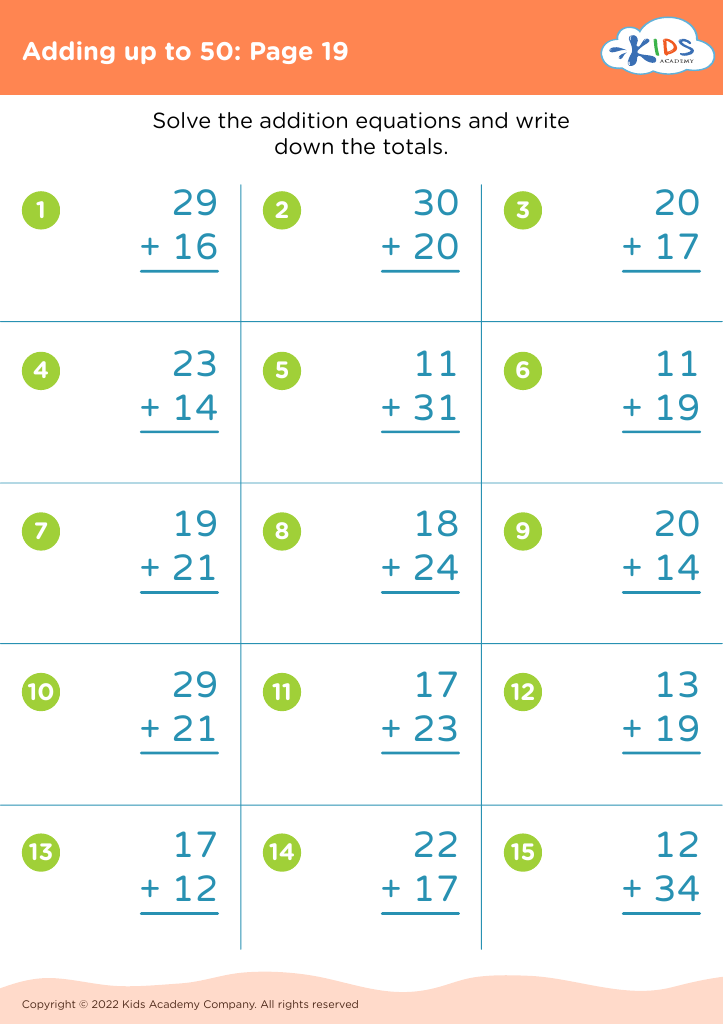
Adding up to 50: Page 19

Adding up to 50: Page 19

Adding up to 50: Page 19
Worksheet
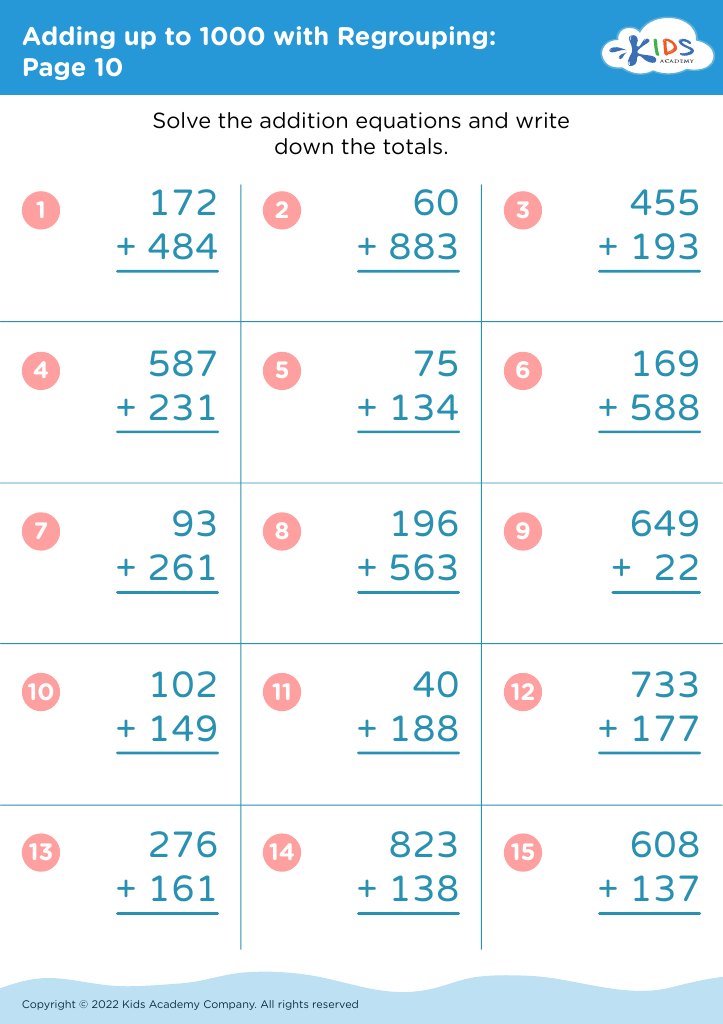
Adding up to 1000 with Regrouping: Page 10
Worksheet
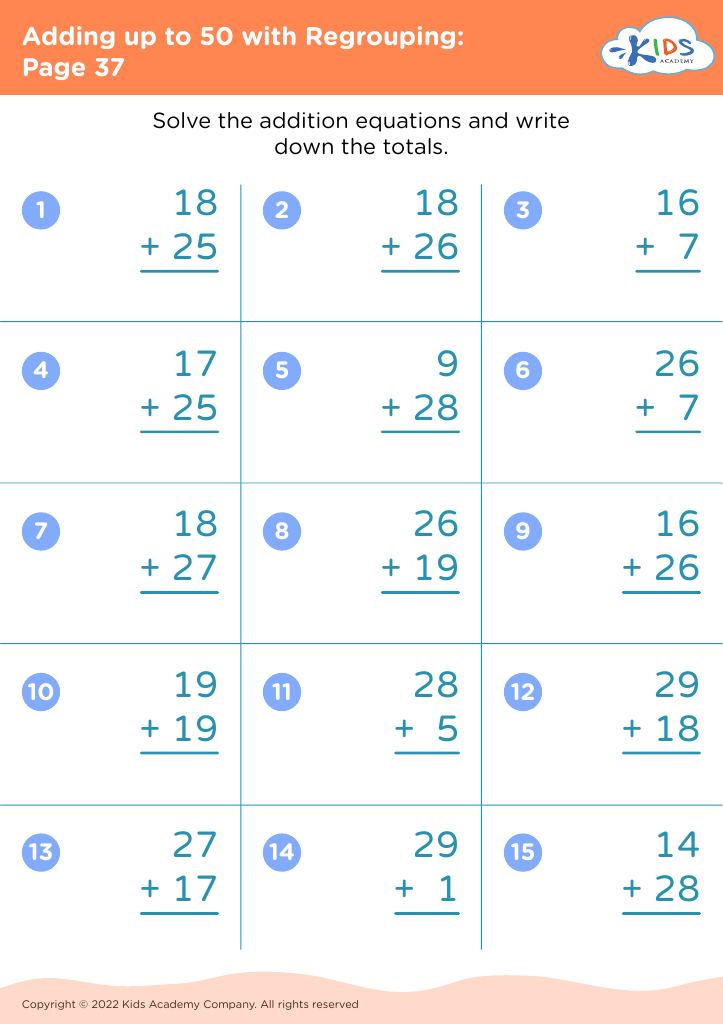
Adding up to 50 with Regrouping: Page 37
Worksheet
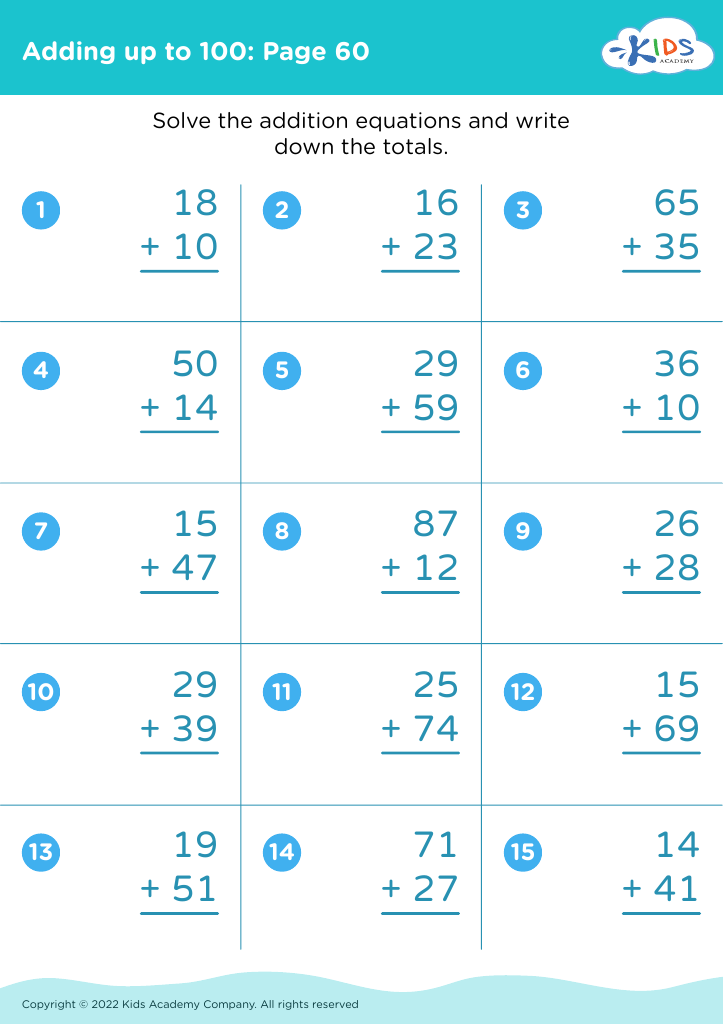
Adding up to 100: Page 60

Adding up to 100: Page 60

Adding up to 100: Page 60
Worksheet
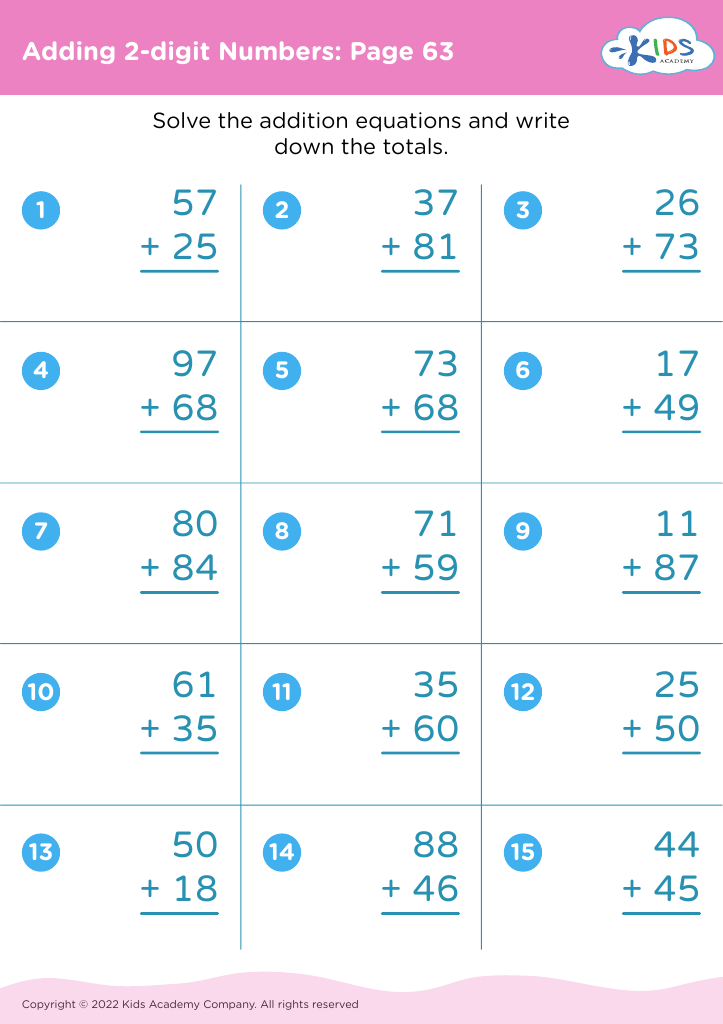
Adding 2-digit Numbers: Page 63

Adding 2-digit Numbers: Page 63

Adding 2-digit Numbers: Page 63
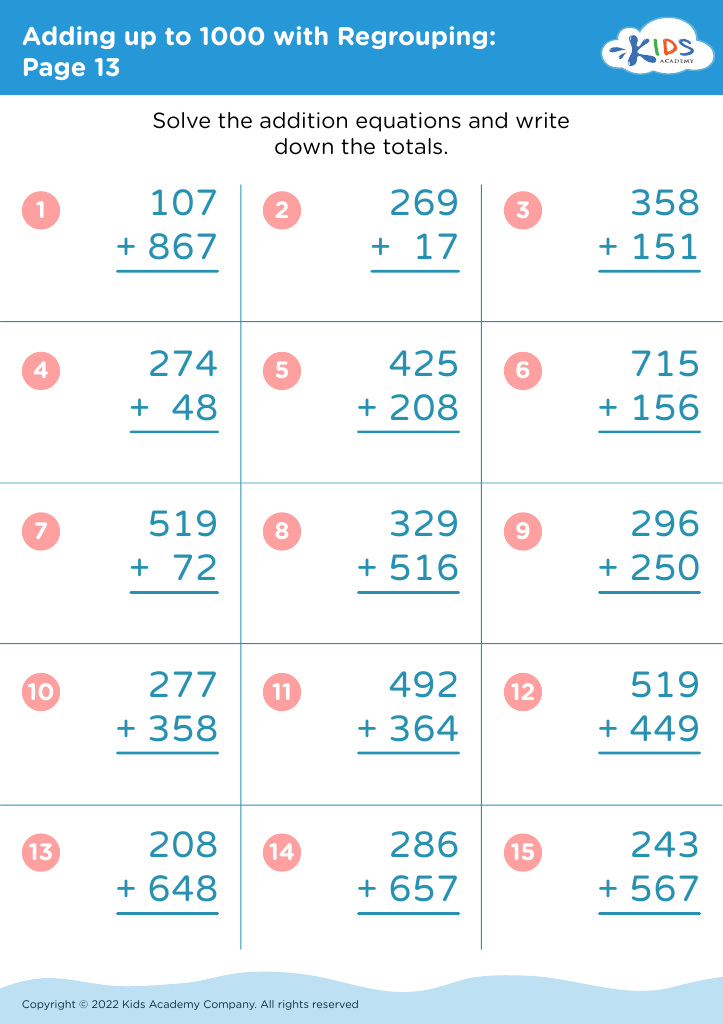
Worksheet
Adding up to 1000 with Regrouping: Page 13
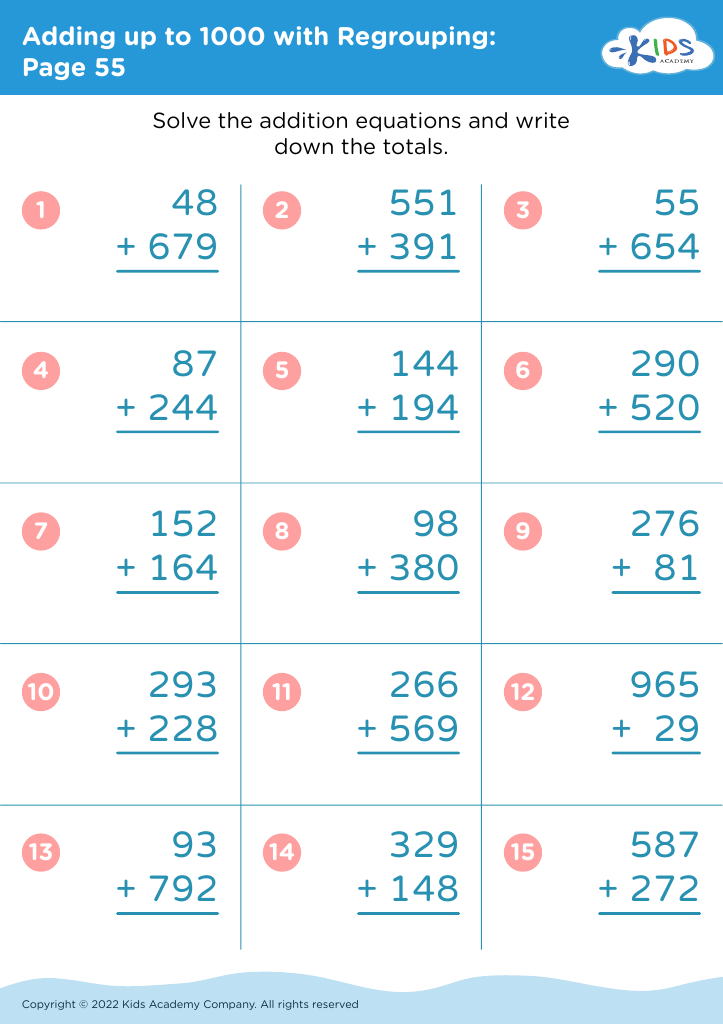
Worksheet
Adding up to 1000 with Regrouping: Page 55
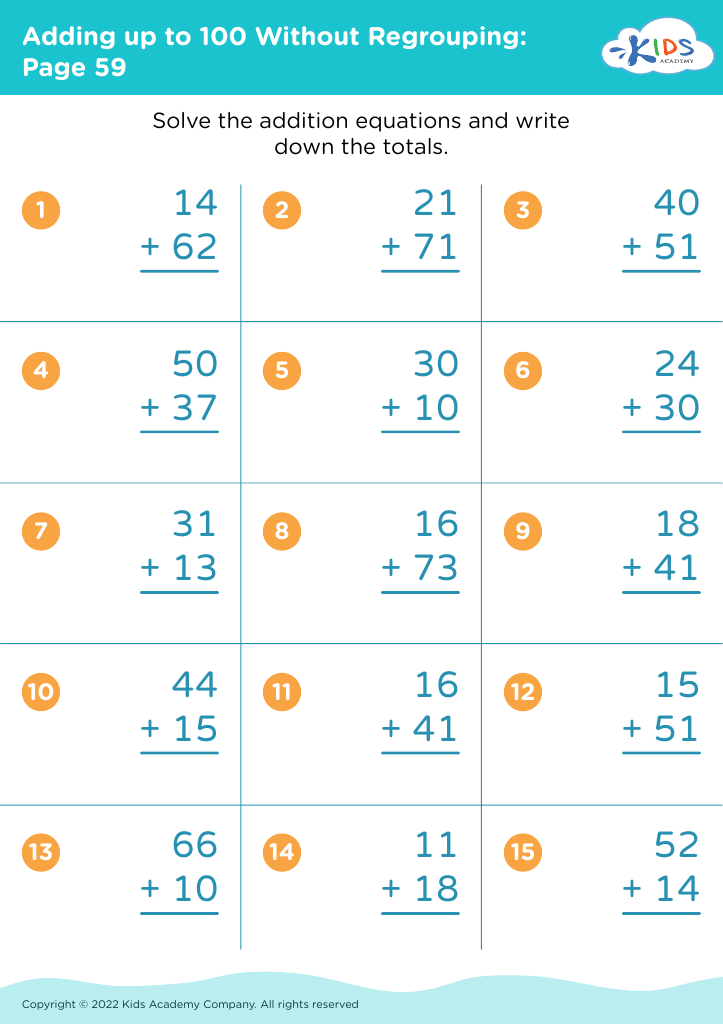
Worksheet
Adding up to 100 Without Regrouping: Page 59
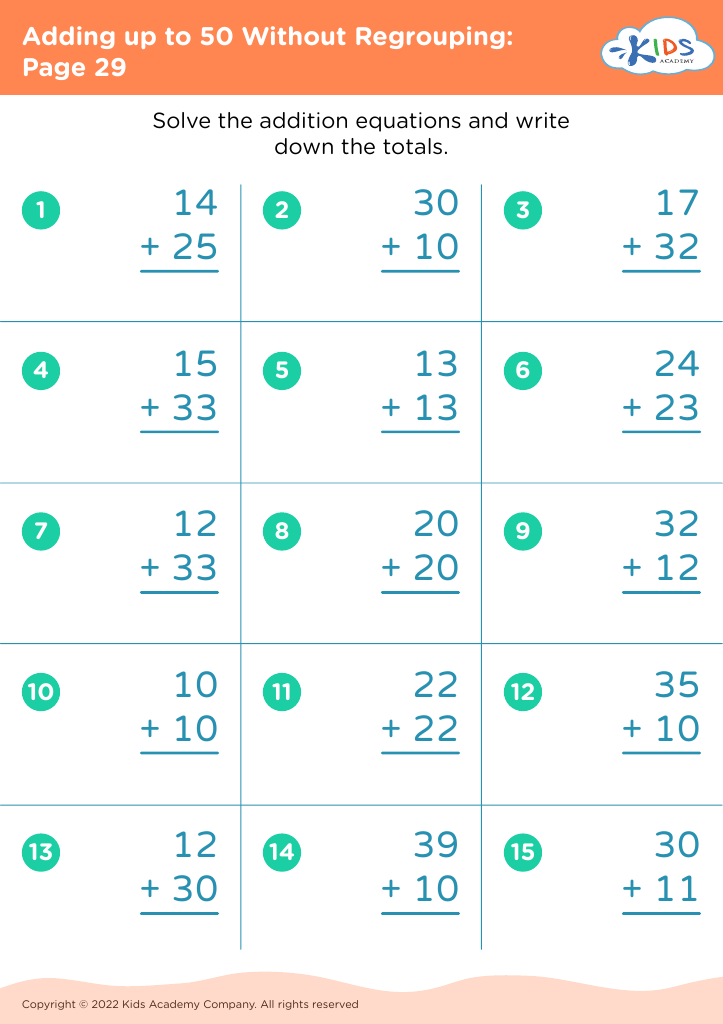
Worksheet
Adding up to 50 Without Regrouping: Page 29
Worksheet
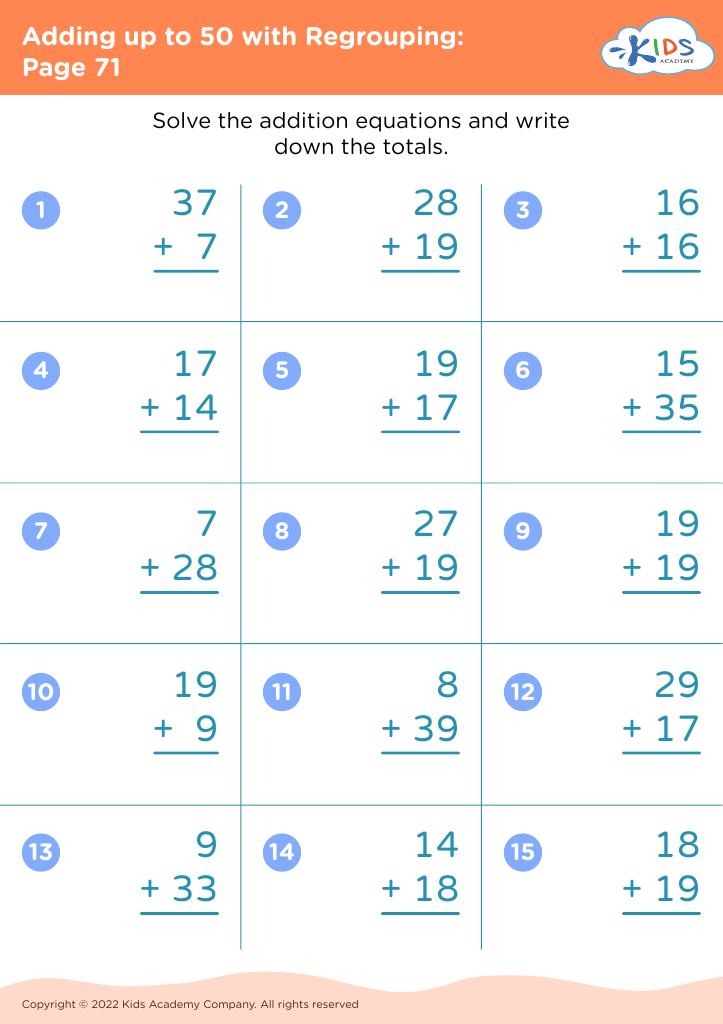
Adding up to 50 with Regrouping: Page 71
Worksheet
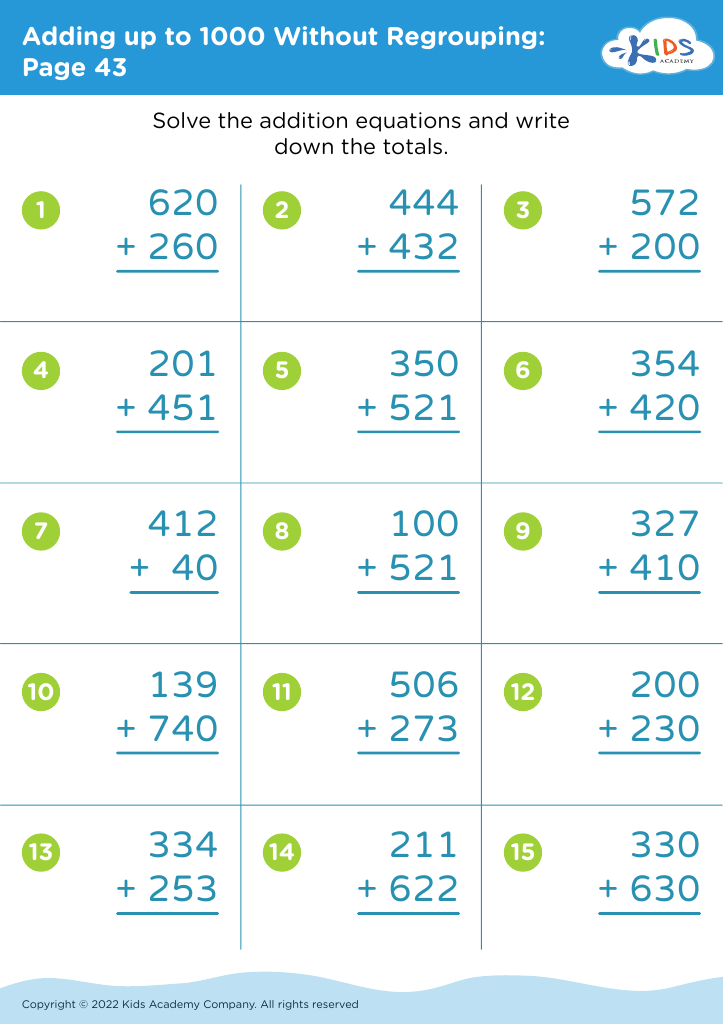
Adding up to 1000 Without Regrouping: Page 43
Worksheet
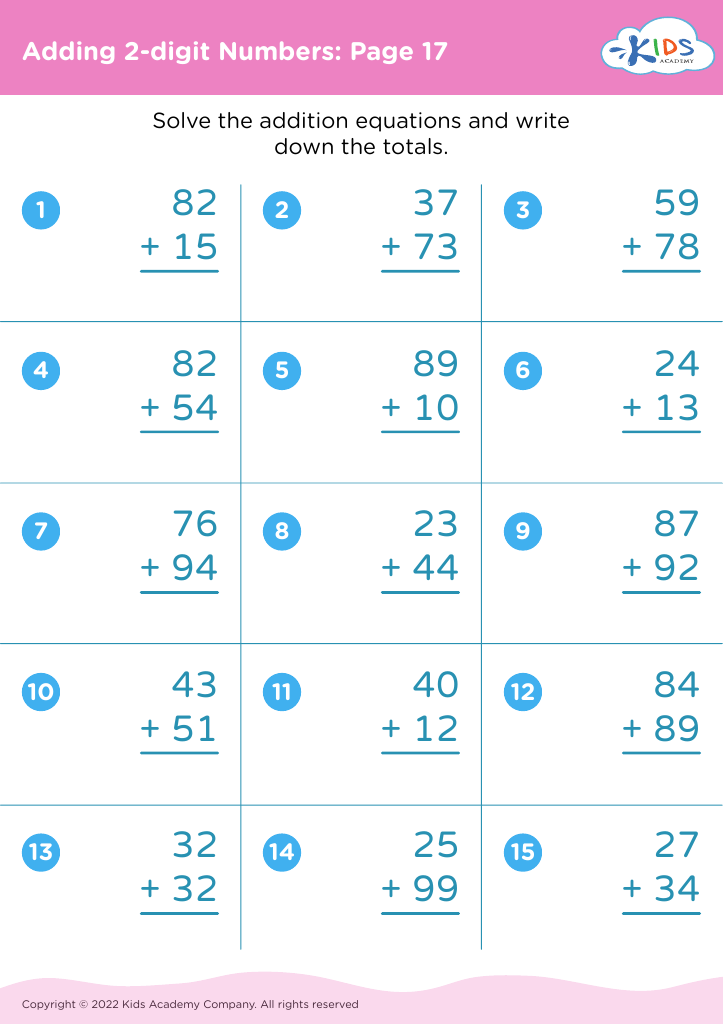
Adding 2-digit Numbers: Page 17

Adding 2-digit Numbers: Page 17

Adding 2-digit Numbers: Page 17
Worksheet
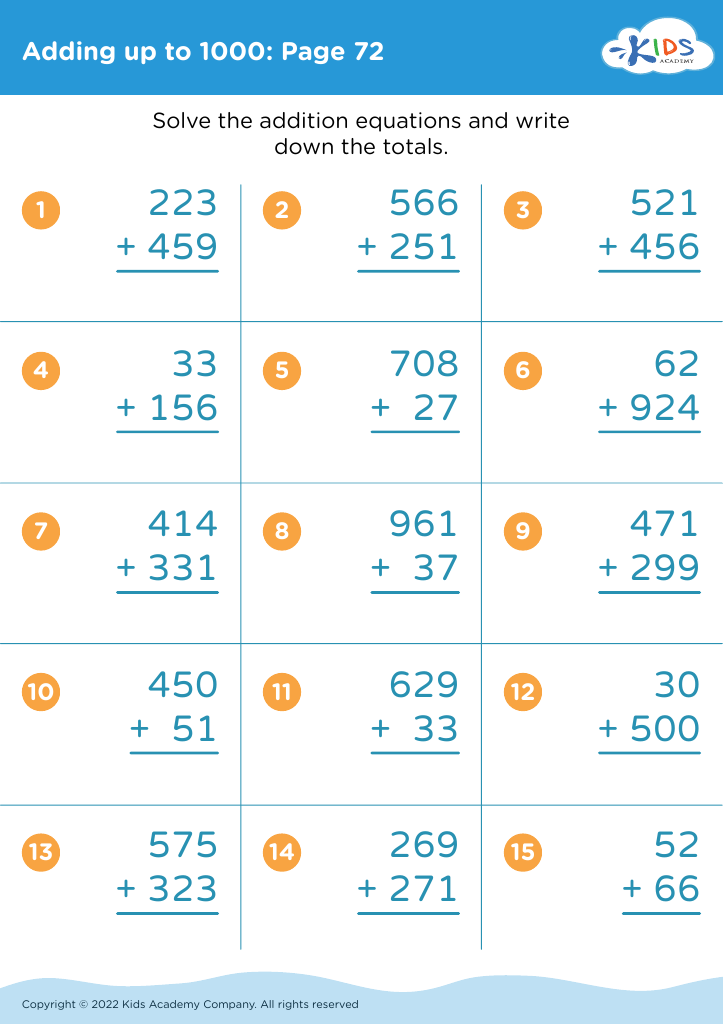
Adding up to 1000: Page 72

Adding up to 1000: Page 72

Adding up to 1000: Page 72
Worksheet
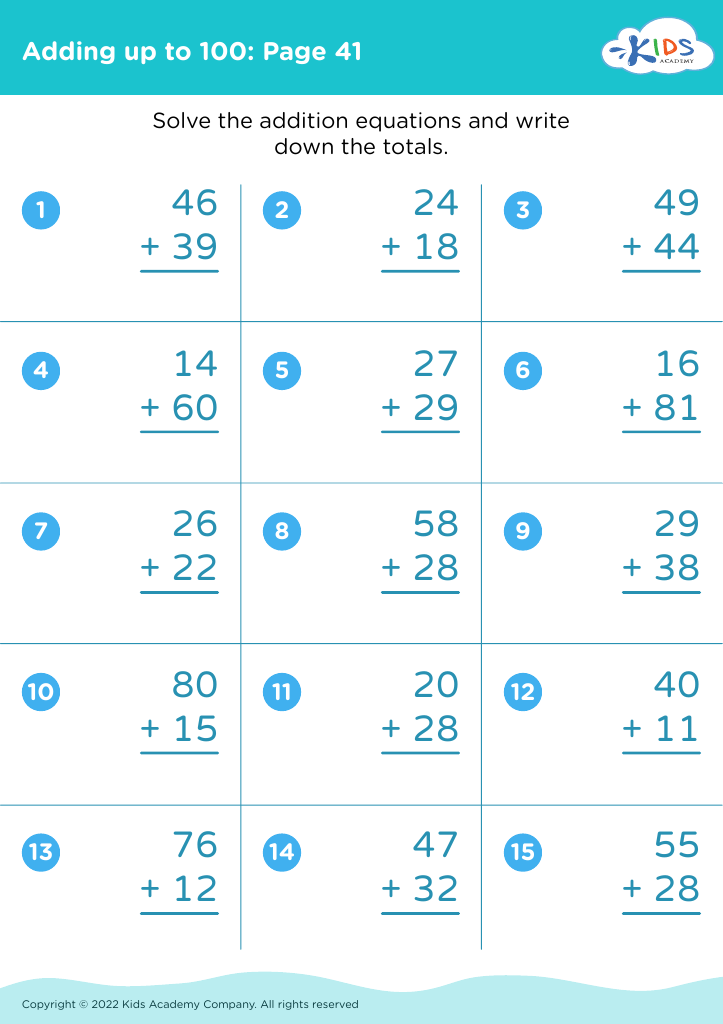
Adding up to 100: Page 41

Adding up to 100: Page 41

Adding up to 100: Page 41
Worksheet
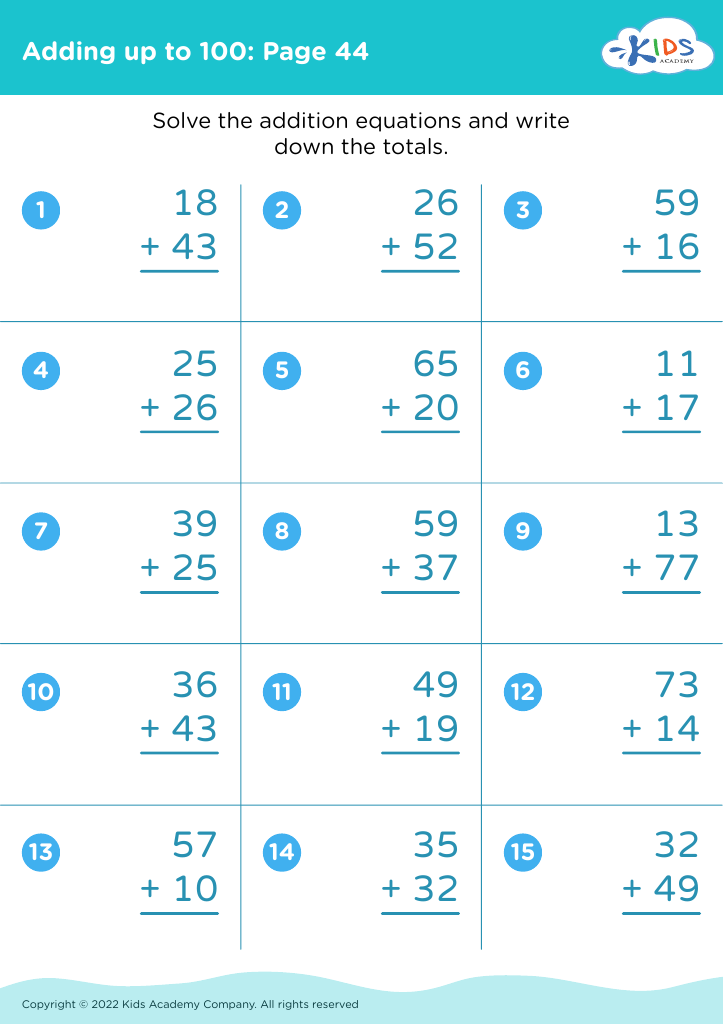
Adding up to 100: Page 44

Adding up to 100: Page 44

Adding up to 100: Page 44
Worksheet


Recognizing patterns in addition is a crucial skill for children aged 7-9, laying a solid foundation for their mathematical understanding. At this developmental stage, children are transitioning from basic arithmetic to more complex problem-solving skills. Recognizing patterns—such as understanding that adding the same number repeatedly can lead to multiplication, or knowing that the sum of two numbers can be reordered—helps them grasp the underlying principles of mathematics.

For parents and teachers, fostering this skill has multiple benefits. First, it enhances children's number sense, empowering them to make connections between concepts, which boosts their confidence in handling math problems. Engaging with patterns also promotes critical thinking skills, as children learn to anticipate outcomes and develop strategies for solving diverse mathematical challenges.

Additionally, incorporating pattern recognition activities into learning sessions keeps children engaged and makes math enjoyable, often reducing anxiety associated with the subject. Tracking progress in pattern recognition allows parents and teachers to tailor support and interventions, ensuring that each child can master addition and build towards more complex mathematical concepts. By prioritizing this foundational skill, adults can help nurture a generation of confident, capable, and enthusiastic math learners.