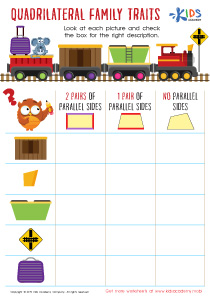
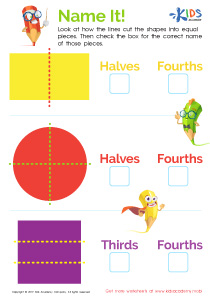
Shape Recognition Area and Perimeter Worksheets for Ages 7-9
3 filtered results
-
From - To
Explore our "Shape Recognition Area and Perimeter Worksheets for Ages 7-9" to make math fun and engaging for your child! These worksheets focus on identifying and analyzing different shapes while covering essential concepts like area and perimeter. Designed for kids aged 7 to 9, these activities enhance spatial awareness, improve problem-solving skills, and align with the school curriculum. Whether they're learning at home or in the classroom, our printable worksheets provide a comprehensive approach to mastering shape recognition and understanding measurements. Start your child’s journey to math proficiency today with Kids Academy's expertly designed resources!
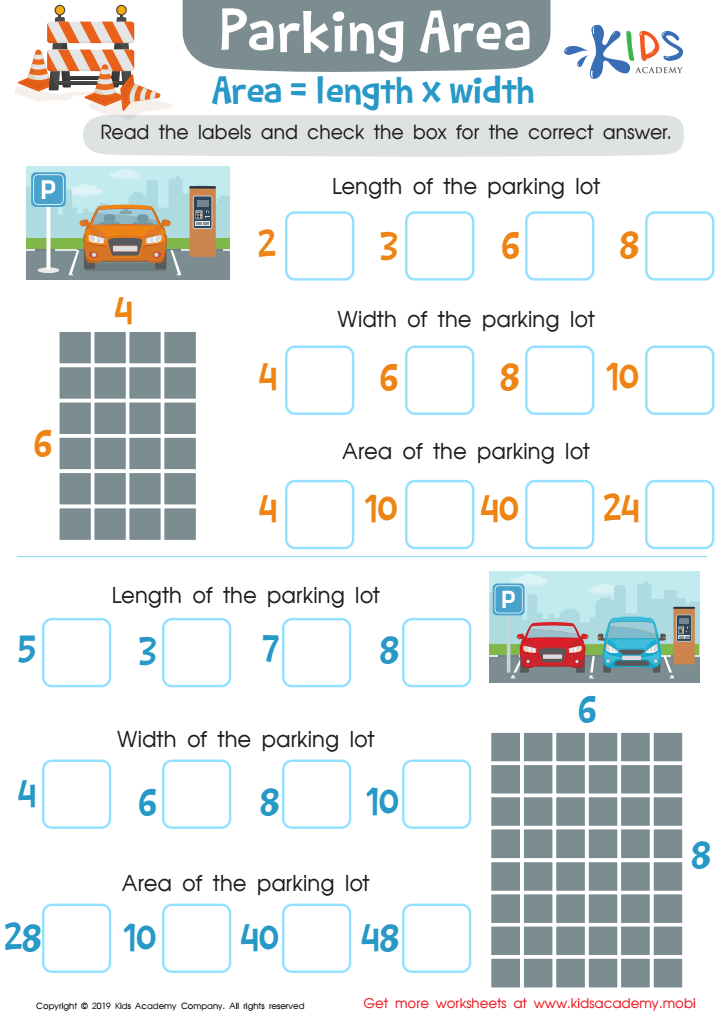
Parking Area Worksheet
 Assign to My Students
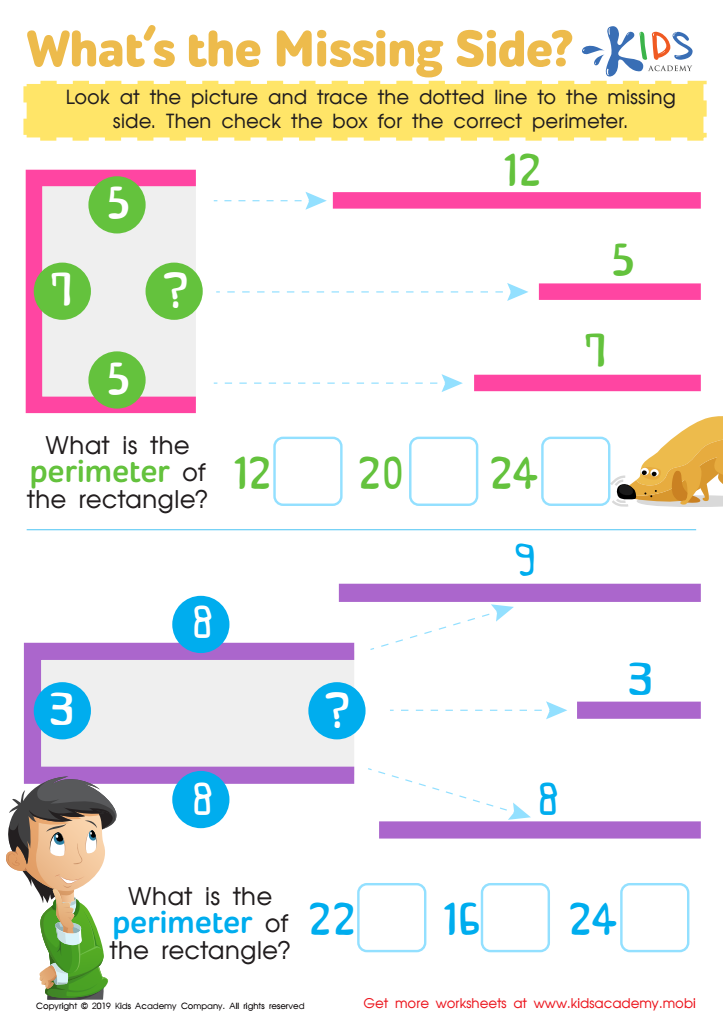
What's the Missing Side Worksheet
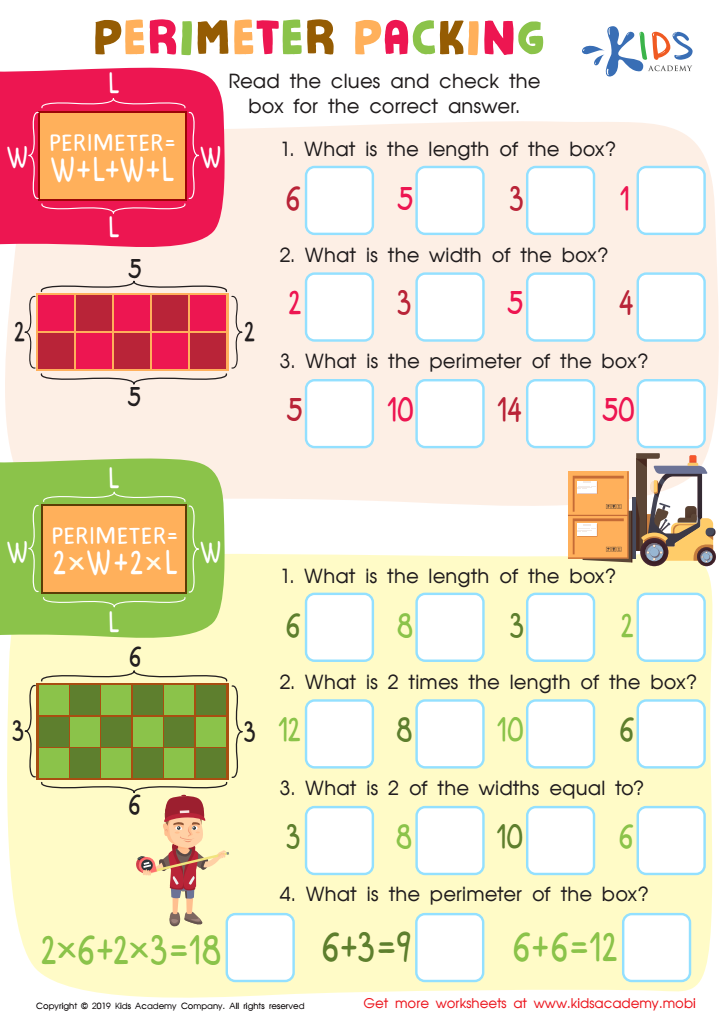
Perimeter Parking Worksheet








Parents and teachers should place a high importance on teaching shape recognition, area, and perimeter to children aged 7-9 because these foundational skills are essential for several reasons. Firstly, understanding shape recognition aids in the development of spatial awareness and cognitive skills critical for problem-solving in everyday life and advanced subjects like geometry, physics, and engineering. Dividing their puzzle!
Learning about area and perimeter helps children grasp how space is quantified, laying the groundwork for future math topics. When students solve real-world problems involving area and perimeter, they enhance their analytical thinking and attention to detail.
Moreover, these concepts foster cross-disciplinary learning. For instance, knowing about shapes and measurements is pertinent to subjects like art (drawing geometric figures), science (understanding properties of materials), and even literature (mapping out story settings).
Incorporating these topics into lessons encourages active learning and engagement. Activities focusing on calculating area and perimeter motivate children to think critically and coordinate abstract ideas with practical applications. Lastly, familiarity with these concepts bolsters a child's confidence and proficiency in mathematics, an invaluable benefit as they advance through their education. Positive early experiences in math classrooms foster a lifelong appreciation for math, which is important in a world where STEM skills are increasingly valued.