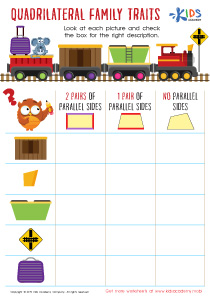
Basic Math Skills Fractions of Shapes Worksheets for Ages 7-9
8 filtered results
-
From - To
Unlock your child's potential with our Basic Math Skills: Fractions of Shapes Worksheets for Ages 7-9. Tailored to cultivate a strong foundation in math, these engaging worksheets help children visually understand fractions by dividing shapes. Perfect for enhancing comprehension and retention, activities are designed to be fun and interactive, encouraging independent learning. Support your child's mathematical journey with these expertly crafted resources that align with school curricula, ensuring they keep ahead in class while enjoying the learning process. Visit our webpage to download and print your worksheets today, and watch your young mathematician excel with fractions!
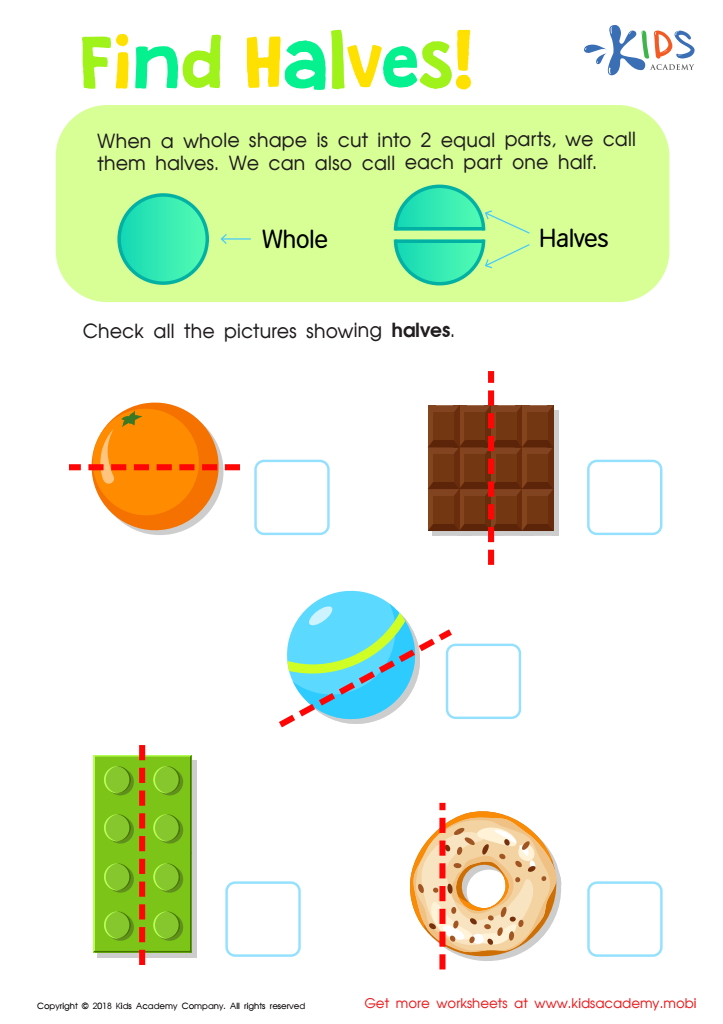
Find Halves Worksheet
 Assign to My Students
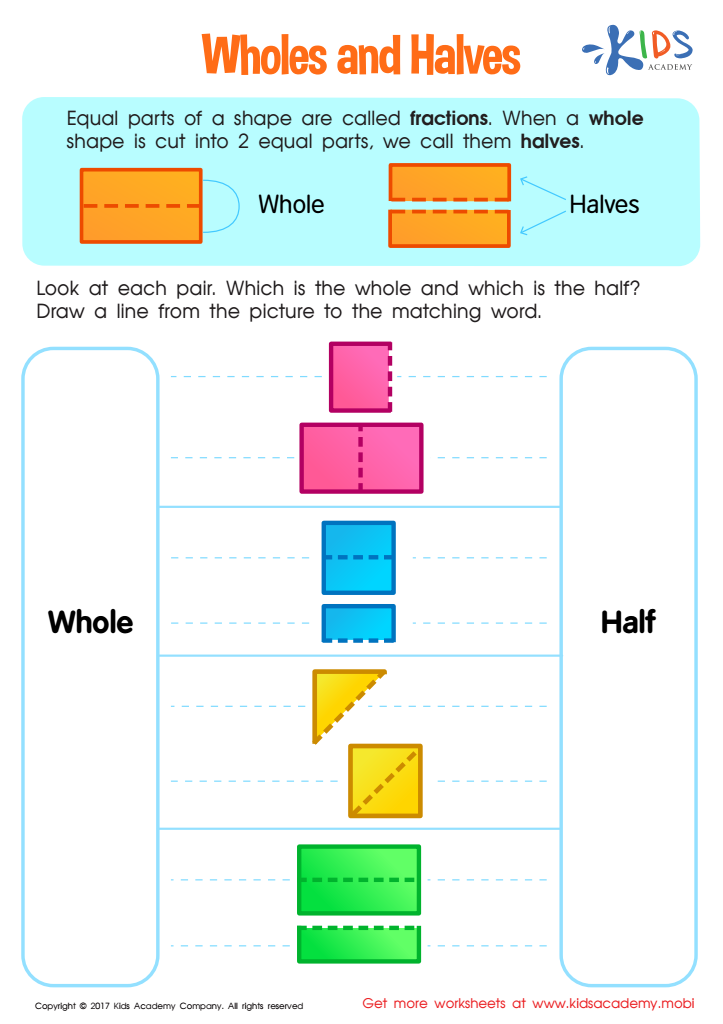
Wholes and Halves Worksheet
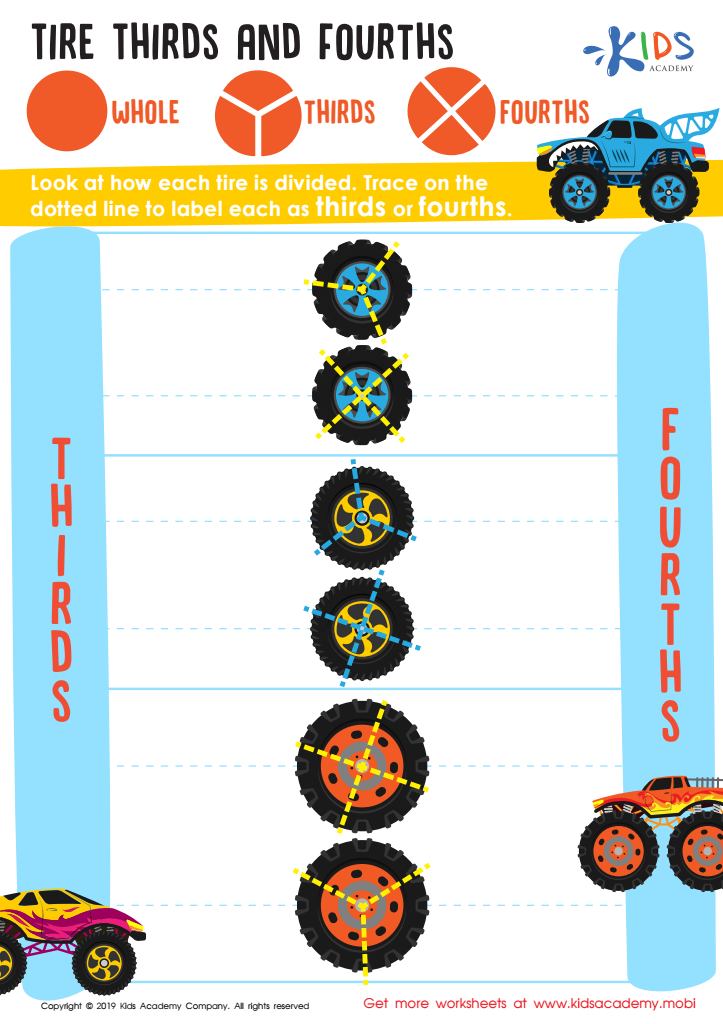
Tire Thirds and Fourths Worksheet
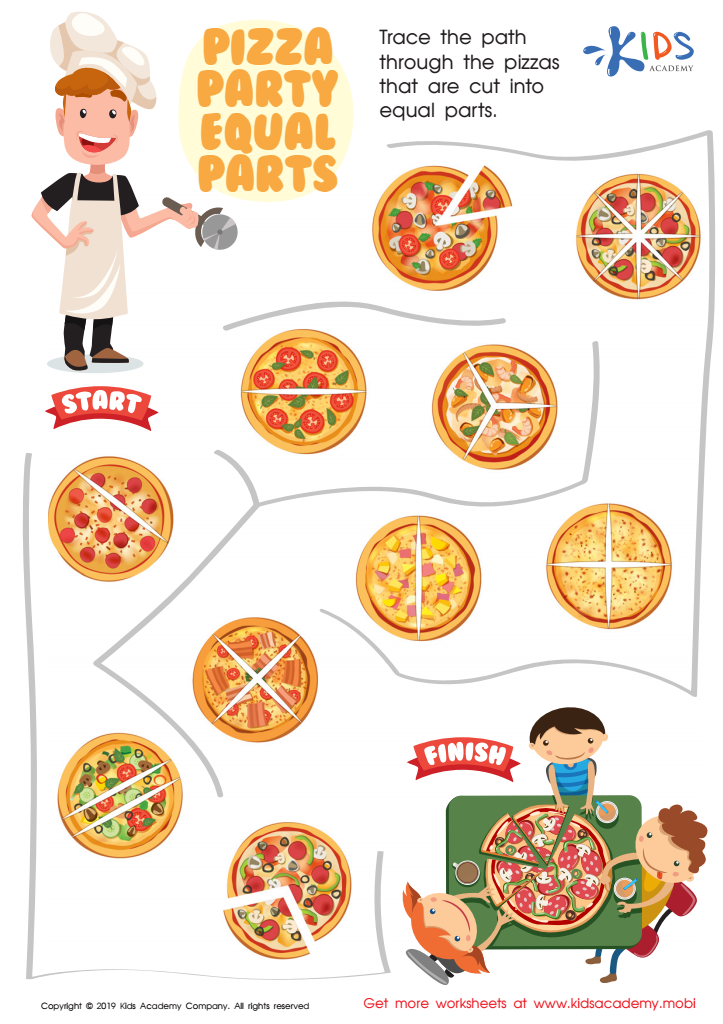
Pizza Party Equal Parts Worksheet
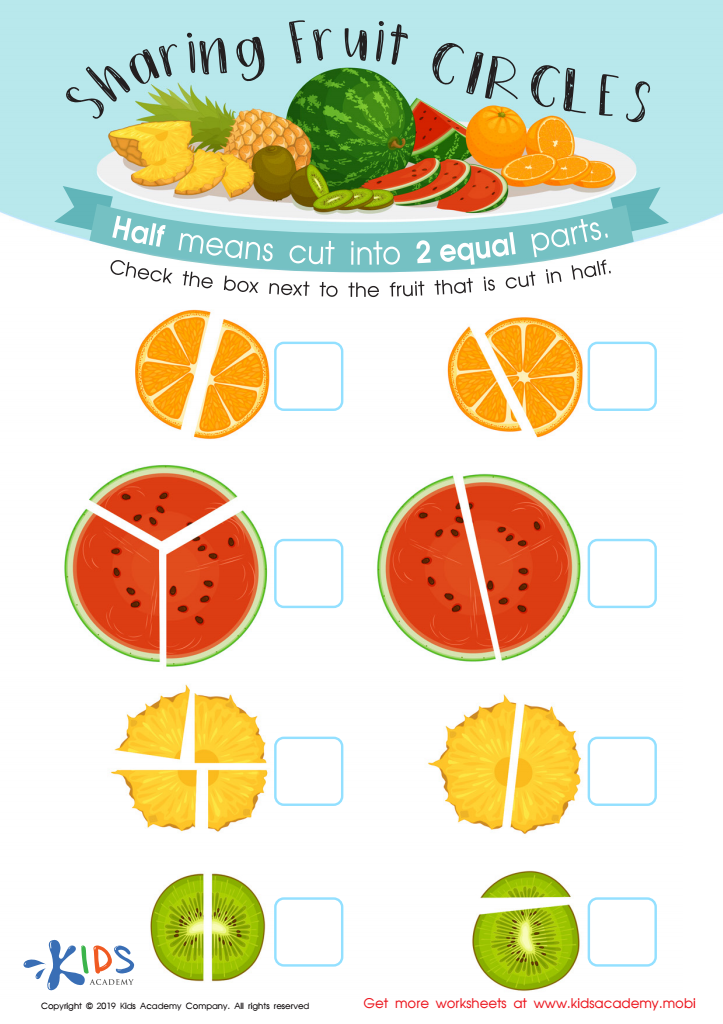
Sharing Fruit Circles Worksheet
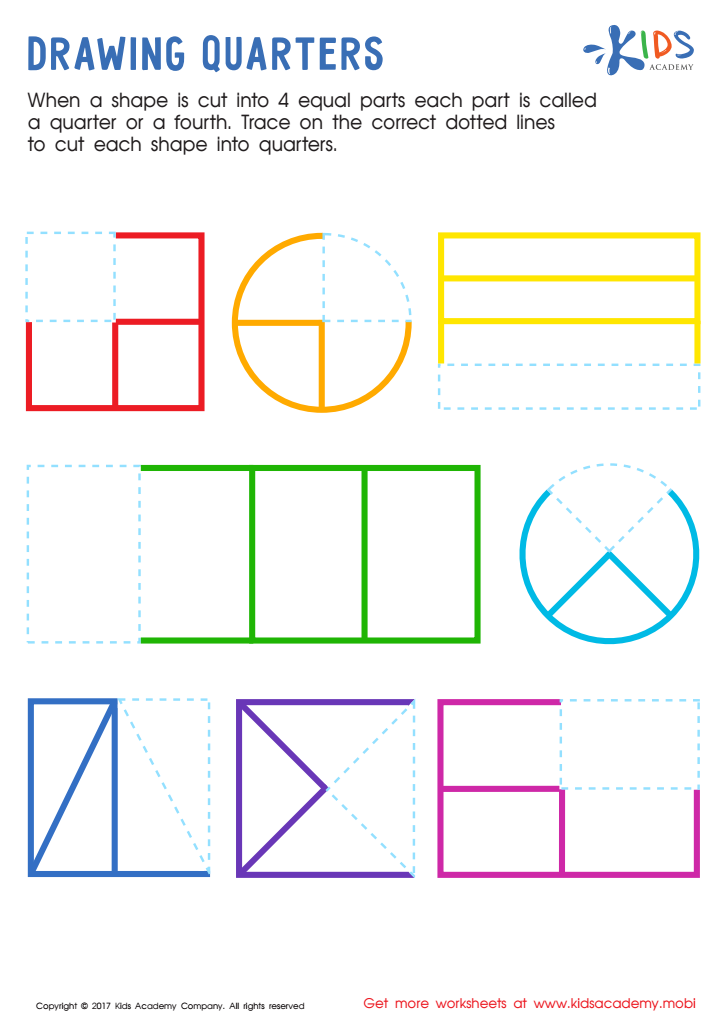
Drawing Quarters Worksheet
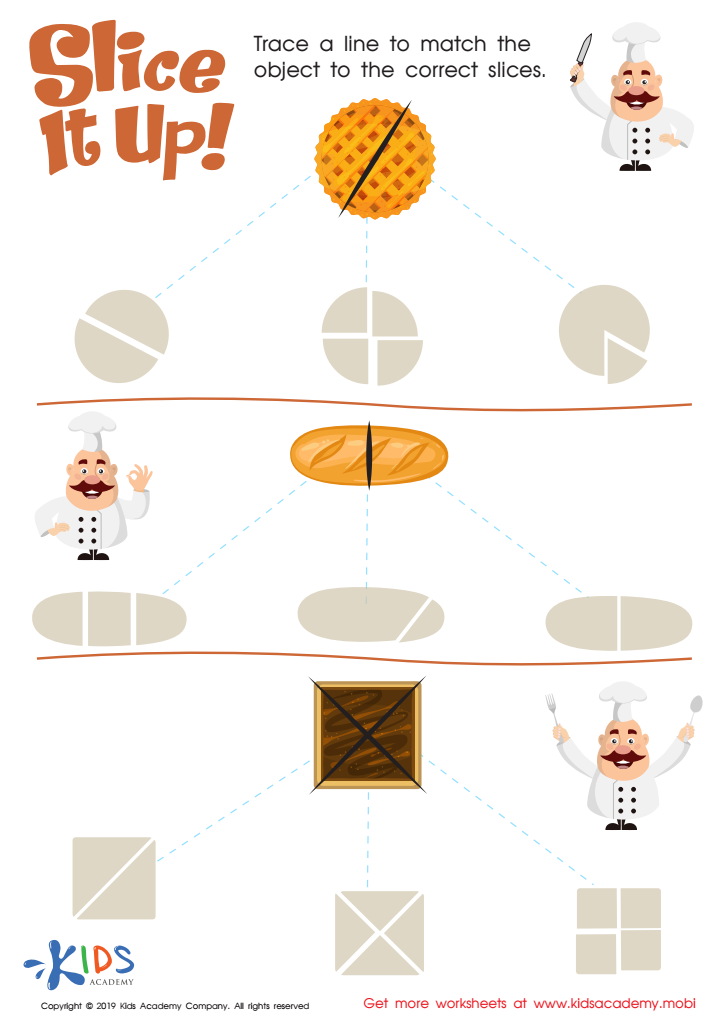
Slice It Up Worksheet
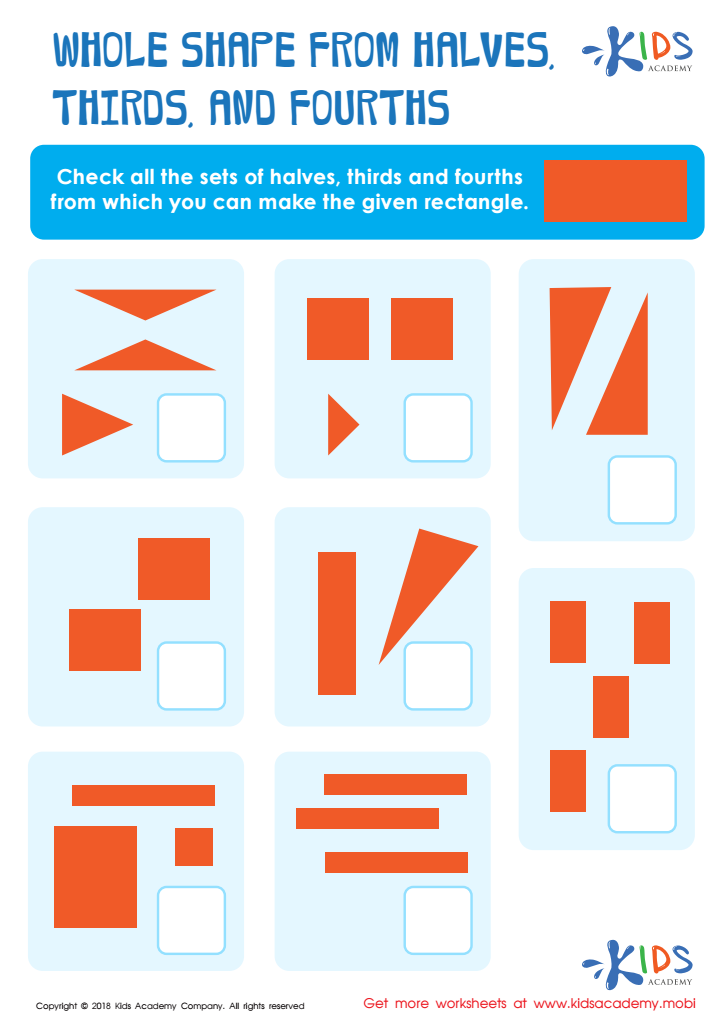
Whole Shape from Halves, Thirds and Fourths Worksheet







Parents and teachers should prioritize basic math skills, including fractions of shapes, for children aged 7-9, as these foundational skills are critical for their academic and real-life success. At this formative stage, learning fractions through shapes provides a concrete, visual way to understand abstract mathematical concepts. Children often grasp ideas more intuitively when they can see and manipulate them firsthand. By recognizing how a shape can be divided into equal parts, kids build their conceptual understanding of fractions, which is essential for more advanced mathematics.
Moreover, mastering fractions at this age improves problem-solving and analytical skills, enhancing cognitive development. As children progress in school, they will encounter more complex mathematical concepts that rely on this early foundation. Missing these essential skills can lead to difficulties in algebra, geometry, and beyond.
Academic benefits aside, understanding fractions has practical everyday applications. Children use fractions when measuring ingredients in a recipe, dividing items among friends, or understanding halves and quarters in the context of time and money. These skills promote logical thinking and help kids make sense of the world around them.
In summary, emphasizing basic math skills like fractions of shapes nurtures academic growth and everyday competence, setting children up for long-term success.