Visual Learning Geometry Worksheets for Ages 7-9
5 filtered results
-
From - To
Boost your child’s geometry skills with our engaging Visual Learning Geometry Worksheets designed specifically for ages 7-9! These worksheets incorporate vibrant visuals and creative exercises that help children understand geometric concepts through hands-on practice. Fostering critical thinking and problem-solving abilities, our activities introduce shapes, angles, and spatial reasoning in an interactive way. Perfect for both classroom and home use, these worksheets encourage independent learning and reinforce essential math skills. Spark your child’s interest in geometry while ensuring they grasp these foundational concepts with ease. Explore our collection today and watch their confidence and creativity soar in learning!
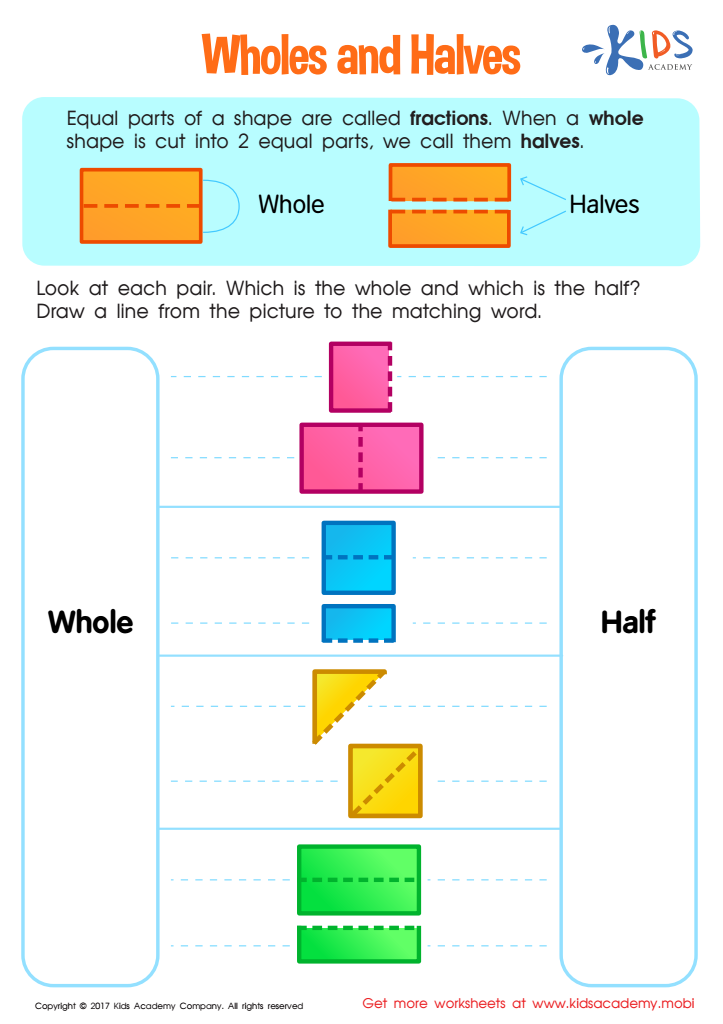
Wholes and Halves Worksheet
 Assign to My Students











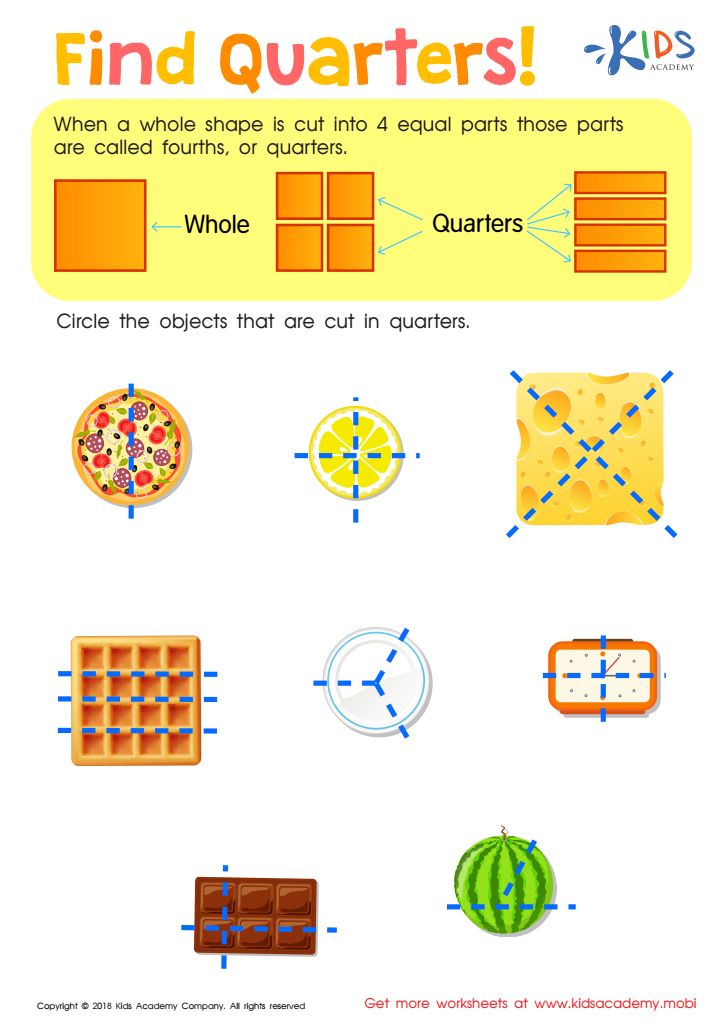
Find Quarters Worksheet
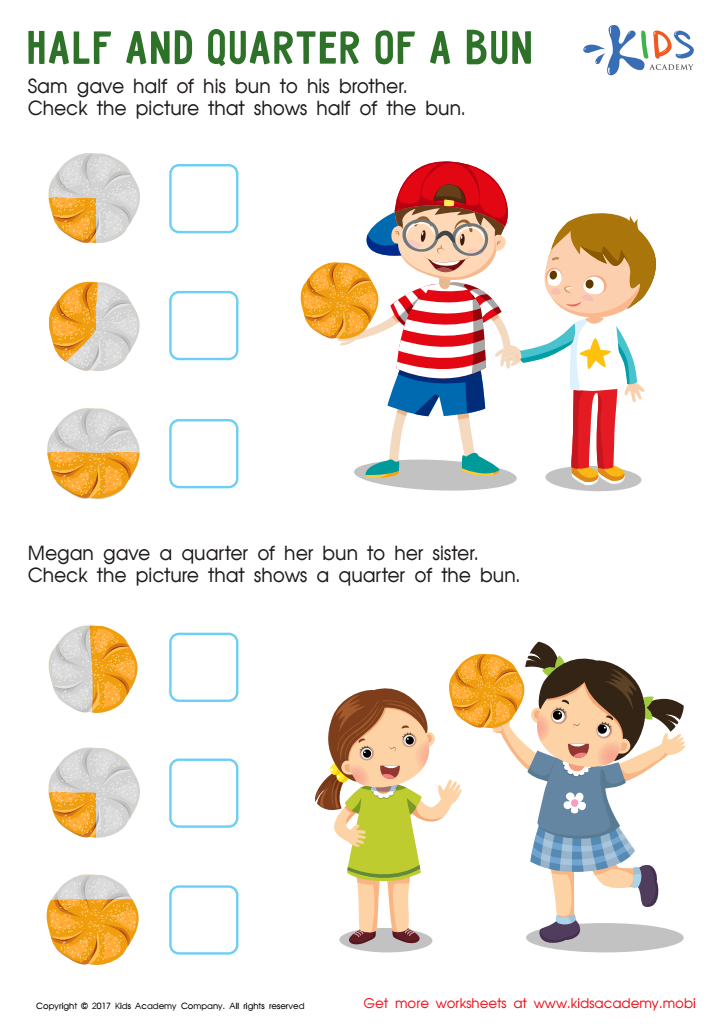
Half and Quarter of a Bun Worksheet
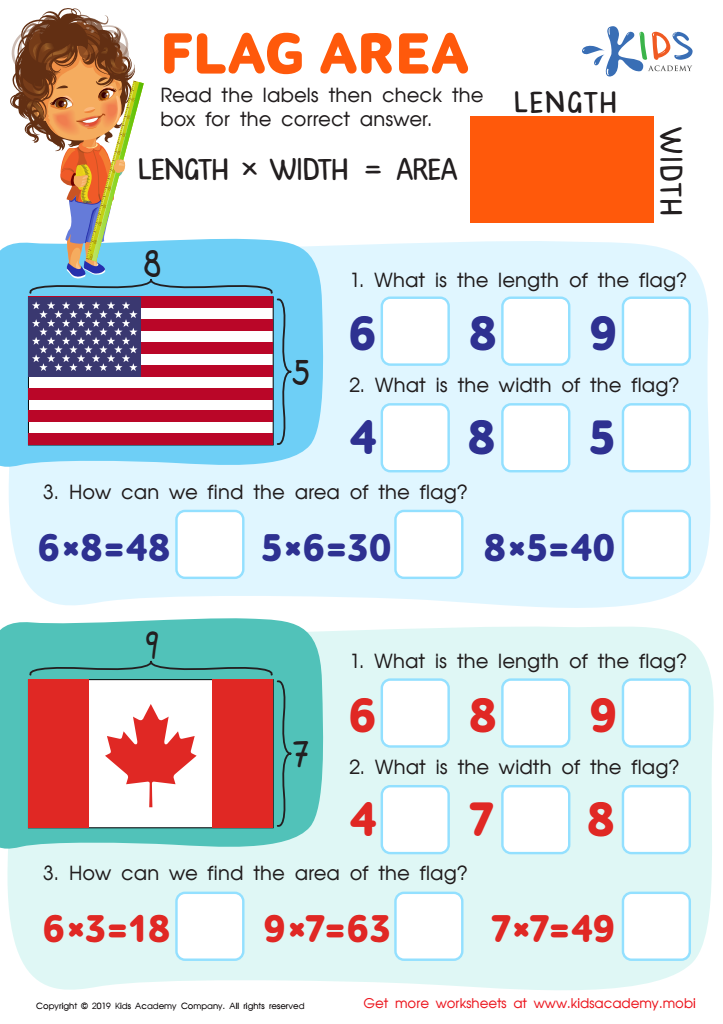
Flag Area Worksheet
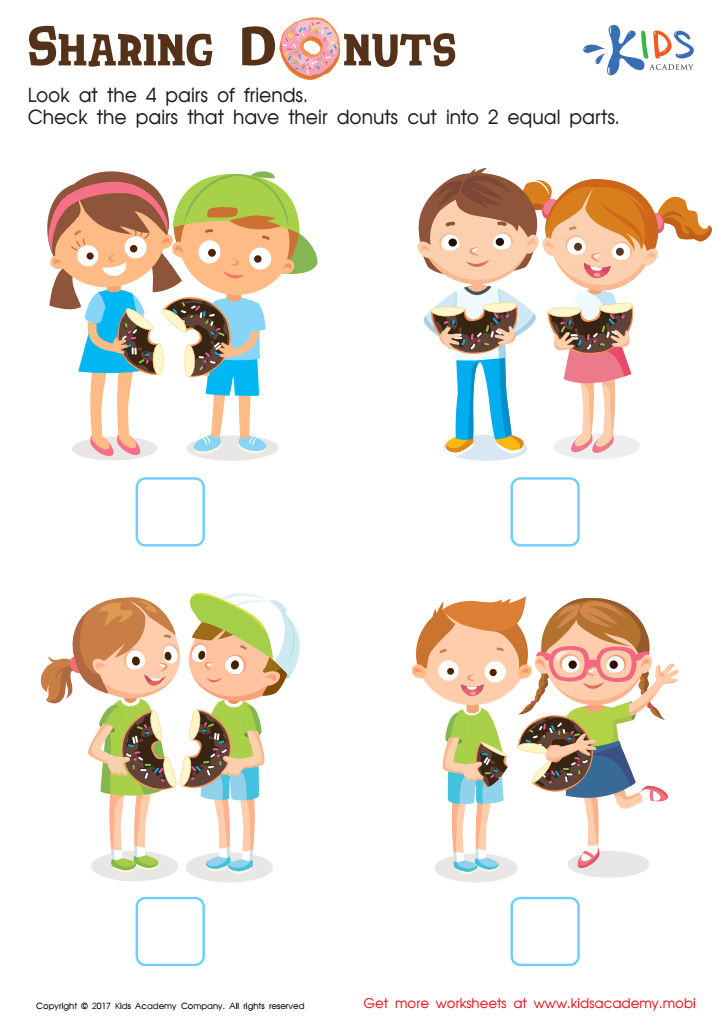
Sharing Donuts Worksheet








Visual learning in geometry for ages 7-9 is essential for several reasons, making it a priority for both parents and teachers. At this developmental stage, children are naturally curious and tend to learn best through engaging, interactive experiences that involve seeing and manipulating shapes. Visual learning helps them to grasp complex spatial concepts more intuitively, establishing a foundation for future mathematical skills.
Understanding geometry through visuals enhances their ability to recognize patterns, differentiate shapes, and comprehend spatial relationships. These skills are crucial not only in mathematics but also in everyday problem-solving scenarios. For example, recognizing shapes in the environment or understanding directions involves geometric thinking.
Additionally, visual learning supports the development of critical thinking. When students visualize geometrical concepts, they are likely to engage in exploratory thinking, making connections between abstract ideas and tangible experiences. This fosters a love for math and encourages creative approaches to problem-solving.
Furthermore, incorporating visual elements into geometry lessons can cater to different learning styles, making mathematics more inclusive and accessible. Overall, promoting visual learning in geometry can significantly enrich children's educational experiences and lay the groundwork for future academic success. By prioritizing this approach, parents and teachers can empower children to become confident, adept learners in a vital area of study.








