Developing problem-solving abilities Numbers Worksheets for Ages 7-9
3 filtered results
-
From - To
Boost your child’s mathematical toolkit with our Developing Problem-Solving Abilities Numbers Worksheets for Ages 7-9. Specially designed to engage young minds, these educational resources feature a variety of exercises that promote critical thinking and logical reasoning. Through captivating activities such as puzzles, sequence games, and math word problems, children will enhance their numerical proficiency while having fun. Perfect for classroom or home use, these worksheets are an excellent way to nurture problem-solving skills and confidence in mathematics. Download our expertly crafted materials today to support your child's journey towards becoming a proficient problem solver!
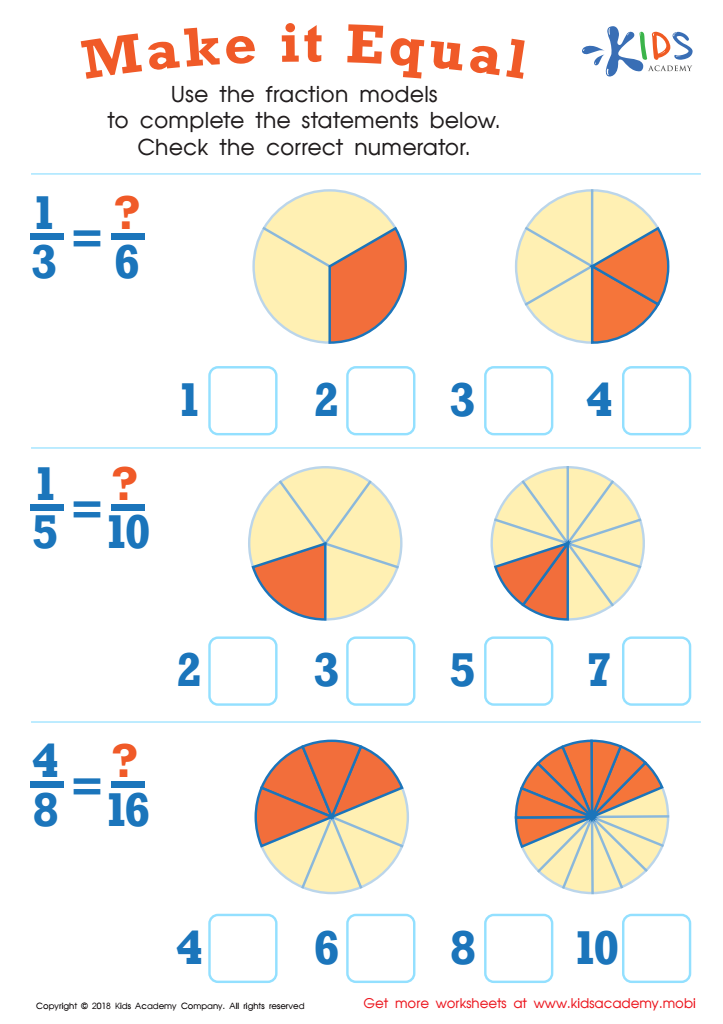
Make It Equal Worksheet
 Assign to My Students
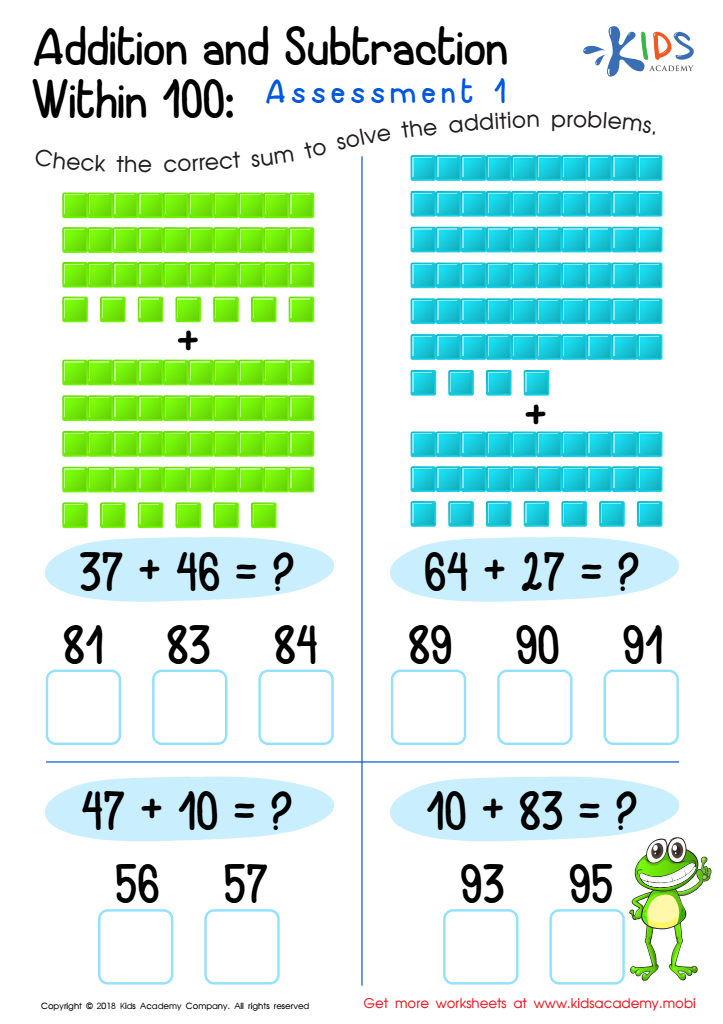
Addition and Subtraction Within 1: Assessment 1 Worksheet
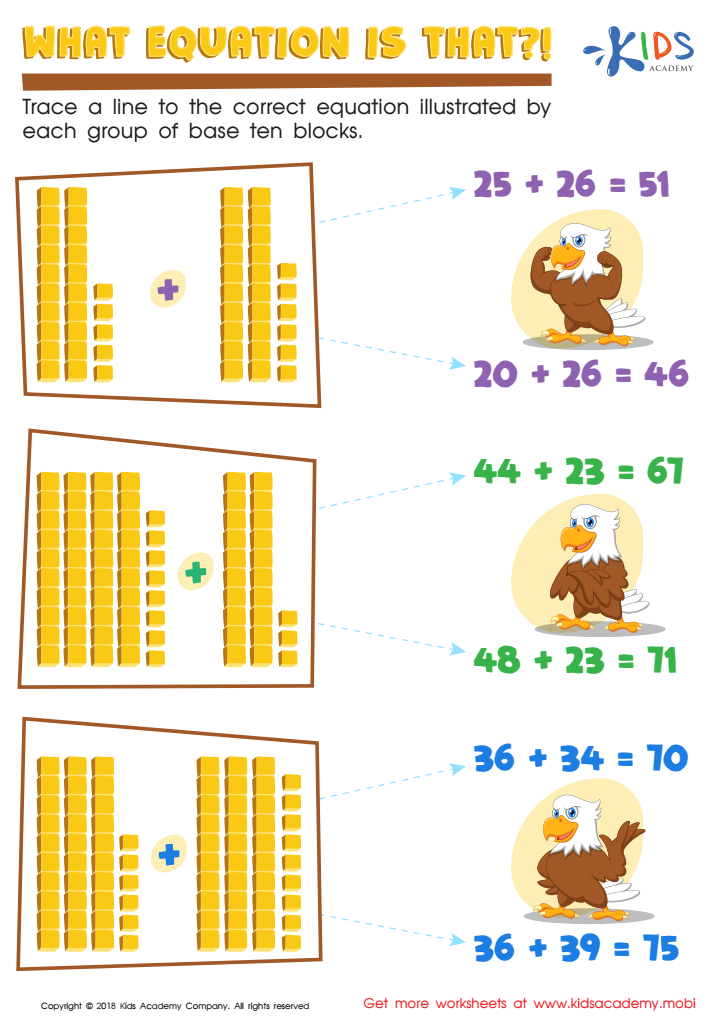
What Equation Is That? Worksheet








Developing problem-solving abilities in numeracy for children ages 7-9 is crucial because it lays the foundation for their future academic and life success. Problem-solving skills are essential for understanding and applying mathematical concepts, which in turn fosters logical and analytical thinking. At this age, children are at a critical developmental stage where their cognitive abilities are rapidly expanding, making it the perfect time to introduce more complex math problems that challenge and stimulate their minds.
Engaging children in problem-solving activities helps them understand the practical applications of math in everyday life. This relevance can increase their interest in the subject and motivate them to engage more deeply with their learning. Skills such as addition, subtraction, multiplication, and division become more meaningful when children see how they apply to real-world scenarios. Also, developing numeracy problem-solving abilities encourages perseverance and resilience, as children learn to try different strategies and face challenges with a positive attitude.
Furthermore, strong problem-solving skills in numeracy can boost a child's confidence and self-esteem. When children successfully solve problems, they build a sense of accomplishment and are more likely to take on new challenges head-on. Parents and teachers who prioritize the development of these skills equip children with intellectual tools essential for academic achievement and everyday decision-making, ensuring a brighter, more competent future.








