Number identification Numbers Worksheets for Ages 7-9
3 filtered results
-
From - To
Discover our engaging Number Identification Worksheets designed specifically for children aged 7-9! These fun and interactive resources help young learners enhance their number recognition skills in a playful way. Each worksheet features vibrant illustrations and age-appropriate activities that promote understanding of numbers in various contexts. From matching numerals to identifying quantities, our worksheets offer targeted practice to boost confidence in math. Perfect for homeschooling or classroom settings, these printable resources cater to different learning styles, making number identification an enjoyable experience. Equip your child with essential expertise and foster a love for learning through our number identification activities today!
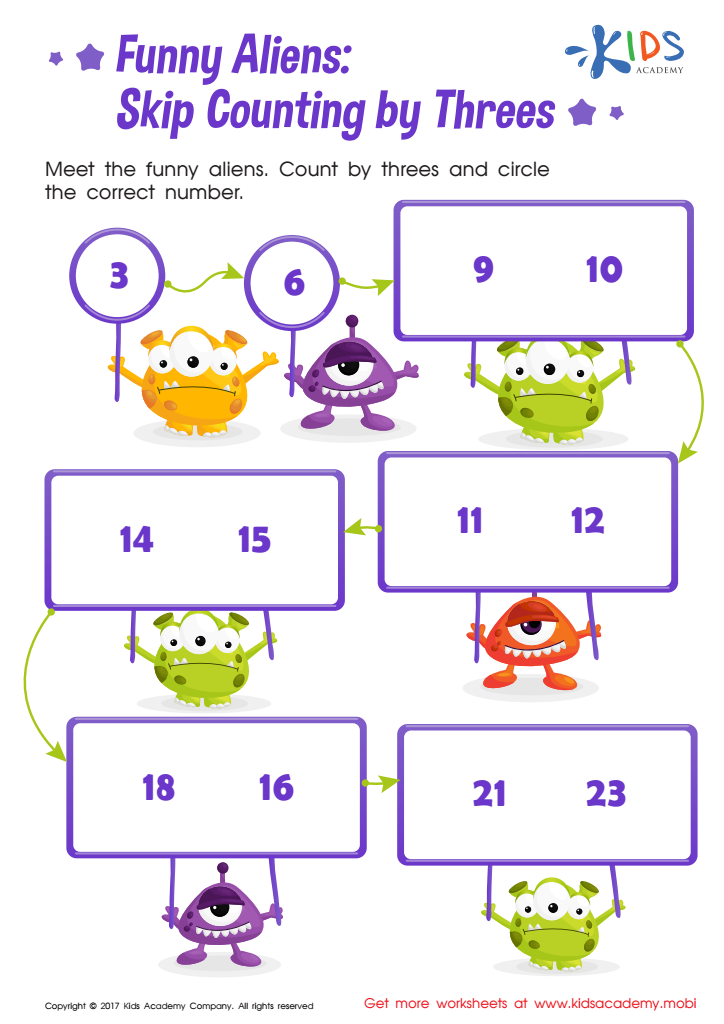
Skip Counting by 3s: Funny Aliens Printable
 Assign to My Students
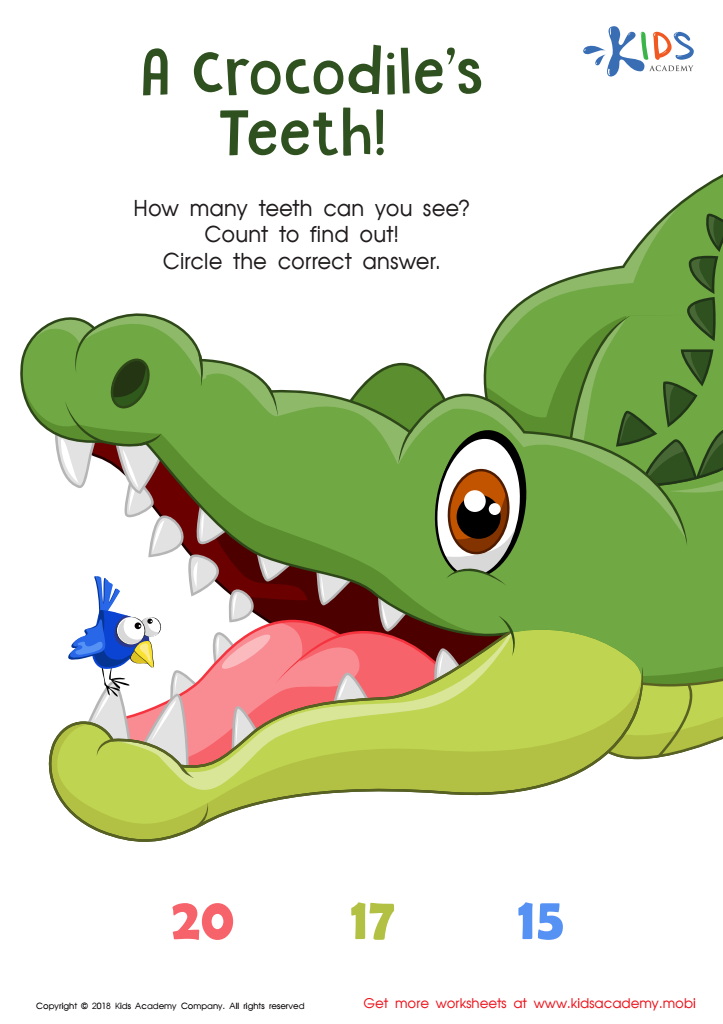
A Crocodile's Teeth Worksheet
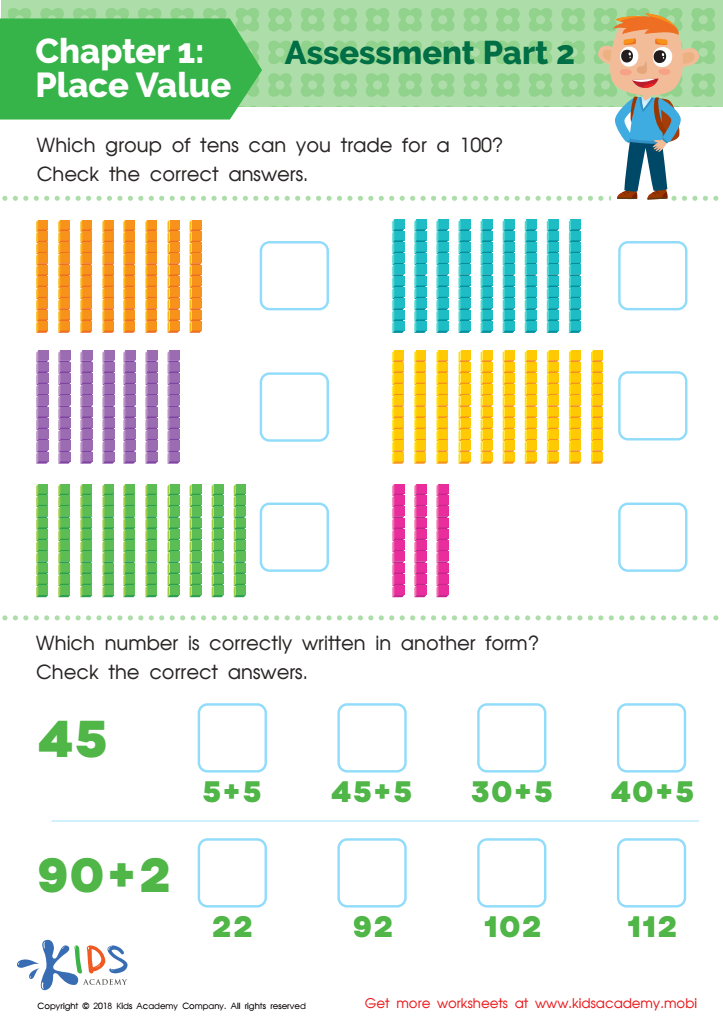
Place Value: Chapter 2 Worksheet








Number identification is a crucial skill for children aged 7-9, as this stage forms the foundation for more advanced mathematical concepts. At this age, children transition from basic counting to understanding the value of numbers, which is vital for their academic growth. By mastering number identification, children develop their ability to recognize, categorize, and compare numbers, enhancing their overall mathematical fluency.
Parents and teachers play a pivotal role in fostering this skill. Engaging children in activities that promote number recognition strengthens their cognitive development and boosts their confidence in math. It encourages critical thinking, as children start to understand number relationships and patterns, setting the stage for future topics such as addition, subtraction, multiplication, and division.
Furthermore, strong number identification skills contribute to success in standardized tests, which often include mathematical components. By supporting children’s acquisition of these skills, adults also enhance their problem-solving abilities and logical reasoning, essential life skills beyond the classroom.
In summary, focusing on number identification for ages 7-9 equips children with the tools needed for academic success and lifelong learning. Thus, it’s essential for parents and teachers to prioritize and nurture these skills in their children.








