Understanding Sequences Numbers Worksheets for Ages 7-9
3 filtered results
-
From - To
Welcome to our engaging "Understanding Sequences Numbers Worksheets" webpage, specially designed for children aged 7-9. These interactive worksheets help young learners grasp the concept of number sequences through a variety of fun and educational activities. Our resources encourage problem-solving skills while allowing students to practice identifying patterns and completing sequences in a supportive environment. Each worksheet is crafted to enhance critical thinking and arithmetic abilities while keeping students motivated. Whether in the classroom or at home, these worksheets provide a wonderful opportunity for kids to deepen their understanding of sequences, ensuring they build a strong mathematical foundation for future learning.
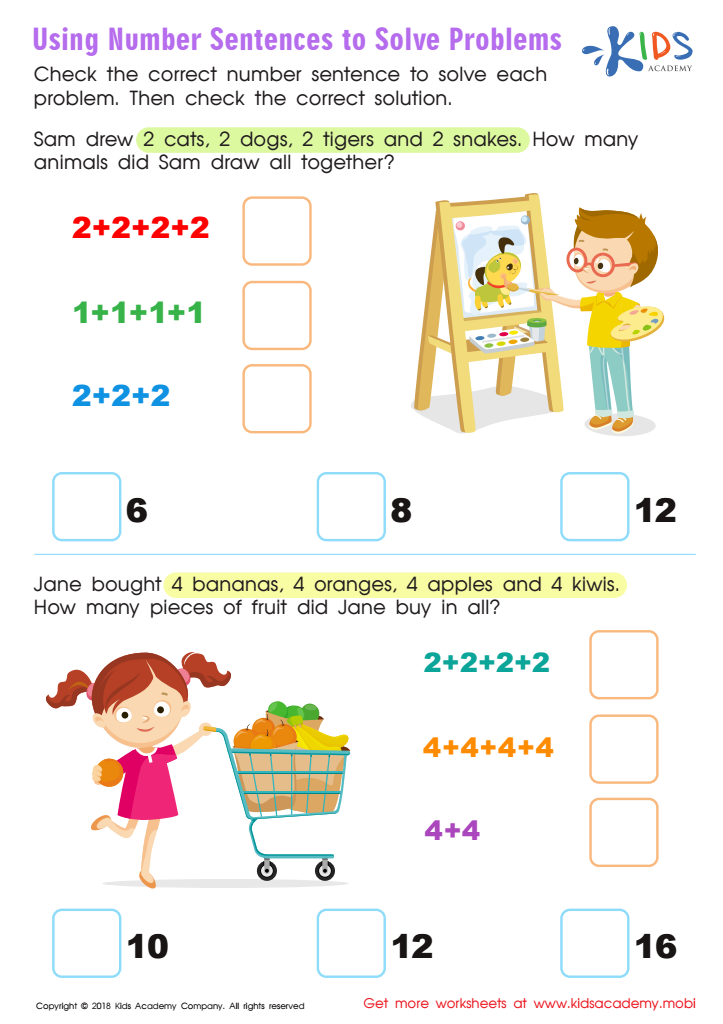
Using Number Sentences to Solve Problems Worksheet
 Assign to My Students
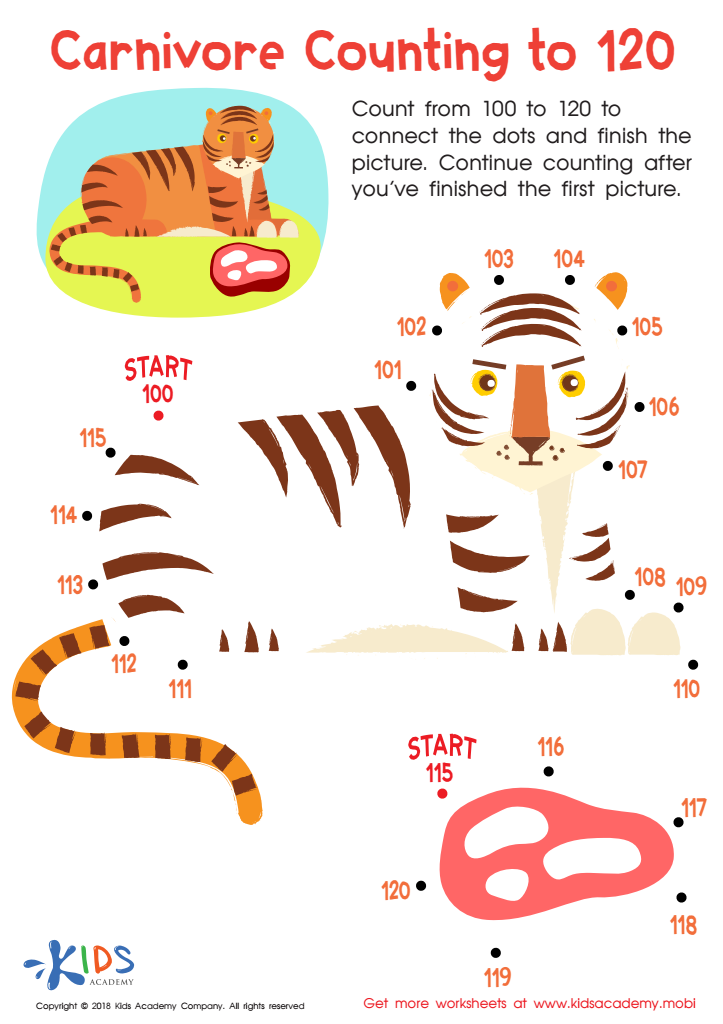
Carnivore Counting to 120 Worksheet
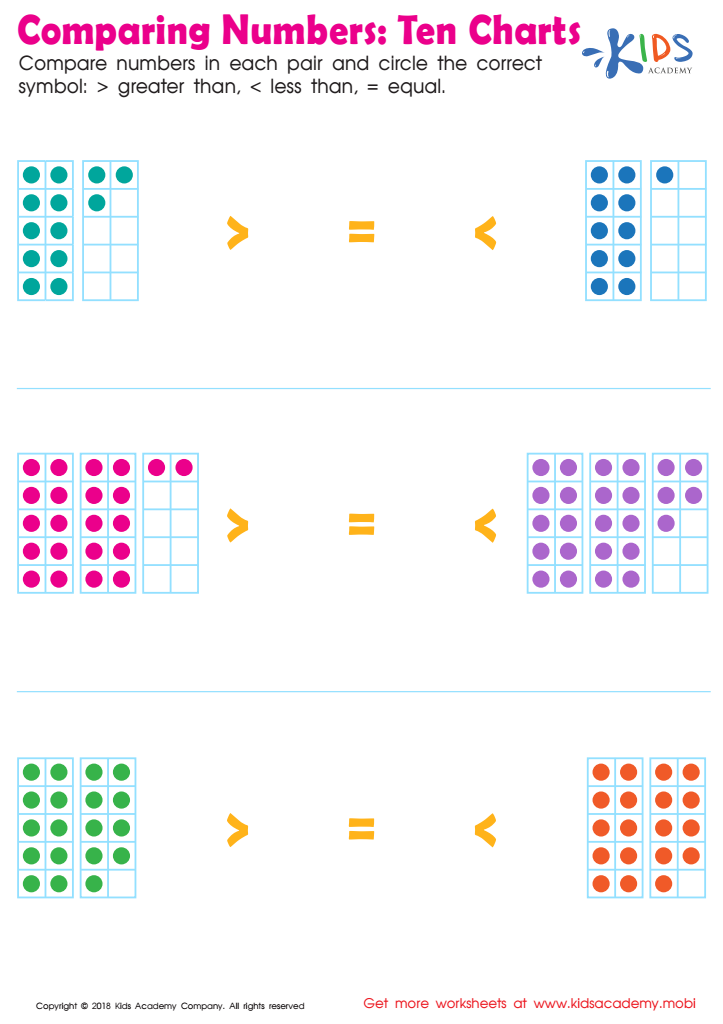
Ten Charts Worksheet







Understanding sequences of numbers is a fundamental skill that plays a crucial role in a child's mathematical development, especially for children aged 7-9. At this stage, students begin to explore patterns, number relationships, and mathematical reasoning, laying the groundwork for more complex concepts in mathematics.
Parents and teachers should care about this topic because it fosters critical thinking skills. Recognizing sequences helps children understand the concept of order and predictability, which is essential for problem-solving and analytical skills. As they identify patterns in repetitive sequences, they also enhance their ability to classify and sort information—skills that benefit them across various subjects.
Moreover, understanding sequences aids in grasping basic mathematical operations, as many areas of arithmetic depend on recognizing and utilizing patterns. Enhanced sequence recognition can boost students' confidence and interest in mathematics, reducing anxiety around the subject.
Ultimately, helping children develop an understanding of number sequences sets the foundation for more advanced concepts they will encounter in later grades, such as algebra and geometry. Emphasizing this concept can lead to stronger mathematical fluency, ensuring that children are not only prepared for future learning but also equipped with critical life skills.








