Understanding skip-counting Numbers Worksheets for Ages 7-9
3 filtered results
-
From - To
Explore our comprehensive collection of skip-counting numbers worksheets designed specifically for children ages 7-9. These engaging resources help young learners master the concept of skip counting, enhancing their mathematical fluency and number sense. Our worksheets feature a variety of activities that encourage students to practice counting by twos, threes, fives, and tens, facilitating their understanding of patterns and sequences. With vibrant illustrations and interactive exercises, these worksheets make learning fun and effective. Perfect for classroom use or at-home practice, our skip-counting worksheets are an invaluable tool for building foundational math skills and preparing students for more advanced concepts.
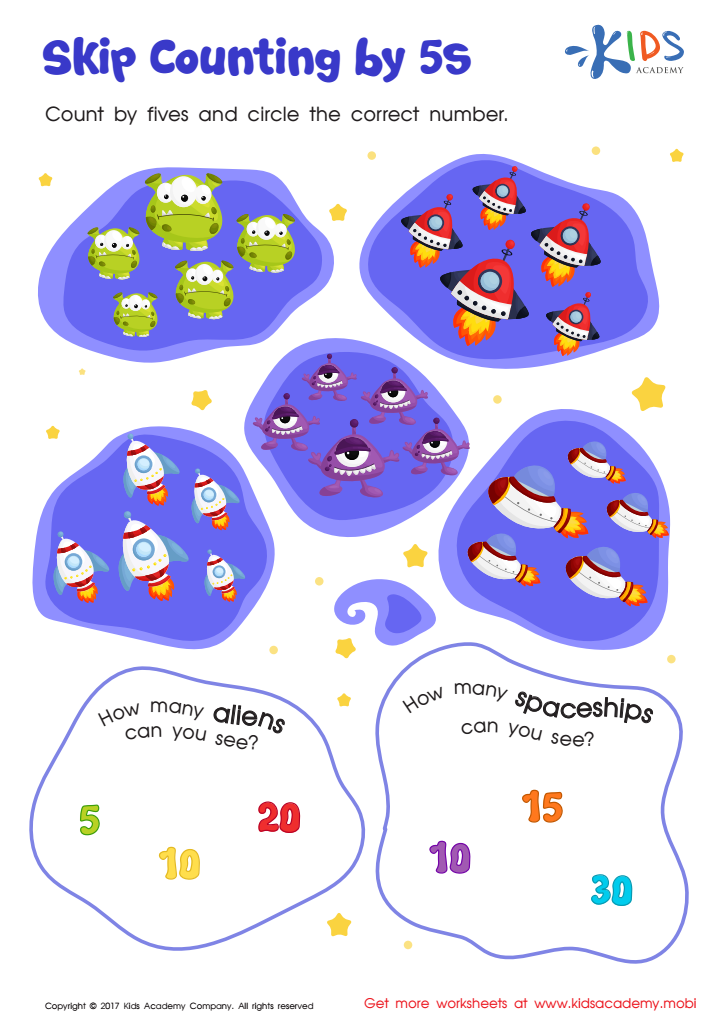
Skip Counting by 5s: Aliens and Spaceships Printable
 Assign to My Students
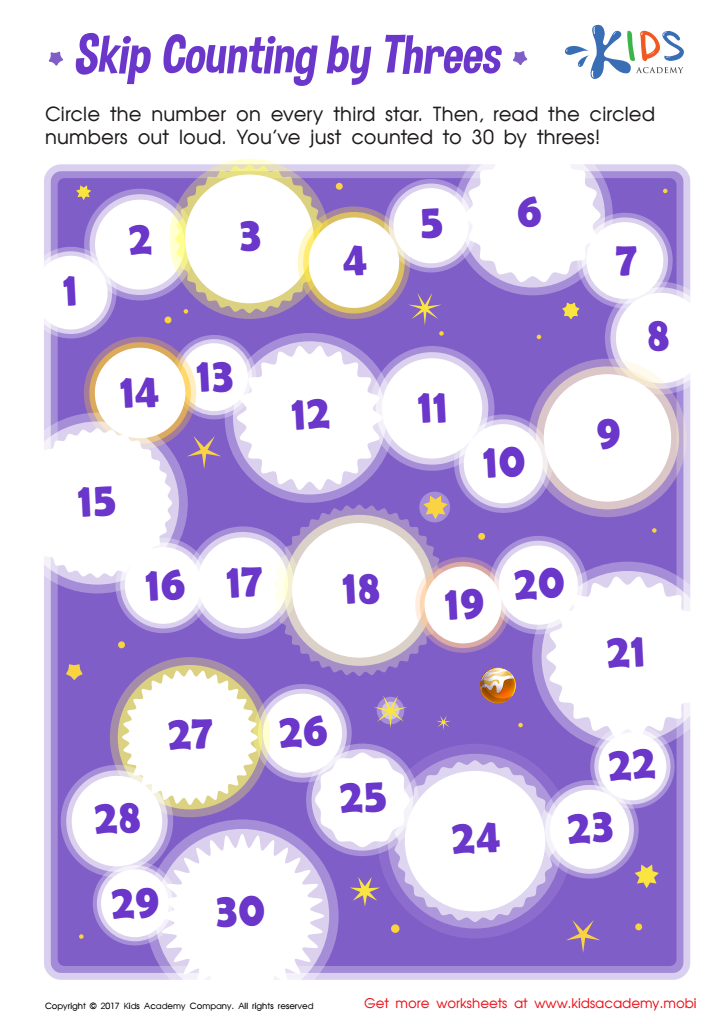
Skip Counting By Three Printable
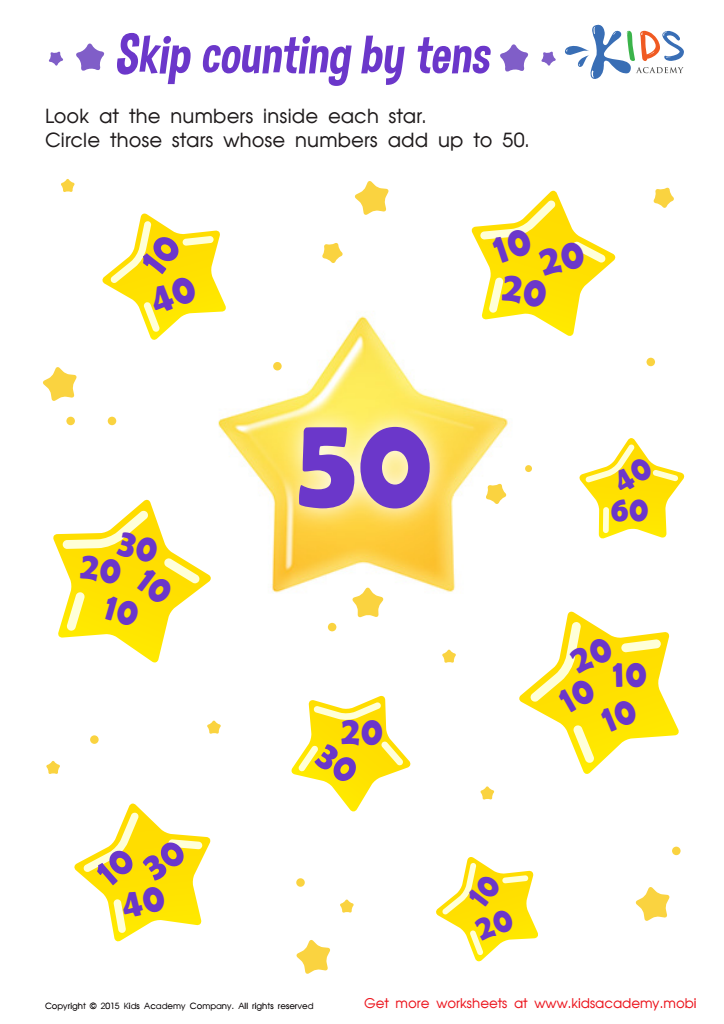
Learn Dozens: Skip Counting by Tens Printable








Understanding skip-counting is a fundamental math skill for children aged 7-9 that lays the groundwork for more advanced mathematical concepts. Skip-counting—counting) by twos, threes, fives, or any other number—enhances a child's numerical fluency, enabling them to recognize patterns in numbers. This skill helps in developing strong mental math capabilities, which are essential for addition, subtraction, and multiplication.
Parents and teachers should prioritize skip-counting as it fosters a deeper understanding of number relationships and enhances problem-solving skills. By mastering skip-counting, children become more comfortable with tasks involving measurement, grouping, and even time-telling. Furthermore, this skill contributes to their confidence as students, as they recognize the logical flow of numbers.
Moreover, skip-counting has real-life applications, such as in budgeting, cooking, and planning events. It encourages critical thinking and supports the development of logical reasoning. Engaging parents in this learning process—through activities like counting games or interactive math exercises—can reinforce these skills at home, ensuring a well-rounded educational experience. In summary, understanding skip-counting counts as a stepping stone towards mastery in mathematics, ultimately serving as an essential tool for academic success.








