
Analytical skills development Math Worksheets for Ages 7-9
4 filtered results
Difficulty Level
Grade
Age
-
From - To
Subject
Activity
Standards
Enhance your child's problem-solving abilities with our "Analytical Skills Development Math Worksheets" designed for ages 7-9. Tailored to challenge and inspire, these worksheets help young learners build critical thinking skills through engaging math exercises. From pattern recognition to logical reasoning, each activity fosters analytical prowess in a fun, educational way. Ideal for both classroom and home use, our worksheets are created by education experts to ensure age-appropriate complexity and enjoyment. Boost your child’s math confidence and prepare them for future academic success with our comprehensive, printable resources. Start their analytical journey today!
Favorites
With answer key
Interactive
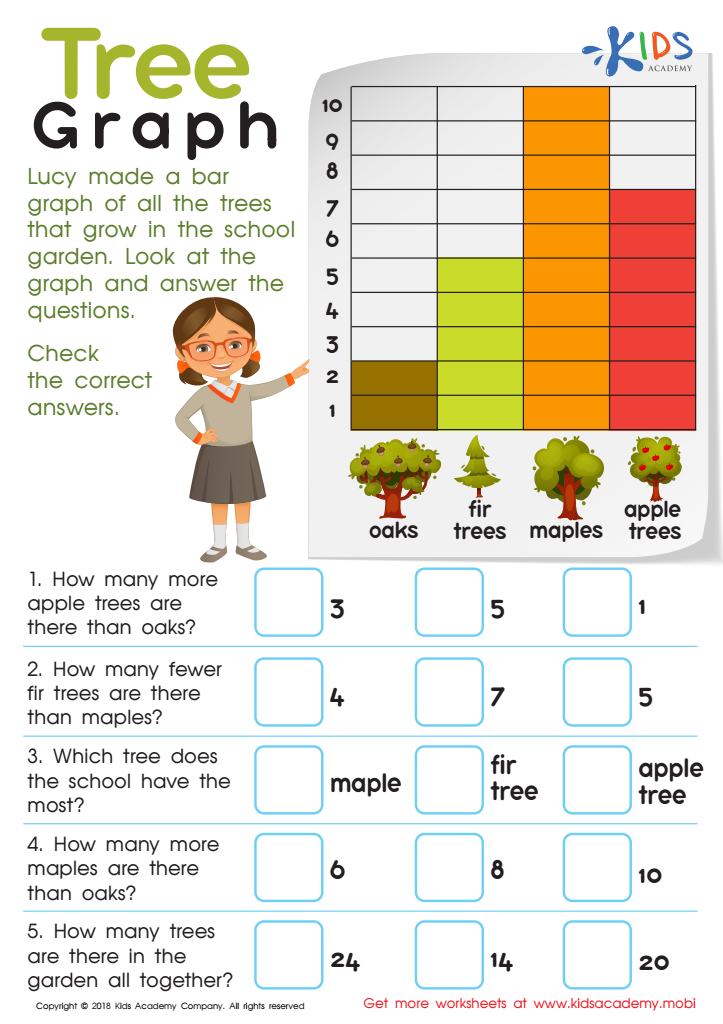
Tree Graph Worksheet
Help your child/students learn to read graphs and report data. With this colorful worksheet, the different types of trees in a school's garden are listed in a bar graph. Guide them through viewing it and answering the questions. To extend the lesson, have them create a tree graph to list the trees at their own school or home.
 Assign to My Students
Tree Graph Worksheet
Worksheet
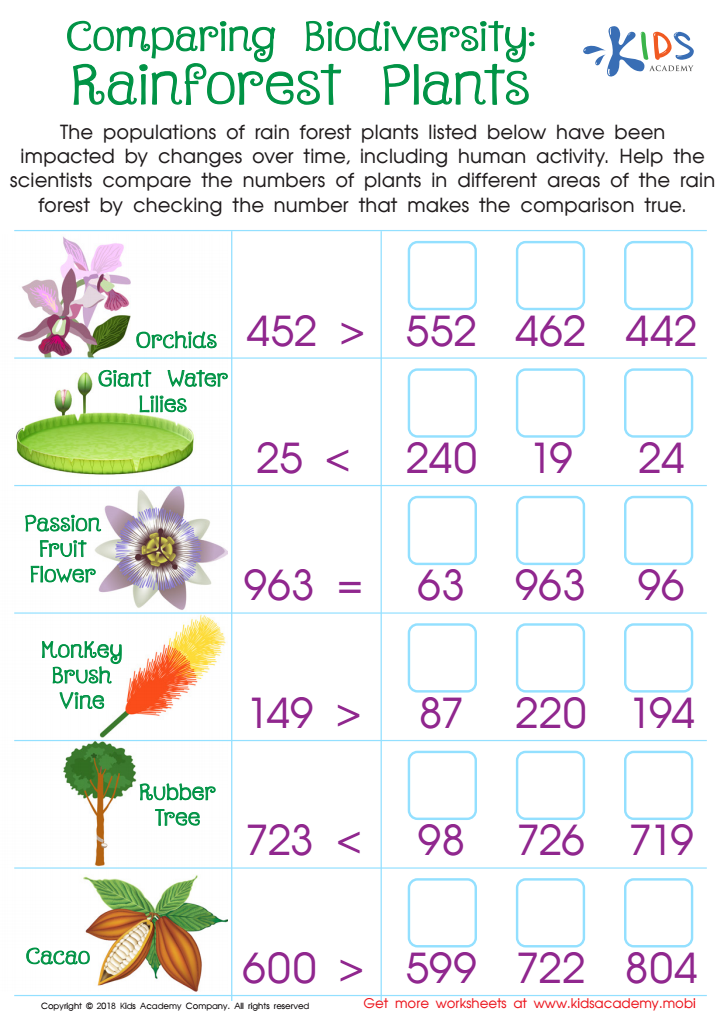
Comparing Biodiversity: Rainforest Plants Worksheet
Have your students learn about biodiversity in the rainforest and practice number sense and reasoning with this colorful PDF worksheet. Comparing the numbers of plants found in different areas of the rainforest, they'll combine eco-friendly science and math to make the number comparisons true.
Comparing Biodiversity: Rainforest Plants Worksheet
Worksheet
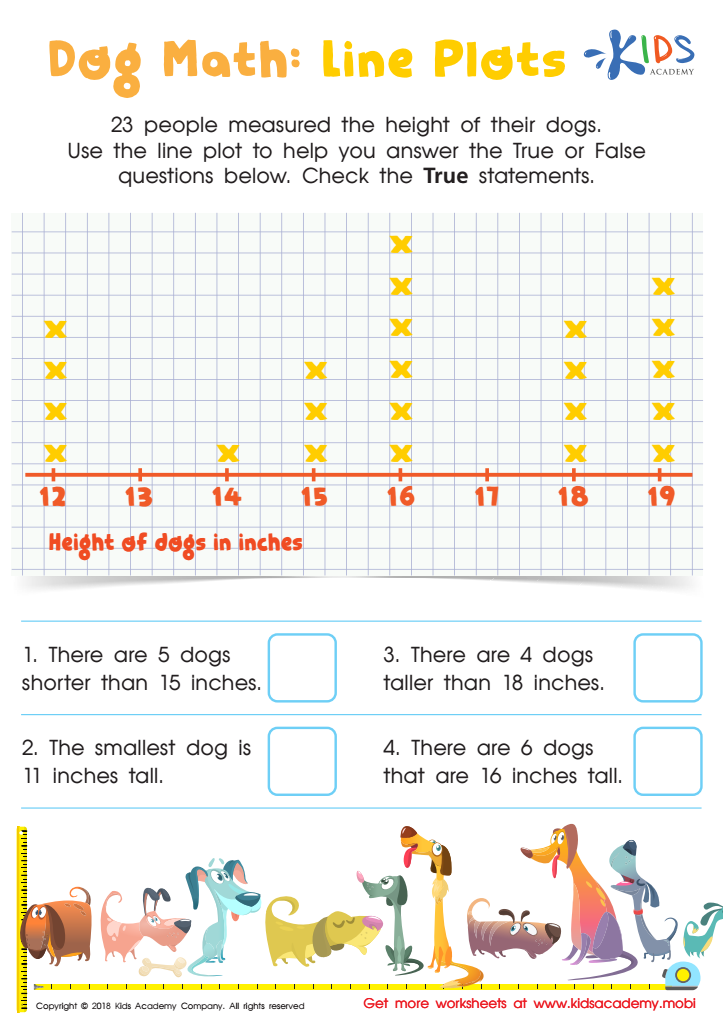
Dog Math: Line Plots Worksheet
Do your kids love dogs? If you have family pets, your kids may be excited to do this worksheet. It involves a line plot and True/False questions about 23 people measuring their dogs' heights. Assist your kids in verifying the statements that are True.
Dog Math: Line Plots Worksheet
Worksheet
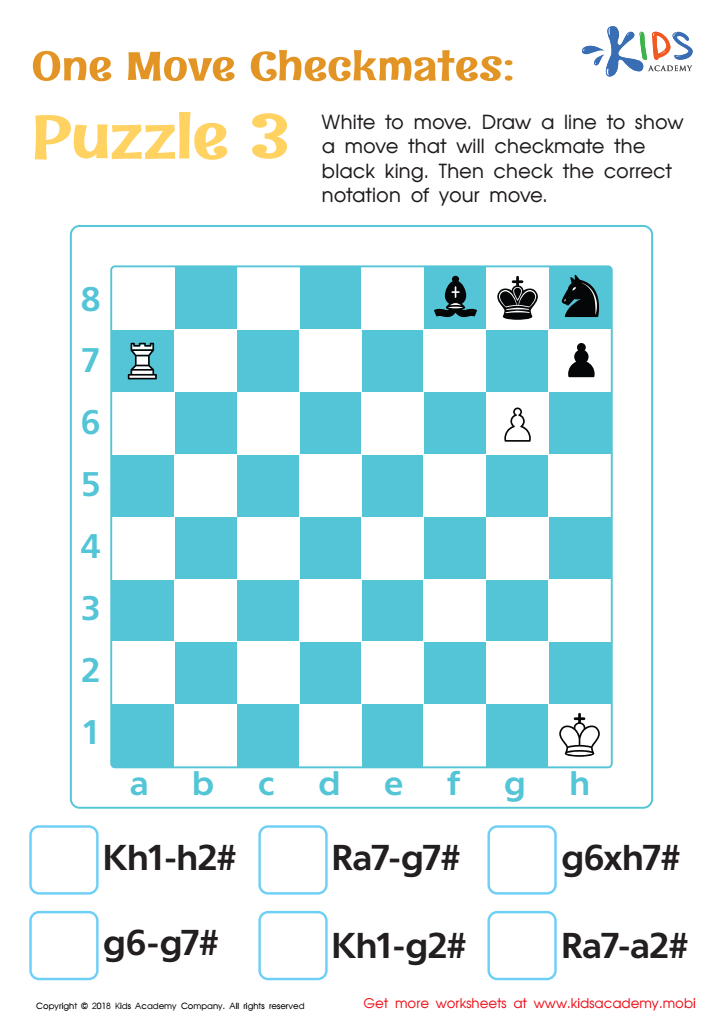
One Move Checkmates: Puzzle 3 Worksheet
Boost your child's critical thinking and strategy skills with this fun puzzle activity. They'll use their logical thinking to plot ways to checkmate the black king, and then check their answer with the given choices. A great way to improve their skills and have a blast doing it!
One Move Checkmates: Puzzle 3 Worksheet
Worksheet
Join Kids Academy for Free
Who is primarily going to use this learning content?








Analytical skills development in math for ages 7-9 is crucial for several reasons that impact a child's overall intellectual growth and success in future learning endeavors.
At this early age, children's brains are highly adaptable, and developing analytical skills through math can fortify their problem-solving abilities. Math encourages logical thinking and pattern recognition, allowing children to approach problems methodically. These skills are not just confined to math but are transferable to other subjects and essential real-life situations.
Learning analytical skills through math also fosters creativity and innovative thinking. When children encounter problems, whether numerical puzzles or real-life scenarios, they learn to explore multiple ways to solve them. This promotes an inquisitive mindset and a resilience that is valuable lifelong.
Moreover, building analytical skills from a young age can boost confidence. As children master math concepts and see their progress, their self-esteem grows. This confidence extends beyond the classroom, influencing how they tackle various challenges.
Parents and teachers who prioritize analytical skills development in math provide children with a strong foundation for future academic success. This foundational skill set enhances their ability to grasp more complex concepts, perform better academically, and engage critically with the world around them, setting a positive trajectory for their lifelong learning journey.








