Improving reading skills Math Worksheets for Ages 7-9
5 filtered results
-
From - To
Enhance your child's reading skills with our carefully crafted math worksheets designed for ages 7-9! These engaging resources seamlessly integrate mathematical concepts with reading comprehension activities, making learning fun and effective. Our worksheets aim to boost vocabulary, sentence structure understanding, and critical thinking through various interactive exercises. As students solve problems, they'll develop essential skills that reinforce both mathematical knowledge and reading proficiency. Perfect for teachers and parents alike, these worksheets provide a thorough approach to facilitate learning in a dynamic way. Encourage your child's academic growth and confidence with our comprehensive collection, tailored to support their developmental stage!

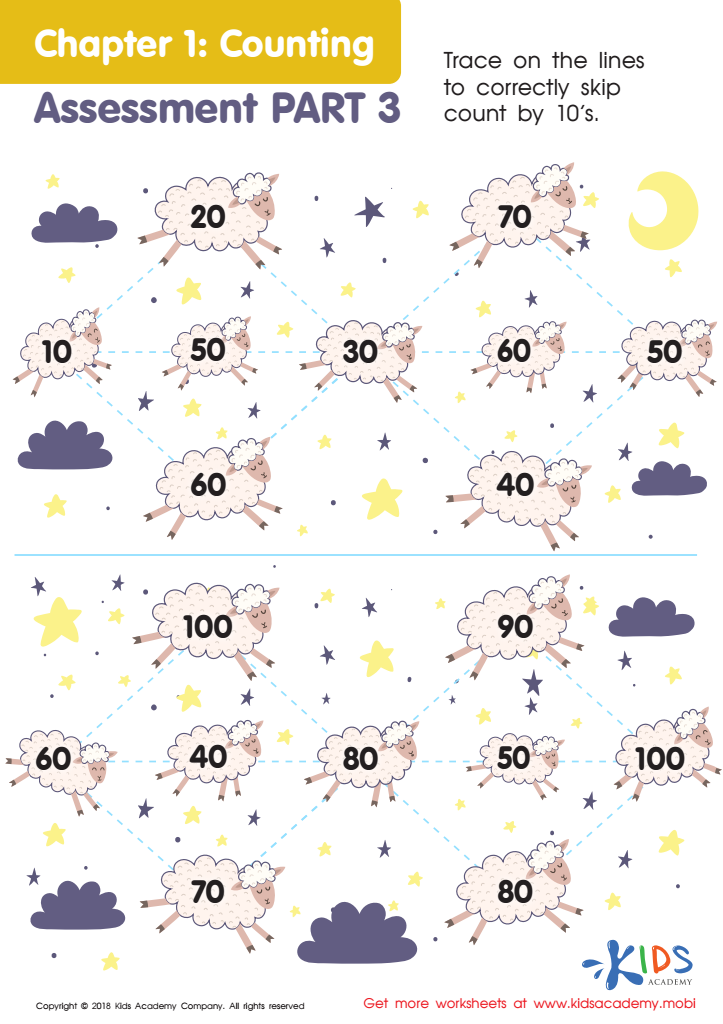
Counting: Assessment 3 Worksheet
 Assign to My Students


.jpg)





Improving reading skills and math proficiency for children ages 7-9 is vital, as these foundational skills significantly impact future academic success and overall cognitive development. At this stage, children are transitioning from learning to read to reading to learn, which means strong reading skills become essential for grasping complex concepts across all subjects, including math. Improved reading ability allows children to follow multi-step math problems, understand word problems, and interpret data accurately, fostering critical thinking.
Additionally, mastering basic math skills during these pivotal years sets the groundwork for higher-level math understanding. Children who develop confidence in math early on are more likely to embrace challenges in the subject and pursue advanced studies later. Enhancing these skills also benefits children's self-esteem; as they become proficient readers and mathematicians, they are more likely to engage positively in their learning experiences.
Lastly, strong reading and math skills correlate with lifelong learning and employability. Parents and teachers play crucial roles in nurturing these skills, ensuring children have access to diverse resources and supportive environments that promote exploration, inquiry, and a love for learning. Investing in these competencies not only enhances academic performance but also helps children become well-rounded individuals equipped for future challenges.








