Learning number patterns Math Worksheets for Ages 7-9
4 filtered results
-
From - To
Unlock your child's potential with our Learning Number Patterns Math Worksheets, designed for ages 7-9. These engaging worksheets help young learners discover the beauty of mathematical sequences, enhancing their problem-solving skills and critical thinking. With a variety of fun activities, students will master number patterns, build a strong foundation in math, and gain the confidence needed for more advanced concepts. Suitable for in-class activities or at-home practice, our expertly crafted worksheets ensure that your child’s journey through math is as enjoyable as it is educational. Guide your child to mathematical success with Kids Academy!
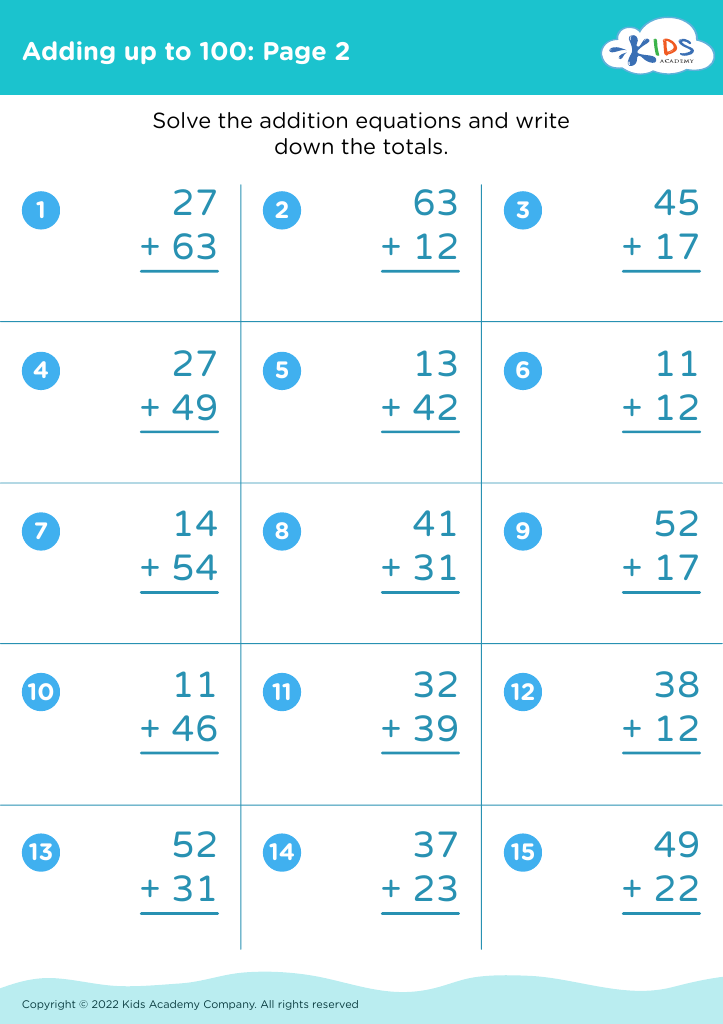
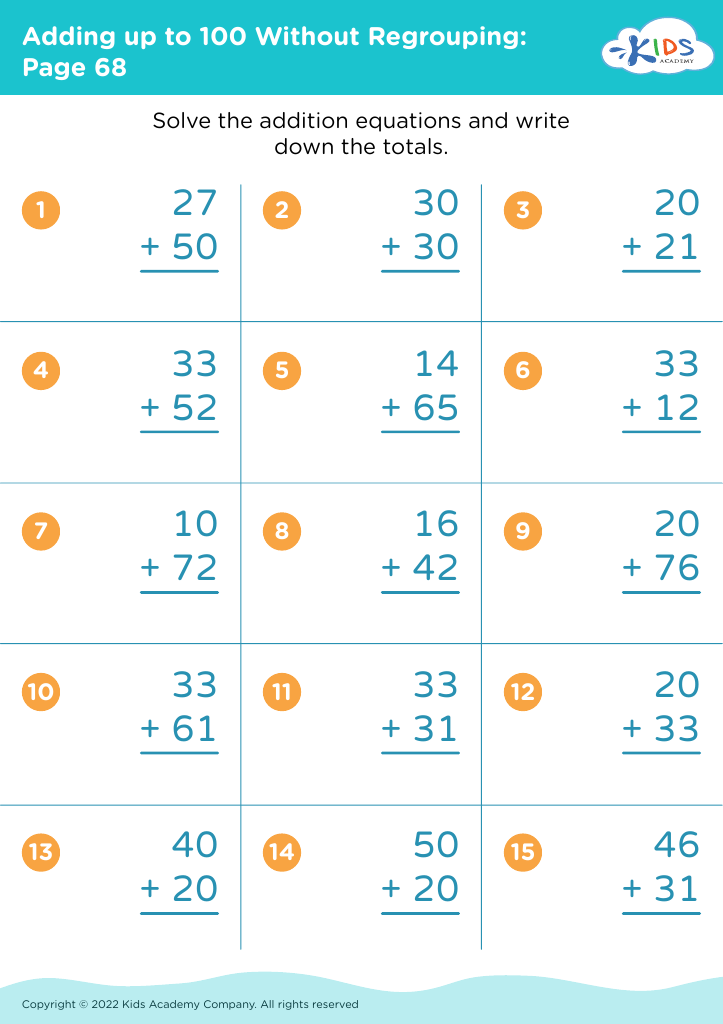
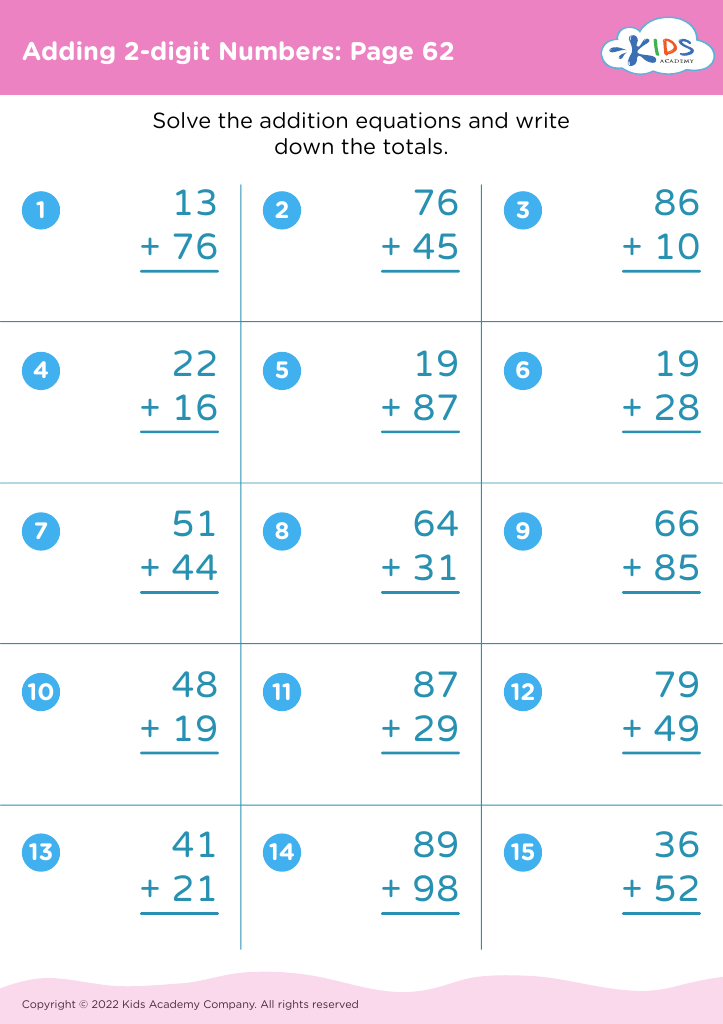
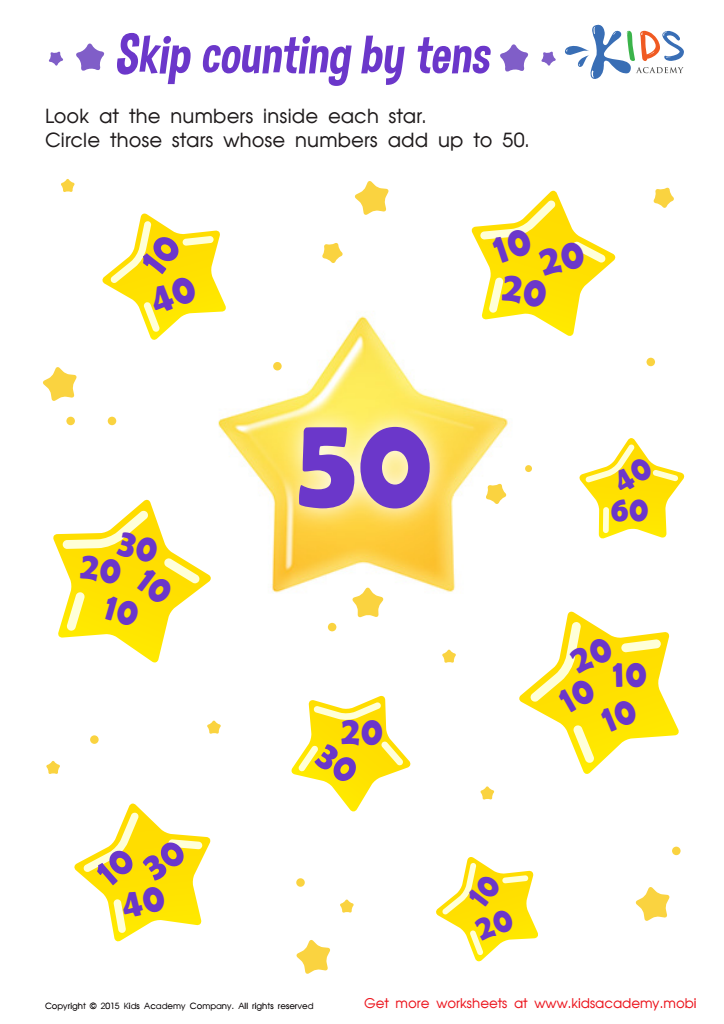
Learn Dozens: Skip Counting by Tens Printable
 Assign to My Students








Parents and teachers should care about learning number patterns in math for children aged 7-9 because it is fundamental in developing key mathematical and cognitive skills. Number patterns foster critical thinking and problem-solving capabilities by encouraging children to recognize relationships, make predictions, and understand the underlying structures of numbers. This early mathematical foundation paves the way for more complex math concepts such as algebra, which is essential in higher education and everyday life.
Understanding number patterns also boosts logical reasoning and analytical skills. By examining sequences and detecting regularities, children sharpen their ability to approach problems methodically and think logically. Furthermore, these skills are transferable across subjects and life situations, enhancing overall academic performance and decision-making abilities.
Additionally, learning number patterns can stimulate a child's curiosity and engagement in mathematics. When children identify and extend patterns, they experience a sense of accomplishment and develop a positive attitude toward math. This positive association can encourage lifelong interest and persistence in the subject, benefiting their educational journey.
In summary, learning number patterns at ages 7-9 is crucial as it helps build a robust mathematical foundation, enhances cognitive skills, and fosters a positive attitude toward math, all of which are vital for a child’s academic and personal growth.








