
Practicing subtraction Math Worksheets for Ages 7-9
5 filtered results
Difficulty Level
Grade
Age
-
From - To
Subject
Activity
Standards
Explore our engaging subtraction math worksheets designed specifically for children aged 7-9! These worksheets are crafted to strengthen subtraction skills through fun and interactive exercises. With a variety of activities, children will build confidence as they tackle straightforward problems and develop a deeper understanding of basic math concepts. Each worksheet focuses on different aspects of subtraction, ensuring comprehensive practice that caters to all learning styles. Ideal for classroom use or at-home learning, our subtraction worksheets make mastering math enjoyable. Help your child become a subtraction whiz while reinforcing their math fundamentals with our thoughtfully designed resources!
Favorites
With answer key
Interactive
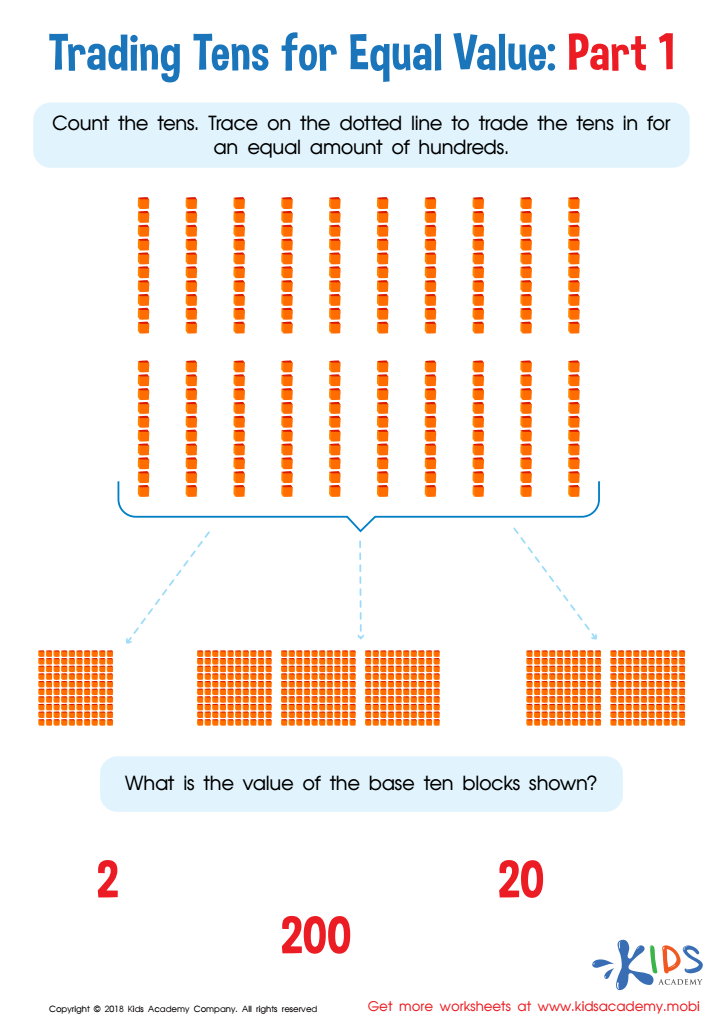
Trading Tens for Equal Value Worksheet: Part 1
This worksheet helps 3rd graders count large numbers and recognize base numbers. It lists 10 cubes and asks students to identify the hundreds, then circle the base blocks. This colorful pdf provides a fun, visual way to help students strengthen their math basics.
 Assign to My Students
Trading Tens for Equal Value Worksheet: Part 1
Worksheet
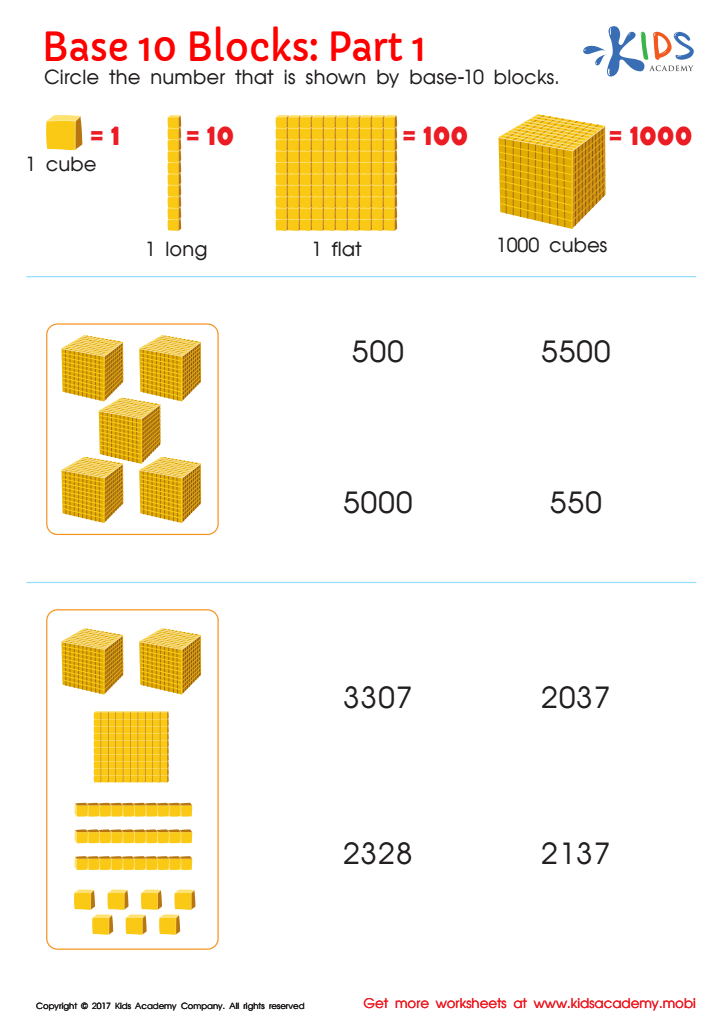
Place Value Thousands Worksheet
Kids aged 8+ can tackle the challenge of understanding place value with this thousands worksheet! It'll help develop their number sense and equip them with the skills to work with numbers up to the thousands.
Place Value Thousands Worksheet
Worksheet
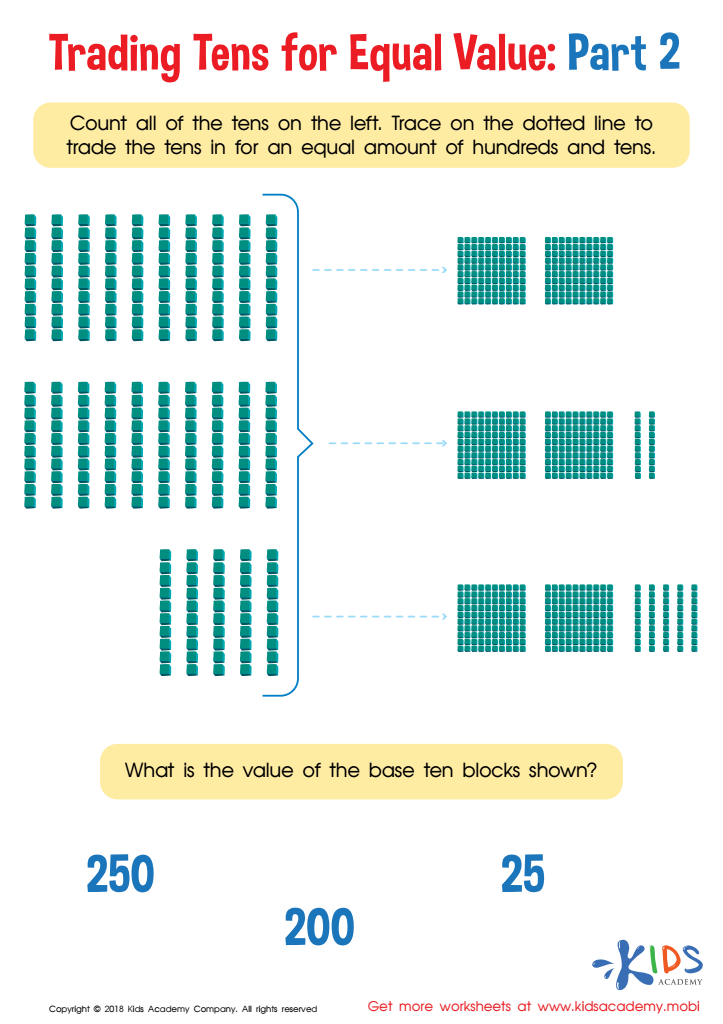
Trading Tens for Equal Value Worksheet: Part 2
Exchange coins for bills and cubes for longs or flats with this helpful place value worksheet! Encourage children to count all the tens, then trace the dotted line to the correct answer and determine the value. This concept can be tricky to teach in elementary math, but this worksheet can help!
Trading Tens for Equal Value Worksheet: Part 2
Worksheet
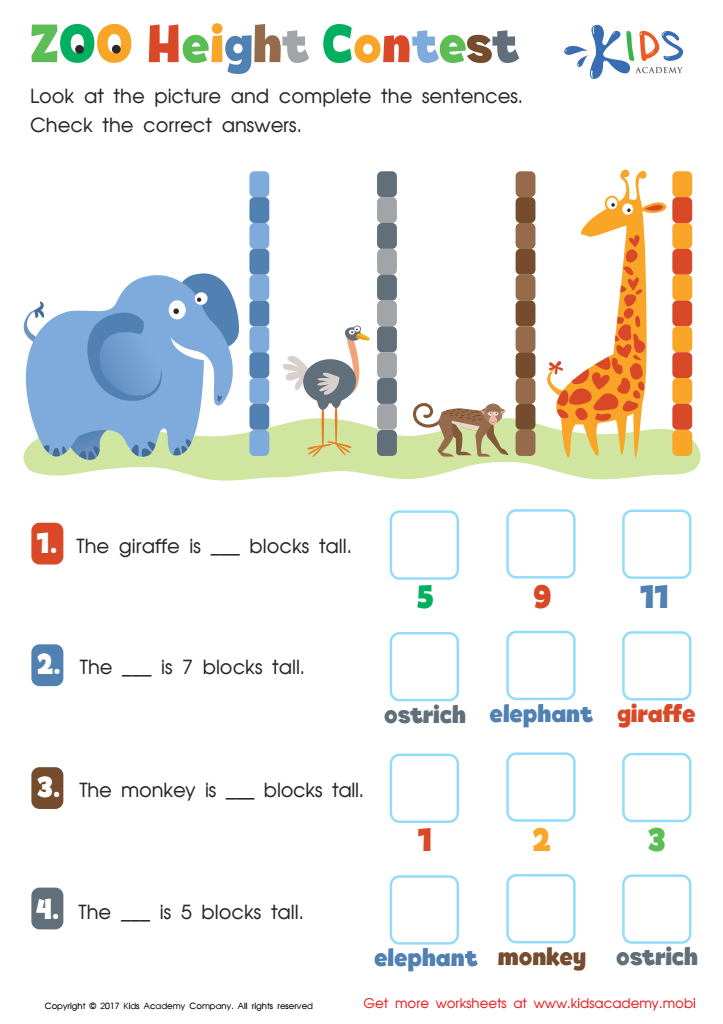
Zoo Height Contest Worksheet
Let's head to the zoo and use colorful blocks to measure your child's favorite animals! With this Kids Academy worksheet, help them practice and prepare for learning measurement. Guide them in looking at the zoo animals and counting blocks to find the height. Then, read the questions and check the box next to the correct answer.
Zoo Height Contest Worksheet
Worksheet
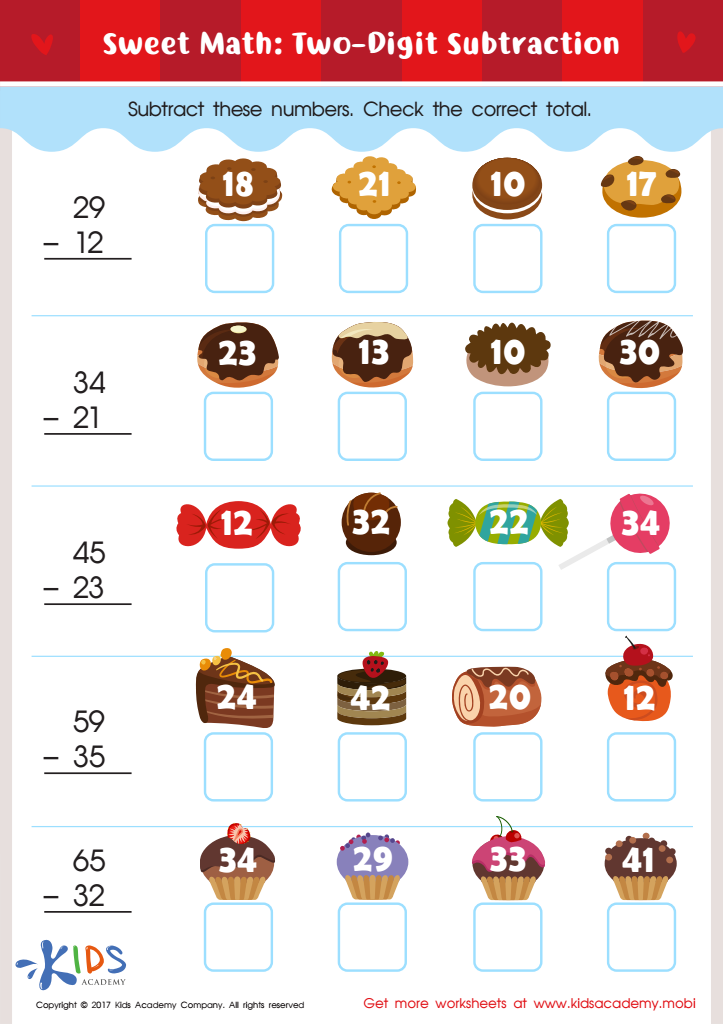
Two Digit Subtraction Worksheet
Make subtraction practice fun and easy with Kids Academy's delightful two digit subtraction worksheet PDF! Your child will love finding the sweet treat containing the correct answer to each 2-digit problem. Offer this quick practice and watch them learn!
Two Digit Subtraction Worksheet
Worksheet
Join Kids Academy for Free
Who is primarily going to use this learning content?






Practicing subtraction for children aged 7-9 is vital for several reasons. First, mastering subtraction builds a strong foundation for more complex mathematical concepts, such as algebra and problem-solving. At this age, children begin encountering two-digit and three-digit subtraction, which introduces regrouping and borrowing—skills essential for their future mathematical understanding.
Additionally, improving subtraction skills enhances a child's confidence and overall attitude towards math. When students successfully solve subtraction problems, they develop a positive self-image and a growth mindset, making them more willing to tackle challenges. Regular practice also helps in developing crucial cognitive skills, including critical thinking and logical reasoning.
Furthermore, subtraction is a real-life skill. From calculating change while shopping to dividing treats among friends, understanding subtraction helps children navigate practical situations. Parents and teachers should engage in fun subtraction activities to make learning enjoyable and reinforce everyday applications.
Lastly, practice allows parents and teachers to identify individual learning needs. By monitoring progress, they can provide targeted support to help children overcome challenges, ultimately fostering a love for learning and helping children thrive academically.








