
Recognizing shapes Math Worksheets for Ages 7-9
34 filtered results
Difficulty Level
Grade
Age
-
From - To
Subject
Activity
Standards
Explore our engaging "Recognizing Shapes Math Worksheets" designed specifically for children aged 7-9! These worksheets focus on helping young learners identify and understand various shapes, enhancing their geometry skills in a fun and interactive way. From circles and squares to triangles and more, students will work on recognizing shapes in different contexts and applications. Perfect for homeschooling, classroom activities, or supplemental learning, our resources promote critical thinking and visual recognition. With a variety of exercises, including coloring, matching, and shape composition, these worksheets cater to diverse learning styles and keep children motivated. Download now and empower your child's math journey!
Favorites
With answer key
Interactive
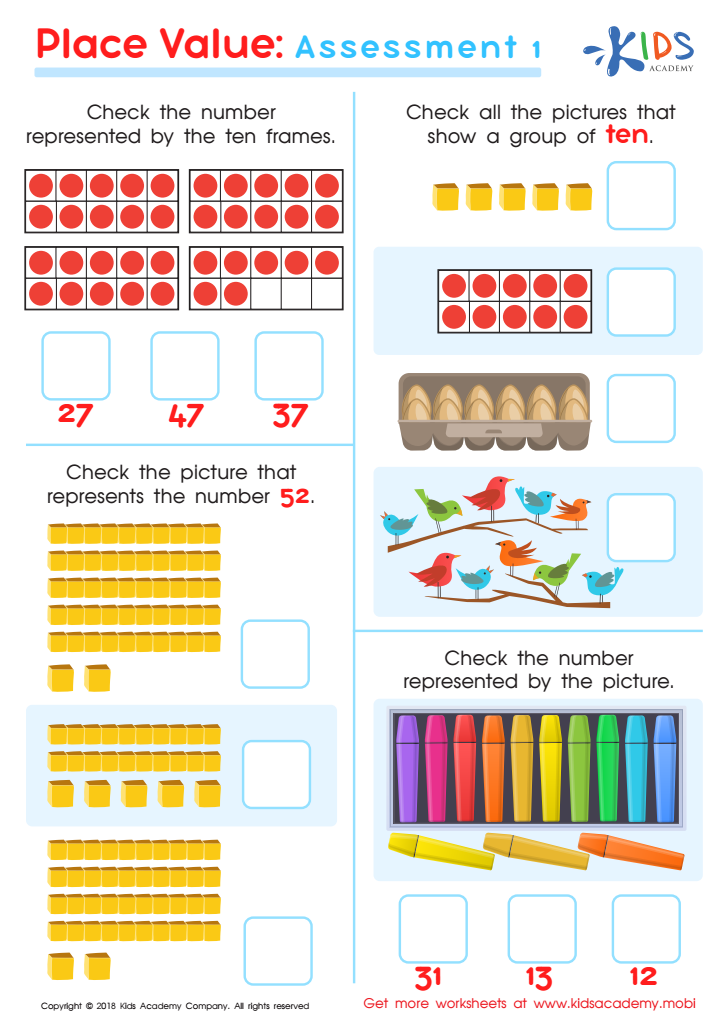
Place Value: Assessment 1 Worksheet
Assess your child's place value and number representation with this PDF worksheet. It lets them count and compare numbers and practice chiseling numbers into groups of ten. It's a great way to identify any concepts that need to be reinforced.
 Assign to My Students
Place Value: Assessment 1 Worksheet
Worksheet
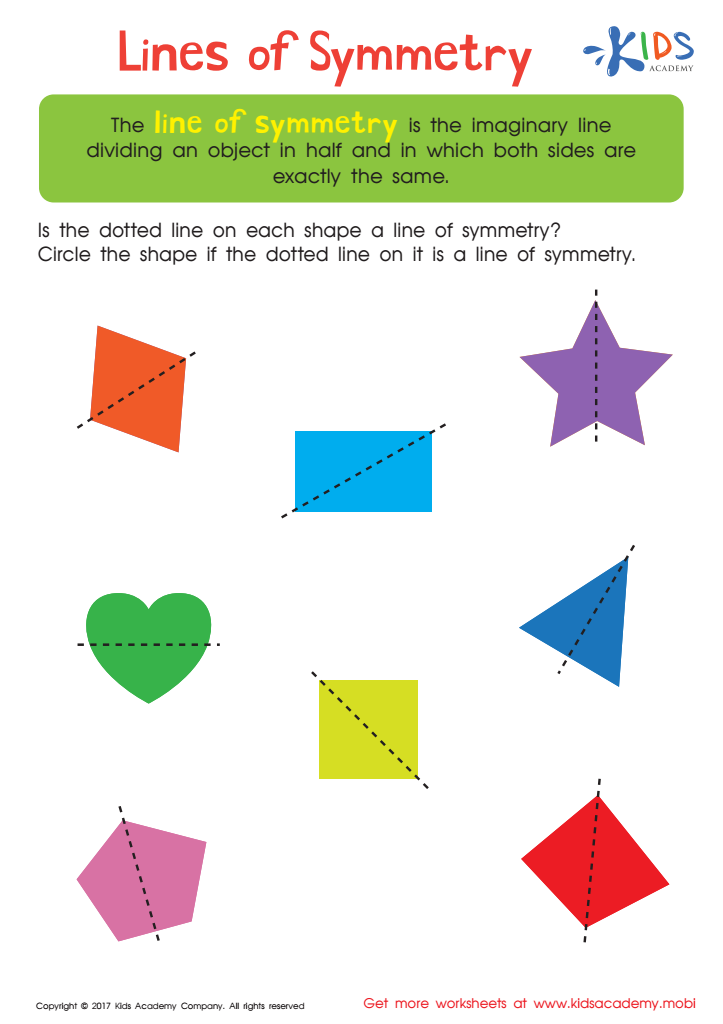
Lines of Symmetry Printable
Symmetry is a key math concept that kids must learn to develop their geometry skills. This fun worksheet helps build this skill, by encouraging kids to recognize symmetrical shapes and find equal parts.
Lines of Symmetry Printable
Worksheet
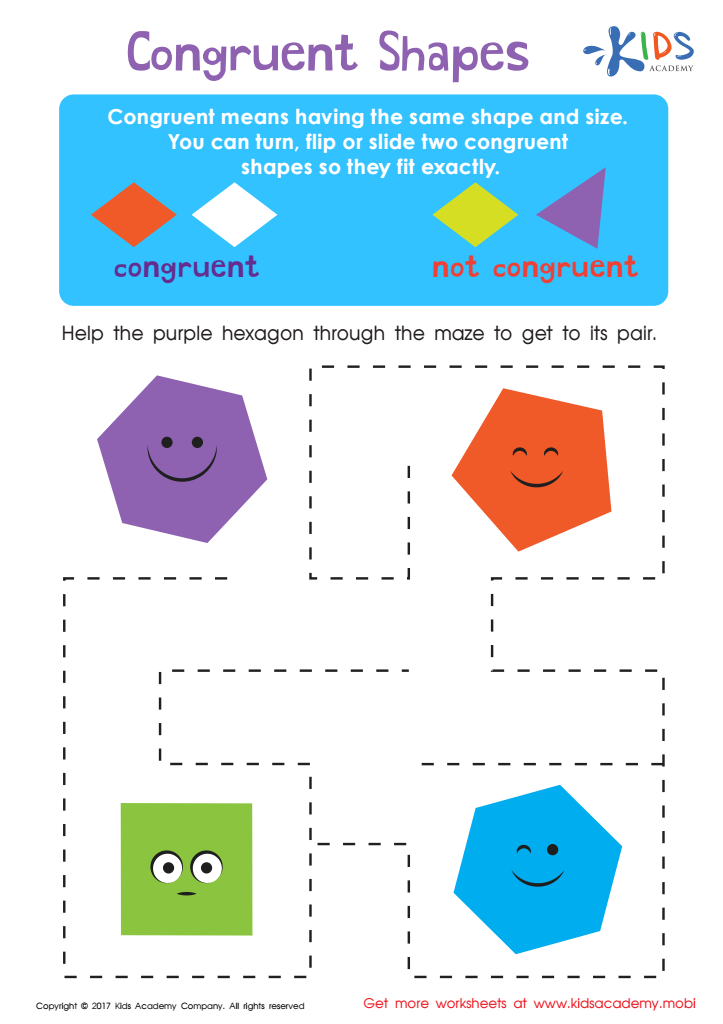
Congruent Shapes Worksheet
Help your child find the twin of the purple hexagon! This congruent shapes worksheet is great for increasing vocabulary while challenging mental rotation skills.
Congruent Shapes Worksheet
Worksheet
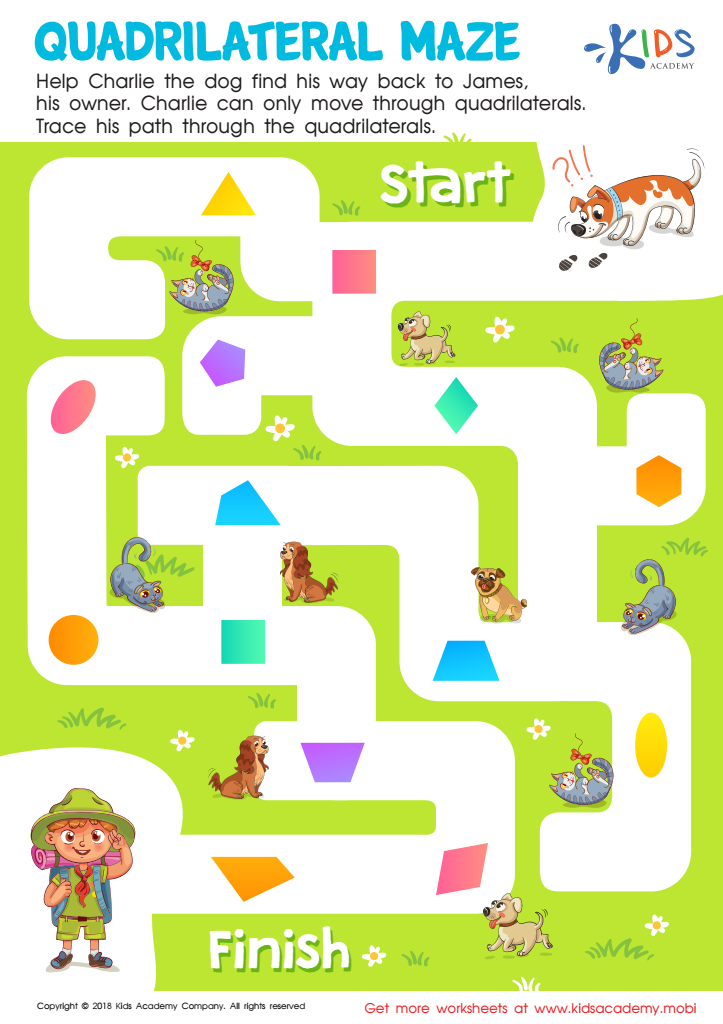
Quadrilateral Maze Worksheet
Does your kid love dogs? If so, this exercise is ideal for them! Help Charlie the pup find his way back to his owner, James, in the quadrilateral maze worksheet. Your child must trace Charlie's path only through squares and rhombuses in order to solve it. Careful planning is key!
Quadrilateral Maze Worksheet
Worksheet
Join Kids Academy for Free
Who is primarily going to use this learning content?




%20(1).jpg)

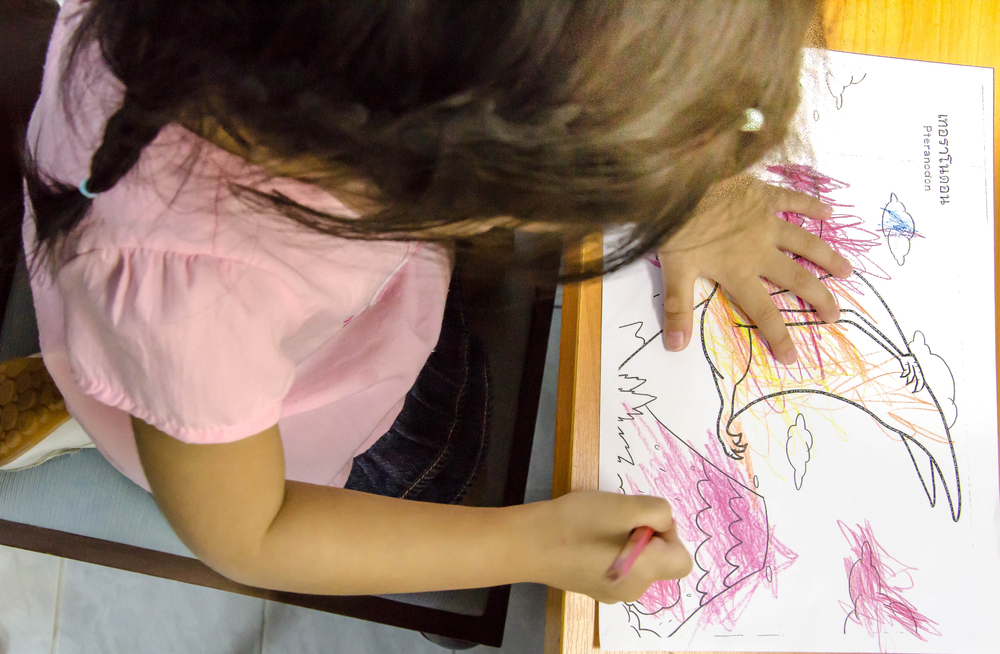

Recognizing shapes is a foundational skill in mathematics that significantly impacts a child’s overall cognitive development, especially for students aged 7-9. During this critical stage, children begin to make connections between geometric concepts and real-world applications. Understanding shapes helps develop spatial awareness, which is essential for many everyday activities, including reading maps, understanding diagrams, and engaging in construction or art projects.
Moreover, recognizing shapes fosters logical reasoning and critical thinking. Children learn to categorize and compare different forms, which enhances their analytical abilities. These skills are not only applicable to mathematics but also to subjects like science and engineering, where geometric principles often come into play.
Additionally, the skills acquired through shapes recognition lay the groundwork for more advanced mathematical concepts, such as area, perimeter, and volume. Early mastery of these concepts can promote confidence in math, making students more likely to engage with the subject matter positively later on.
Encouraging recognition of shapes also supports literacy development; as children learn to describe shapes using appropriate vocabulary, they enhance their communication skills. Consequently, fostering shape recognition is essential for holistic development, making it a priority for both parents and educators.








