Understanding area Math Worksheets for Ages 7-9
3 filtered results
-
From - To
Discover our engaging "Understanding Area Math Worksheets" for kids ages 7-9, designed to enhance mathematical skills in a fun and interactive way. These worksheets help young learners grasp the concept of area by using colorful visuals and practical examples. Through a variety of exercises, including measuring, calculating, and comparing area, students will develop a solid foundation in geometry. Our comprehensive resources cater to different learning styles, ensuring every child can succeed. Perfect for classroom activities or home practice, these worksheets encourage critical thinking and problem-solving, making math both enjoyable and educational. Start your journey to mastering area today!
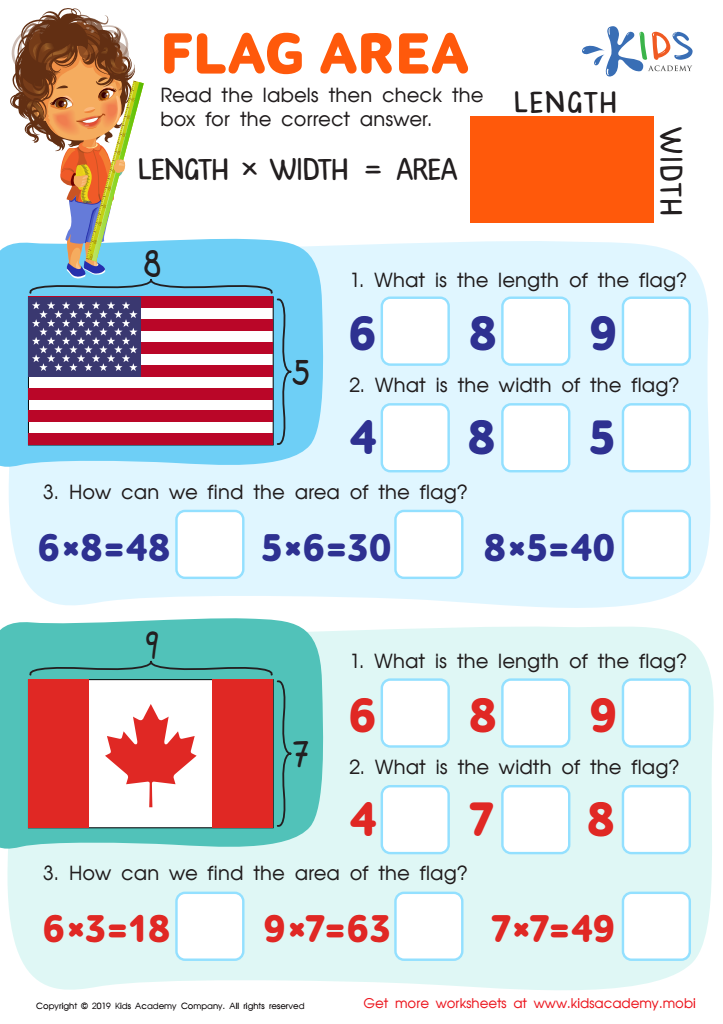
Flag Area Worksheet
 Assign to My Students
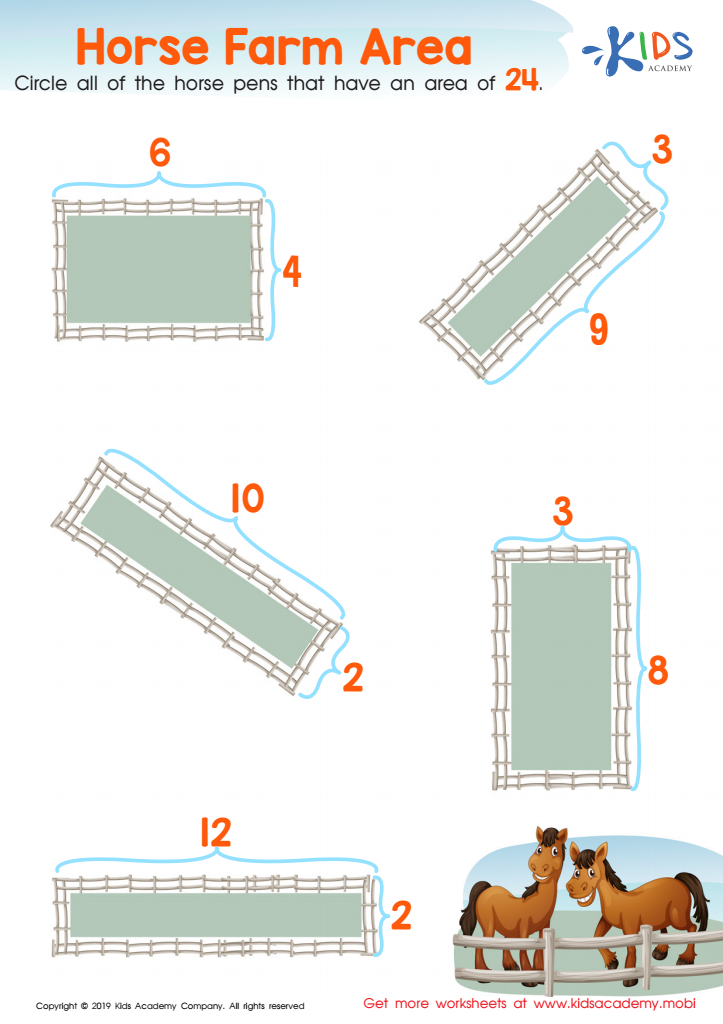
Horse Farm Area Worksheet
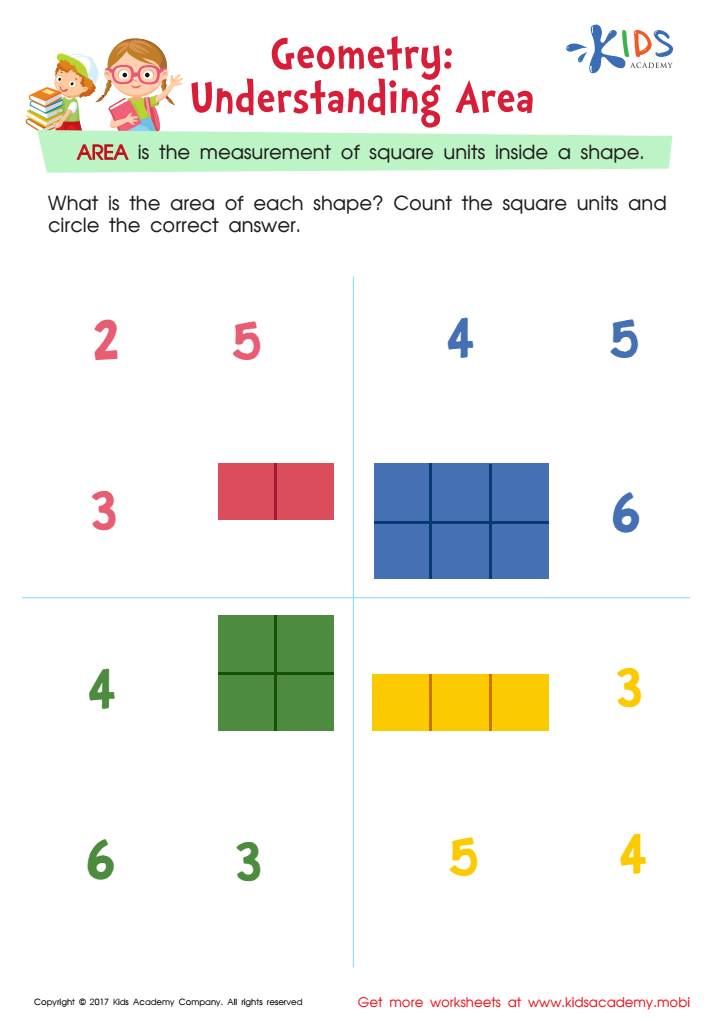
Understanding Area Worksheet








Understanding area math for children ages 7-9 is critical for several reasons. Firstly, grasping the concept of area lays a foundational understanding of geometry. Children begin to recognize that different shapes occupy different amounts of space, a skill applicable in everyday situations, such as determining the size of a room or plotting a garden. This knowledge fosters spatial awareness, enhancing problem-solving and critical-thinking skills as they encounter more complex math in later grades.
Moreover, math literacy contributes to overall academic achievement. Encouraging students to explore area through hands-on activities like measuring and drawing shapes promotes engagement and retention. This age group benefits from tactile learning experiences, making math both fun and interactive. When parents and teachers prioritize understanding area, they facilitate deeper connections between mathematical ideas and the world around them.
Finally, familiarity with area can spark interest in STEM fields, cultivating future innovators ready to tackle real-world challenges. Engaging parents in the learning process, such as through home projects, reinforces these concepts and builds a positive learning atmosphere. By focusing on area math, educators and families empower children with essential skills that will benefit them across subjects and throughout their lives.








