Check out this FREE Trial Lesson on Math for age 7-9!

Addition with Arrays - Part 2

Favorites
With answer key
Interactive
  • 7-9
  • Understanding fractions
  • Math
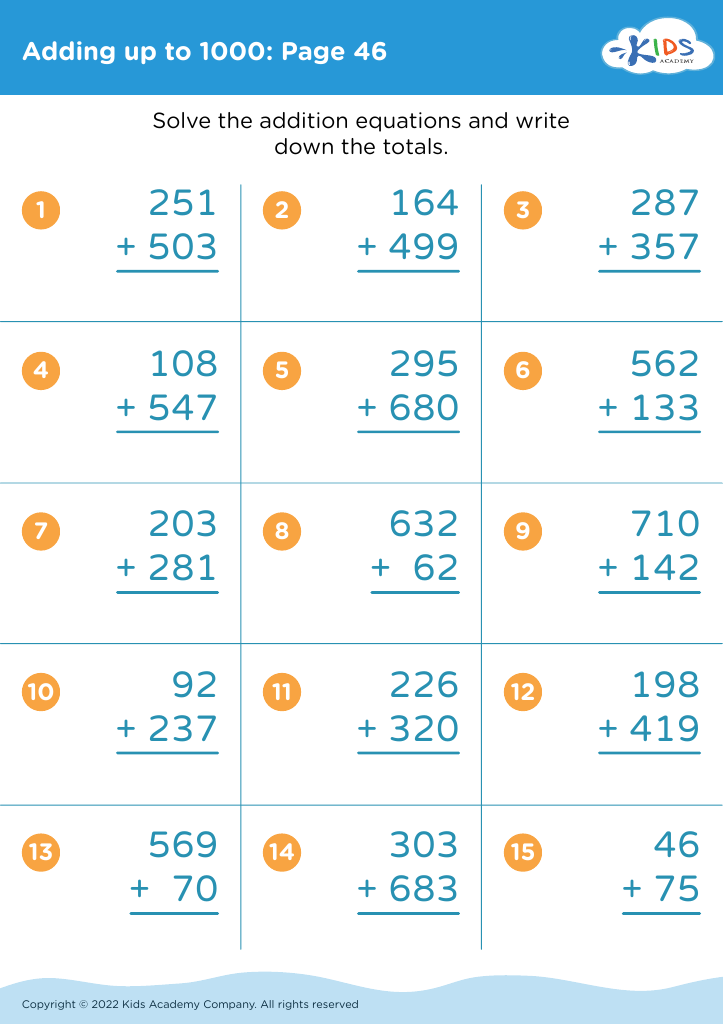
Adding up to 1000: Page 46

Adding up to 1000: Page 46

Adding up to 1000: Page 46
Worksheet
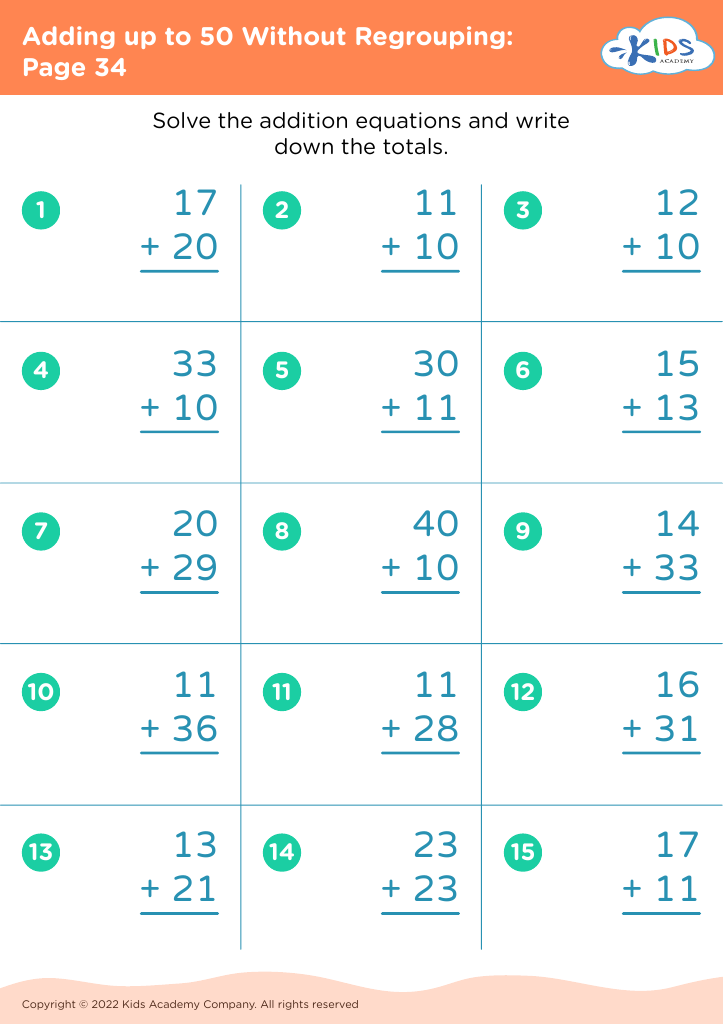
Adding up to 50 Without Regrouping: Page 34
Worksheet
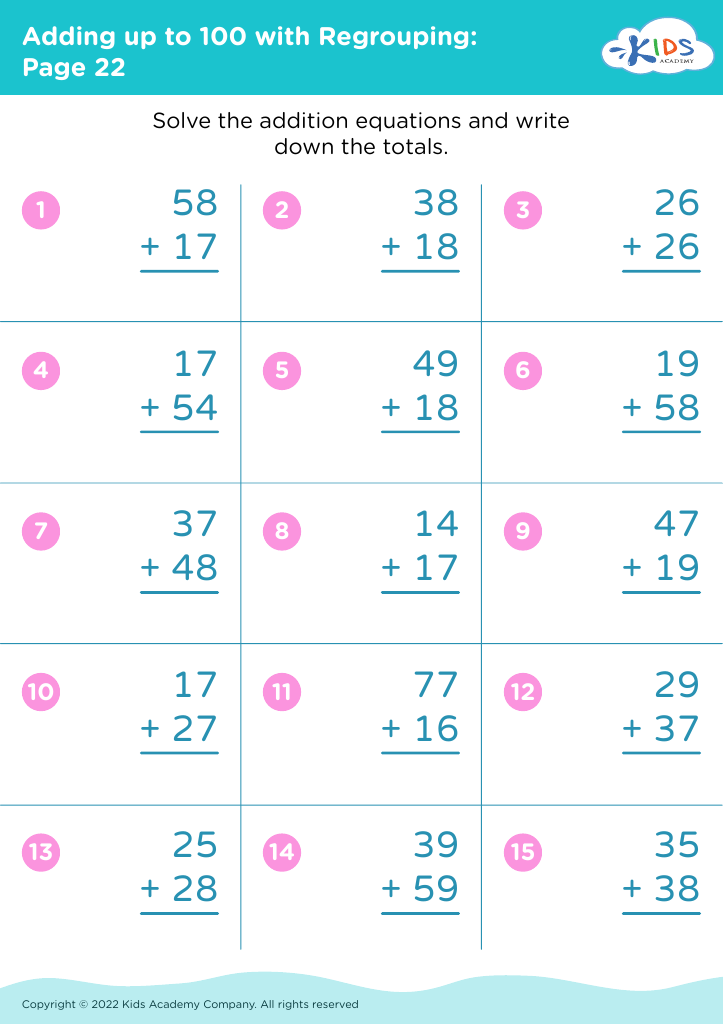
Adding up to 100 with Regrouping: Page 22
Worksheet
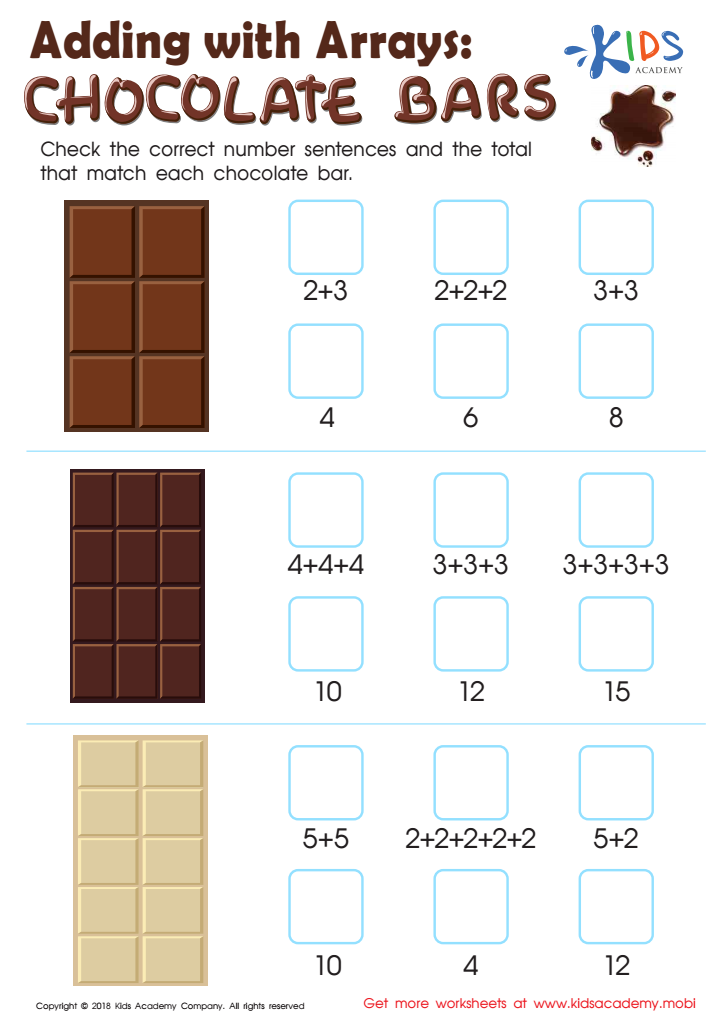
Adding with Arrays: Chocolate Bars Worksheet

Adding with Arrays: Chocolate Bars Worksheet

Kids love chocolates! Gauge how enthused your kids get when you mention them. This worksheet is a fun exercise about chocolates - get your kids to check the correct number sentences and totals for each chocolate bar. Reward their hard work with some chocolates - extra incentive for a job well done!
Adding with Arrays: Chocolate Bars Worksheet
Worksheet
Match Fractions Worksheet

Match Fractions Worksheet

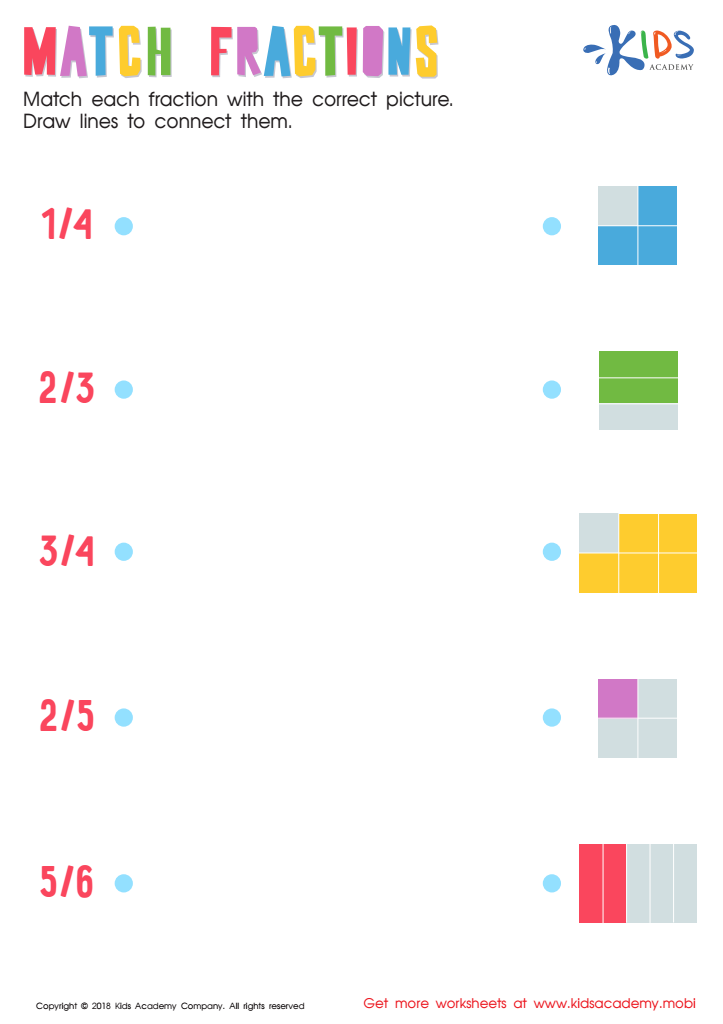
Have your child match fractions to images with this worksheet. There are five fractions on the left and five pictures on the right. Ask them to draw lines to connect each fraction to the right image. It's a great way to learn while having fun!
Match Fractions Worksheet
Worksheet
Fruity Problem Solving Worksheet

Fruity Problem Solving Worksheet

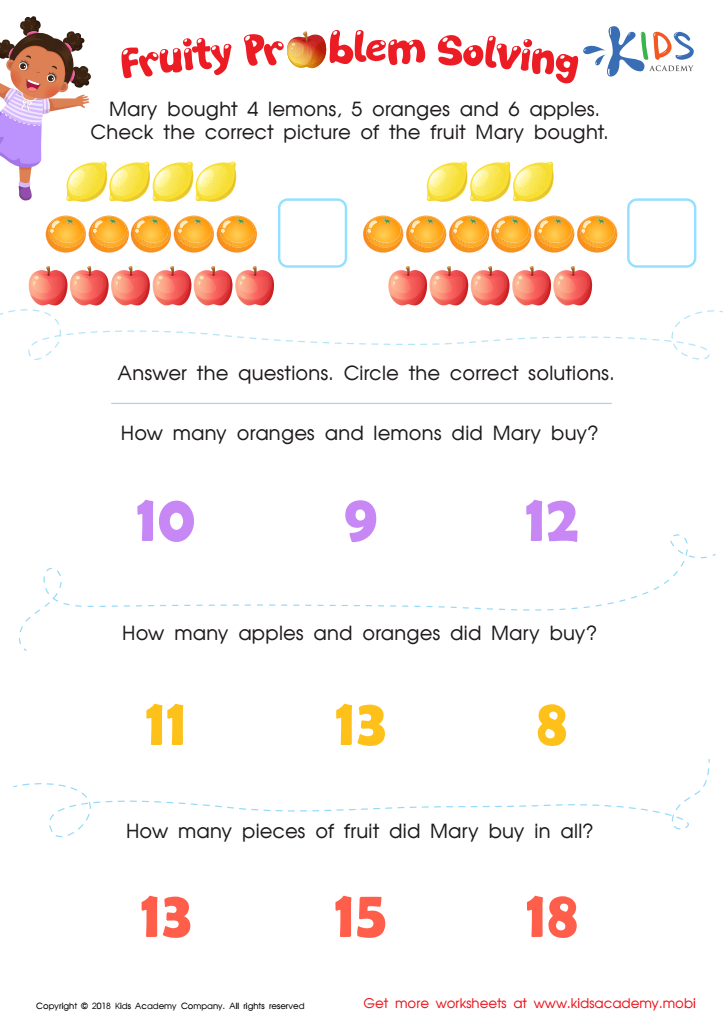
Practice addition word problems with young mathematicians using this PDF worksheet featuring fruit. As they read each problem carefully and circle the correct sums, they'll reinforce attention to detail and fine motor skills. Tangible representations are key to helping them with basic addition.
Fruity Problem Solving Worksheet
Worksheet
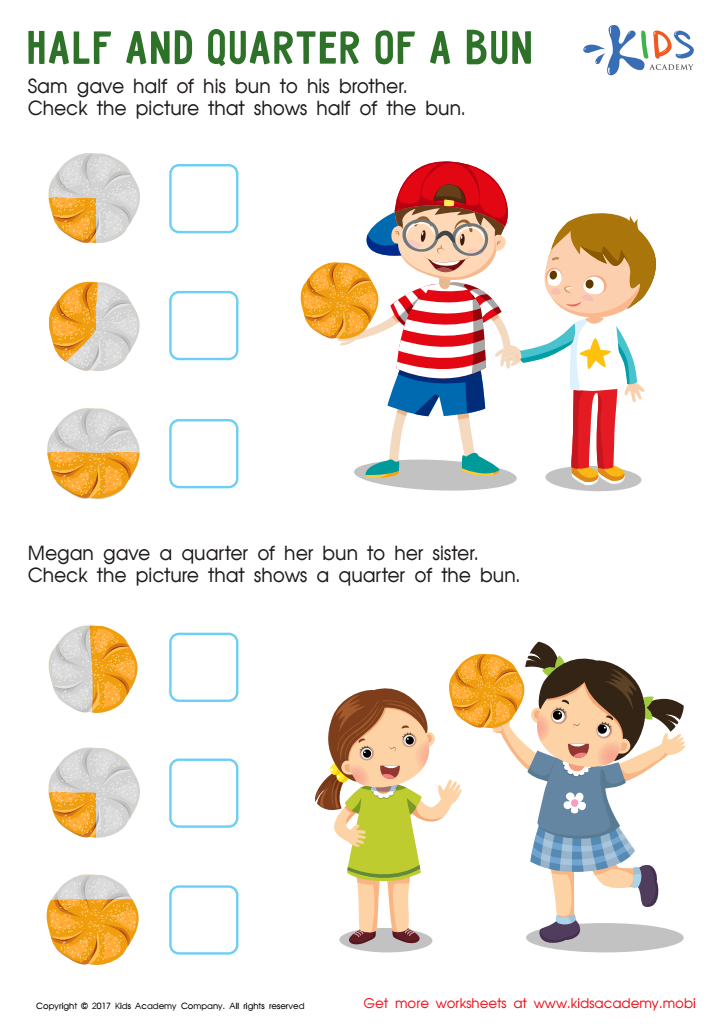
Half and Quarter of a Bun Worksheet
Half and Quarter of a Bun Worksheet
This worksheet introduces Sam, his brother and Megan, her sister, who are sharing buns. Show kids the picture of half and quarter to help them understand. Ask if they know what half and quarter of a shape is before progressing. Help them check the picture showing half and quarter of a bun.
Half and Quarter of a Bun Worksheet
Worksheet
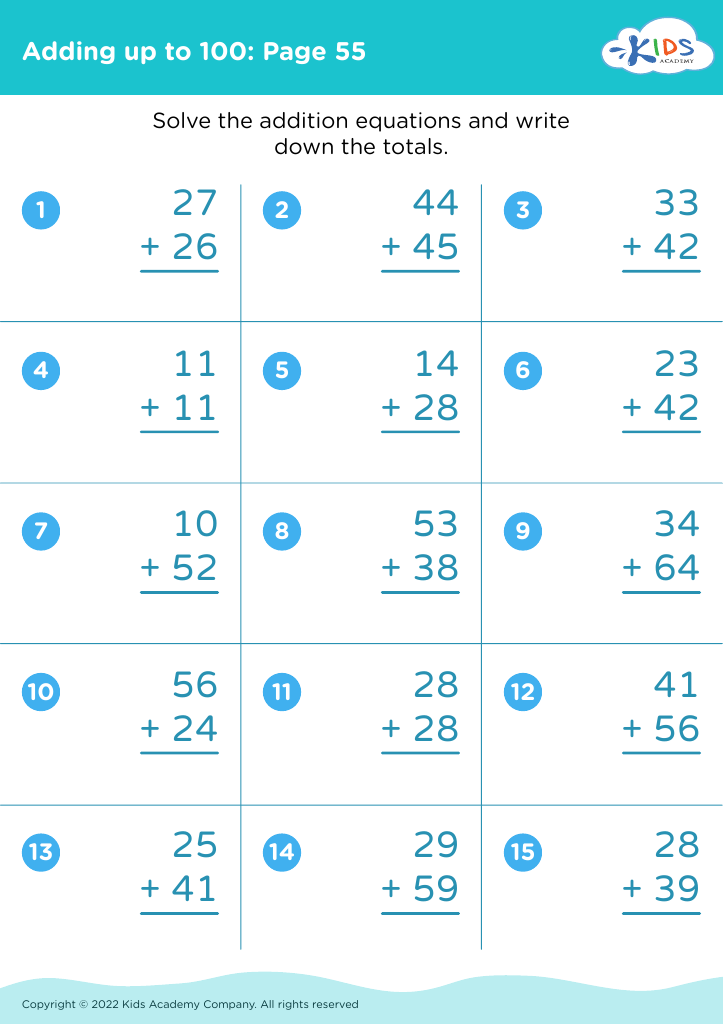
Adding up to 100: Page 55

Adding up to 100: Page 55

Adding up to 100: Page 55
Worksheet
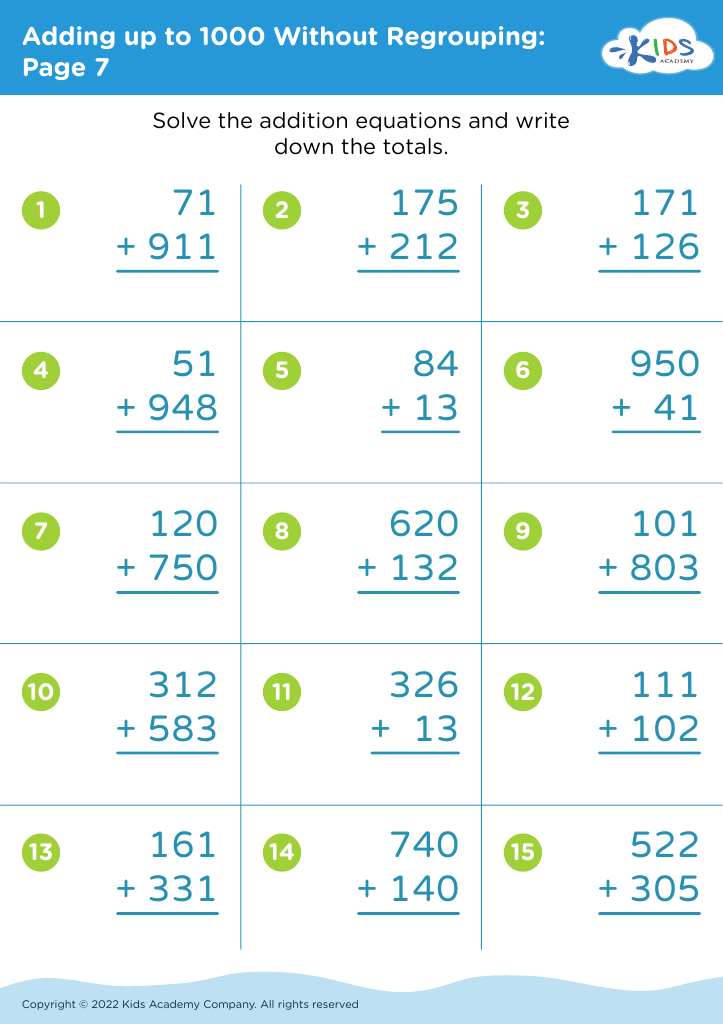
Adding up to 1000 Without Regrouping: Page 7
Worksheet
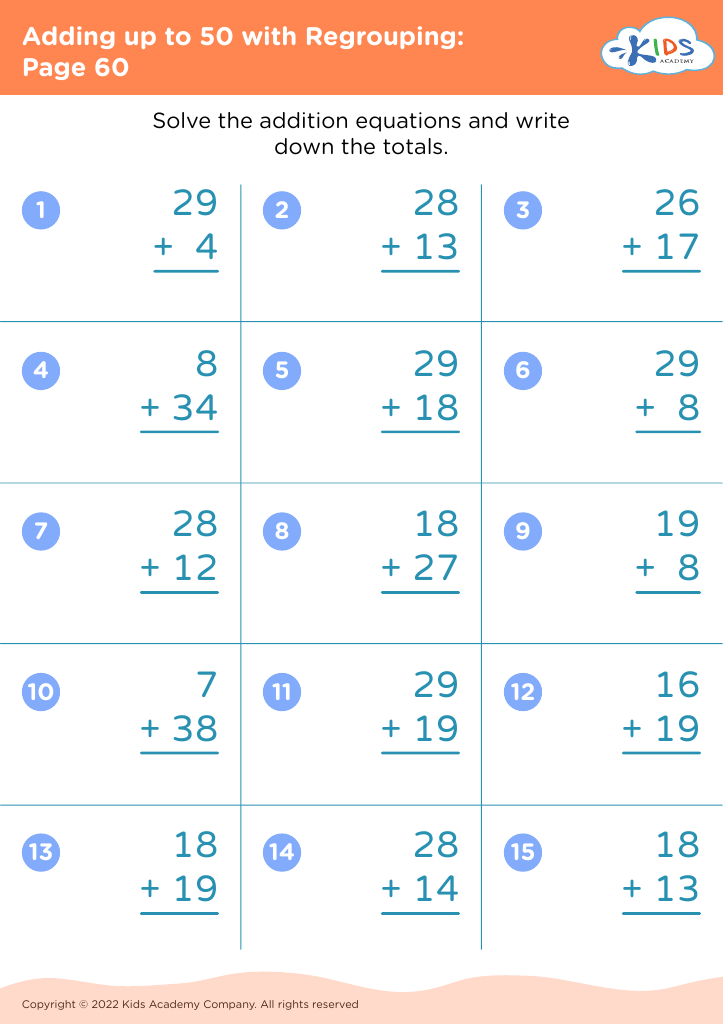
Adding up to 50 with Regrouping: Page 60
Worksheet
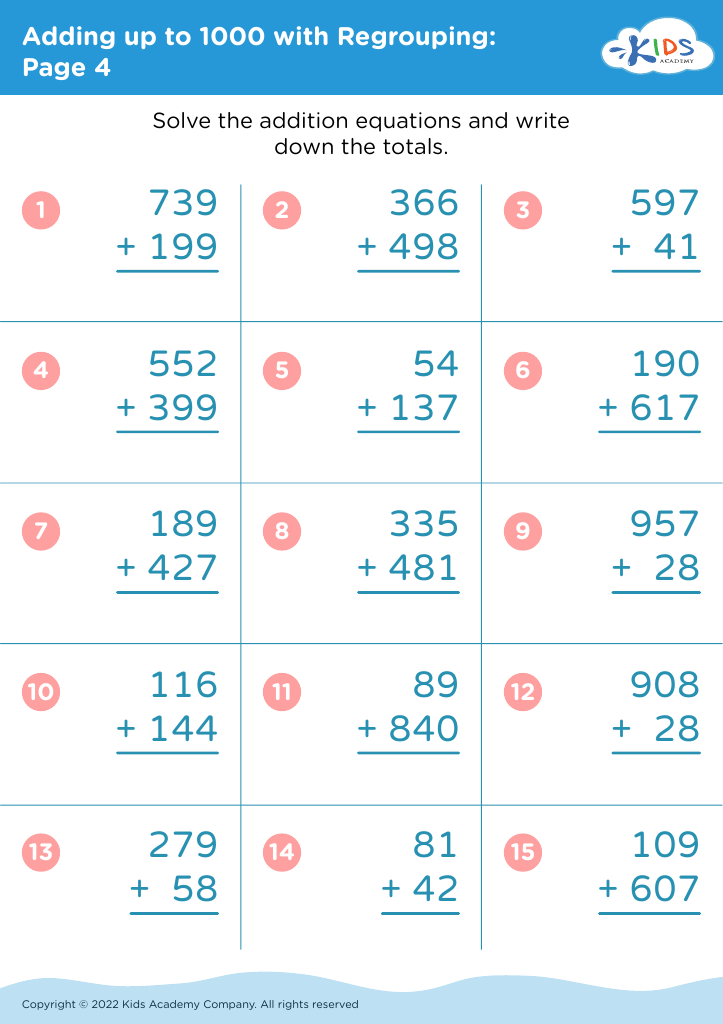
Adding up to 1000 with Regrouping: Page 4
Worksheet
Halves and Fourths for the House Worksheet
Halves and Fourths for the House Worksheet
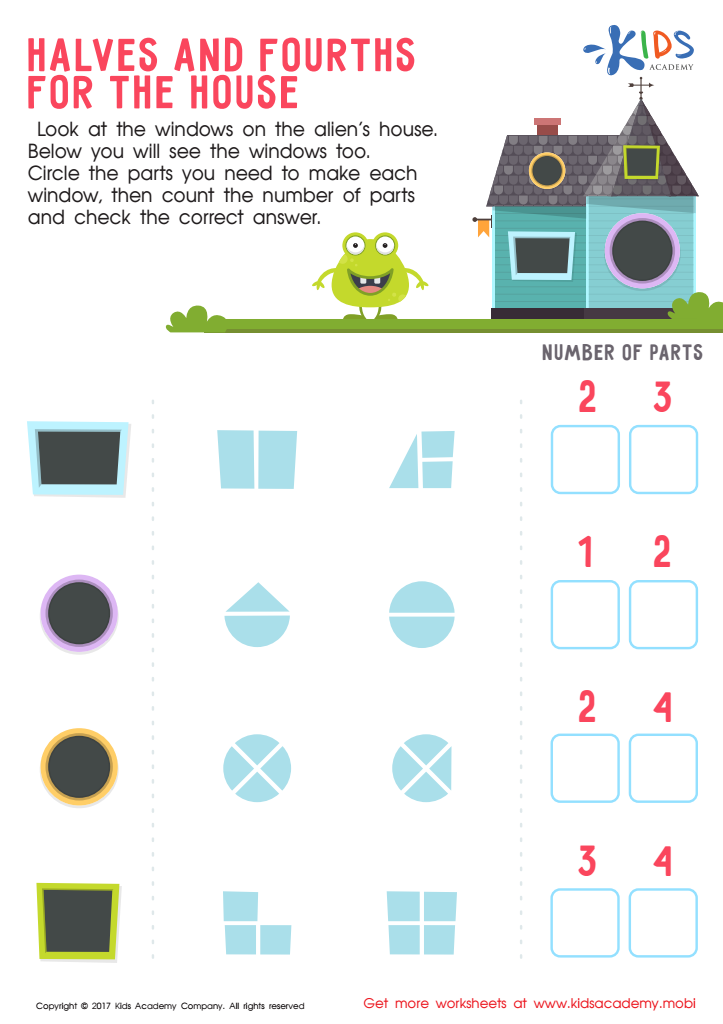
Help your child become friends with the alien in this worksheet! If they're fans of alien books and movies, they'll love it. Ask them to circle the parts at the bottom that make each window, then count the number of parts and check the correct answer.
Halves and Fourths for the House Worksheet
Worksheet
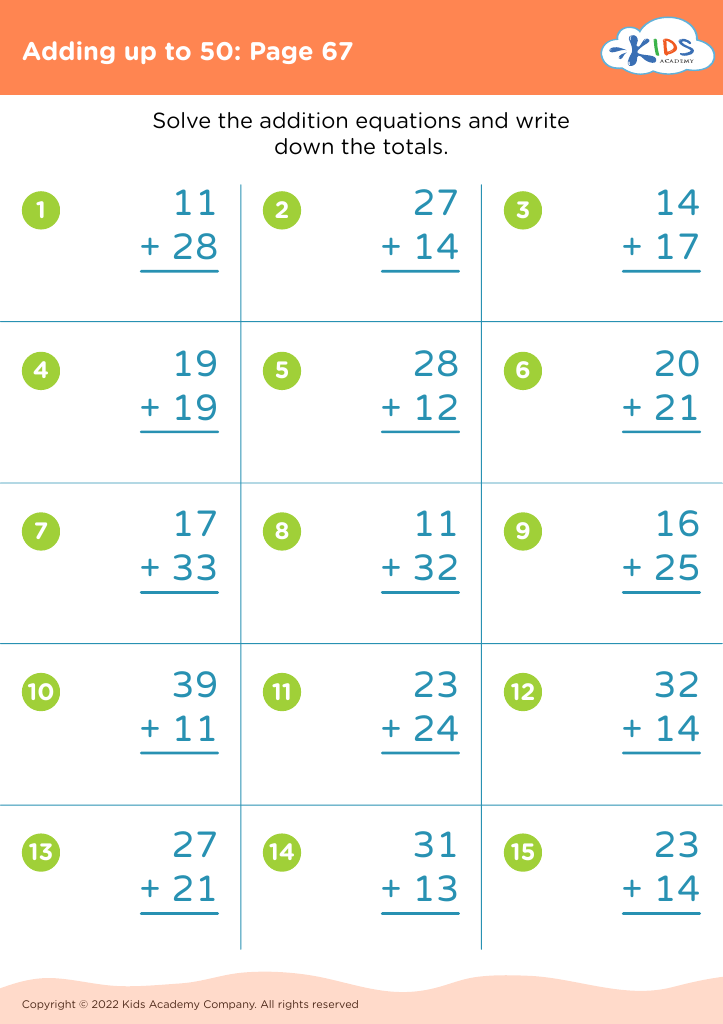
Adding up to 50: Page 67

Adding up to 50: Page 67

Adding up to 50: Page 67
Worksheet
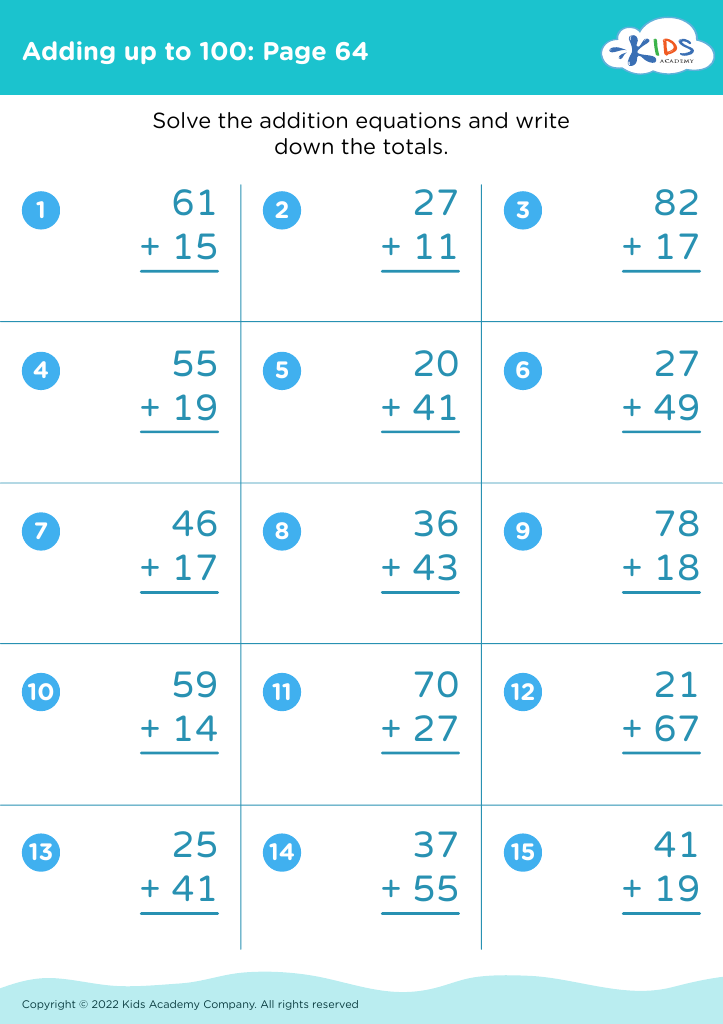
Adding up to 100: Page 64

Adding up to 100: Page 64

Adding up to 100: Page 64
Worksheet
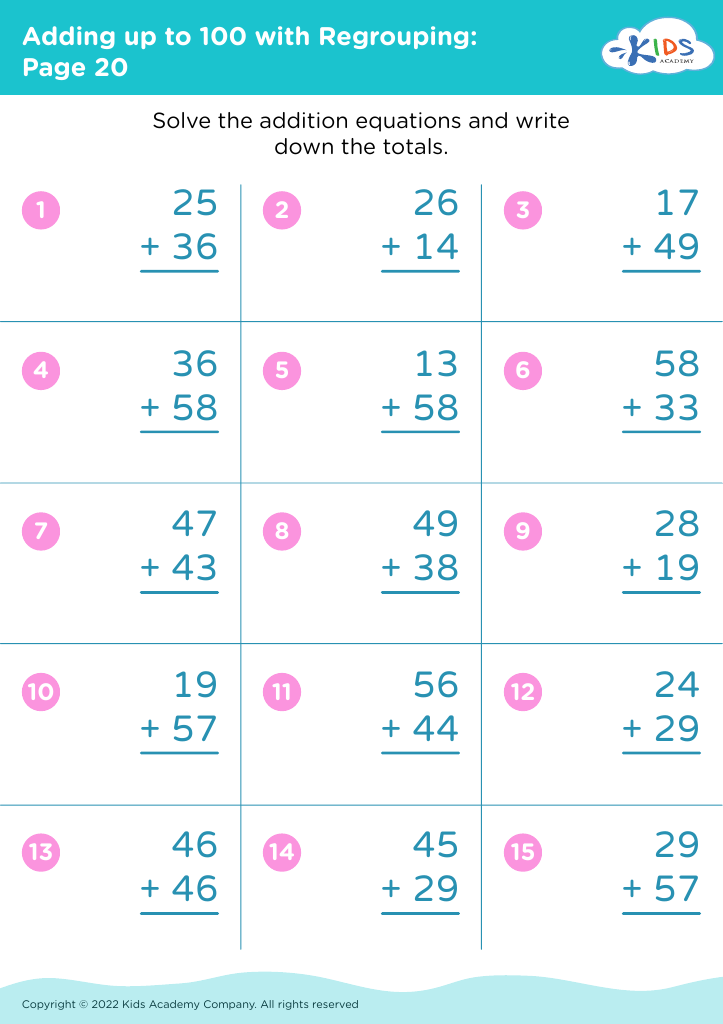
Adding up to 100 with Regrouping: Page 20
Worksheet
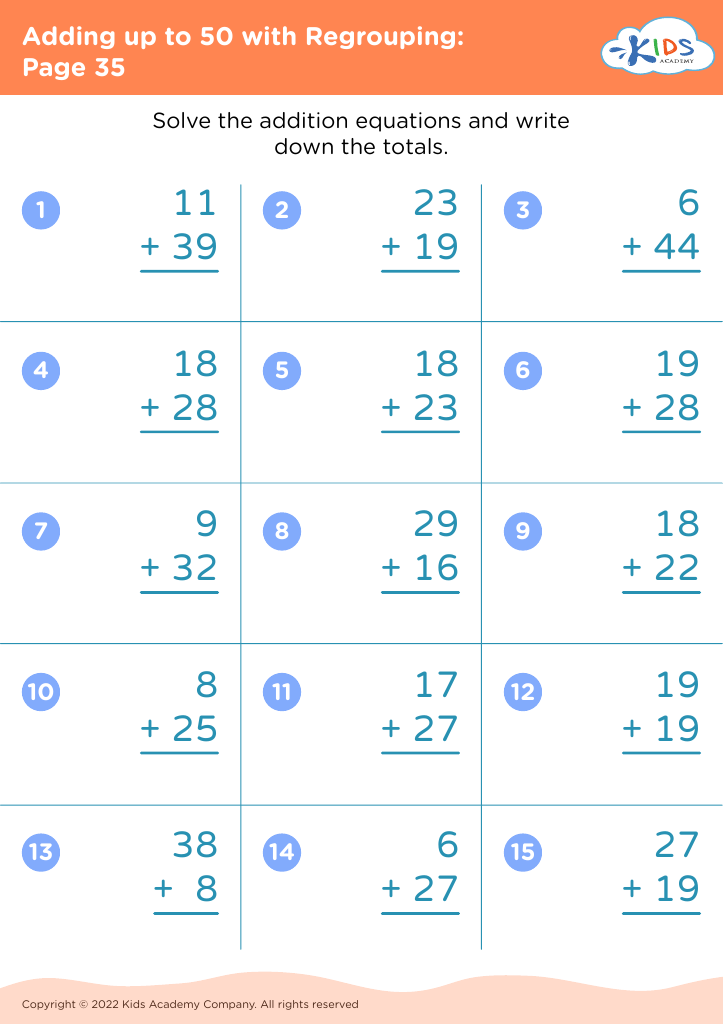
Adding up to 50 with Regrouping: Page 35
Worksheet
Adding up to 100 with Regrouping: Page 46
Worksheet
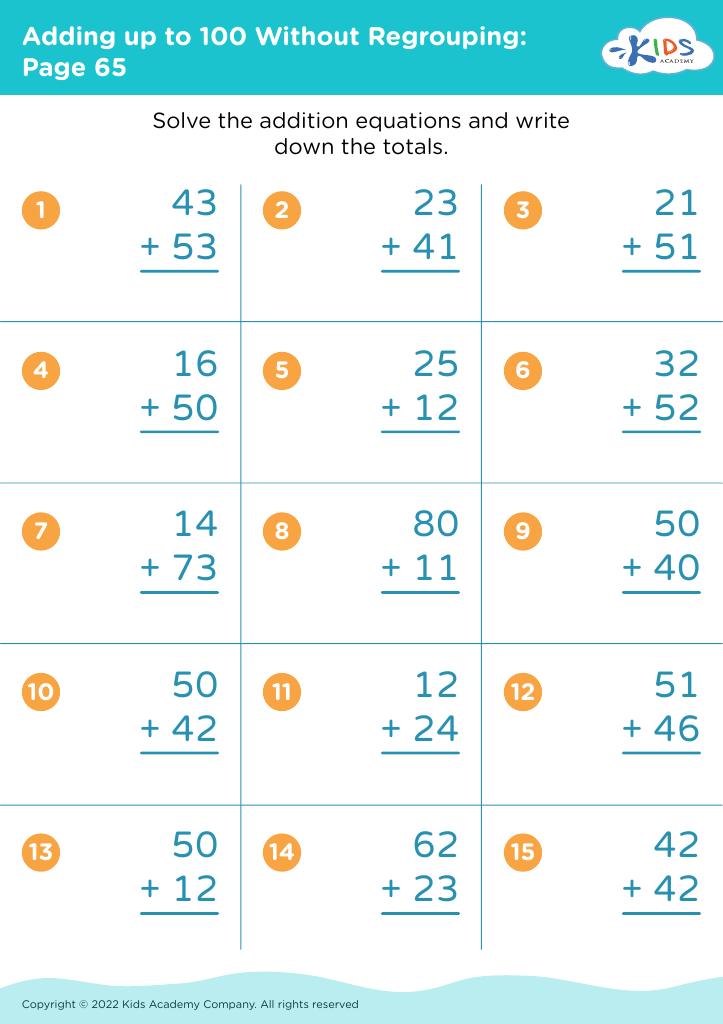
Adding up to 100 Without Regrouping: Page 65
Worksheet
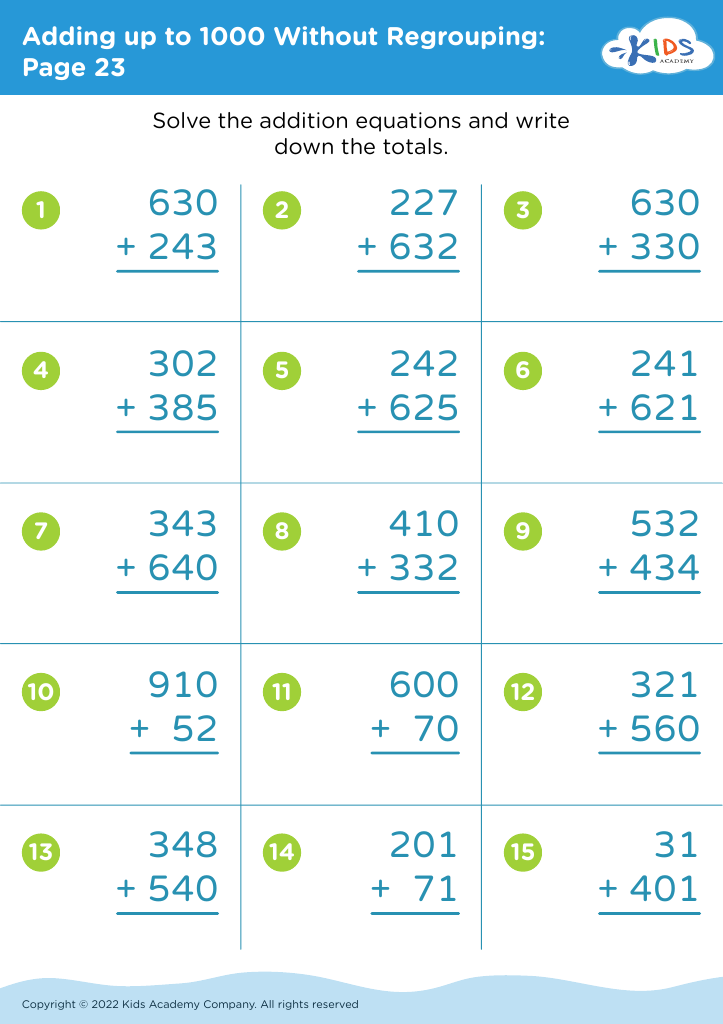
Adding up to 1000 Without Regrouping: Page 23
Worksheet
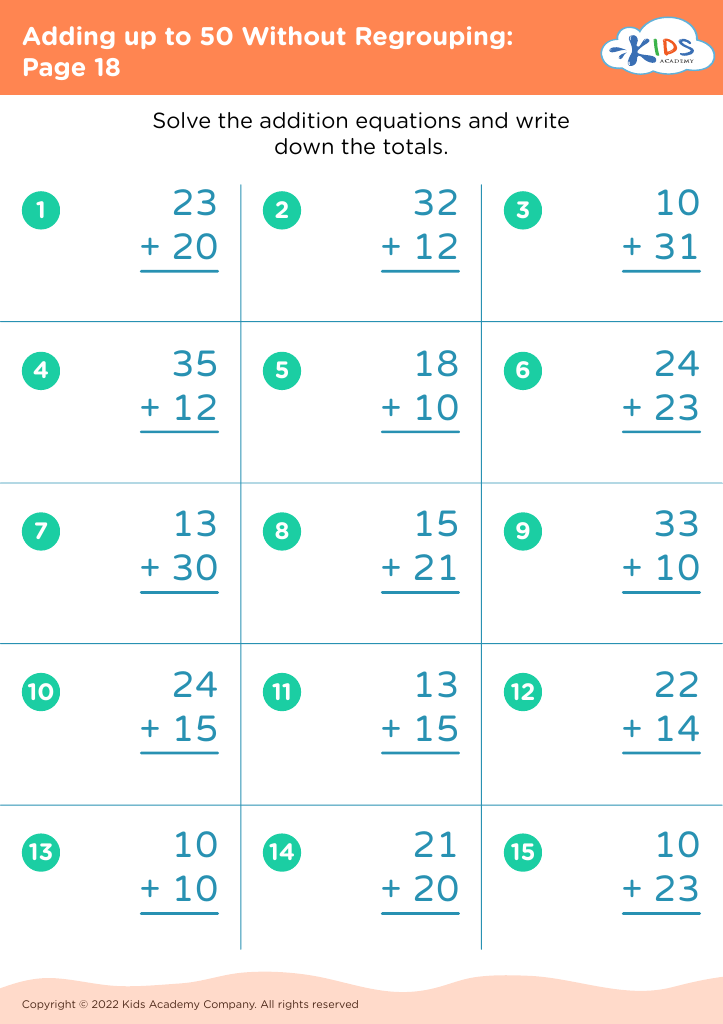
Adding up to 50 Without Regrouping: Page 18
Worksheet
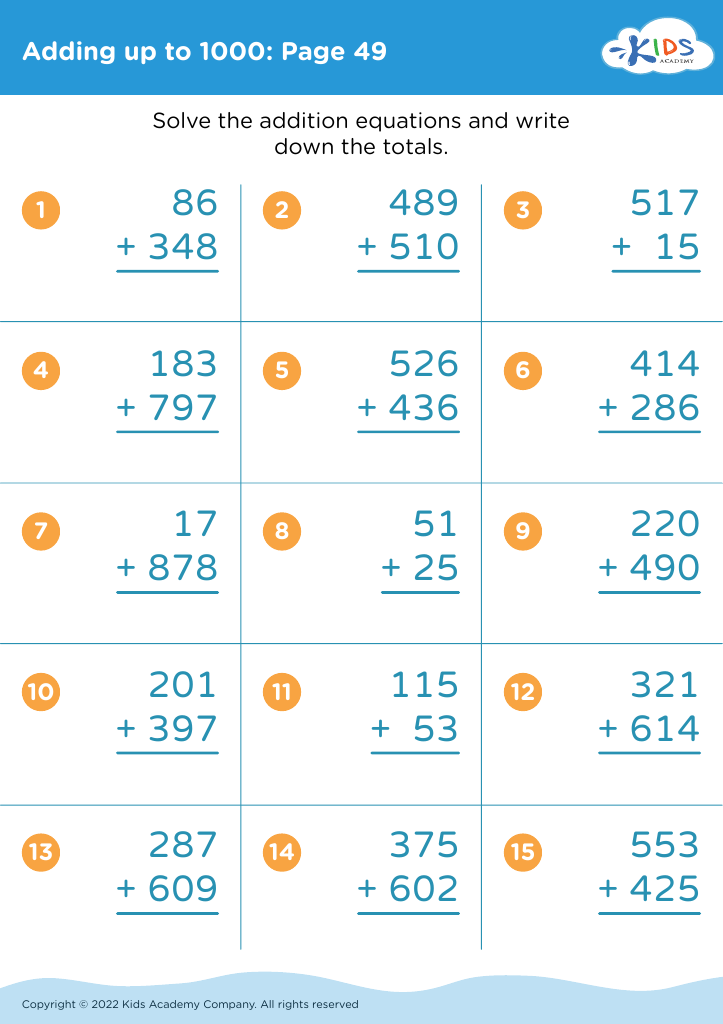
Adding up to 1000: Page 49

Adding up to 1000: Page 49

Adding up to 1000: Page 49
Worksheet
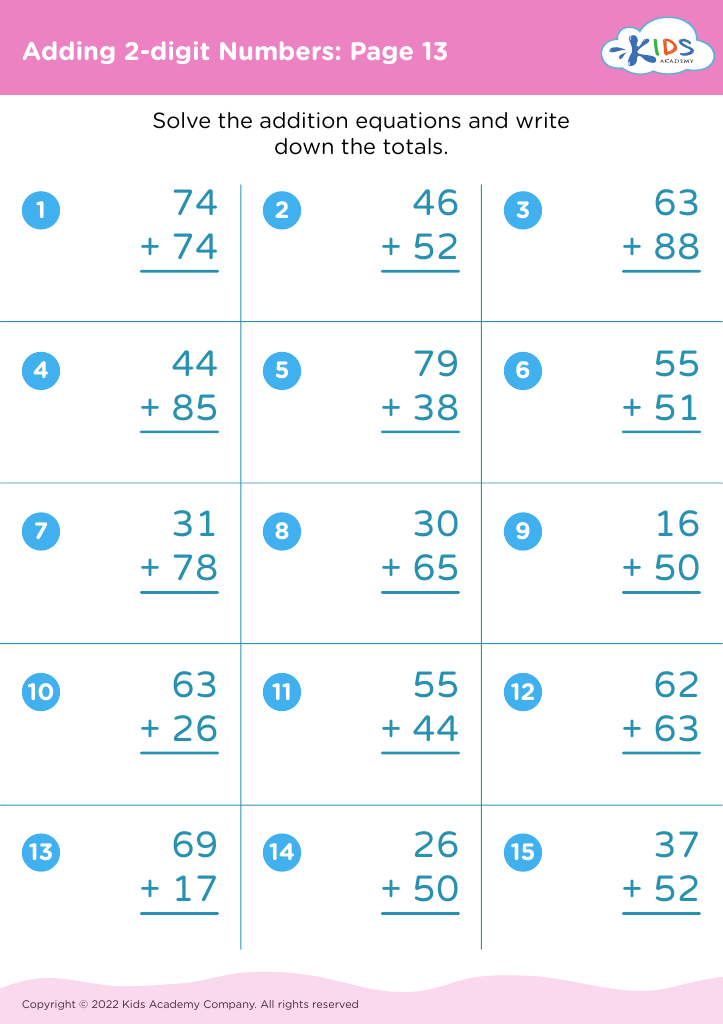
Adding 2-digit Numbers: Page 13

Adding 2-digit Numbers: Page 13

Adding 2-digit Numbers: Page 13
Worksheet
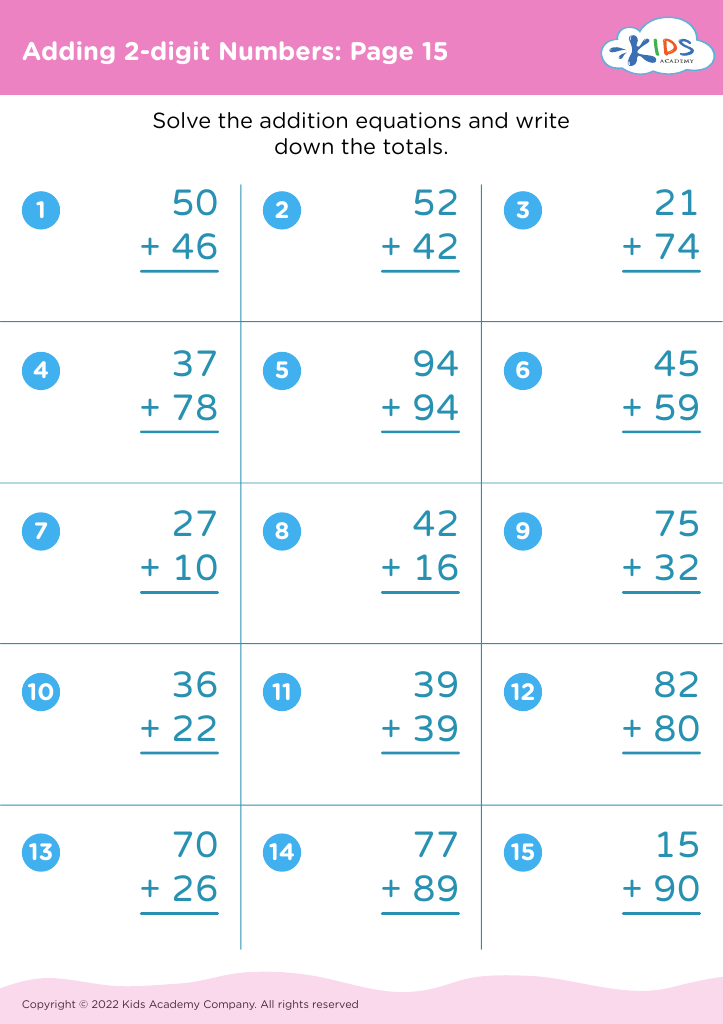
Adding 2-digit Numbers: Page 15

Adding 2-digit Numbers: Page 15

Adding 2-digit Numbers: Page 15
Worksheet
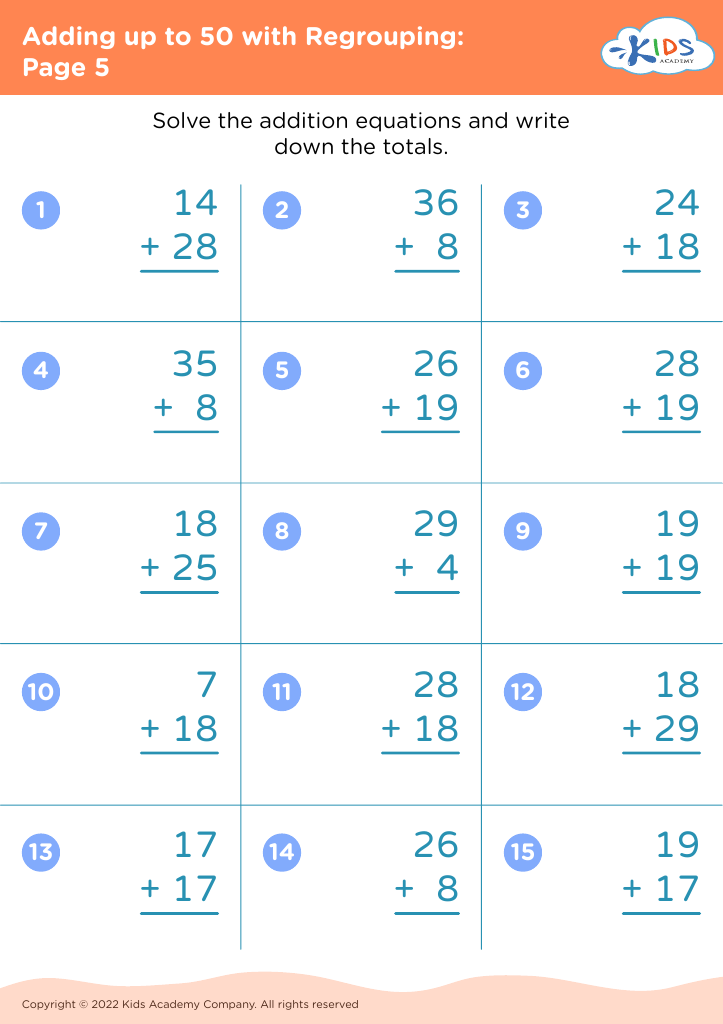
Adding up to 50 with Regrouping: Page 5
Worksheet


Understanding fractions at an early age is crucial for children ages 7-9 for several reasons. First, it lays the groundwork for future math concepts. Fractions are essential in more advanced mathematics including algebra, geometry, and calculus. Grasping fractions early makes these subjects more approachable later on.

Second, fractions have real-life applications. From cooking measurements to dividing a pizza among friends, fractions are everywhere. Learning how to handle fractions helps children appreciate the relevance of math in daily life.

Third, understanding fractions boosts problem-solving skills. It involves abstract thinking, comparative analysis, and this lays the foundation for logical reasoning needed in all academic subjects.

Lastly, early success in fractions, a commonly challenging topic, can build a child's confidence. Mastery in this area can create a positive attitude towards math and can diminish math anxiety, fostering a growth mindset.

Therefore, parents and teachers should prioritize teaching fractions effectively and engagingly. Support tools like visual aids, interactive games, and hands-on activities can make learning fractions enjoyable and comprehensible, ensuring that children not only succeed now but are also prepared for future academic challenges. In turn, this strengthens their overall cognitive development and supports lifelong learning.