Understanding Perimeter Math Worksheets for Ages 7-9
3 filtered results
-
From - To
Explore our "Understanding Perimeter Math Worksheets for Ages 7-9," designed to make learning fun and effective! These engaging activities introduce young learners to the concept of perimeter through interactive exercises that reinforce measuring and calculating boundaries of various shapes. Each worksheet focuses on hands-on practice to build confidence and mastery in perimeter calculation. Perfect for classroom use or homework, our resources cater to different learning styles, ensuring every child grasps this fundamental math skill. Empower your child with essential mathematical knowledge using our expert-crafted worksheets, and watch their skills flourish! Download now and get started on the path to success!
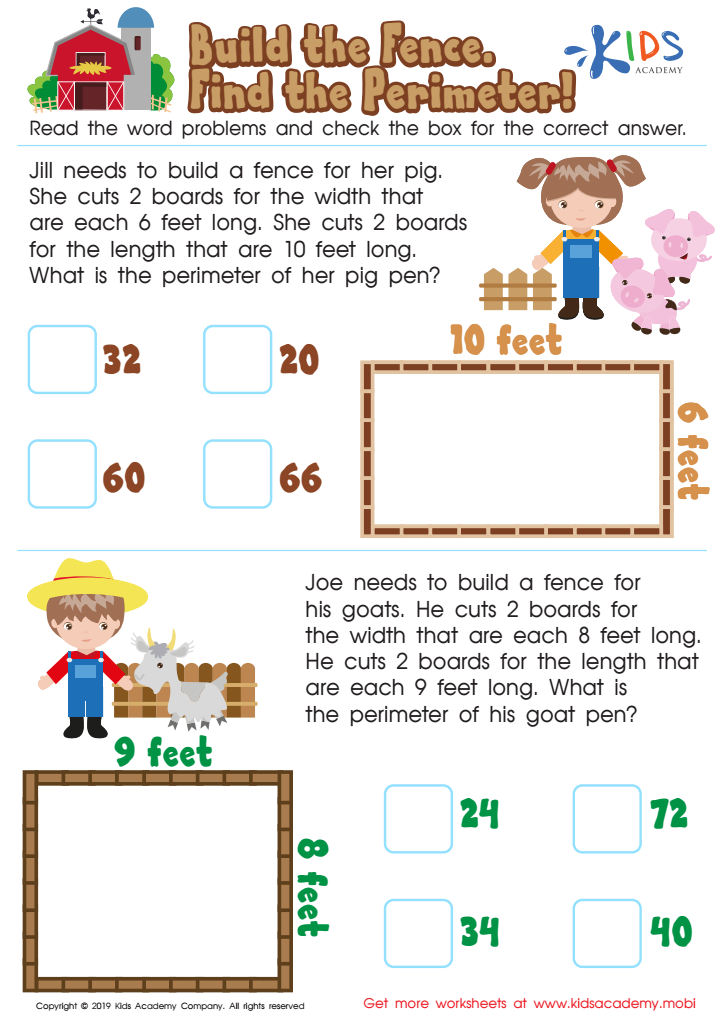
Build the Fence, Find the Perimeter Worksheet
 Assign to My Students
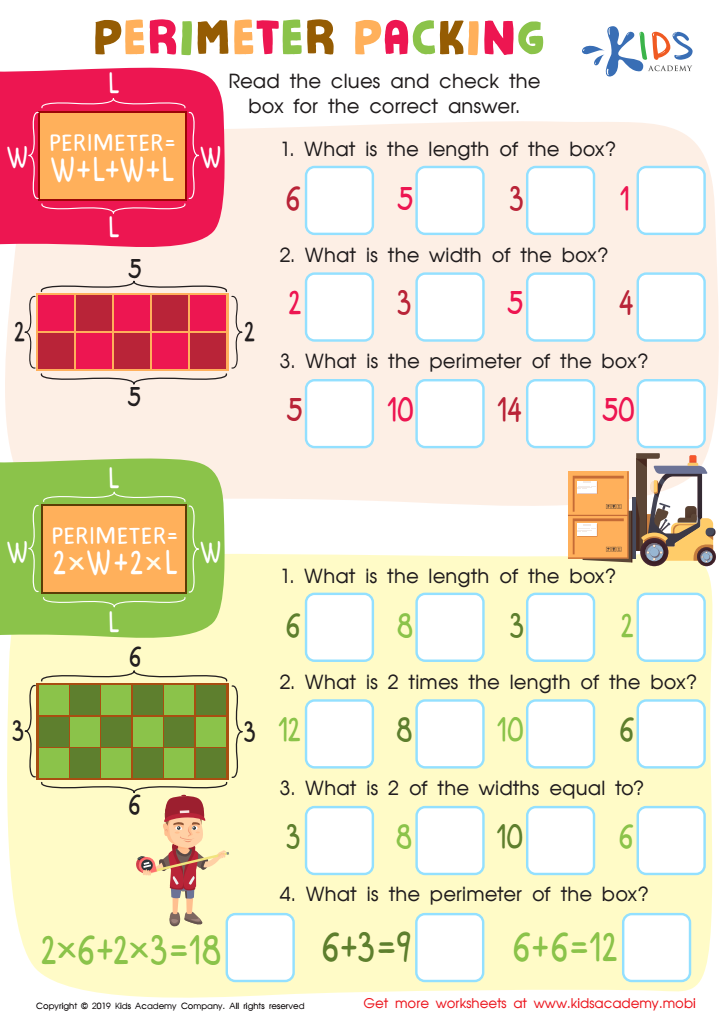
Perimeter Parking Worksheet
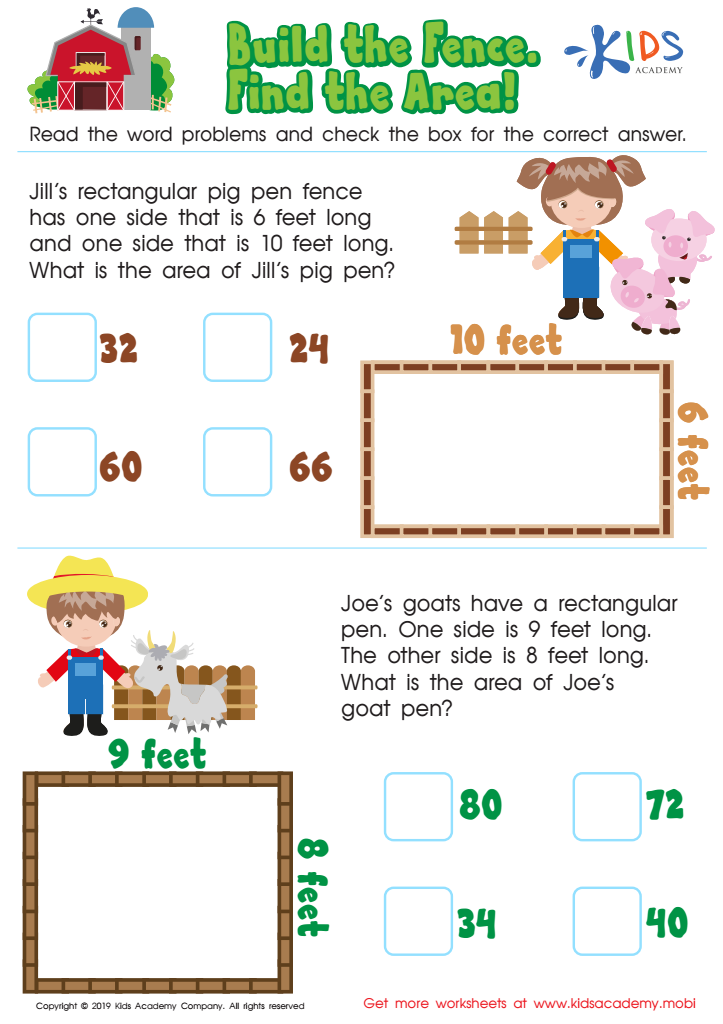
Build the Fence, Find the Area Worksheet






Understanding perimeter math is crucial for children aged 7-9 for several reasons that can significantly impact their overall learning and development. At this formative age, children are building foundational mathematical skills that will serve as the bedrock for more complex concepts later on. Learning about the perimeter allows young students to grasp practical applications of addition and measurement, reinforcing these basic arithmetic skills in a hands-on, engaging manner.
Perimeter tasks, such as measuring the boundaries of simple shapes, lay the groundwork for spatial awareness and geometry. Children develop the ability to visualize and understand the properties of different shapes, which is essential for many future mathematical concepts. Moreover, these exercises enhance problem-solving skills as students learn to strategize and find solutions.
From a real-world perspective, understanding perimeter concepts helps children in everyday situations, such as knowing how much material is needed to fence a yard or how to frame a picture. Encouraging the ability to relate math to tangible, practical activities makes the learning process enjoyable and meaningful. For parents and teachers, nurturing this aspect of mathematical literacy can foster a lifelong appreciation and understanding of math, along with boosting the child’s self-confidence in their ability to tackle mathematical challenges.








