Number Sequencing Skip Counting Worksheets for Ages 7-9
4 filtered results
-
From - To
Unlock the world of mathematics with our Number Sequencing Skip Counting Worksheets designed specifically for children ages 7-9! These engaging worksheets provide a fun and interactive way for young learners to master the concept of skip counting, a fundamental skill that supports number sense and lays the groundwork for more advanced math topics. Featuring visually stimulating designs and a variety of exercises, kids will enhance their ability to recognize number patterns, improve their counting speed, and build confidence in their math skills. Perfect for classroom or home use, our worksheets are tailored to ignite the joy of learning in every child!
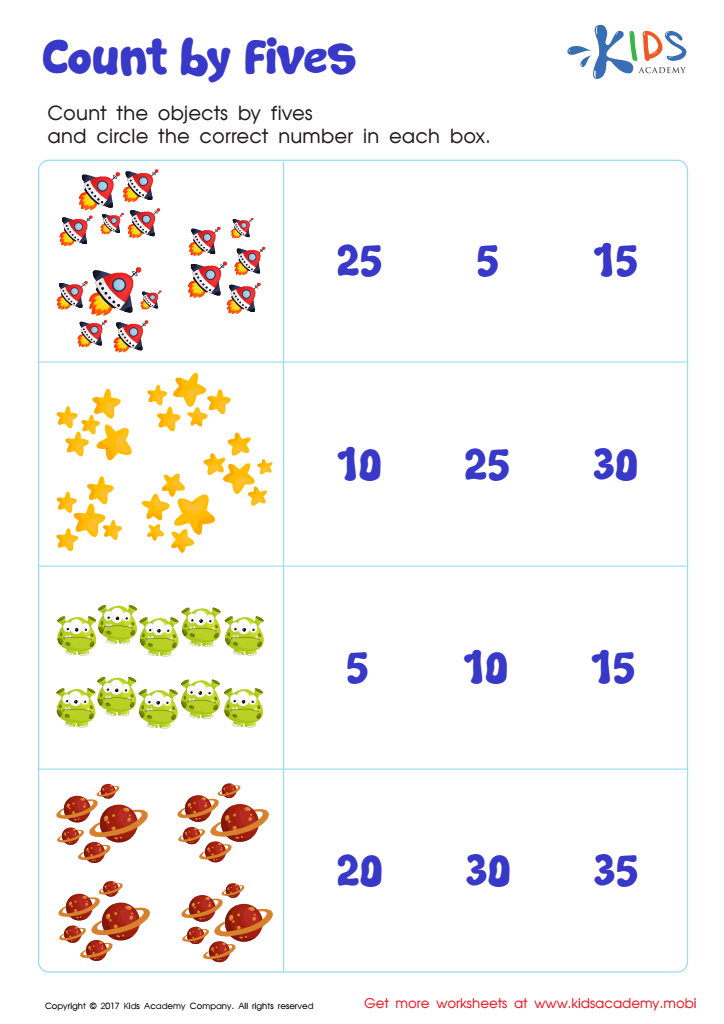
Skip Counting by 5s: Space Math Printable
 Assign to My Students
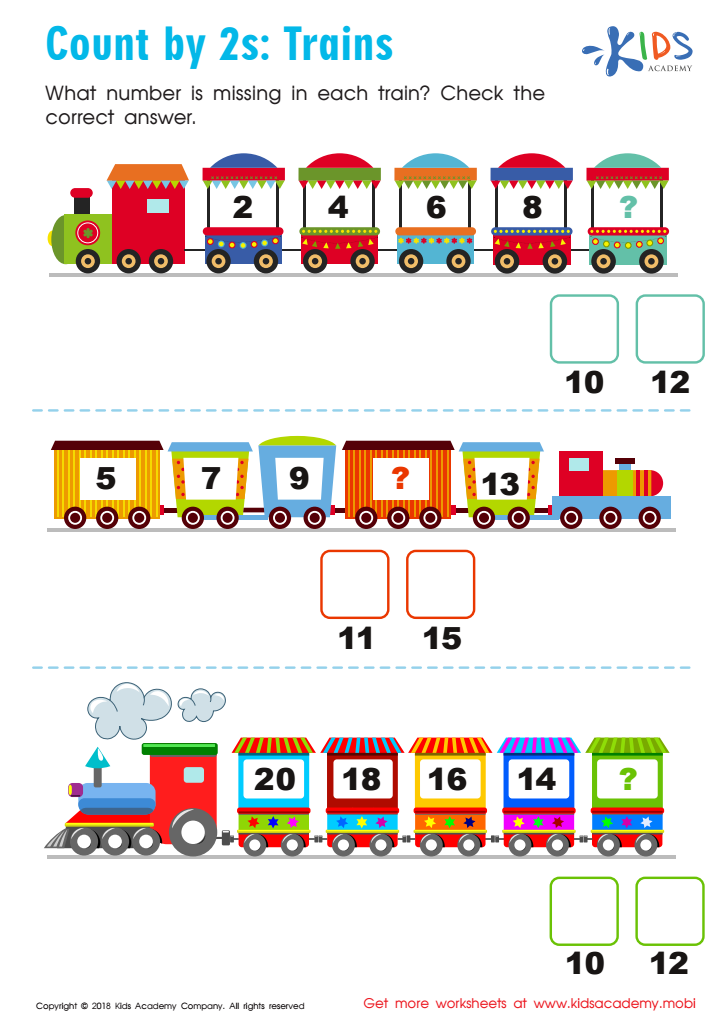
Count by 2's: Trains Worksheet
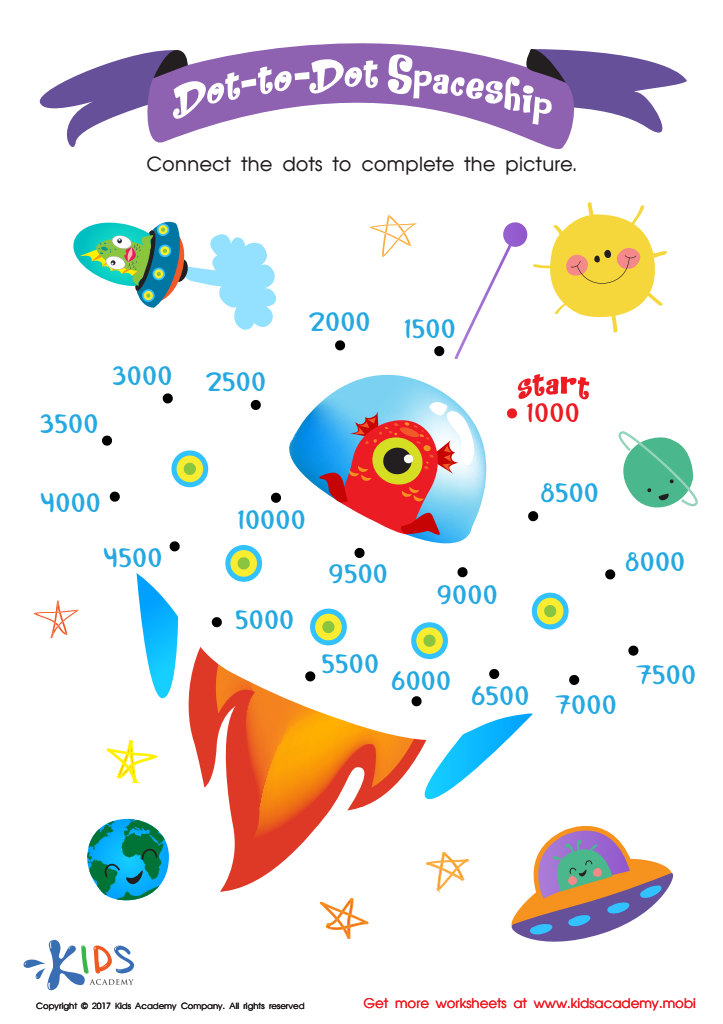
Dot to Dot Worksheet for 3rd Grade
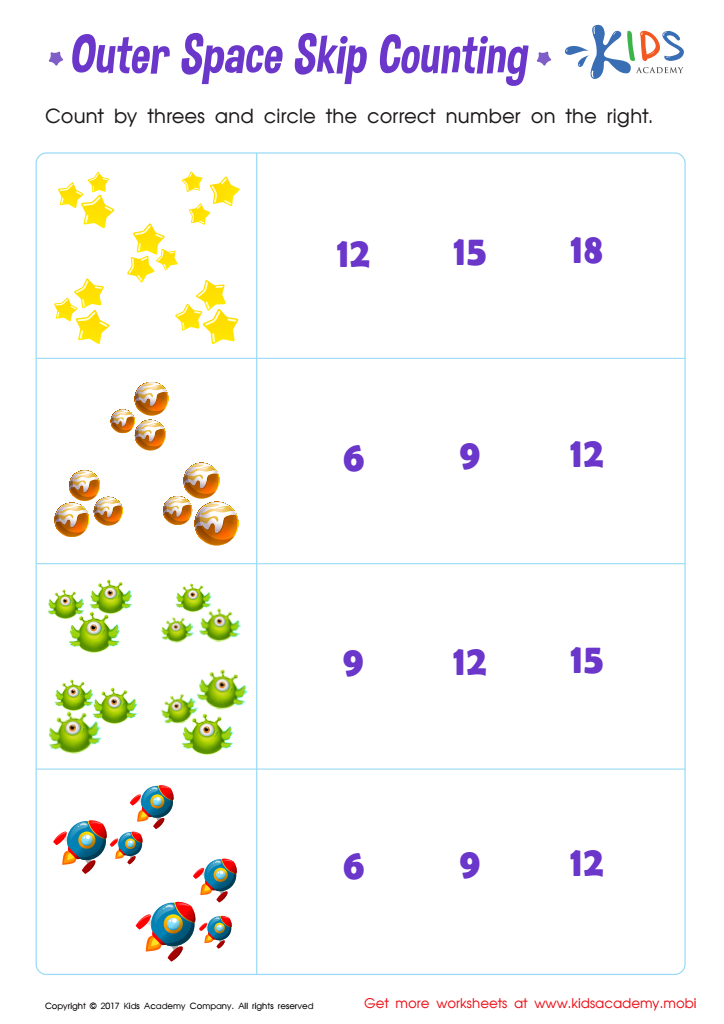
Skip Counting by 3s: Outer Space Skip Counting Printable







.jpg)
Number sequencing and skip counting are vital foundational skills for children aged 7-9. These skills play a crucial role in their overall mathematical development and future academic success.
Firstly, number sequencing helps children understand the order of numbers, which is important for mathematical operations such as addition, subtraction, and even more complex concepts like fractions and decimals. By mastering sequencing, children can better grasp patterns within mathematics, enhancing their problem-solving abilities.
Secondly, skip counting—counting by twos, threes, fives, or tens—develops a child's ability to recognize number patterns and relationships. This skill is particularly useful for simplifying calculations, such as quick estimations or solving multiplication problems, ultimately promoting number fluency.
Furthermore, fostering mastery in these areas builds confidence and a positive attitude towards math. Children who feel competent in handling numbers are more likely to engage in learning and tackle more challenging mathematical concepts.
In addition, skip counting has real-world applications, like helping with telling time, understanding money, or organizing data. Hence, parents and teachers should prioritize number sequencing and skip counting as essential elements of mathematical education, setting the stage for future learning and practical application.








