Understanding skip-counting Skip Counting Worksheets for Ages 7-9
3 filtered results
-
From - To
Discover the importance of skip-counting with our engaging worksheets designed for kids aged 7-9. In our “Understanding Skip-Counting” section, students will enhance their mathematical skills by practicing counting by twos, fives, and tens. These engaging activities help build number fluency, improve counting efficiency, and lay a solid foundation for future math concepts. Our printable worksheets are crafted to spark interest, allowing children to practice skip-counting in a fun and interactive way. Join us in helping your child master this essential math skill with our colorful and instructional resources that cater to young learners' needs! Perfect for parents and educators alike.
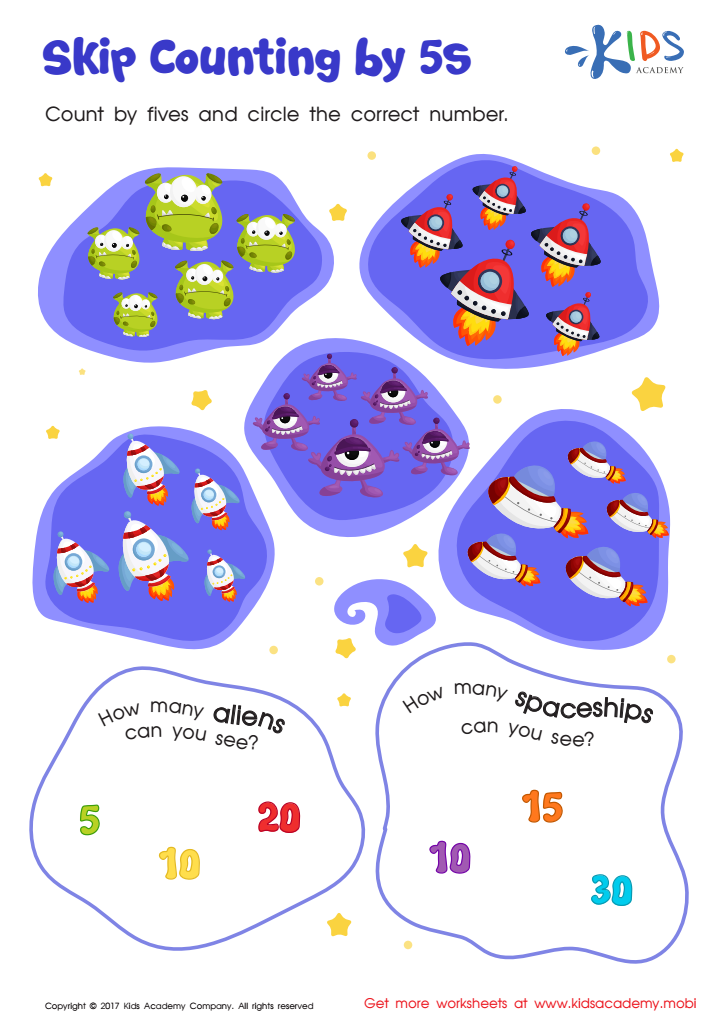
Skip Counting by 5s: Aliens and Spaceships Printable
 Assign to My Students
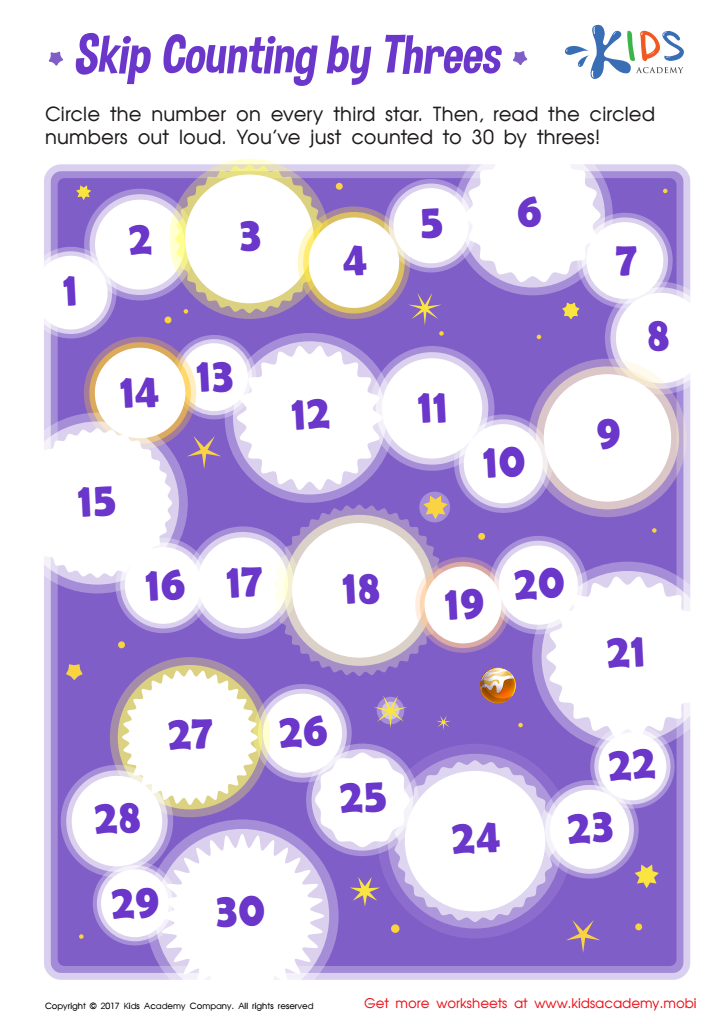
Skip Counting By Three Printable
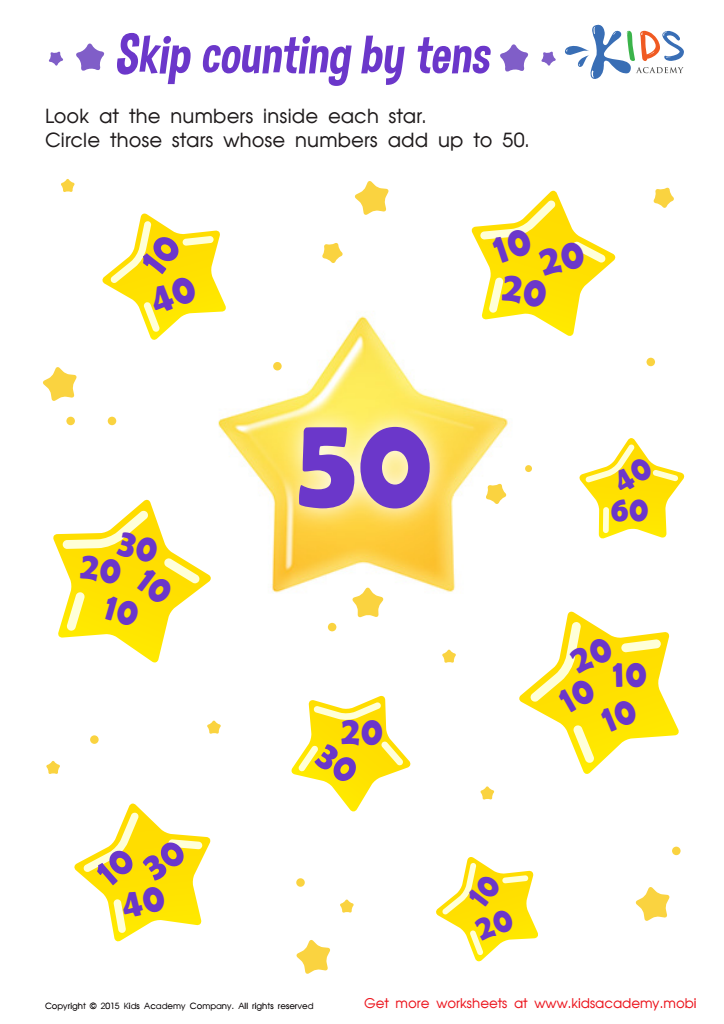
Learn Dozens: Skip Counting by Tens Printable








Skip counting is a foundational math skill that plays a crucial role in the fluency of number sense for children ages 7-9. Understanding skip counting allows students to easily recognize patterns in numbers and enhances their ability to perform basic arithmetic operations such as addition and multiplication.
For parents and teachers, promoting skip counting is vital for several reasons. First, it lays the groundwork for multiplication; by skip counting by twos, fives, or tens, kids develop an intuitive understanding of multiplication as repeated addition. This understanding boosts confidence and competence in later mathematics, including factors, multiples, and problem-solving.
Furthermore, skip counting enhances number sense—students begin to see numbers not in isolation but in relation to one another, which fosters critical thinking and analytical skills. It encourages mental math strategies, reducing reliance on calculators and allowing for smoother mathematical reasoning.
Additionally, incorporating skip counting in daily activities can make learning engaging. Parents can turn skip counting into fun games or incorporate it into everyday situations like counting money or steps.
In summary, skip counting is a vital skill that transforms learning into a more impactful and enjoyable experience, equipping children with the necessary tools for future mathematical challenges.








