Problem-Solving Skills Two-step Word Problems Worksheets for Ages 7-9
12 filtered results
-
From - To
Introducing our Problem-Solving Skills Two-step Word Problems Worksheets for ages 7-9, designed to enhance young minds through engaging challenges. These worksheets help children develop critical thinking and analytical skills by solving practical, real-life problems. Each worksheet includes a variety of math scenarios requiring students to perform two calculations to reach the answer. Featuring vibrant illustrations and age-appropriate language, these tools support learning in a fun, educational manner. Perfect for classroom use or additional home practice, they aim to build confidence and mastery in tackling complex problems step-by-step. Foster essential math skills in a stimulating way today!
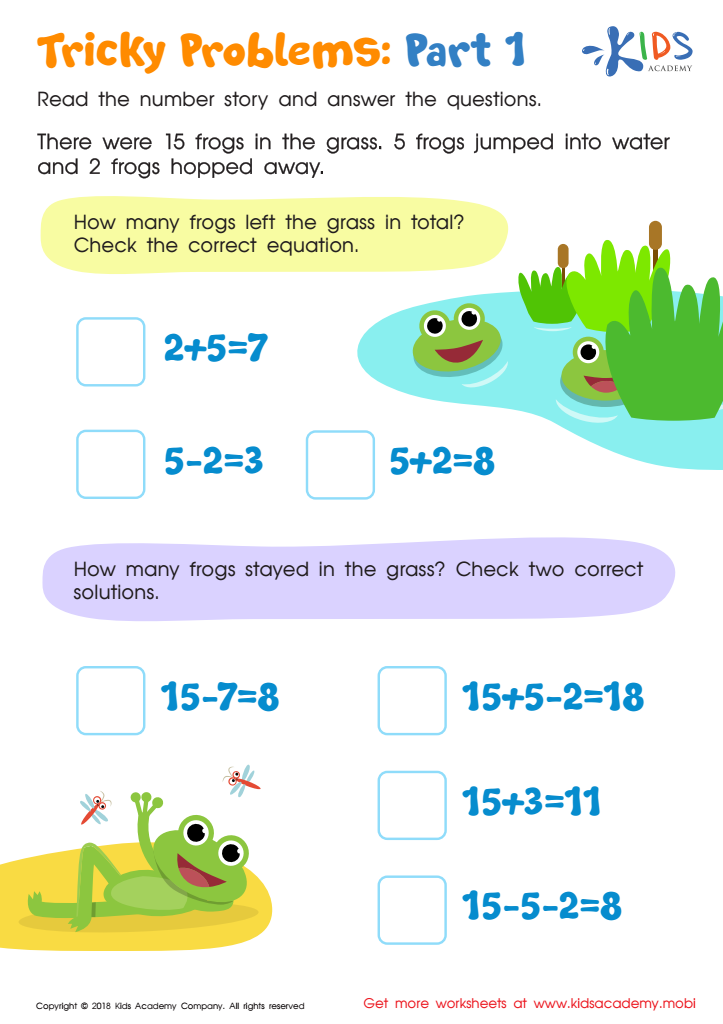
Tricky Problems Worksheet: Part 1
 Assign to My Students
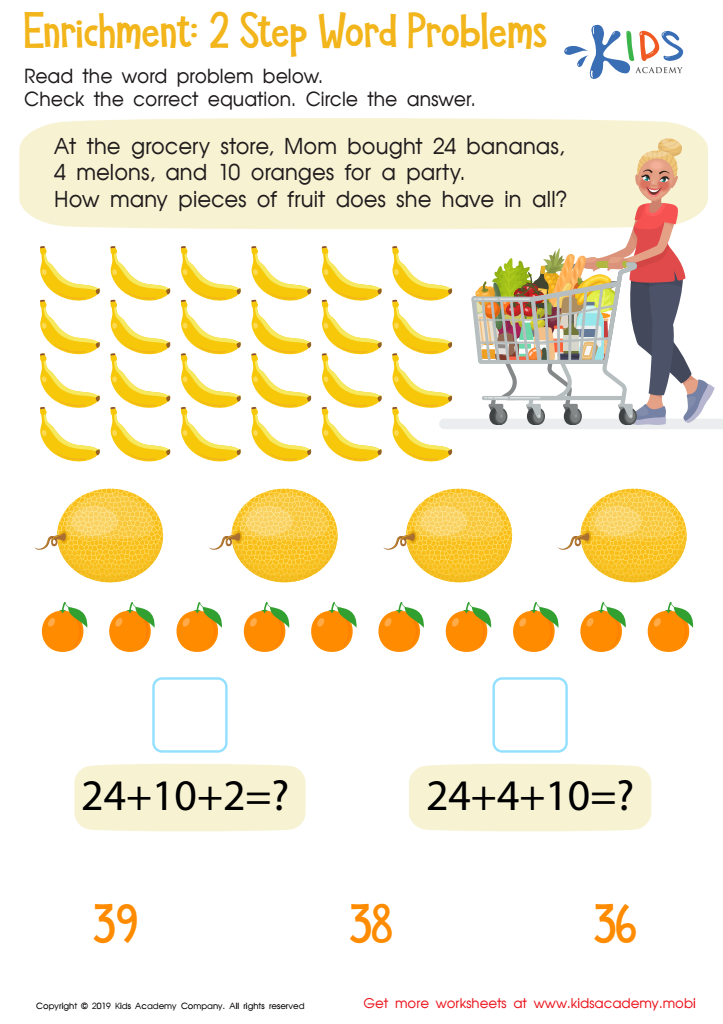
Enrichment -2 Step Word Problems Worksheet
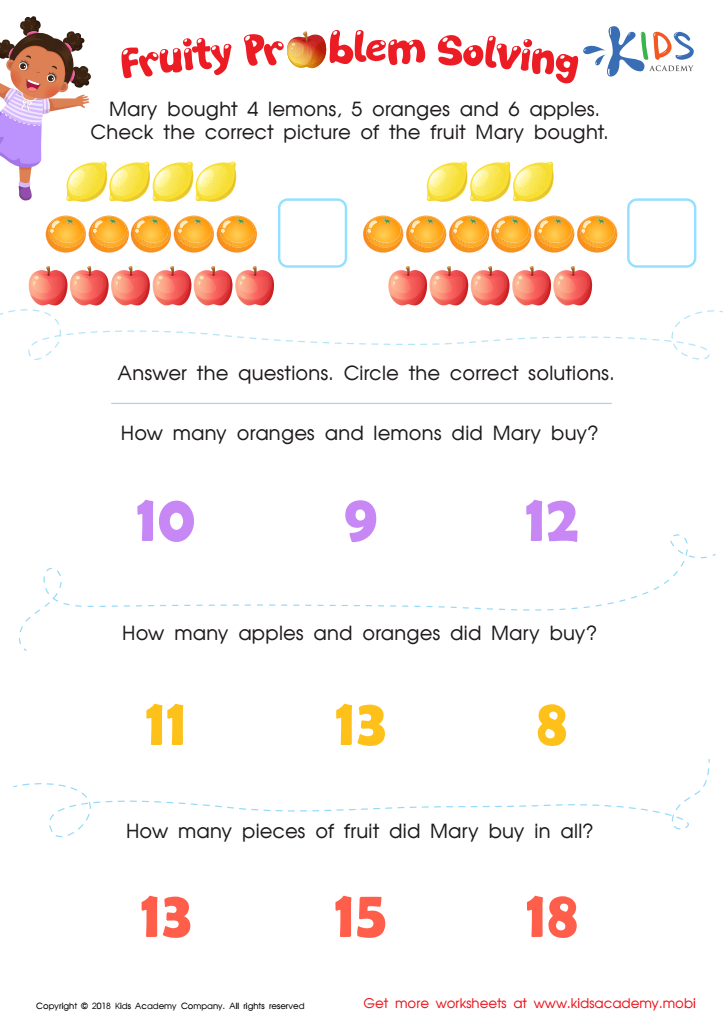
Fruity Problem Solving Worksheet
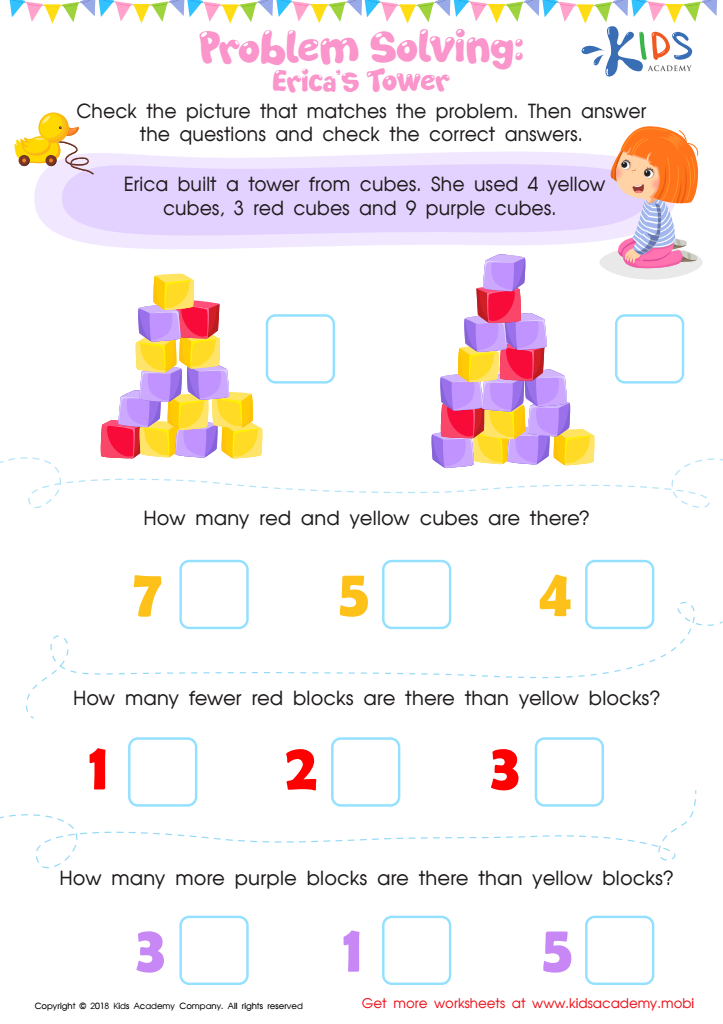
Problem Solving: Erica's Tower Worksheet
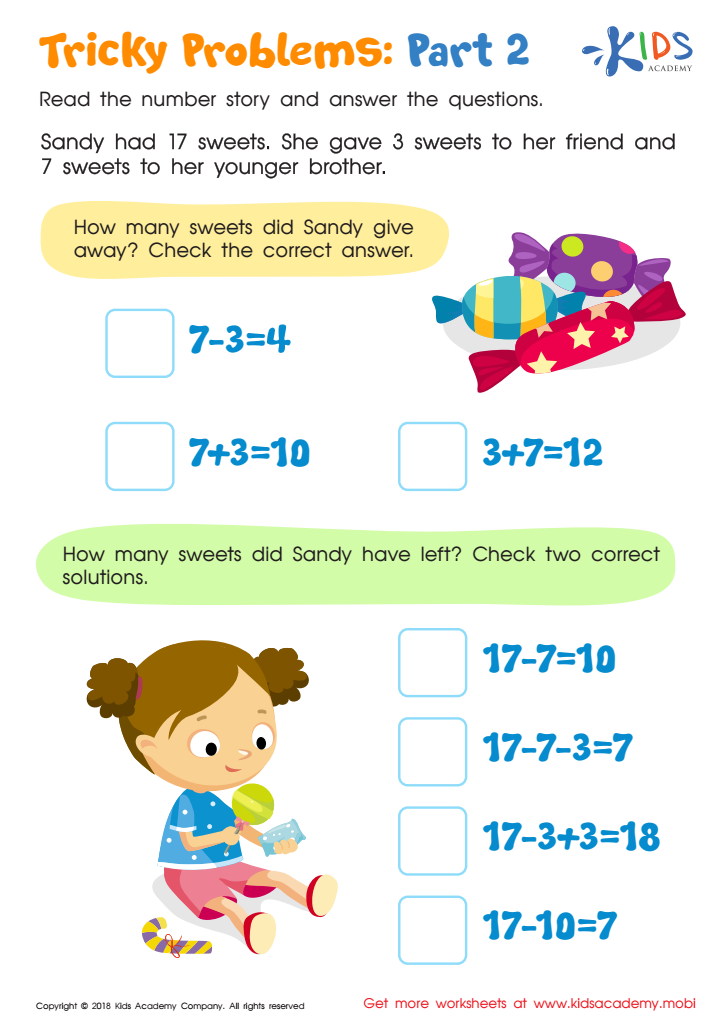
Tricky Problems Worksheet: Part 2
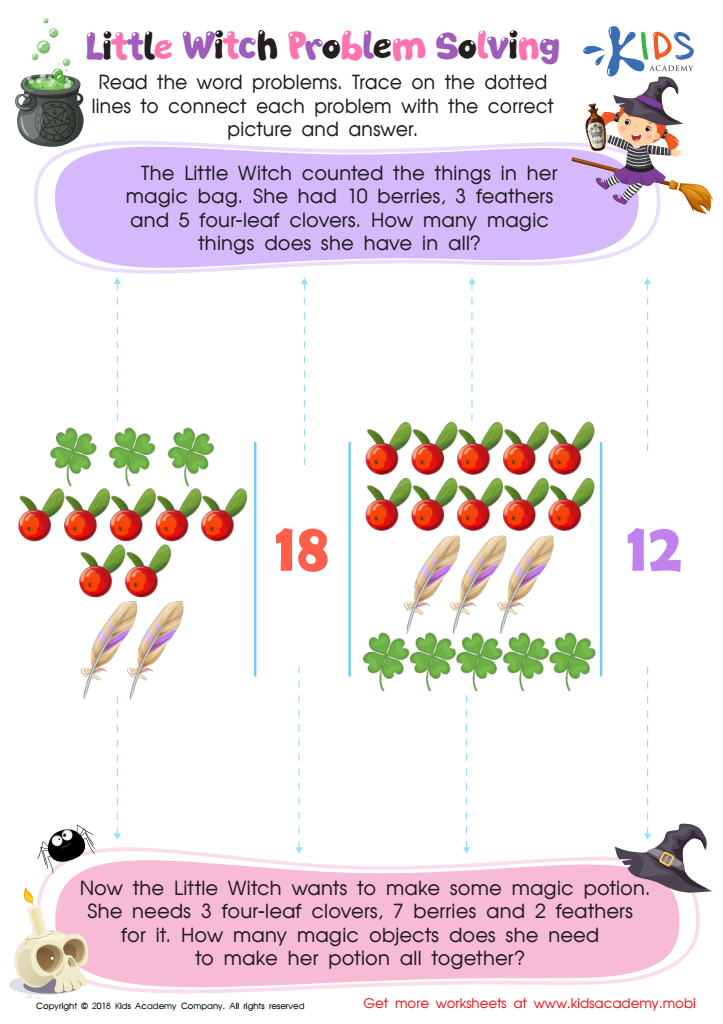
Little Witch Problem Solving Worksheet
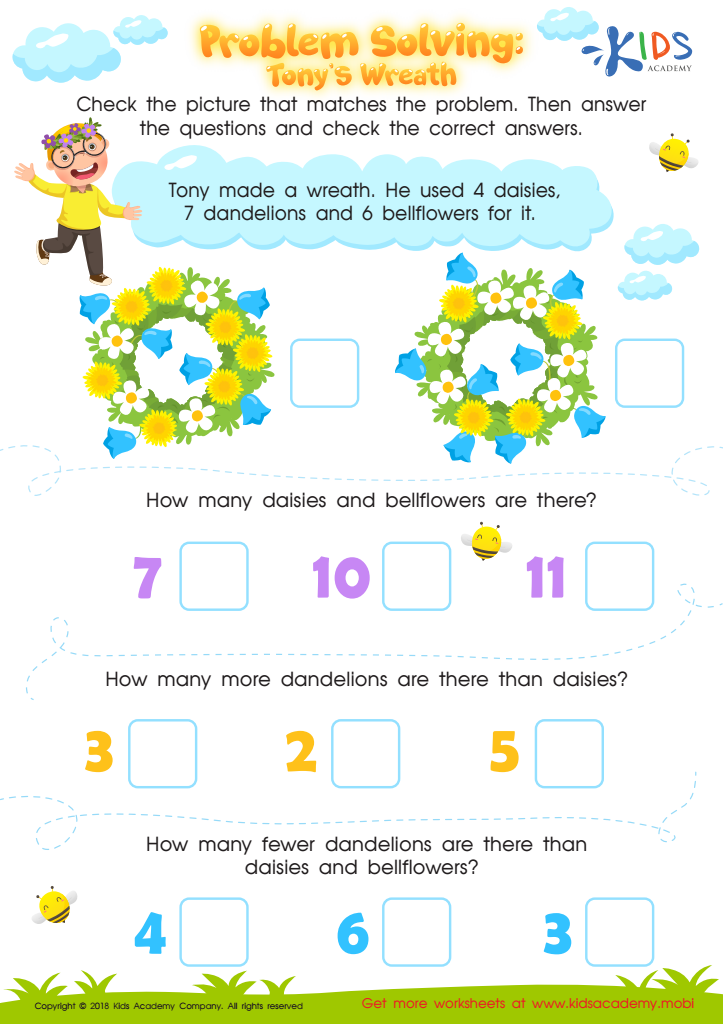
Problem Solving: Tony's Wreath Worksheet
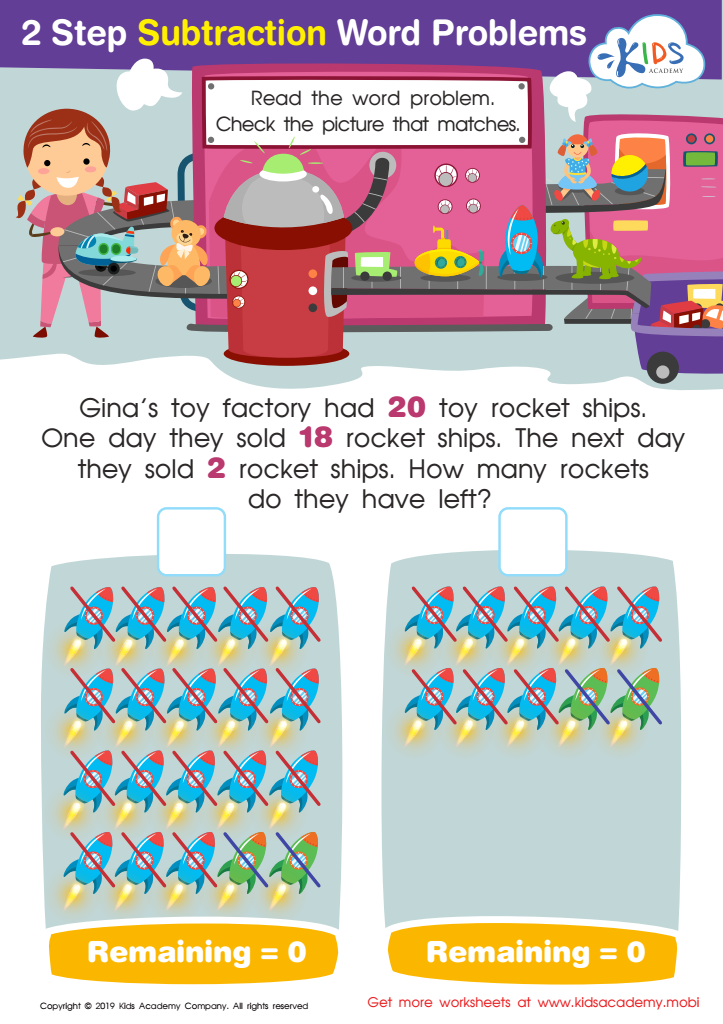
Step Subtraction Word Problems Worksheet
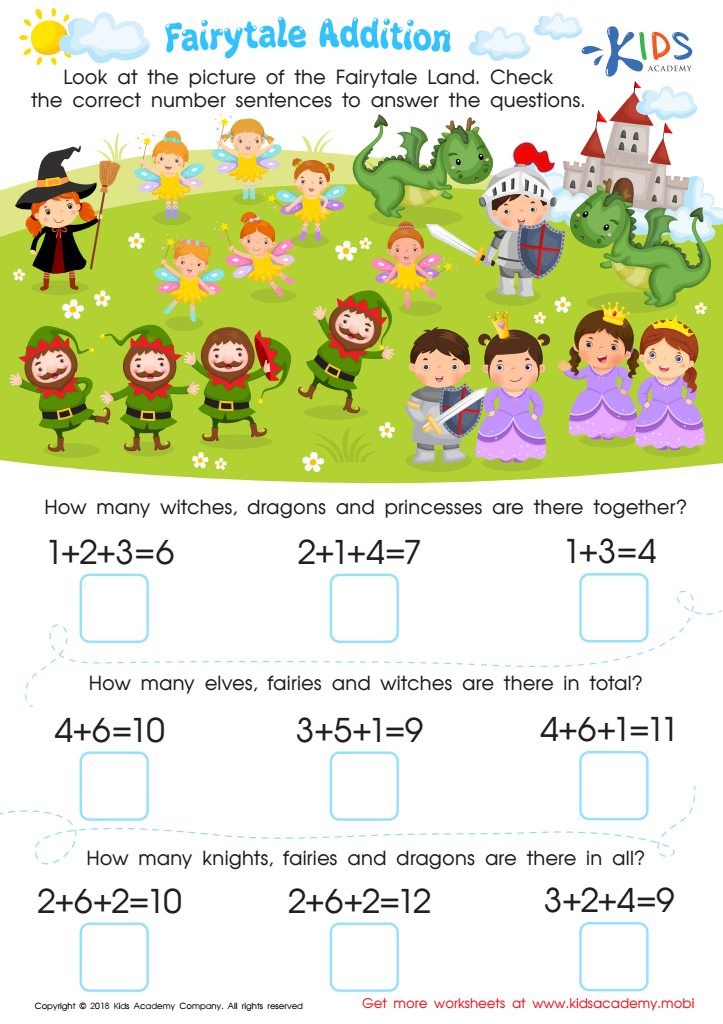
Fairytale Addition Worksheet
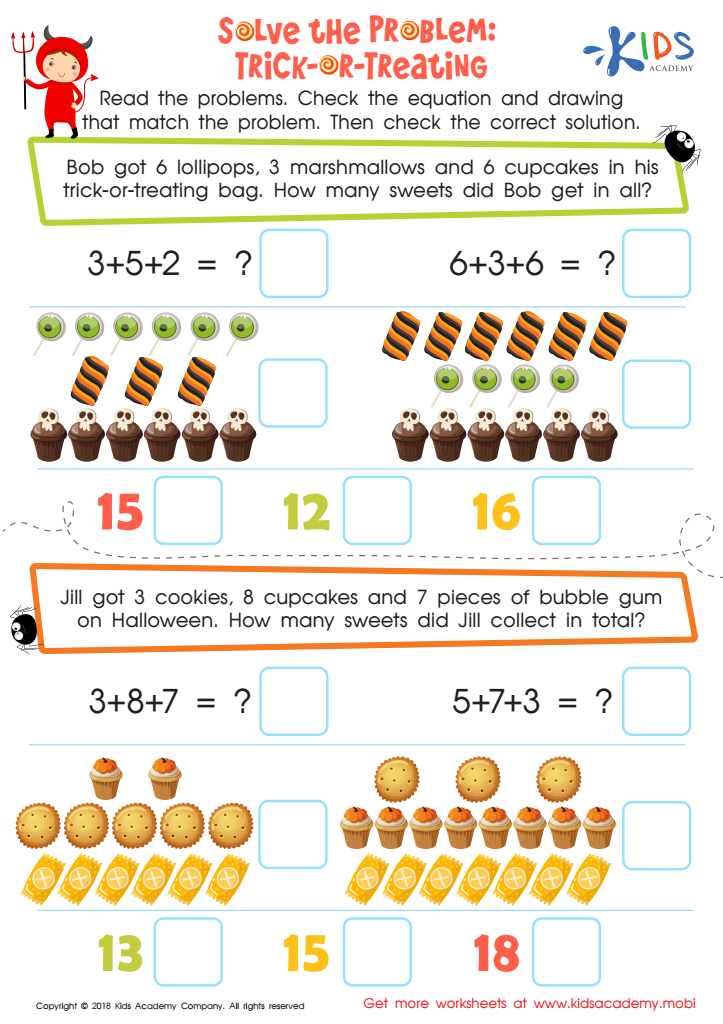
Solve the Problem: Trick–or–treating Worksheet
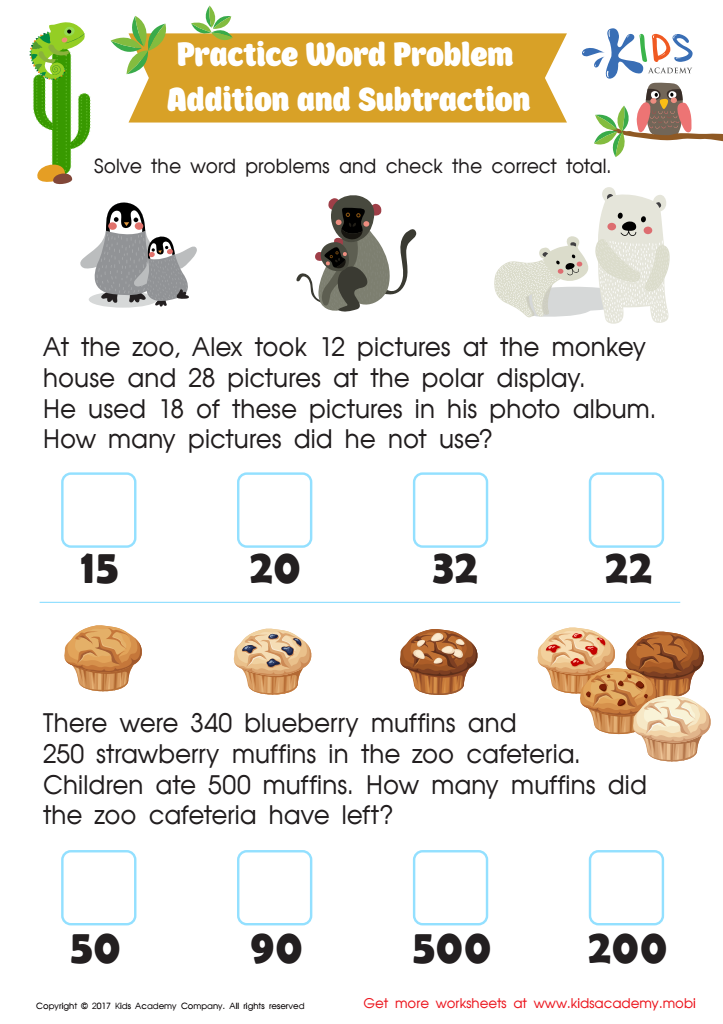
Addition and Subtraction: Word Problems Worksheet
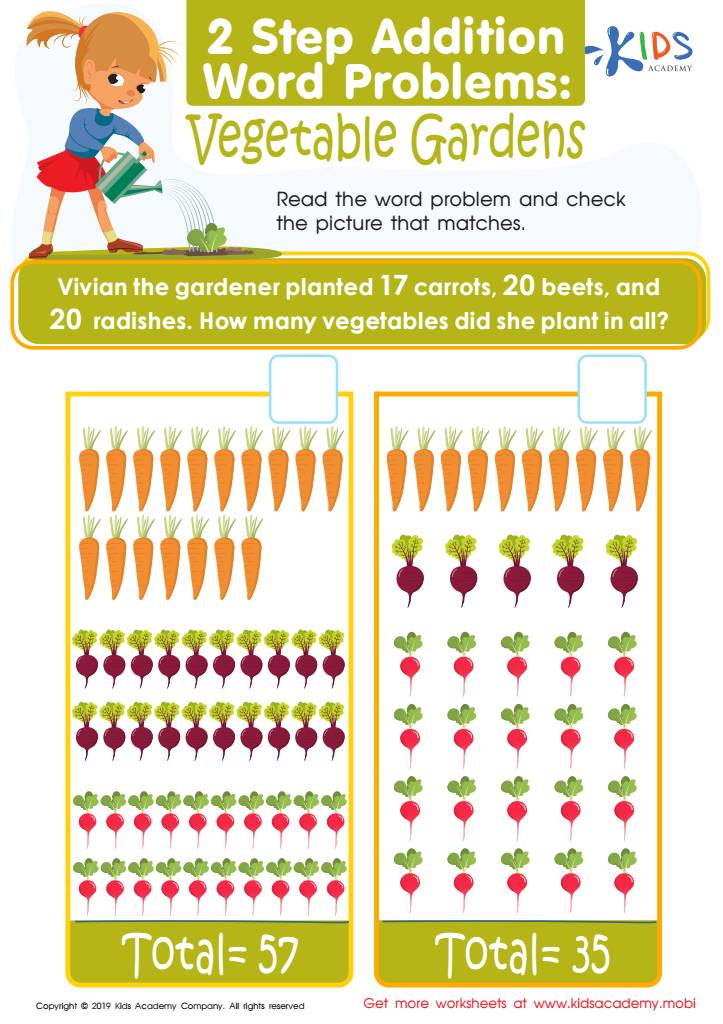
Vegetable Gardens Worksheet



Problem-solving skills, particularly in tackling two-step word problems, are essential for children aged 7-9 because they lay a vital foundation for critical thinking and future academic success. At this developmental stage, children are transitioning from simple arithmetic to more complex mathematical concepts. Two-step word problems offer an opportunity for young learners to apply their basic arithmetic knowledge in more elaborate scenarios that require them to think logically and sequentially.
Firstly, solving these word problems helps children to understand the importance of breaking down a problem into smaller, more manageable parts. This skill is not only critical in mathematics but is also valuable in real-life situations where complex tasks must be tackled step-by-step.
Secondly, two-step word problems enhance reading comprehension and the ability to extract relevant information. Children learn to identify key details and dismiss extraneous data, thus improving their focus and precision.
Furthermore, these problems promote persistence and resilience. Not every attempt will result in an immediate answer, teaching children the importance of perseverance and adaptability.
Investing in these skills early ensures that students build a robust intellectual toolkit that benefits them in various subjects and everyday decision-making processes. For parents and teachers, fostering these abilities can significantly boost a child's confidence, academic performance, and enthusiasm for learning.