Cognitive Development Word Problems Worksheets for Ages 7-9
4 filtered results
-
From - To
Boost your child's cognitive development with our engaging Word Problems Worksheets tailored for ages 7-9! These thoughtfully designed activities enhance critical thinking and problem-solving skills, making math enjoyable and interactive. Each worksheet presents real-life scenarios that encourage kids to analyze information, apply mathematical concepts, and derive solutions independently. With a variety of themes and difficulty levels, learners will build confidence and develop a strong foundation in mathematics. Perfect for homework, classroom use, or extracurricular learning, our worksheets promote essential cognitive skills while keeping young minds challenged and entertained. Start nurturing your child's mathematical thinking today!
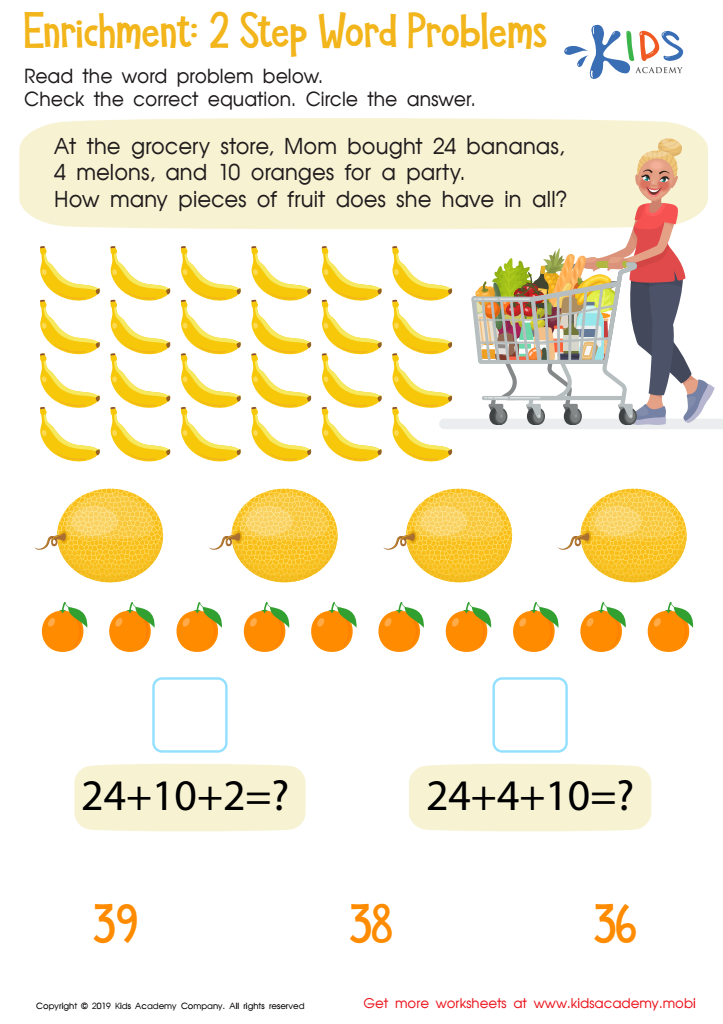
Enrichment -2 Step Word Problems Worksheet
 Assign to My Students
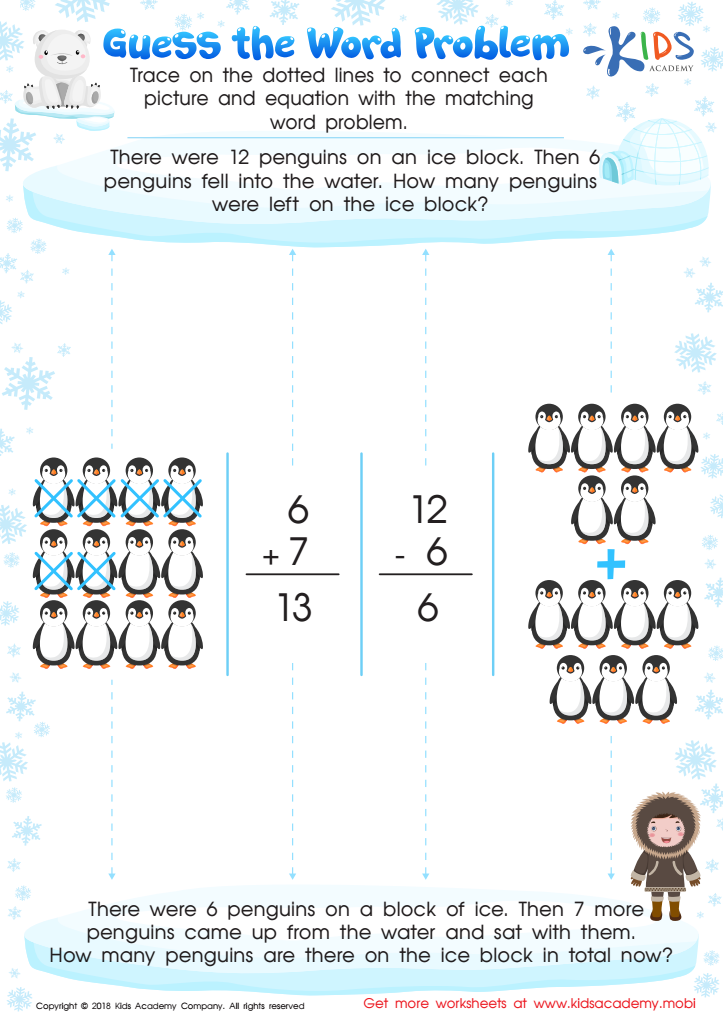
Guess the Word Problem Worksheet
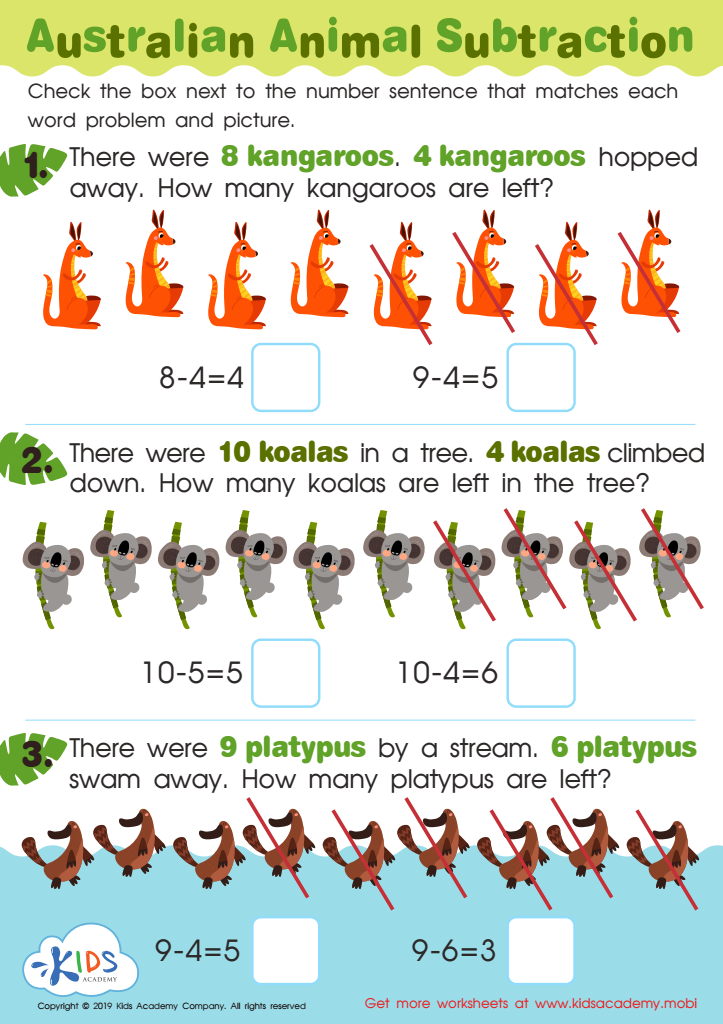
Australian Animal Subtraction Worksheet
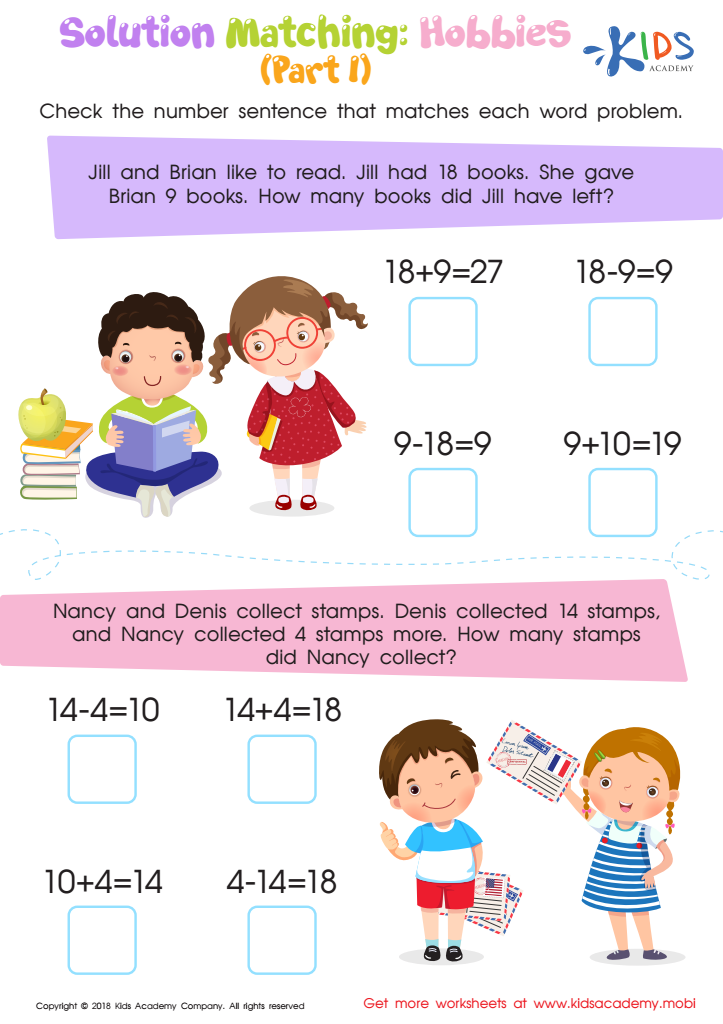
Solution Matching: Hobbies. Part 1 Worksheet








Cognitive development during ages 7-9 is a crucial stage in a child's learning journey, particularly in mastering problem-solving skills such as word problems. At this age, children begin to think more abstractly, transitioning from concrete operations to more complex mental processes. Engaging with word problems enhances these skills by encouraging children to analyze, interpret, and apply critical thinking.
Parents and teachers should care about cognitive development in this area for several reasons. Firstly, word problems foster mathematical reasoning; they require children to translate real-life scenarios into mathematical equations, promoting comprehension that extends beyond rote memorization. Secondly, they cultivate resilience, as tackling challenging problems encourages a growth mindset—students learn to embrace challenges and see errors as a pathway to learning.
Furthermore, word problems often intertwine language skills; comprehension and vocabulary enhancement occur as students read and interpret the problems. In essence, focusing on cognitive development through word problems equips children with essential skills for future academic challenges, enhances their overall cognitive abilities, and prepares them to navigate complex scenarios in everyday life. By prioritizing this focus, adults can significantly influence a child's confidence and competence in mathematics and critical thinking.








