Subtraction skills Word Problems Worksheets for Ages 7-9
6 filtered results
-
From - To
Enhance your child's subtraction skills with our engaging word problems worksheets designed specifically for ages 7 to 9. These thoughtfully crafted activities help young learners practice essential math concepts through relatable real-world scenarios, making subtraction both fun and educational. Our worksheets encourage critical thinking, improve problem-solving abilities, and build confidence in math. With a variety of difficulty levels, each worksheet challenges students to apply subtraction in different contexts, fostering a deeper understanding of the concept. Perfect for classroom or home use, these printable resources are an excellent way to reinforce learning and ensure your child masters their subtraction skills effectively.
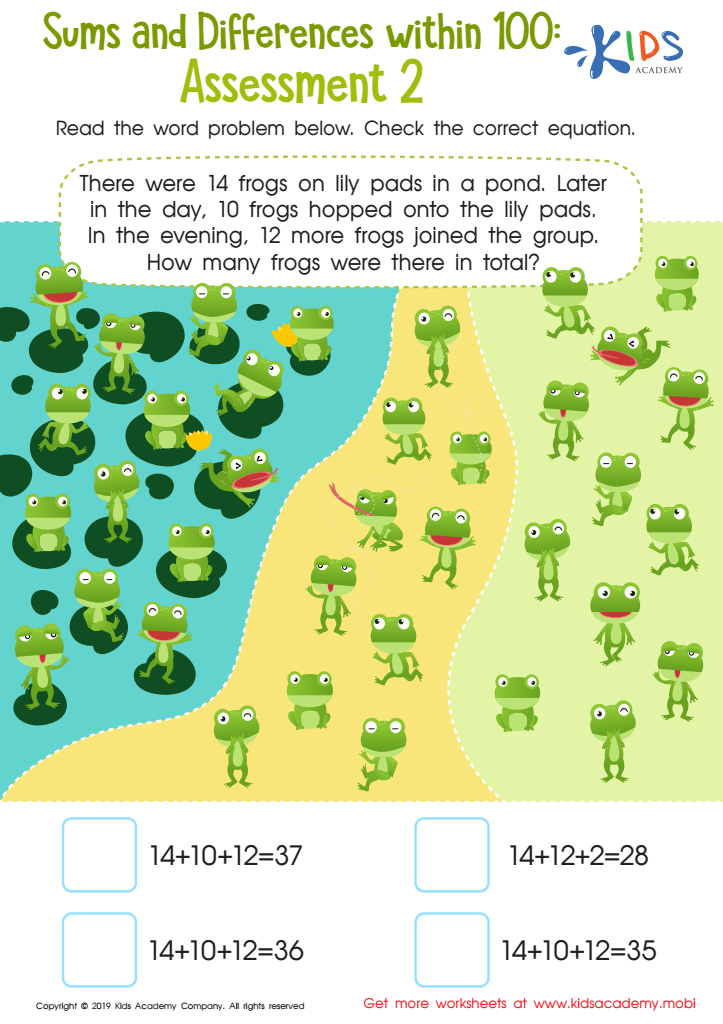
Sums and Differences Within 1 - Assessment 2 Worksheet
 Assign to My Students
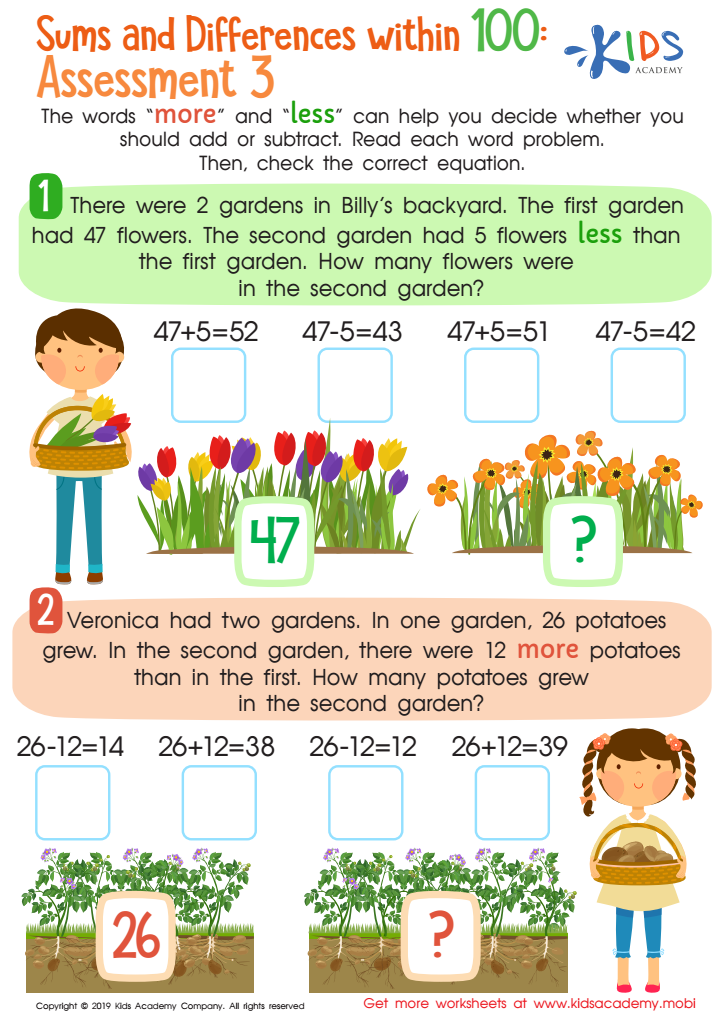
Sums and Differences Within 1 - Assessment 3 Worksheet
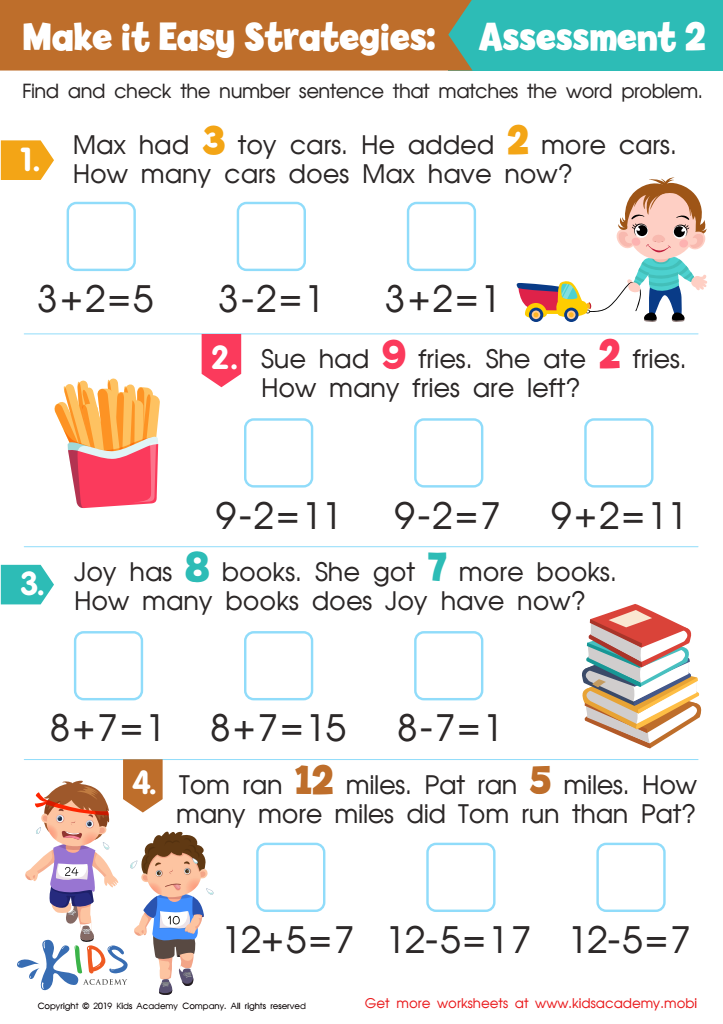
Make it Easy Strategies: Assessment 2 Worksheet
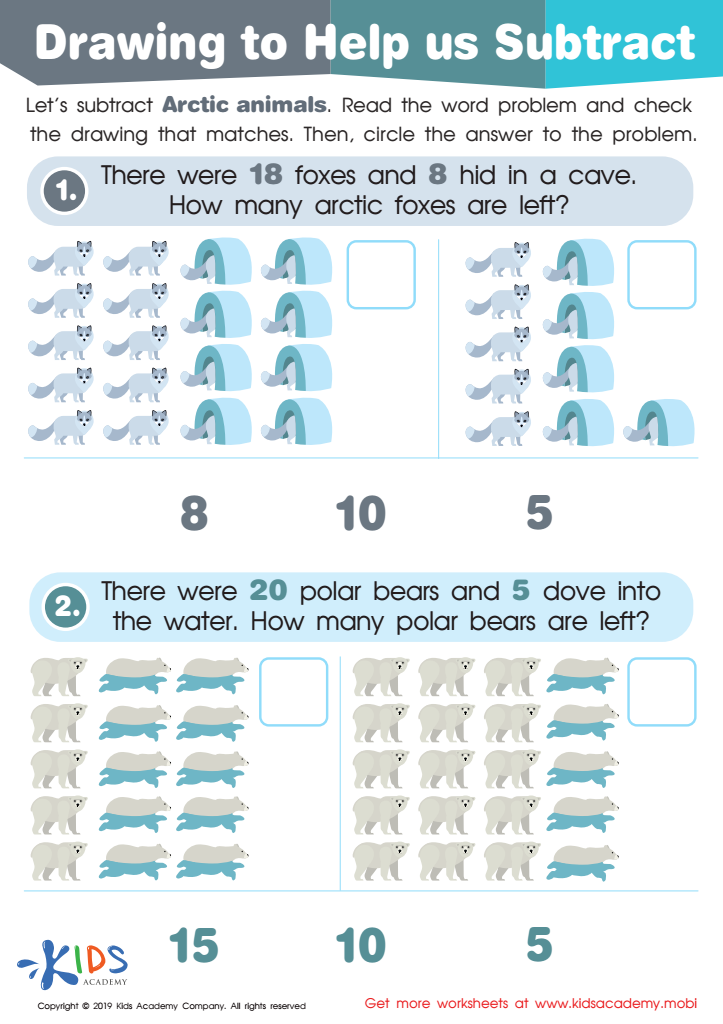
Drawing to Help Us Subtract Worksheet
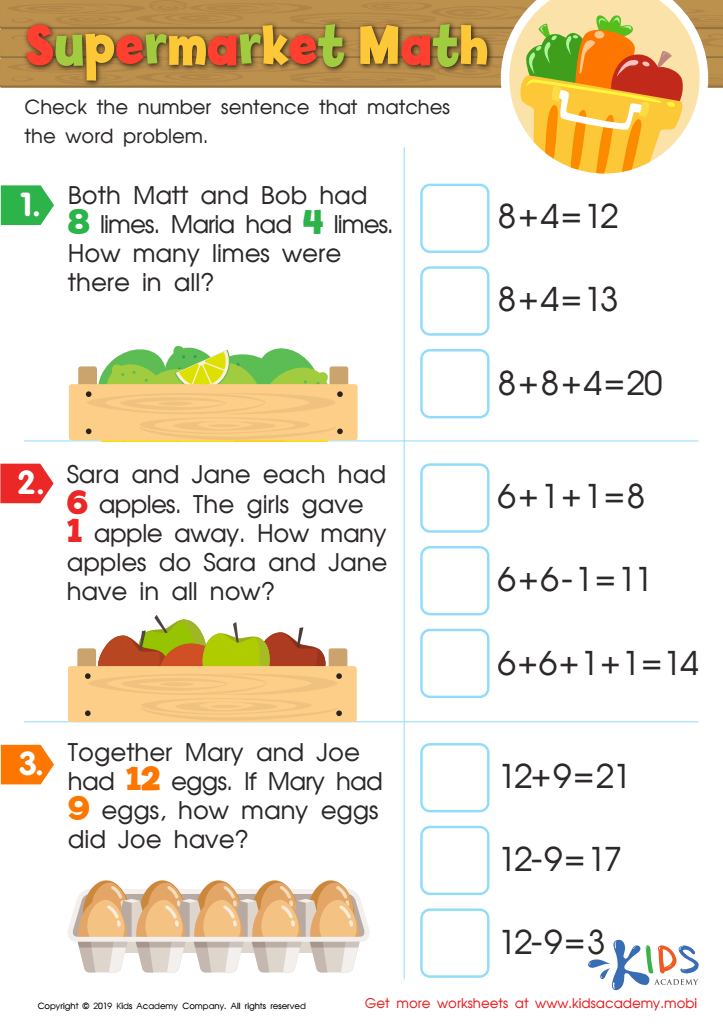
Supermarket Math Worksheet
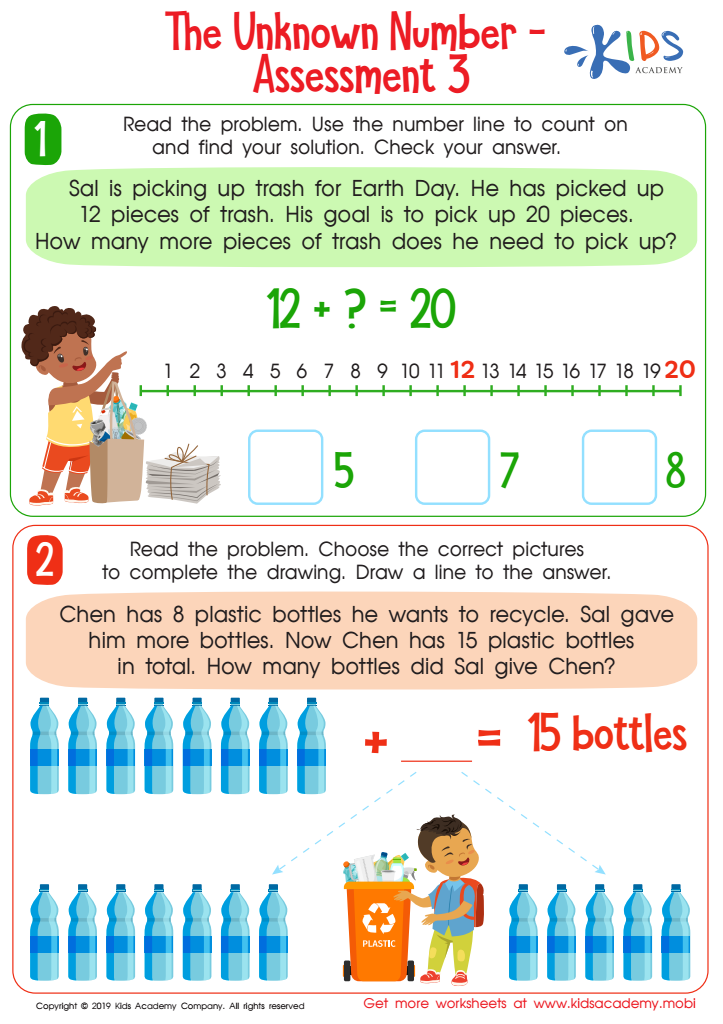
The Unknown Number - Assessment 3 Worksheet








Subtraction skills, particularly in the context of word problems, are essential for children aged 7-9 as they lay the foundation for critical thinking and problem-solving abilities. At this developmental stage, children begin to transition from basic arithmetic to applying mathematical concepts in real-world scenarios. Word problems require them to interpret language, identify relevant information, and determine the appropriate operations to use. This process enhances their comprehension and reasoning skills, promoting not only academic success but also cognitive growth.
Moreover, mastering subtraction in word problems builds numerical fluency, enabling children to approach more complex mathematical concepts with confidence. It fosters a deeper understanding of how subtraction interacts with addition, reinforcing the relationship between these fundamental operations. When children encounter subtraction in relatable contexts—like sharing cupcakes or measuring distances—they see the practicality of math in their everyday lives, increasing their motivation and willingness to learn.
For parents and teachers, focusing on these skills means cultivating a strong mathematical foundation for students. It equips them to tackle challenging concepts in the future and fosters a positive attitude toward learning. Ultimately, investment in subtraction skills and word problems is an investment in a child’s overall educational journey.








