Basic Addition Building Vocabulary Worksheets for Ages 7-9
3 filtered results
-
From - To
Elevate your child’s math skills with our "Basic Addition Building Vocabulary Worksheets" designed specifically for ages 7-9. These engaging worksheets focus on developing a solid foundation in addition while building essential vocabulary. Children will enjoy a variety of exercises that combine math concepts with fun word problems, promoting both numerical and language proficiency. Ideal for at-home learning or classroom activities, our resources encourage critical thinking and reinforce the relationship between words and numbers. Empower your little learners to enhance their addition skills and discover the joys of arithmetic through our thoughtfully crafted worksheets. Foster a love for learning math today!
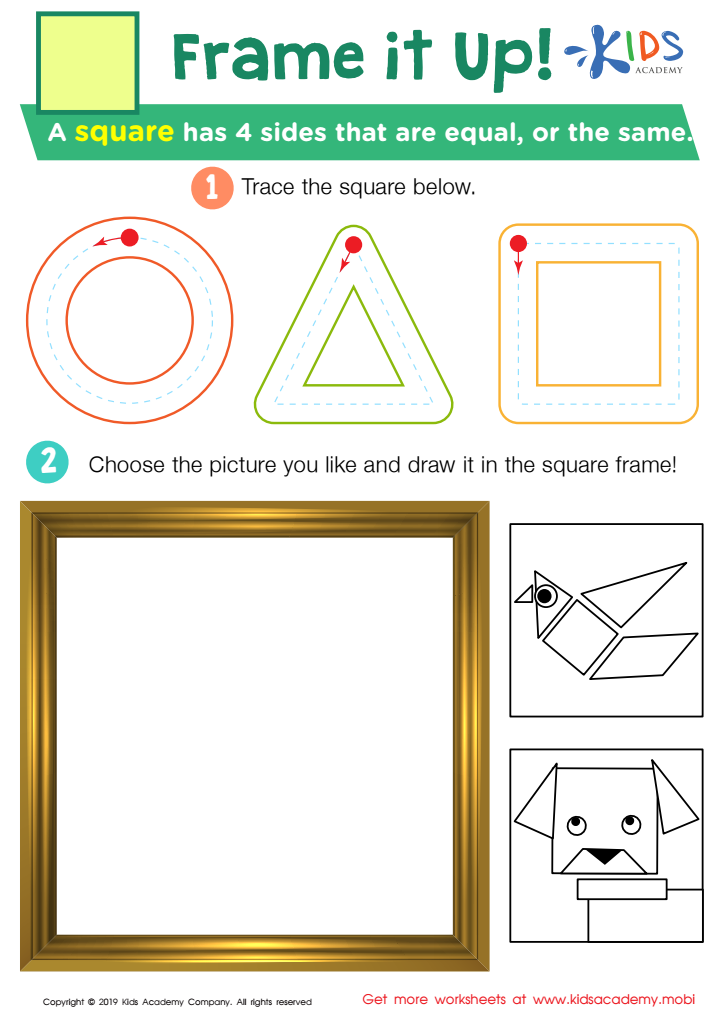
Frame it Up Worksheet
 Assign to My Students













.jpg)
.jpg)




Understanding basic addition is crucial for children aged 7-9, as it forms the foundation for their future math skills and overall academic success. During this developmental stage, children are not just learning to add; they are building a mathematical vocabulary that helps them articulate their thinking, understand problem-solving strategies, and communicate mathematical ideas effectively.
Parents and teachers should care about enhancing addition vocabulary because it aids comprehension and increases confidence in students. When children are familiar with terms like "sum," "addend," or "plus," they can better navigate math problems and discussions, making abstract concepts more tangible. This vocabulary is not just about words; it's about fostering a mindset that encourages logical reasoning and critical thinking.
Additionally, strong addition skills are connected to broader cognitive development. When children engage in activities focusing on addition skills using proper terminology, they develop not only numeracy but also language skills and cognitive flexibility. Engaging with math becomes more about enjoyment and understanding, rather than just rote memorization. Ultimately, cultivating a strong base in addition vocabulary empowers children to tackle more complex mathematical concepts with confidence as they progress through their education. 衡








